
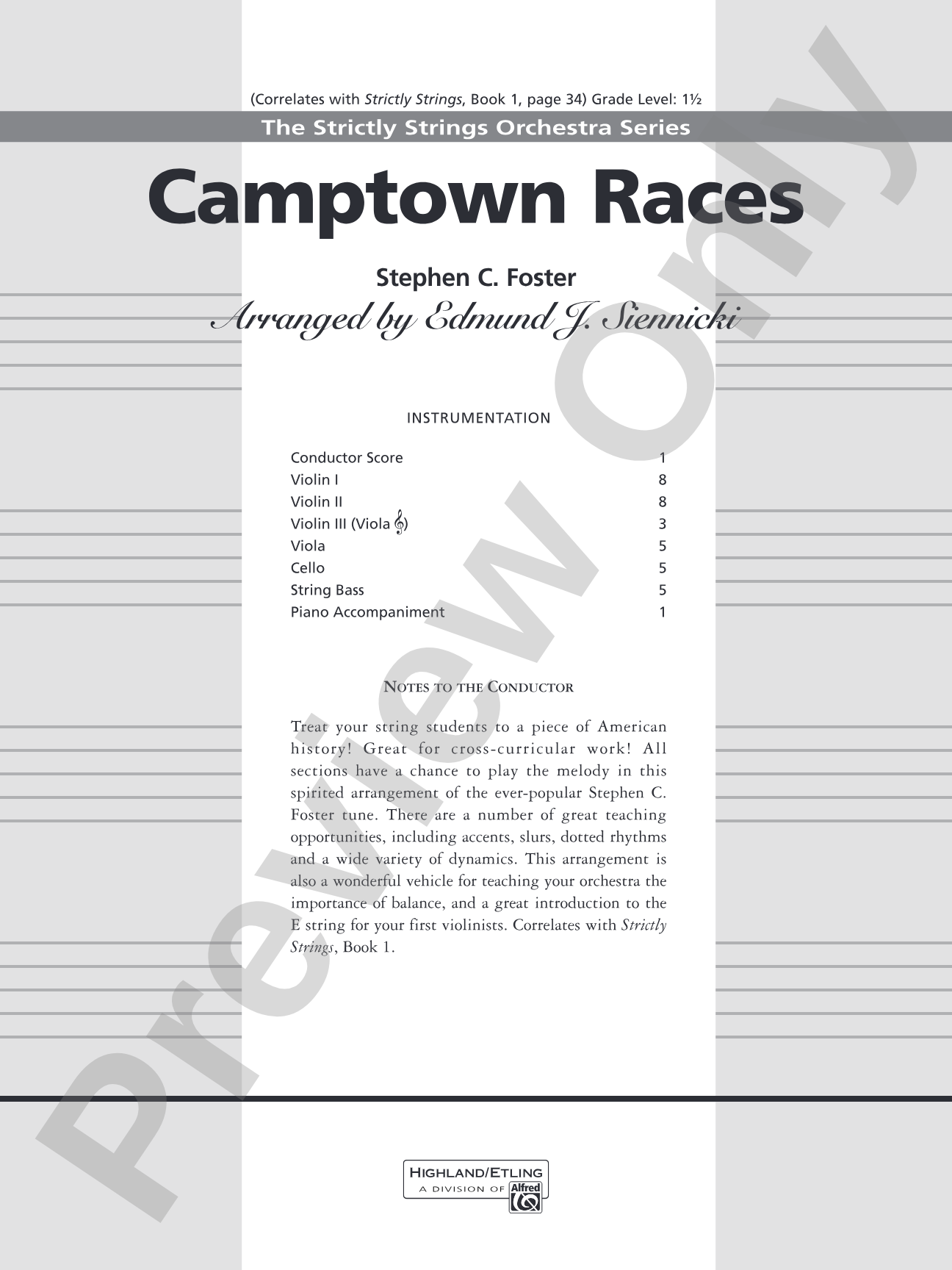
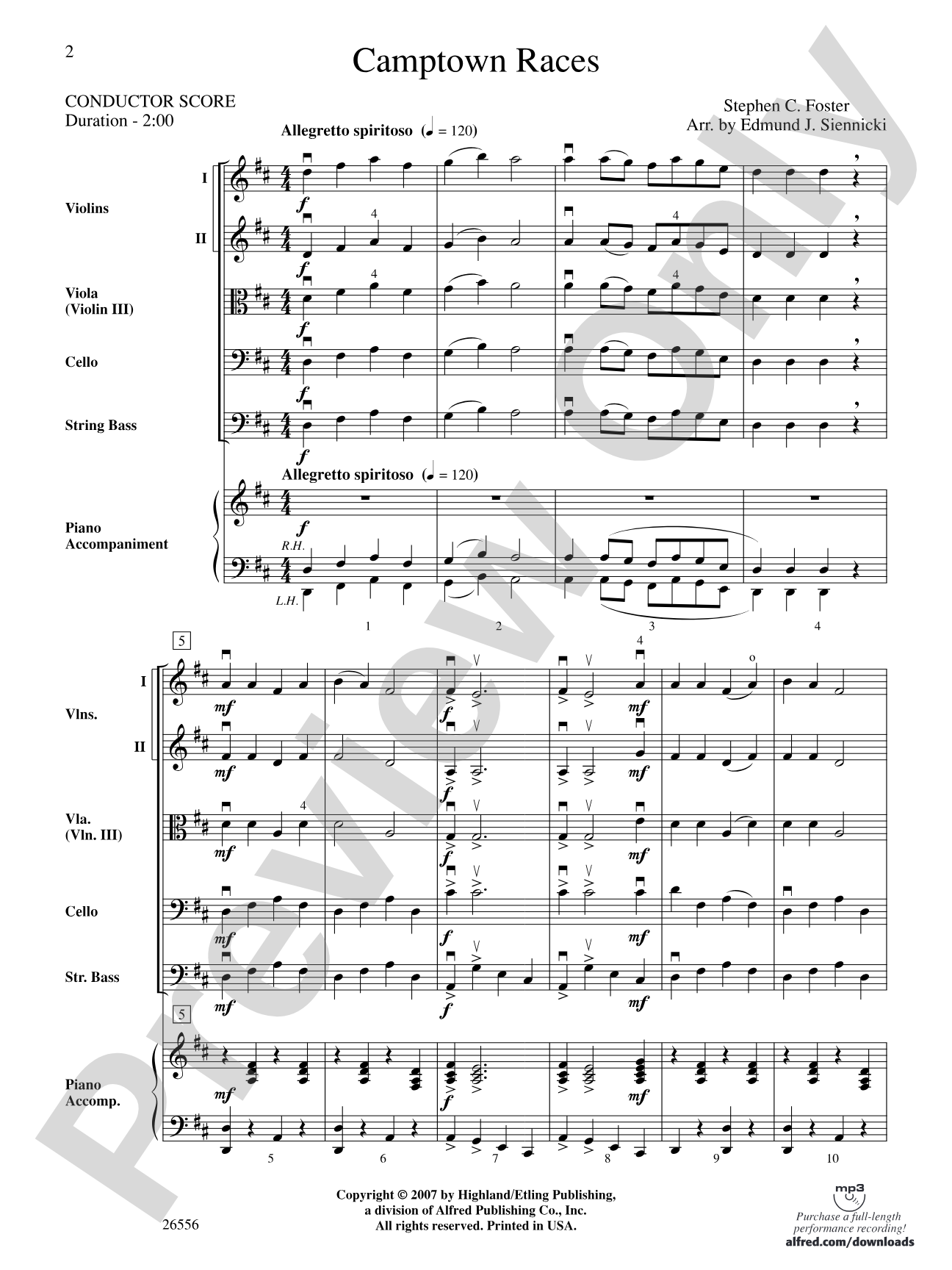
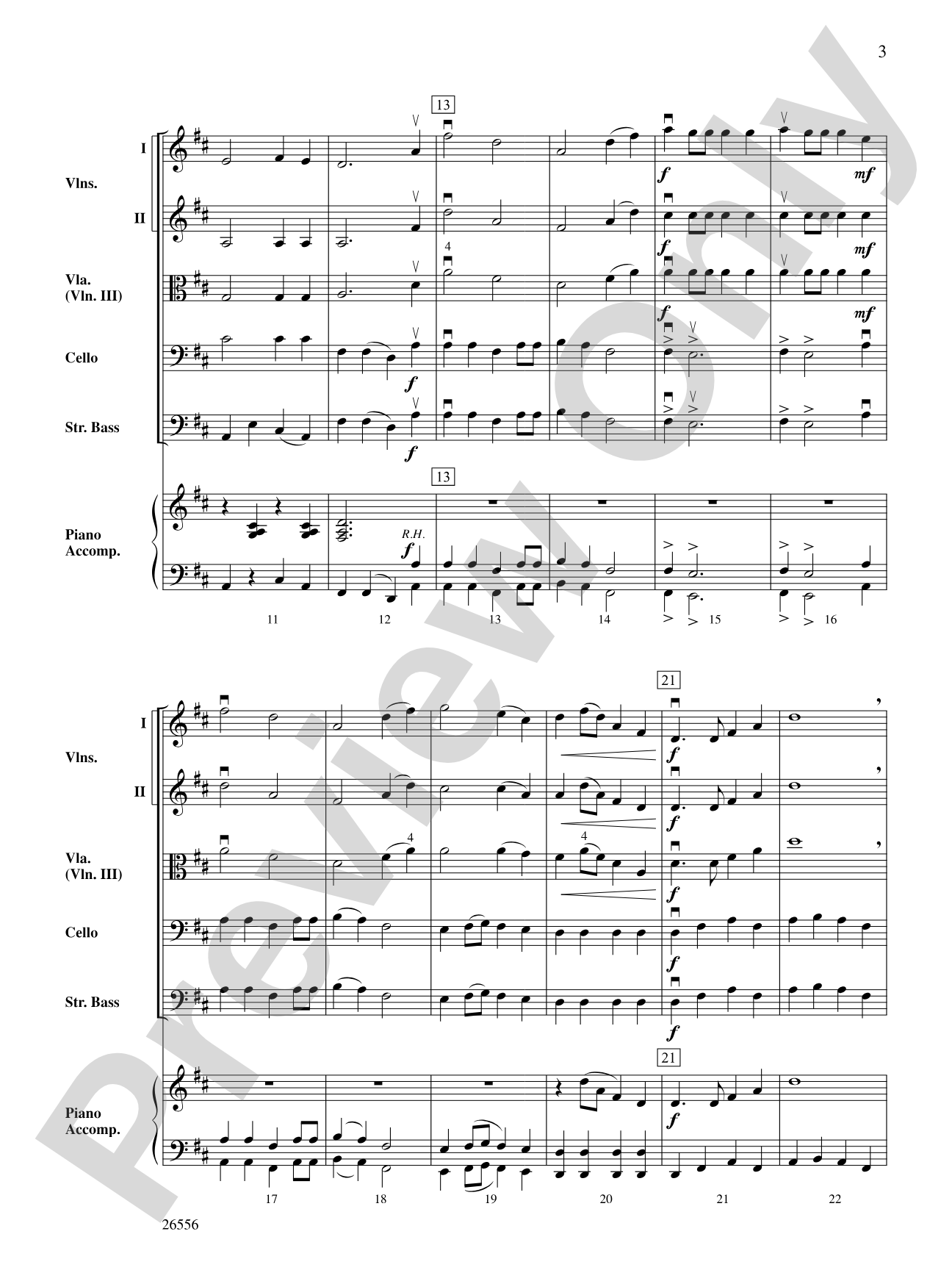
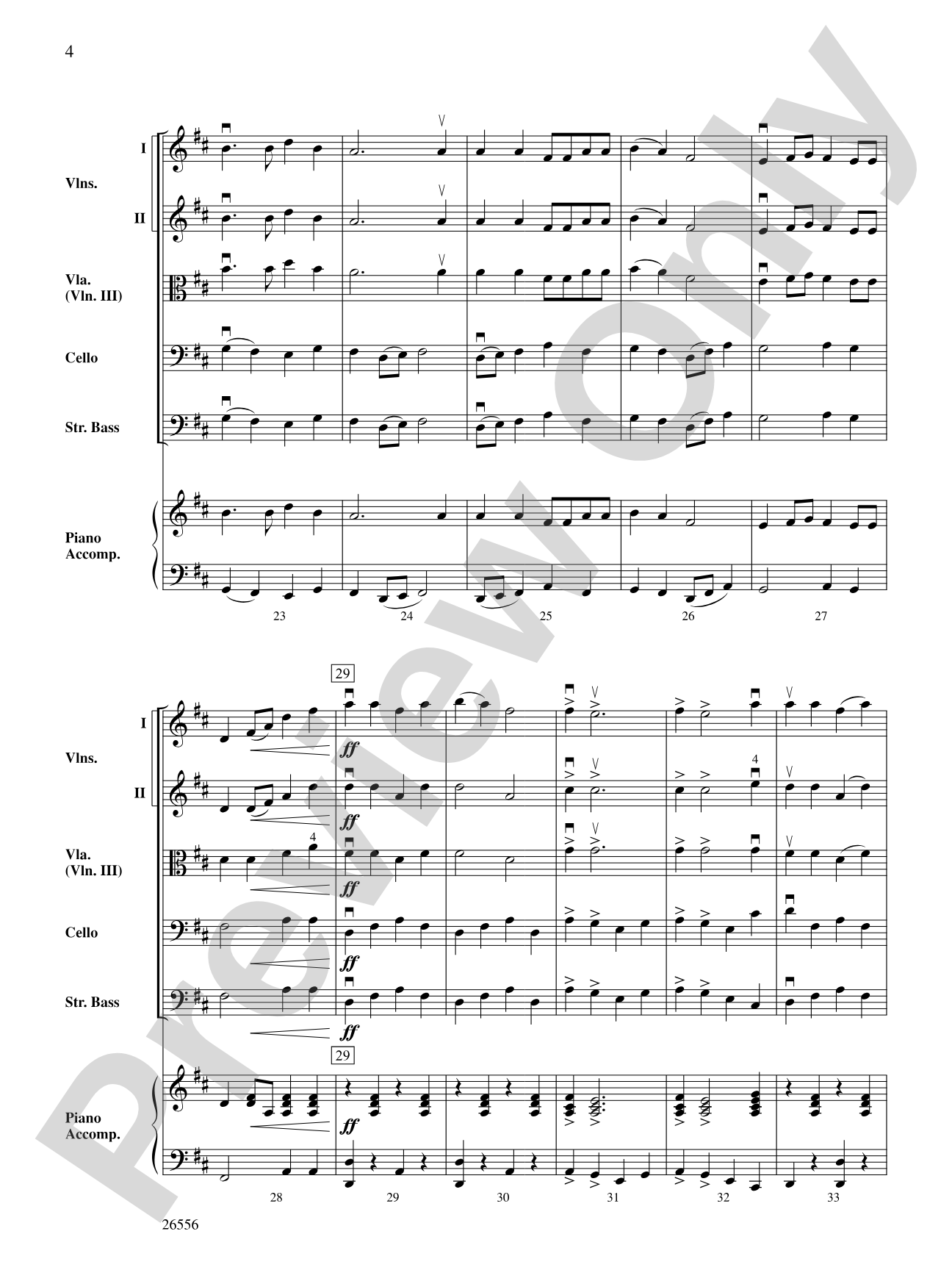



Camptown Races: String Orchestra Conductor Score & Parts
By Stephen Foster / arr. Edmund J. Siennicki
Grade: 1.5
Item: 00-PK-0001081

$42.00
Pickup currently not available
Buy Extra Parts (Digital PDF Download)
| Product | Price | Quantity |
|---|---|---|
| Camptown Races: Score | $6.00 | |
| Camptown Races: 1st Violin | $7.99 | |
| Camptown Races: 2nd Violin | $7.99 | |
| Camptown Races: Viola | $7.99 | |
| Camptown Races: 3rd Violin (Viola [TC]) | $7.99 | |
| Camptown Races: Cello | $7.99 | |
| Camptown Races: String Bass | $7.99 | |
| Camptown Races: Piano Accompaniment | $7.99 |
Parts Added to Cart!
Related Items
Camptown Races: String Orchestra Conductor Score |
$6.00
|
View |
Description
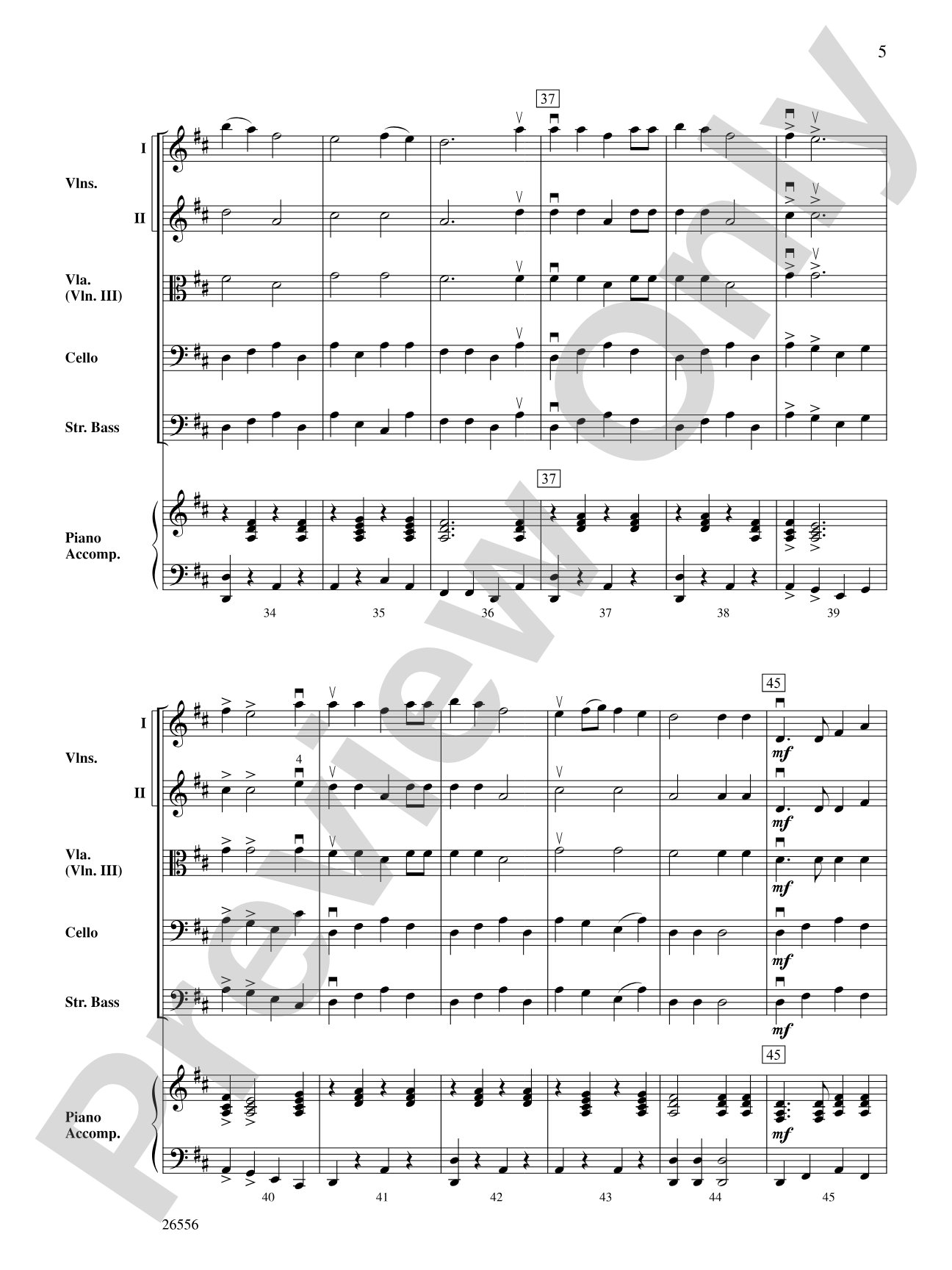
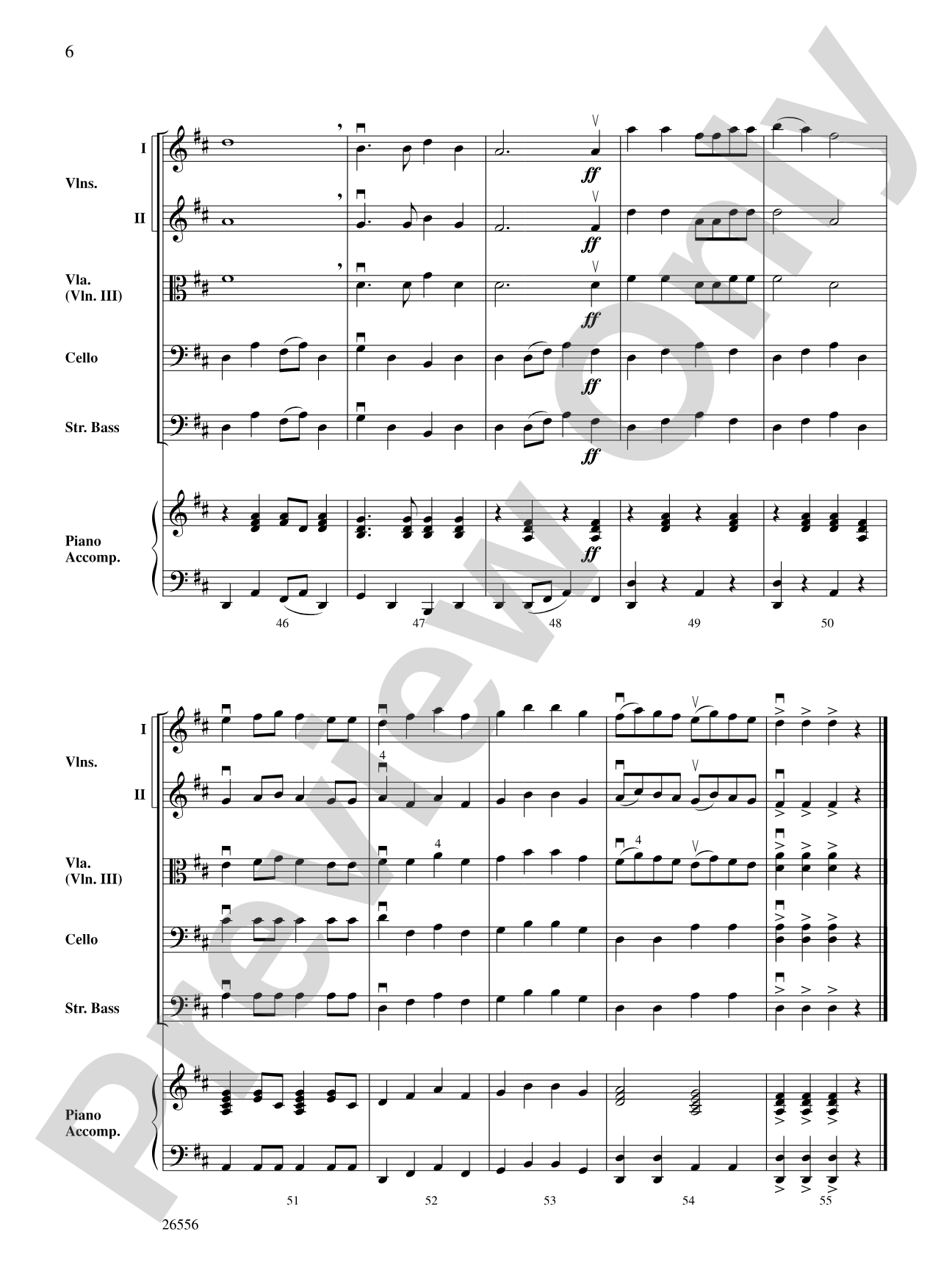
Treat your string students to a piece of American history! With a number of great teaching opportunities including accents, slurs, dotted rhythms and a wide variety of dynamics, this piece is a wonderful vehicle for teaching your orchestra the importance of balance and a great introduction to the E string for your first violinists. Correlates with Strictly Strings Book 1, page 34. This title is available in MakeMusic Cloud.


Don't just read it, hear it, play along with it, and watch your students grow with it. In MakeMusic Cloud, Camptown Races: String Orchestra Conductor Score & Parts comes alive with professional accompaniment, adjustable tempo, and built-in practice tools that turn solo practice into real progress.
Open in the Player
Jump straight in and assign it today.
Start Your Free Trial
Open this title and explore the full library in minutes.
Sample Audio
1
Audio File
--:--
0:00
0:00
Sample Video
No sample videos found.
Additional Details
Series:
Highland/Etling Strictly Strings
Publisher:
Alfred Music
Page Count:
36
SKU:
00-PK-0001081
More about this title
About the Composer: Stephen Foster
Stephen Foster (1826, 1864) stands as the first major American songwriter to write deliberately for a popular audience. He composed nearly 200 songs during his lifetime, many of which became folk standards that Americans have sung for generations. His melodies have an immediate, memorable quality that makes them ideal for music education: they sit comfortably in young voices and instruments while carrying genuine historical weight.
Why we love this
This arrangement captures the infectious energy of one of Foster's most recognizable melodies while building genuine orchestral skills. The piece's transparency makes it ideal for young orchestras to hear their own balance and intonation, and the pedagogical payoff is substantial: first violinists get meaningful work on the E string, the entire ensemble practices dynamic shaping and articulation clarity, and everyone leaves with a piece of American musical heritage they can actually perform.
What to expect
Bright and bouncy, with a folk tune's natural swing. The melody sits high and warm, full of character without pretense, while the supporting parts create a light rhythmic groove that gives the piece its infectious energy.
Who it's for
String orchestras in their first year of reading together, particularly ensembles transitioning from unison or two-part textures to fuller voicing. The grade 1.5 level and correlation to Strictly Strings Book 1 make it an ideal vehicle for building fundamental ensemble skills without overwhelming young players.
How to get the most out of it
- Shape the dotted rhythms with clear articulation on the short notes; underscore the snap without rushing the pulse.
- Balance the melody across your first violin section while keeping the accompanying parts proportionally lighter; this trains ears for the hierarchies that string writing demands.
- Approach the dynamic contrasts deliberately. Let the softer passages breathe so that the accented sections have genuine impact.
- Use the slurs to guide phrasing rather than as mechanical bowing instructions; encourage violinists to think about the line beneath the technical markings.
How to use it
Feature this on a concert celebrating American composers or folk traditions, where its historical weight and immediate accessibility serve as an engaging anchor. It also works well mid-program as a palette-cleansing piece that reminds audiences of orchestral music's popular roots, or as a contest selection where its combination of musical authenticity and pedagogical value earns strong adjudication.
Skills your students will build
- E string facility and intonation on the first violin part
- Reading accents and slurs in context
- Executing dotted rhythms with precision and character
- Responding to dynamic markings across four-part writing
- Ensemble balance and awareness of accompaniment roles