
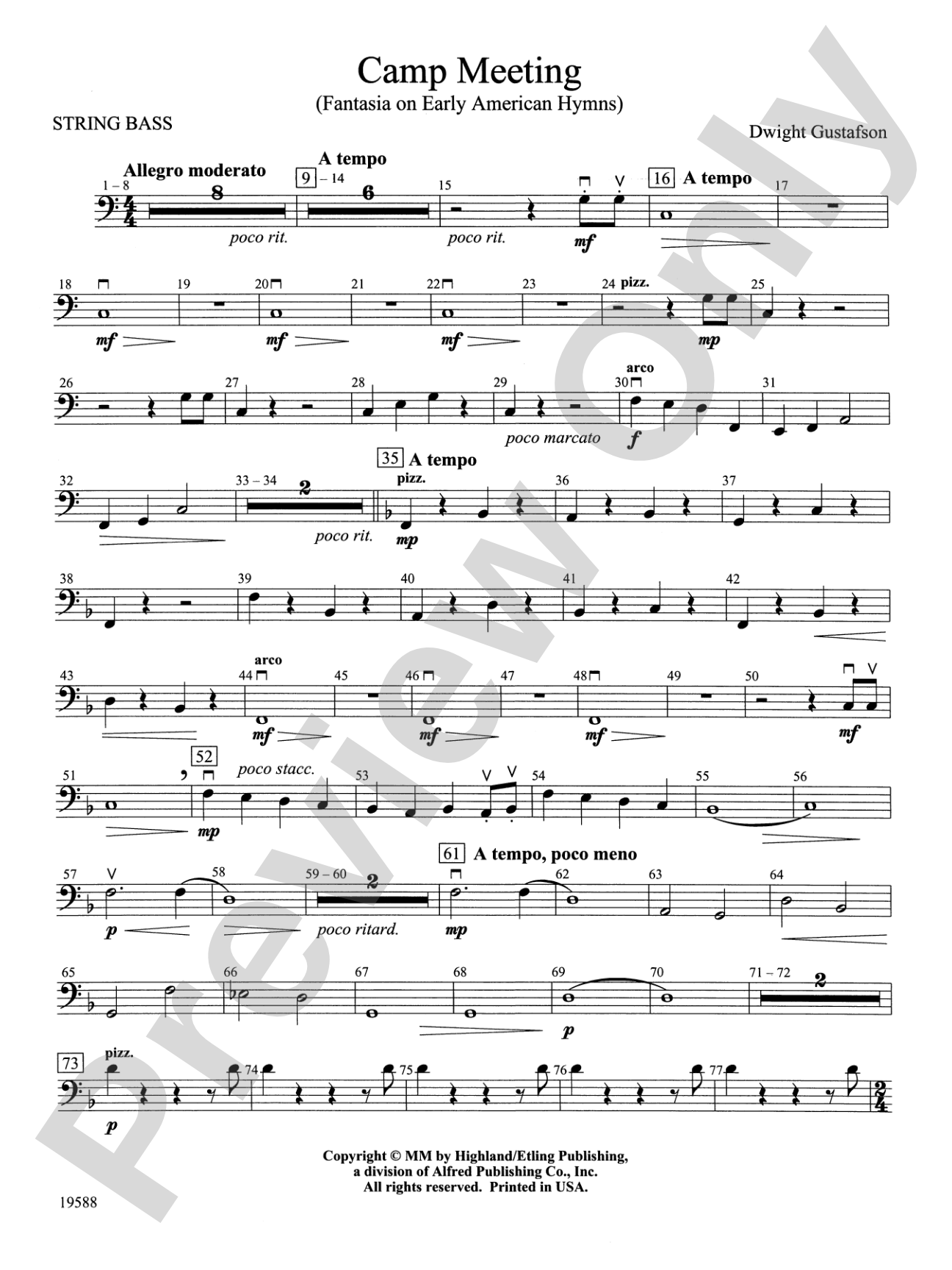

Camp Meeting (Fantasia on Early American Hymns): String Bass
(Fantasia on Early American Hymns)
By Dwight Gustafson
Grade: 4
Item: 00-PC-0000349_SB
$3.00
Pickup currently not available
Description
Rhythmic energy, creative orchestration and interesting harmonies abound in this tour de force for full orchestra, based on "Brethren We Have Met to Worship," "Come Ye Sinners, Poor and Needy" and "The Old-Time Religion." With its featured solo work for all sections of the orchestra, you will love rehearsing and performing this professional-sounding work from Dwight Gustafson.


Don't just read it, hear it, play along with it, and watch your students grow with it. In MakeMusic Cloud, Camp Meeting (Fantasia on Early American Hymns): String Bass comes alive with professional accompaniment, adjustable tempo, and built-in practice tools that turn solo practice into real progress.
Open in the Player
Jump straight in and assign it today.
Start Your Free Trial
Open this title and explore the full library in minutes.
Sample Audio
No sample audio found.
Sample Video
No sample videos found.
Additional Details
Series:
Highland/Etling Full Orchestra
Publisher:
Alfred Music
Page Count:
222
SKU:
00-PC-0000349_SB
More about this title
About the Composer: Dwight Gustafson
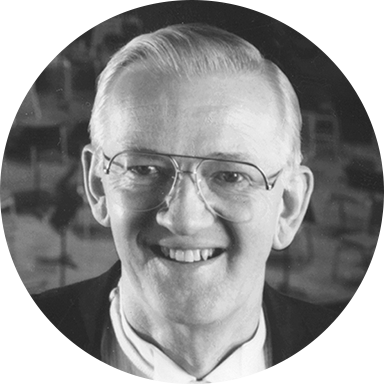
Dwight Gustafson has shaped music education and composition for decades as dean emeritus of the School of Fine Arts at Bob Jones University, a position he held for over 40 years. His formal training spans Bob Jones University (Bachelor of Arts and Master of Arts in church music) and Florida State University (Doctor of Music Composition, where he received a graduate fellowship). Beyond the classroom, Gustafson maintains an active conducting schedule, leading the Bob Jones University Symphony Orchestra and Opera Association while serving as a clinician for high school choral and orchestral programs.
His compositional output ranges widely: chamber and choral works published by major U.S. music houses, two one-act operas, film scores for four feature-length productions, and substantial orchestral works including the violin concerto Encounters and Fantasia for a Celebration, commissioned by the Williamsburg Symphonia for the city's tercentennial celebration.
Why we love this
Every section of the orchestra receives meaningful solo work, which transforms this into a genuine rehearsal gift. Directors appreciate how Gustafson balances accessibility at Grade 4 with genuinely professional orchestration; students don't feel they're playing simplified music. The three hymn-tune foundations give the piece cultural and spiritual resonance while the harmonic language and rhythmic drive keep it fresh.
What to expect
Camp Meeting pulses with the rhythmic vitality and spiritual warmth of American hymn singing, yet heard through a sophisticated orchestral lens. The piece feels both rooted in folk tradition and contemporary in its harmonic approach, creating a sense of discovery as familiar melodies transform across the ensemble.
Who it's for
Orchestras at the Grade 4 level with well-balanced sections and musicians ready for genuine solo responsibility. This work suits directors who want to program sacred music with orchestral sophistication and students who benefit from seeing every instrument earn its place in the texture.
How to get the most out of it
- Highlight the distinct character each hymn tune brings to the work. Even when orchestration shifts, maintaining the melodic identity of 'Brethren We Have Met to Worship,' 'Come Ye Sinners, Poor and Needy,' and 'The Old-Time Religion' helps audiences track the narrative arc.
- Balance the energy across sections during the rhythmic passages. With featured solo work throughout, ensure that accompanying parts maintain their harmonic and rhythmic integrity even when a particular section steps into the spotlight.
- Explore the harmonic language as a pedagogical moment. Gustafson's interesting harmonies aren't ornamental; they deepen the character of each hymn tune and reward careful listening from both orchestra and audience.
How to use it
Program this as a centerpiece for a concert themed around American sacred music or cultural heritage. Its Grade 4 accessibility and professional sound make it an effective anchor work that showcases ensemble growth without requiring championship-level virtuosity. The work also pairs naturally with other Americana-inspired repertoire or serves well in spring programming when concert themes often broaden beyond traditional classical canons.
Skills your students will build
- Balancing melody and accompaniment across sections
- Sustaining rhythmic clarity in syncopated passages
- Executing featured solo passages with confidence and musicality
- Understanding harmonic function in creative orchestration
- Blending and responding to dynamic shifts across the full ensemble