Camino del Sol: 1st B-flat Clarinet Sheet Music Preview

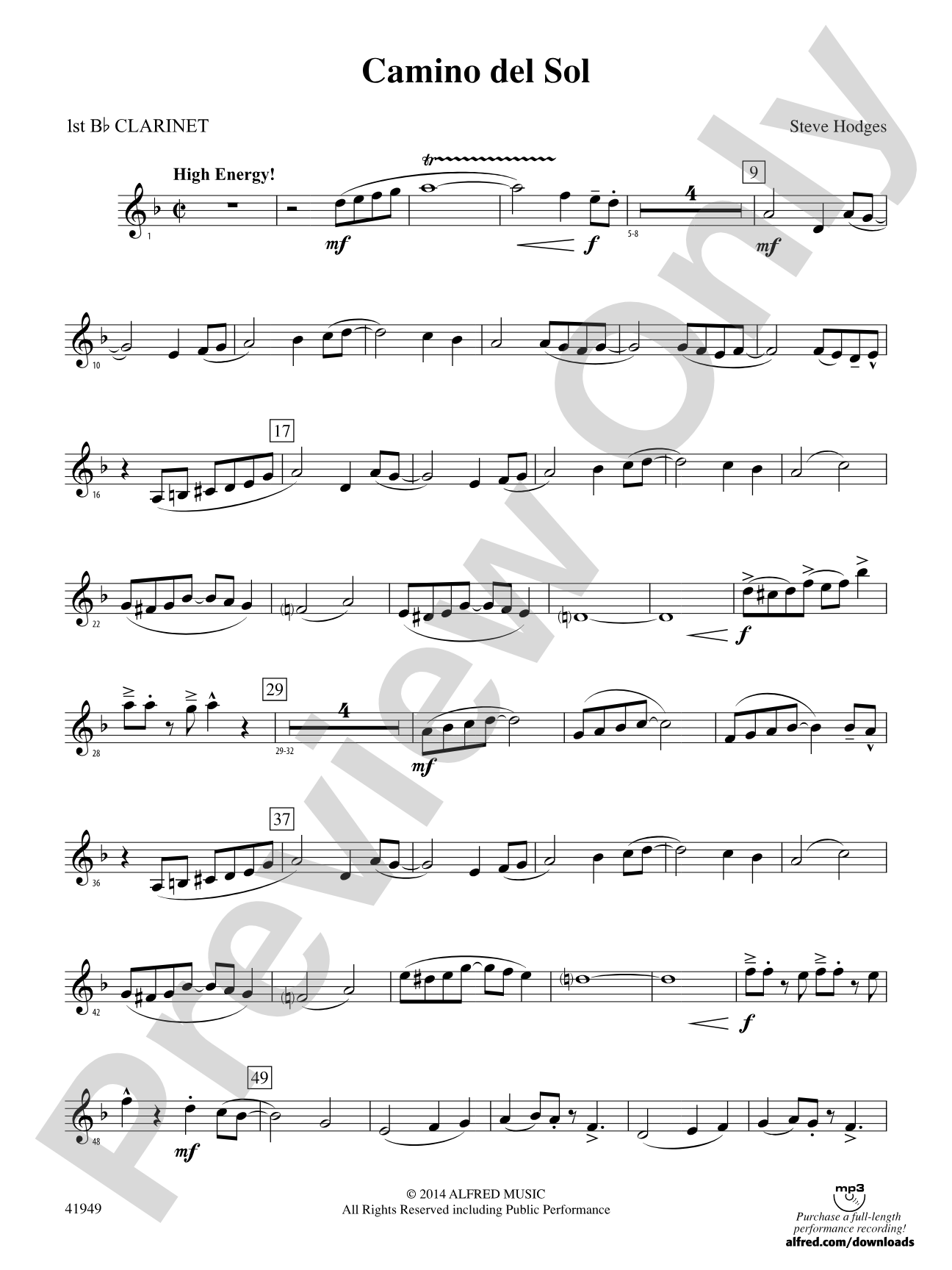
Camino del Sol: 1st B-flat Clarinet

By Steve Hodges

Grade: 2.5 (Medium Easy)

Item: 00-PC-0016431_C1

Digital Download
$3.00
Description
This energetic composition features active percussion and vibrant themes with seamless transitions from Latin to rock and back. Translated as "path to the sun," the band will generate some heat with this piece! (2:20)

Don't just read it, hear it, play along with it, and watch your students grow with it. In MakeMusic Cloud, Camino del Sol: 1st B-flat Clarinet comes alive with professional accompaniment, adjustable tempo, and built-in practice tools that turn solo practice into real progress.

Sample Audio
0:00
0:00
Sample Video
Additional Details
Series: Young Symphonic
Publisher: Alfred Music
Page Count: 254
SKU: 00-PC-0016431_C1

More about this title

About the Composer: Steve Hodges

Steve Hodges

Steve Hodges studied music education at Western Oregon University and Central Washington University, earning degrees that prepared him for a 40-year career directing bands, choirs, and chamber ensembles across the public school system. Since 1986, he has composed over 120 concert band works published by Alfred Music, along with choral arrangements released through Staff Music and Shawnee Press. His compositions have appeared at festivals and state conventions worldwide, and several of his pieces were commissioned by honor bands and school districts across Virginia, Iowa, British Columbia, Washington, Oregon, and North Carolina. His music has also been licensed by TBS and ESPN for broadcast use.

Hodges is an ASCAP member and has received multiple recognitions for his compositional work. Now retired and based in The Dalles, Oregon, he remains active in community music alongside his wife Teddie. He takes particular joy in learning that his grandchildren are performing his works in their own school bands.

Why we love this

Hodges writes with a director's ear for what middle-level bands need: music that energizes without demanding technical impossibilities. The shift between Latin and rock idioms keeps rehearsals fresh and the percussion parts are substantial enough to matter, giving your rhythm section real musical responsibility rather than padding.

What to expect

The piece radiates warmth and forward motion. Bright Latin colors give way to driving rock energy, creating a journey that feels both celebratory and propulsive, like following a path into sunlight.

Who it's for

Grade 2.5 concert bands seeking repertoire that excites without requiring advanced technical facility. Directors working with developing ensembles will appreciate the accessible instrumentation and straightforward part-writing that lets younger players feel capable while still engaging with sophisticated style elements.

How to get the most out of it

  • Establish the Latin groove firmly in early rehearsals; lock the clave rhythm with the percussion section before layering full band parts so the style feels authentic rather than imposed.
  • Shape the transitions between Latin and rock sections with deliberate tempo and articulation choices. Mark exact dynamic values for the shift points so the band understands when the character changes.
  • Balance the active percussion writing against the melodic lines. These parts deserve their own voice; resist the urge to pull percussion back just because there's a lot of it.
  • Work the rock section with the same harmonic precision as the Latin material. The style shift doesn't mean loosening musical focus; keep intonation and rhythmic clarity intact through both sections.

How to use it

Program this as an opener or mid-concert pick-me-up where the audience needs refreshing. The combination of Latin and rock styles makes it particularly effective at community concerts and festival settings where variety of repertoire matters, and its 2:20 duration fits neatly into concert blocks.

Skills your students will build

  • Recognizing and performing Latin rhythmic patterns (clave, tumbao, conga rhythm)
  • Transitioning smoothly between contrasting musical styles and tempos
  • Balancing active percussion writing with harmonic and melodic clarity
  • Sectional independence while maintaining ensemble cohesion across style shifts
  • Articulation and phrasing appropriate to rock and Latin idioms

You May Also Like