

Camelot Quest: 2nd Violin
By Katie O'Hara LaBrie
Grade: 1.5
Item: 00-PC-0018638_VN2
$3.00
Pickup currently not available
Description
This title features Alfred Music's String Orchestra FLEX options. That means that every part in this set is now transposed into every other part, so you can play this title with any combination of like- or mixed-string ensemble. After purchasing this set, decide what additional parts you need to meet the unique needs of your ensemble, then download and print them for free at alfred.com/supplemental---free of charge.
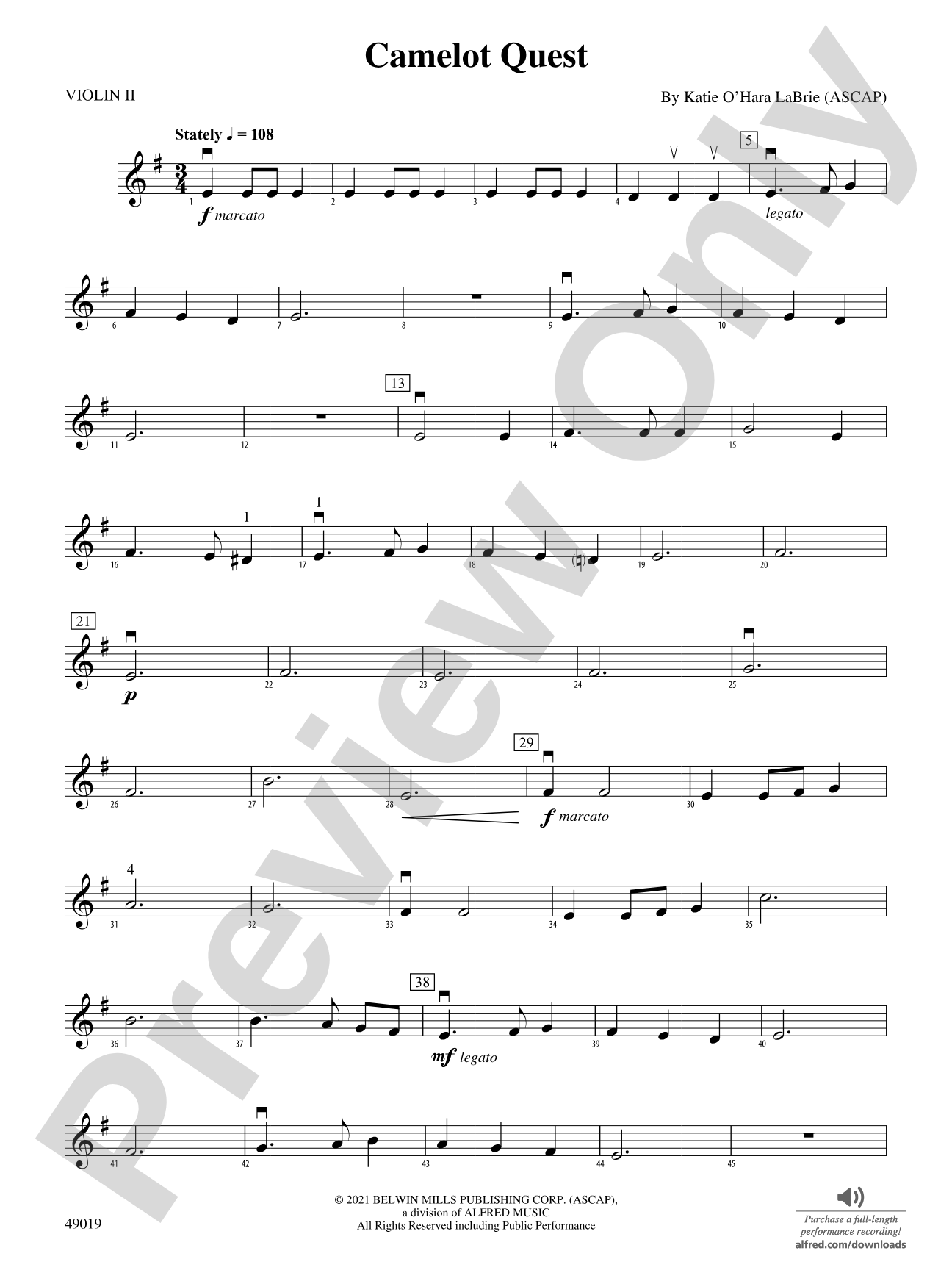
Imagine riding through Camelot on a quest to save the kingdom. Every player will be the hero in this medieval inspired tune, Camelot Quest by Katie Katie O'Hara LaBrie. Written in E minor, students will be introduced to D-sharps through low 1st finger as well as dotted-quarter rhythms in every part. Students and audiences alike will love the mixed energy of marcato ostinato patterns vs. the legato melodies. The journey concludes with a joust-like battle, adding excitement to any concert or festival program. Optional percussion adds to the medieval flair. (2:45) This title is available in MakeMusic Cloud.


Imagine riding through Camelot on a quest to save the kingdom. Every player will be the hero in this medieval inspired tune, Camelot Quest by Katie Katie O'Hara LaBrie. Written in E minor, students will be introduced to D-sharps through low 1st finger as well as dotted-quarter rhythms in every part. Students and audiences alike will love the mixed energy of marcato ostinato patterns vs. the legato melodies. The journey concludes with a joust-like battle, adding excitement to any concert or festival program. Optional percussion adds to the medieval flair. (2:45) This title is available in MakeMusic Cloud.
Don't just read it, hear it, play along with it, and watch your students grow with it. In MakeMusic Cloud, Camelot Quest: 2nd Violin comes alive with professional accompaniment, adjustable tempo, and built-in practice tools that turn solo practice into real progress.
Open in the Player
Jump straight in and assign it today.
Start Your Free Trial
Open this title and explore the full library in minutes.
Sample Audio
1
Audio File
--:--
0:00
0:00
Sample Video
Additional Details
Series:
Belwin Beginning String Orchestra
Publisher:
Alfred Music
Page Count:
91
SKU:
00-PC-0018638_VN2
More about this title
About the Composer: Katie O'Hara Labrie

Katie O'Hara Labrie is a composer, conductor, and cellist rooted in Northern Virginia's music education community. She spent fifteen years teaching orchestra in Fairfax County schools before establishing herself as a prolific composer whose work draws directly from her classroom experience. She holds a Bachelor of Music in Music Education from St. Olaf College and a Master of Music in Instrumental Conducting from George Mason University.
LaBrie's compositions prioritize both musicality and pedagogical value, earning multiple J.W. Pepper Editor's Choice selections and performances at major conferences including the Midwest Band and Orchestra Directors Clinic and American String Teachers Association Conference. Named one of Yamaha's "40 Under 40" in 2022, she continues to compose with an emphasis on purposeful practice and student engagement. She founded the Fairfax Chamber Players and co-created "the Big IDEA" practice method.
Why we love this
The FLEX instrumentation system eliminates the scramble to find the right parts for your ensemble configuration. LaBrie writes melodies and rhythmic patterns that work equally well whether your players read treble or bass clef, making this piece accessible to beginners without sacrificing musical interest. The narrative arc from medieval quest to jousting finale gives your students a story to perform, not just notes to read.
What to expect
Camelot Quest captures the pageantry and motion of a medieval adventure. Marcato rhythms propel the ensemble forward like hoofbeats and armor clanging, then the legato passages sweep in with nobility and grace. The final battle crackles with energy, leaving audiences excited and players breathless.
Who it's for
This title suits beginning string orchestras (grade 1.5) ready to step beyond unison melodies into multi-part textures while exploring character and storytelling. The FLEX system makes it ideal for schools with mixed instrumentation, small ensembles, or programs where part availability is unpredictable.
How to get the most out of it
- Balance the marcato ostinato patterns against the legato melodies by having the rhythm section players anchor their part with clear articulation while the melody carriers shape their phrases across bar lines.
- Introduce the D-sharp fingering in the first rehearsal as a point of pride rather than an obstacle; students appreciate understanding the specific challenge before they encounter it in the score.
- Let the optional percussion part shine during the joust finale without drowning out the strings; this is where the medieval atmosphere peaks, and both sections need audible definition.
- Lock the dotted-quarter rhythms across all parts by counting aloud together in early rehearsals; this rhythm pattern appears throughout and settles quickly once the ensemble internalizes it.
How to use it
Program this early in the concert season to showcase your ensemble's ability to handle character and texture contrasts on a single piece. It works especially well in family concerts or festival competitions where youth audiences respond to narrative programming. The moderate length (2:45) pairs naturally with a longer featured work or several shorter character pieces.
Skills your students will build
- Reading D-sharp in first position and adapting hand position for this altered tone
- Playing dotted-quarter rhythms with rhythmic precision across all ensemble parts
- Balancing marcato and legato articulations within the same piece to support musical contrast
- Navigating multi-part texture where different sections carry melody and accompaniment simultaneously
- Responding to programmatic content to shape phrasing and dynamic shape with intentionality