
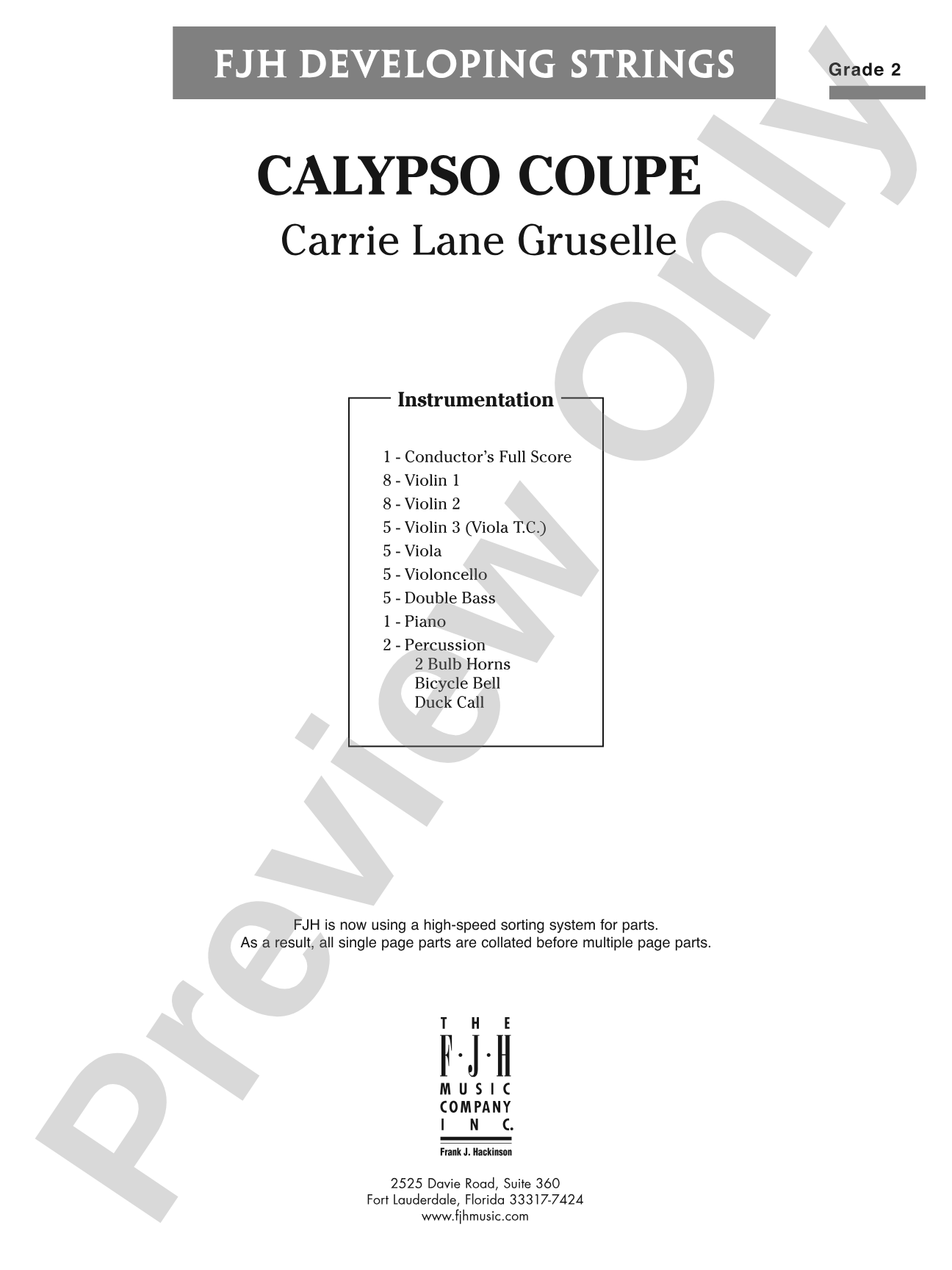

Calypso Coupe: String Orchestra Conductor Score & Parts
By Carrie Lane Gruselle
Grade: 2
Item: 98-DST6304
$60.00
Pickup currently not available
Buy Extra Parts (Digital PDF Download)
| Product | Price | Quantity |
|---|---|---|
| Calypso Coupe: Score | $5.00 | |
| Calypso Coupe: Violin 1 | $7.00 | |
| Calypso Coupe: Violin 2 | $7.00 | |
| Calypso Coupe: Violin 3 (Viola T.C.) | $7.00 | |
| Calypso Coupe: Viola | $7.00 | |
| Calypso Coupe: Violoncello | $7.00 | |
| Calypso Coupe: Double Bass | $7.00 | |
| Calypso Coupe: Piano | $7.00 | |
| Calypso Coupe: Percussion | $7.00 |
Parts Added to Cart!
Description
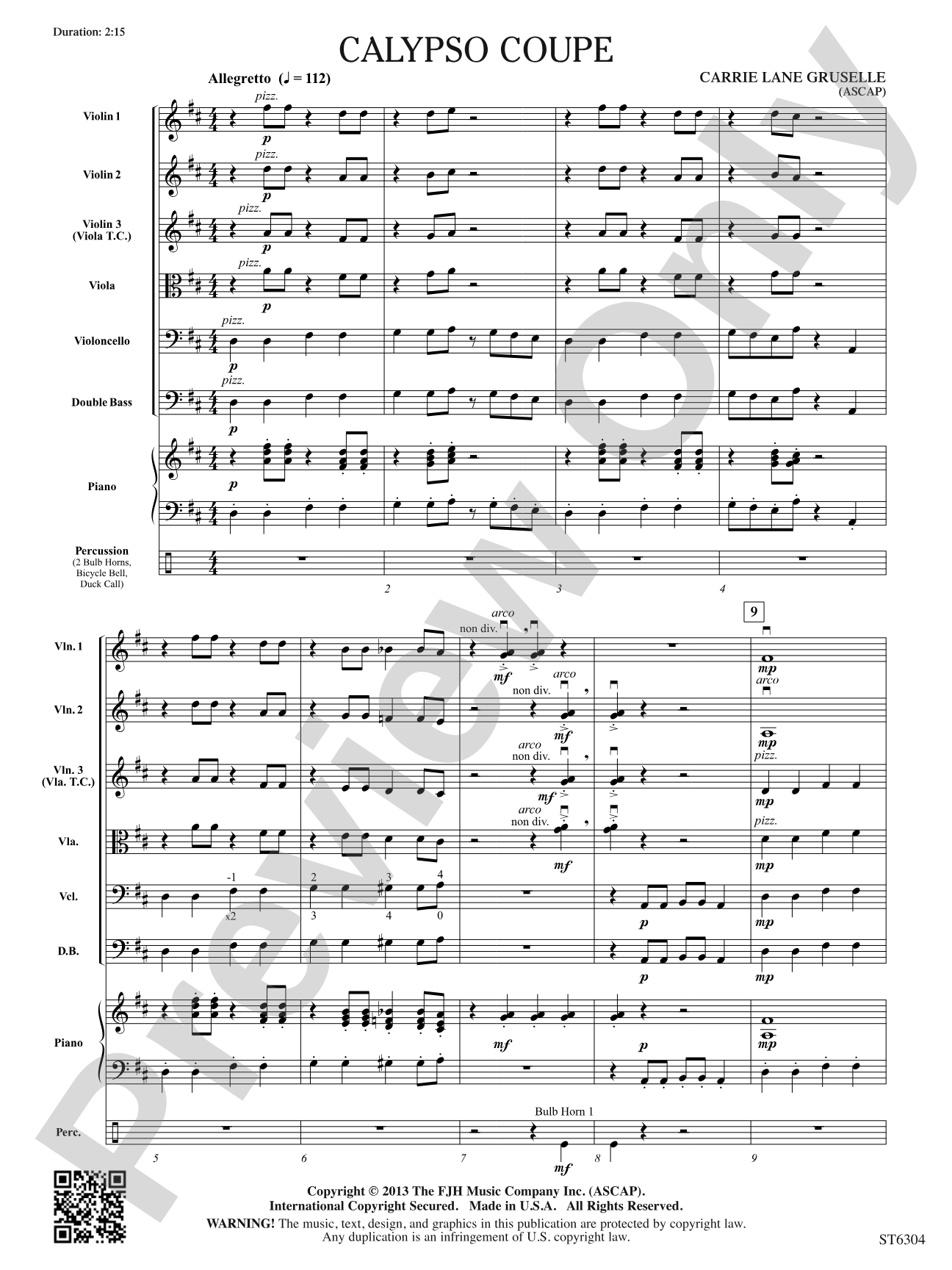
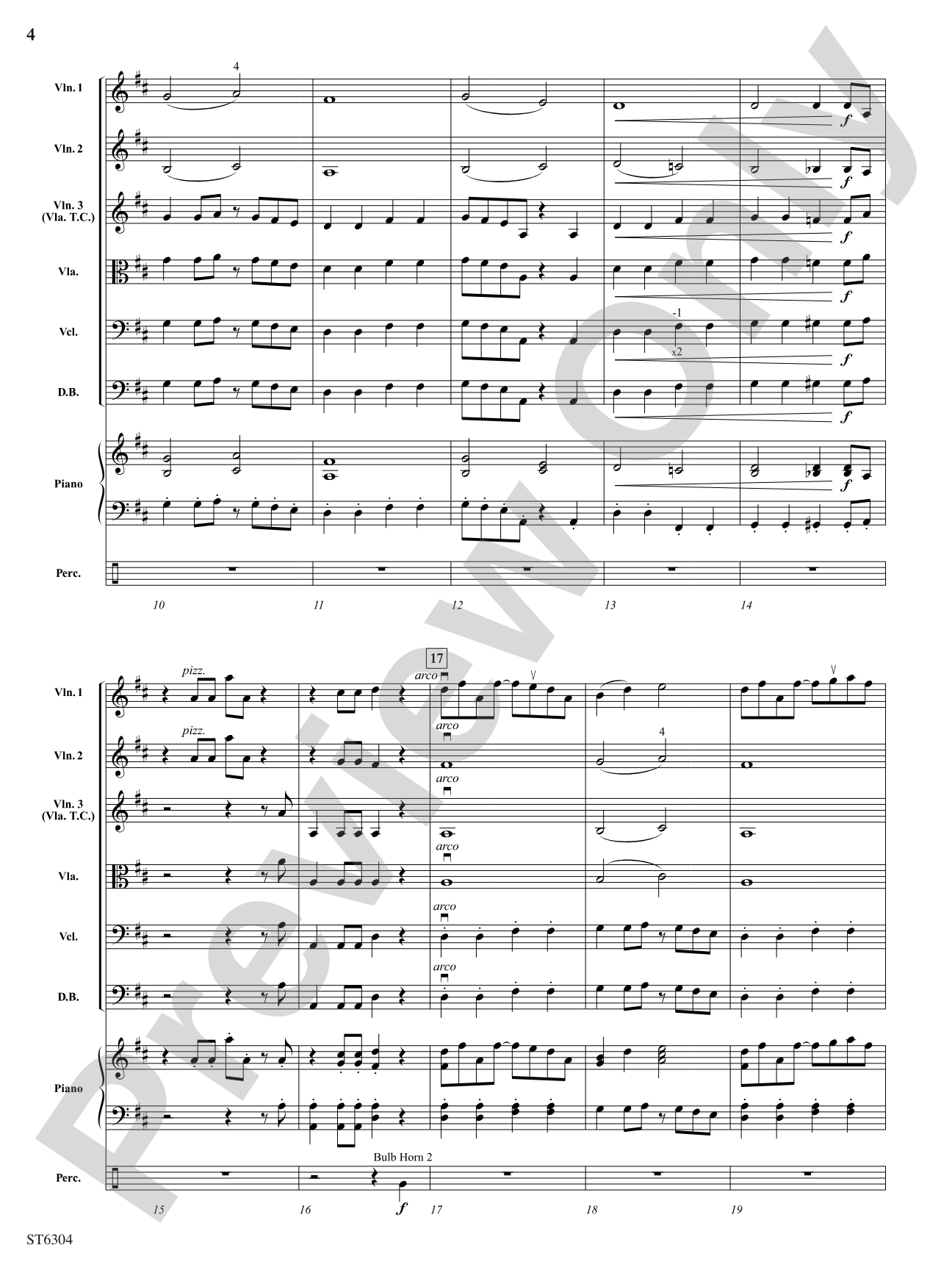
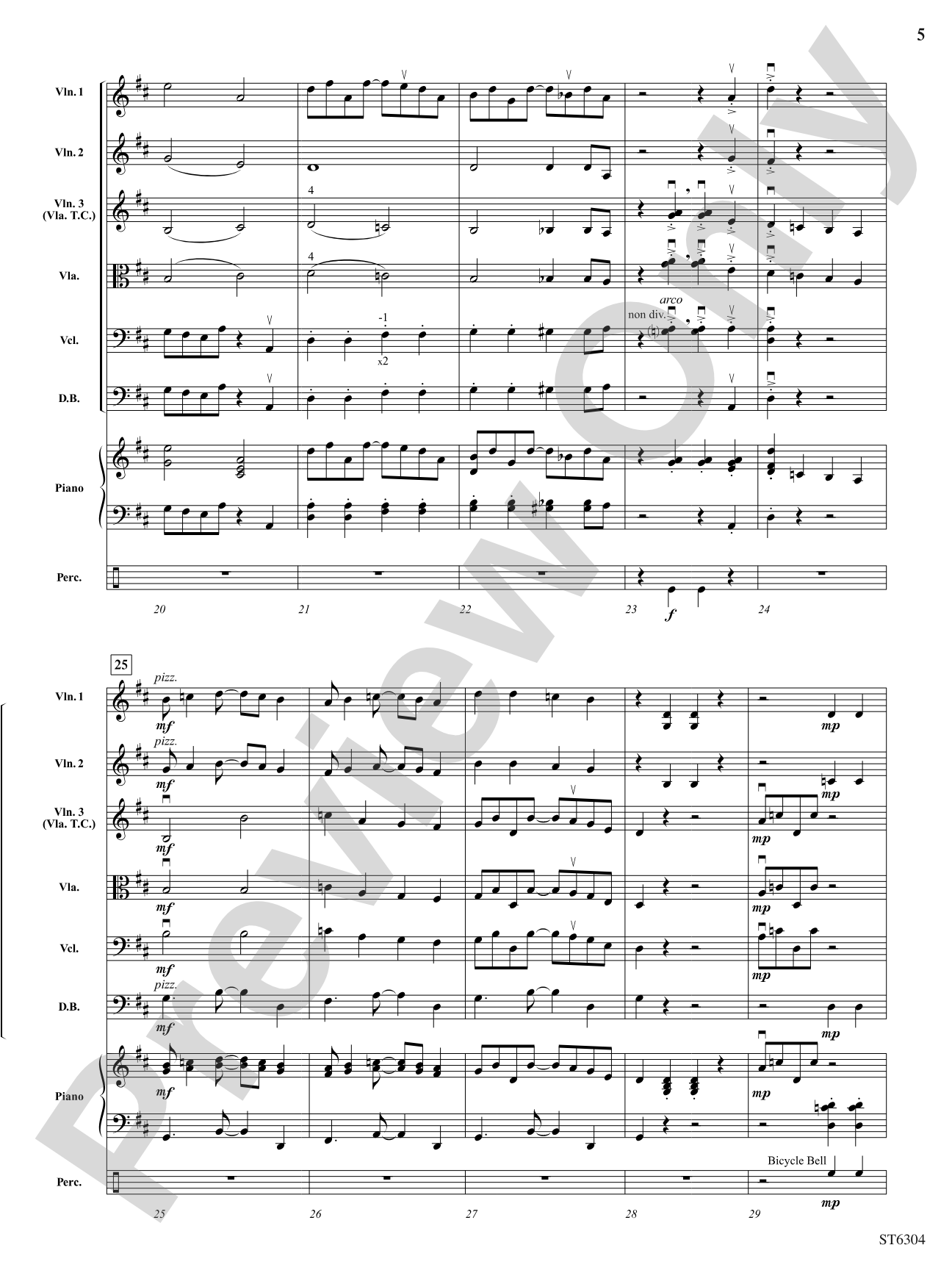
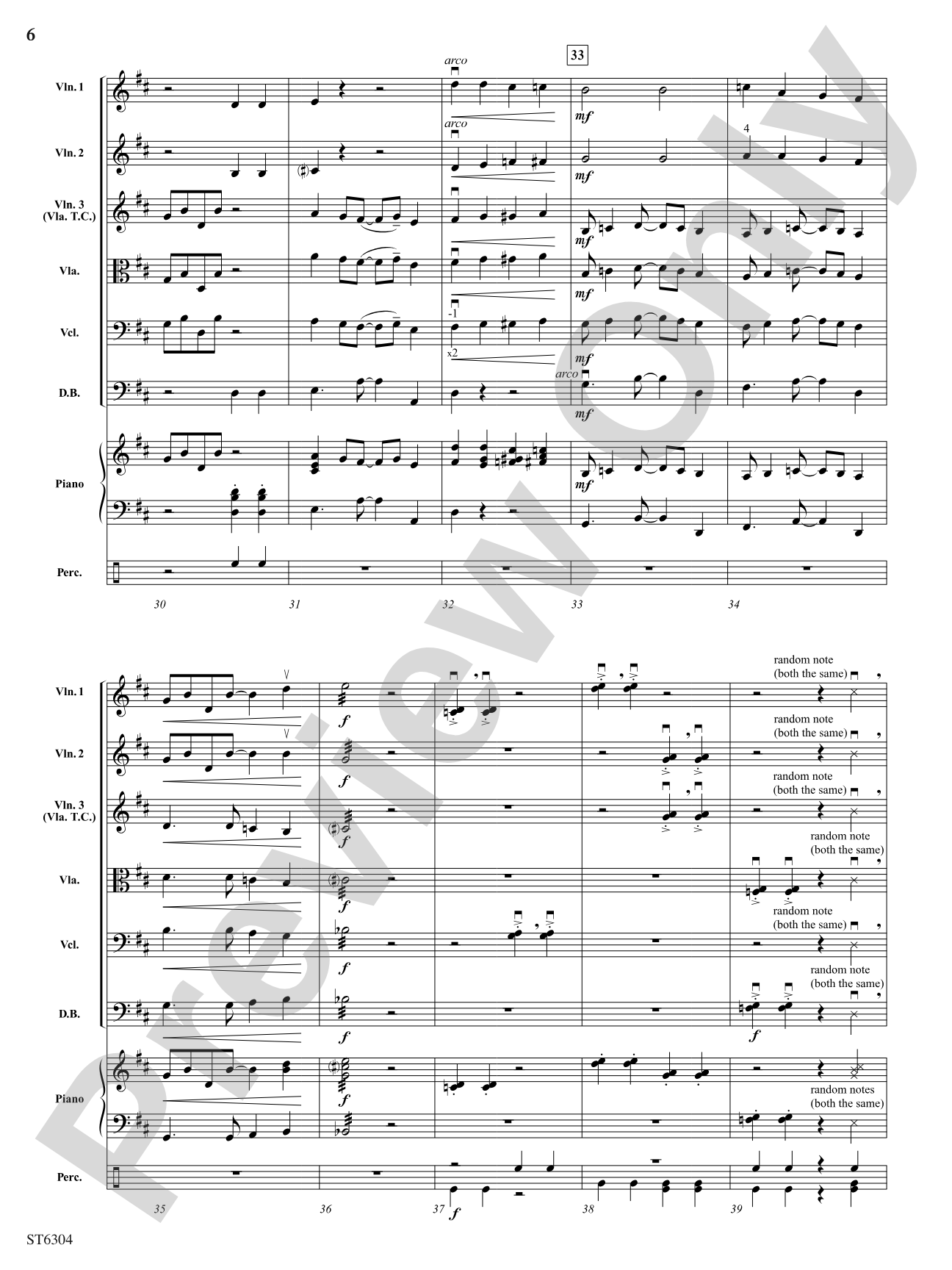
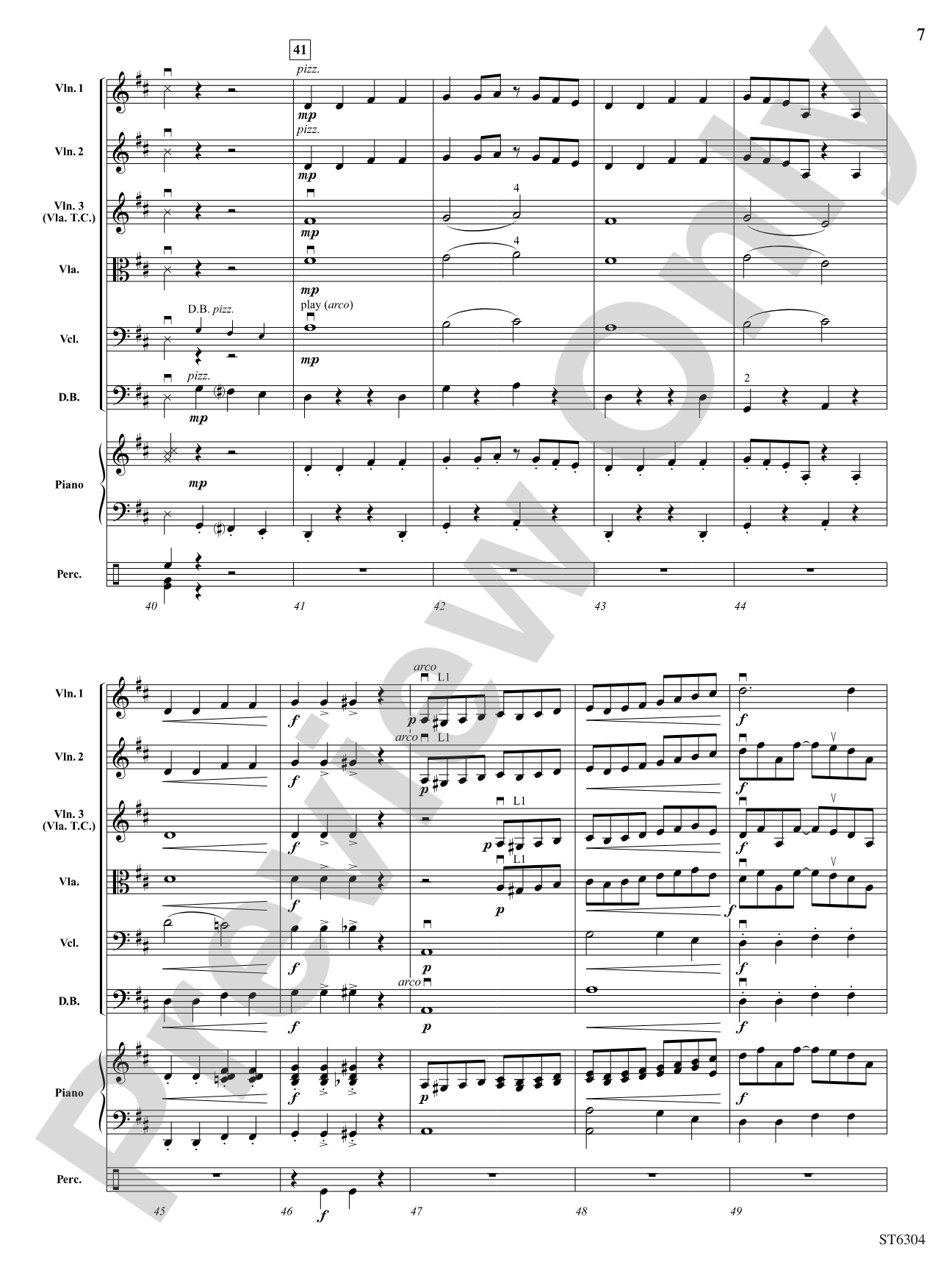
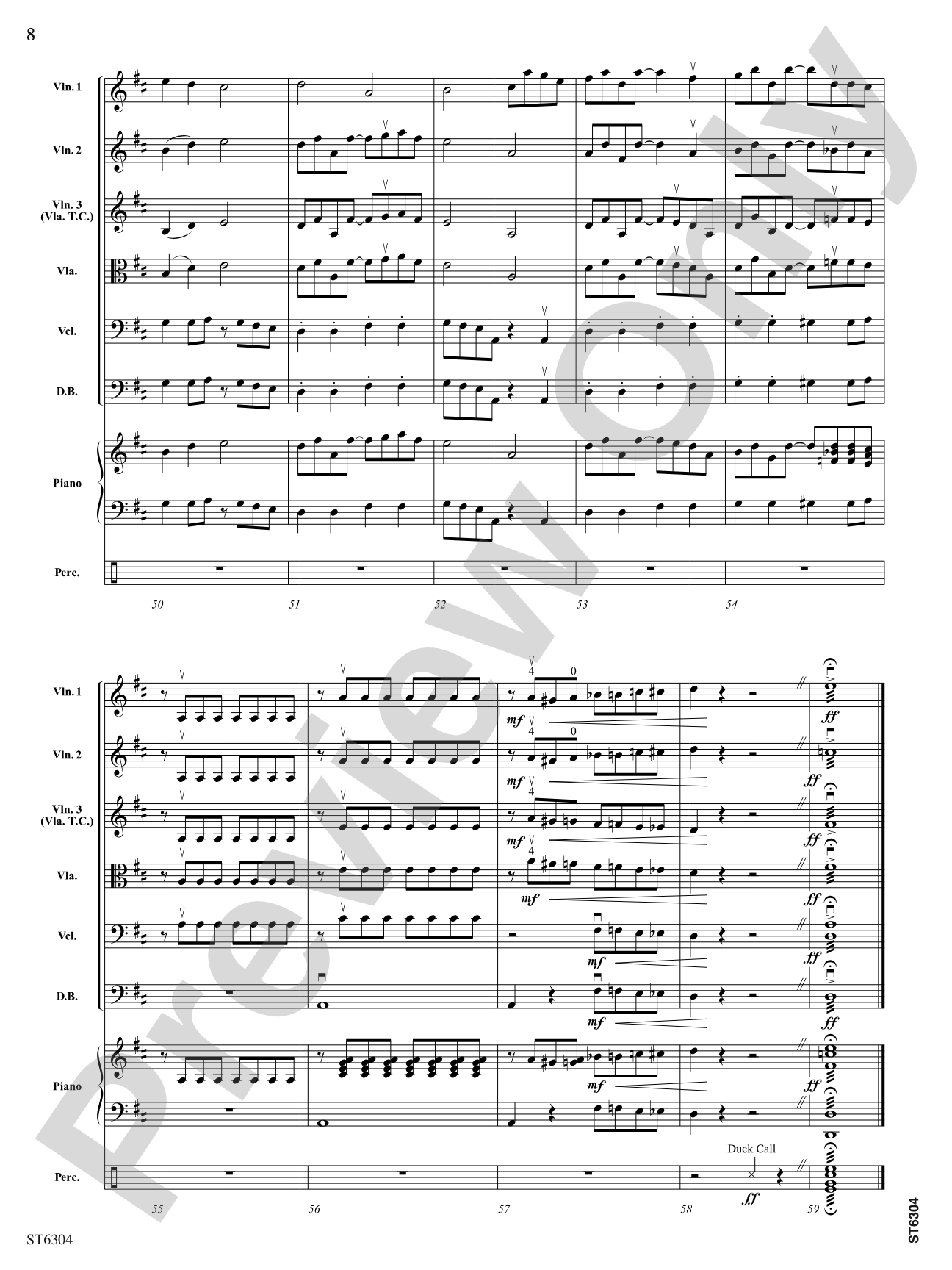
Enjoy this comical depiction of a seaside car ride complete with honking horns and passing bicyclists. A wealth of special effects makes this one of a kind! In addition to the comic relief, students get exposed to syncopation, a variety of articulations and string crossings. Watch out! Is that a duck I hear?!


Calypso Coupe: String Orchestra Conductor Score & Parts isn't in MakeMusic Cloud just yet...but it could be. Let us know you'd like to see it, and you'll help shape what comes next. In the meantime, start a free trial and dive into thousands of interactive titles your students can play along with today.
Request This Title
Tell us you want it.
Start Your Free Trial
Explore everything that's ready to play right now.
Sample Audio
1
Audio File
--:--
0:00
0:00
Sample Video
No sample videos found.
Additional Details
Series:
FJH Developing Strings
Publisher:
The FJH Music Company, Inc.
SKU:
98-DST6304
More about this title
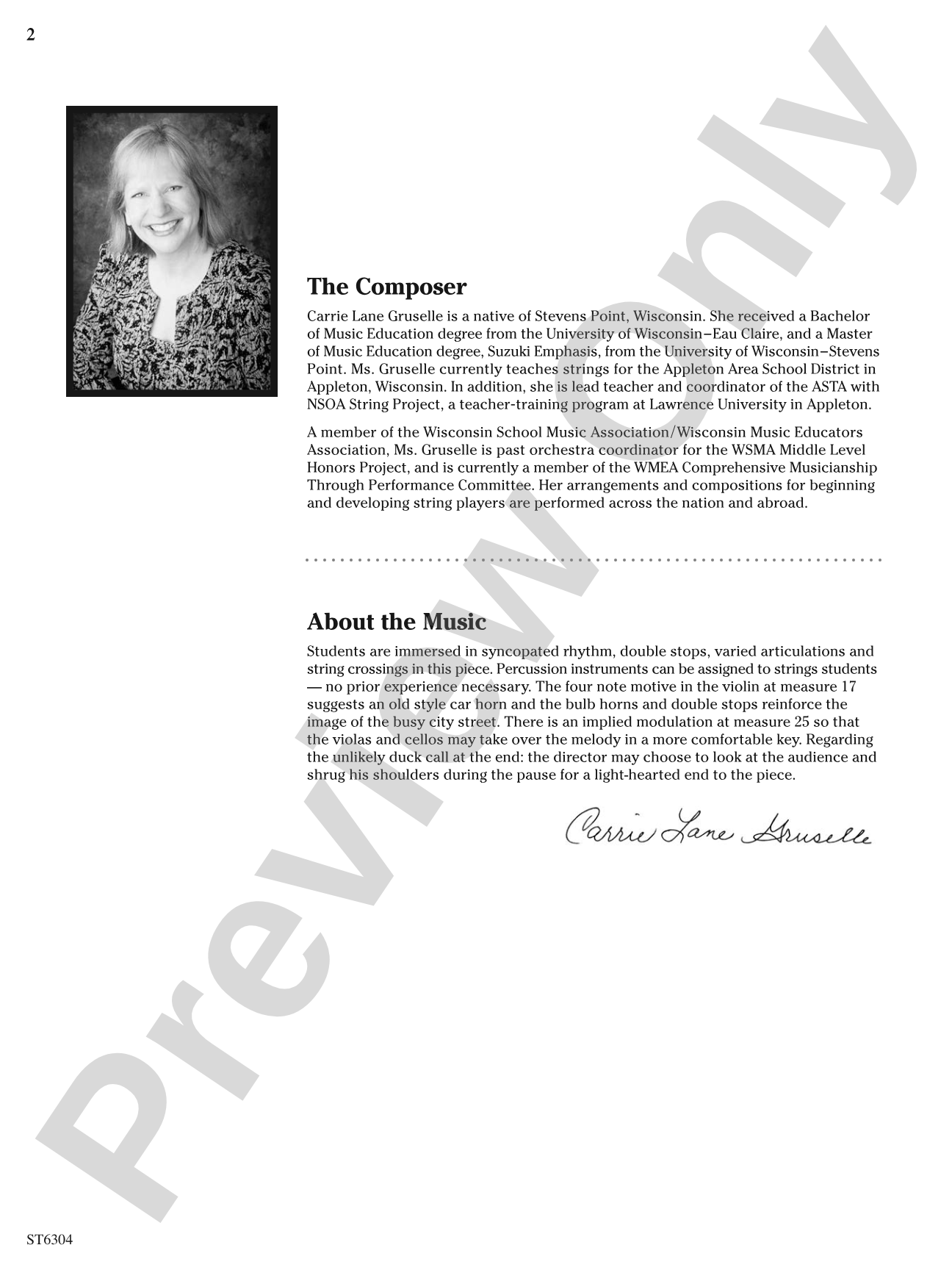
About the Composer: Carrie Lane Gruselle

Carrie Lane Gruselle earned her Bachelor of Music Education from the University of Wisconsin—Eau Claire and her Master of Music Education from the University of Wisconsin—Stevens Point, where she specialized in Suzuki pedagogy. She teaches strings to elementary and middle school students in the Appleton Area School District and serves as cello instructor at the Lawrence University Arts Academy in Appleton, Wisconsin.
Gruselle's background in both traditional and Suzuki string education deeply informs her compositional voice. Her work reflects a keen understanding of what young string players can accomplish and what captures their imagination on stage.
Why we love this
Gruselle has crafted a piece that walks the fine line between entertainment and genuine musical learning. The syncopation and string crossings demand focused technique, yet the novelty elements—honking horns, bicycle sounds, and that surprise duck call—keep young players engaged and laughing. Programming this alongside more serious repertoire gives your orchestra the gift of uninhibited joy without sacrificing learning.
What to expect
You're riding along a breezy coastal road in a convertible, the sun on your face, the world happening around you in delightful detail. Horns honk at unexpected moments; someone pedals past on a bicycle; the absurdity of it all feels wonderfully alive and unscripted. There's genuine warmth beneath the comedy, and by the end, your orchestra feels like it just took an adventure together.
Who it's for
Grade 2 string orchestras looking to explore rhythmic variety and articulation techniques without getting bogged down in complexity. This piece works beautifully for groups ready to tackle syncopation and multiple simultaneous effects but still benefit from shorter phrases and straightforward harmonic structure.
How to get the most out of it
- Balance the special effects so they enhance rather than overwhelm the melodic lines. Rehearse the horn honks and sound effects separately to establish consistent timing and dynamic control.
- Isolate the syncopated rhythms in sections before running full passages. Have players tap the syncopation against a steady pulse to internalize the offset.
- Practice string crossings at half speed, focusing on smooth bow control and even tone. Gradually increase tempo only after crossings become automatic.
- Conduct the comic moments with clear, exaggerated gestures. Your body language will invite the confidence and playfulness the score asks for.
How to use it
Open a spring or end-of-year concert with this piece to set a lighthearted tone and immediately signal to the audience that joy is on the menu. Pair it with one more accessible novelty work and a solid standard from your level to create a balanced, entertaining first half that still demonstrates your students' range.
Skills your students will build
- Reading and performing syncopated rhythms in quarter-note and eighth-note contexts
- String crossings with clean articulation and consistent tone
- Variety of articulations including staccato, legato, and marcato within a single piece
- Ensemble coordination of non-pitched sound effects with pitched musical lines
- Rhythmic independence and listening to parts moving at different rhythmic values