Calle Caliente: 3rd B-flat Trumpet Sheet Music Preview

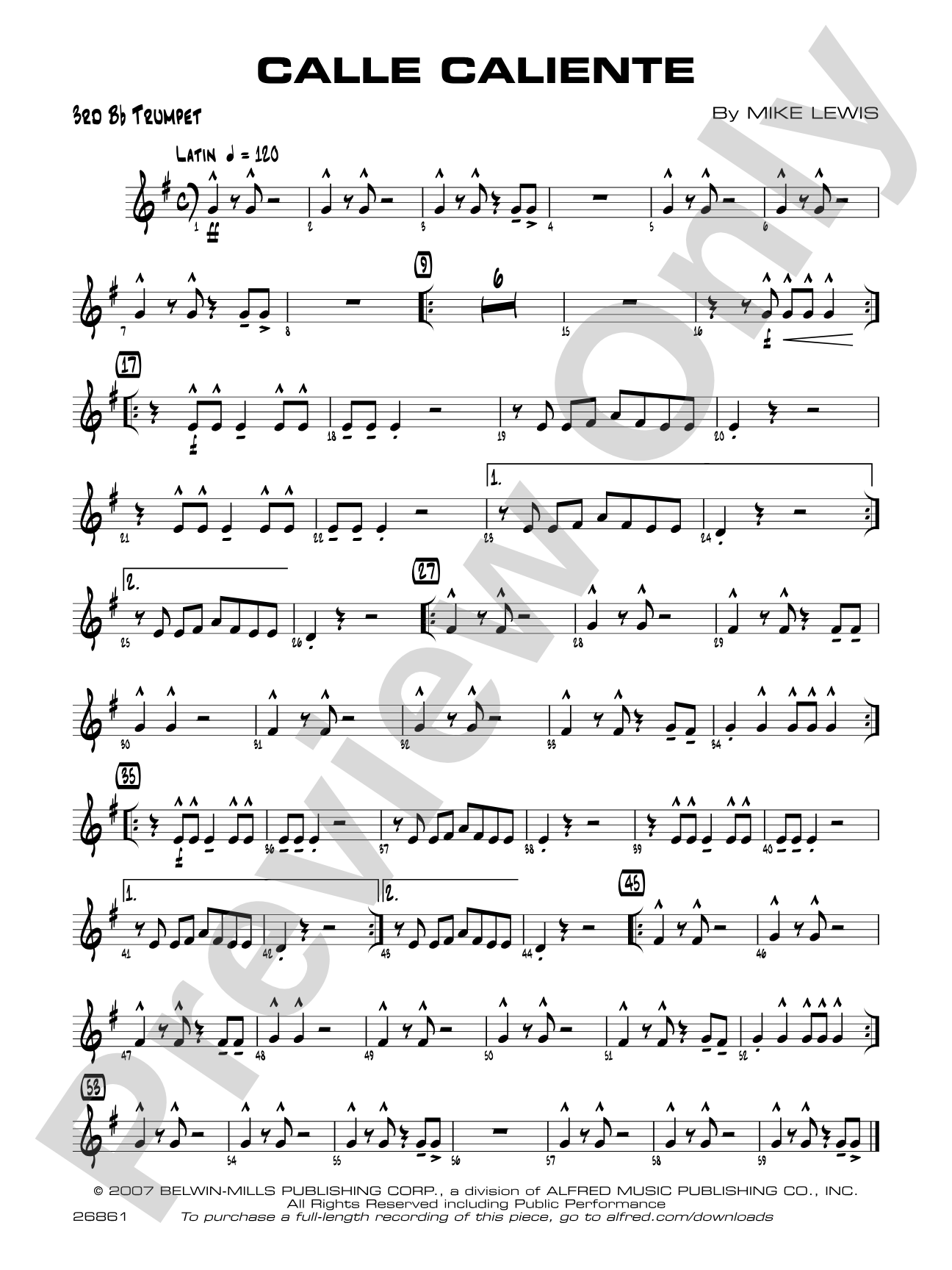
Calle Caliente: 3rd B-flat Trumpet

By Mike Lewis

Item: 00-PC-0014806_T3

Digital Download
$3.00
Description
Latin for the young player! Mike Lewis has scored this original with no solos, no high brass notes and simple rhythms throughout. The high note for 1st trumpet is written E top space. Plenty of ensemble and section playing, it's easy to rehearse and effective for any performance. This title is available in MakeMusic Cloud.

Don't just read it, hear it, play along with it, and watch your students grow with it. In MakeMusic Cloud, Calle Caliente: 3rd B-flat Trumpet comes alive with professional accompaniment, adjustable tempo, and built-in practice tools that turn solo practice into real progress.

Sample Audio
0:00
0:00
Sample Video
Additional Details
Series: First Year Charts for Jazz Ensemble
Publisher: Alfred Music
Page Count: 40
SKU: 00-PC-0014806_T3

More about this title

Why we love this

Mike Lewis understands what young jazz ensembles need to sound professional without getting buried in technical demands. By eliminating solos and keeping the highest trumpet note in a manageable range, he lets musicians focus on ensemble blend, rhythmic precision, and the infectious energy of Latin jazz rather than fighting their instruments.

What to expect

Calle Caliente burns with the rhythmic drive and sunny warmth of Latin jazz without requiring virtuosity. The writing feels transparent and conversational, with ensemble sections trading lines and supporting one another in a way that builds confidence and camaraderie.

Who it's for

Young jazz ensembles and developing programs looking for accessible Latin repertoire that doesn't compromise on sound or style. This works equally well for musicians in their first year of jazz band or for established groups seeking energetic opener or closer material.

How to get the most out of it

  • Lock in the rhythmic foundation by isolating the rhythm section (piano, bass, drums) first, then layer the horn parts section by section rather than full ensemble from the start.
  • Emphasize the Latin feel through consistent articulation in the ensemble parts; have players mark where they need to tongue lightly versus where they can let the line breathe.
  • Balance the voicing so no single section dominates; these ensemble-driven charts work best when the brass blend supports rather than overpowers the rhythm section.
  • Use the recorded accompaniment (available separately) to help the band internalize the groove before attempting to play live with piano and drums.

How to use it

Open a concert with this to establish immediate energy and engage the audience with infectious Latin grooves, or use it mid-program to shift mood and tempo. The straightforward demands make it ideal for early-season performance while the ensemble arrangement ensures a polished, unified sound.

Skills your students will build

  • Latin rhythmic phrasing and articulation in a jazz context
  • Ensemble balance and blend within horn sections
  • Reading and playing jazz comping and ensemble lines without solos
  • Responding to rhythm section cues and groove-based accompaniment
  • Reading simple jazz notation and stylistic interpretation

You May Also Like