
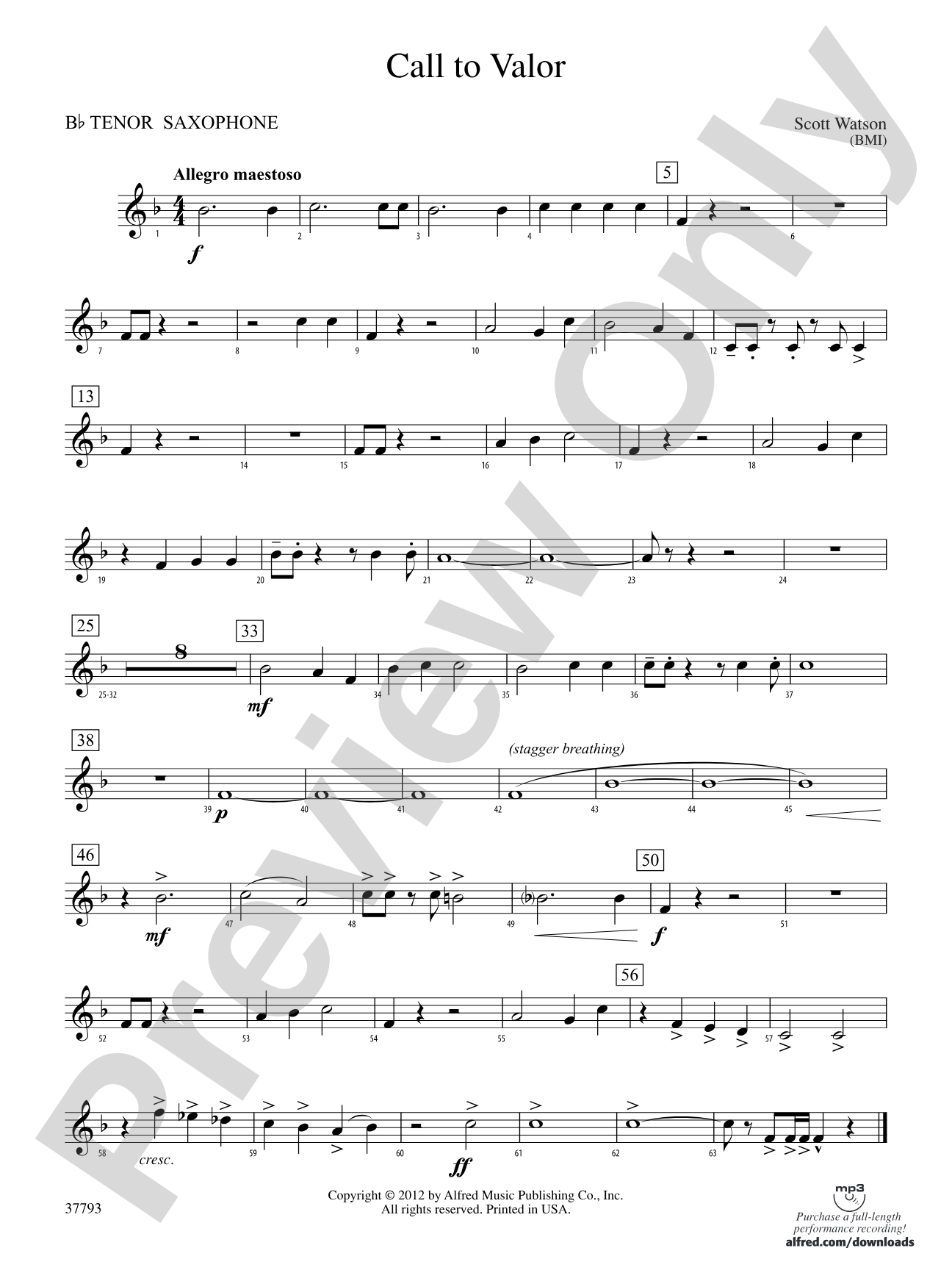

Call to Valor: B-flat Tenor Saxophone
By Scott Watson
Grade: 1.5 (Easy)
Item: 00-PC-0015324_TX1
$3.00
Pickup currently not available
Description
Valor is defined as "boldness or determination in facing great danger; heroic courage." "Call to Valor" musically evokes both the resolute strength and quiet courage required to face difficulties and the unknown. The piece begins with a brief, animated introduction followed by a bold fanfare theme. A quieter, contrasting section alternates bugle calls with field drum solos, but then builds to the return of the opening material. "Call to Valor" is the perfect fanfare opener or exciting closer for your next concert. This title is available in MakeMusic Cloud.


Don't just read it, hear it, play along with it, and watch your students grow with it. In MakeMusic Cloud, Call to Valor: B-flat Tenor Saxophone comes alive with professional accompaniment, adjustable tempo, and built-in practice tools that turn solo practice into real progress.
Open in the Player
Jump straight in and assign it today.
Start Your Free Trial
Open this title and explore the full library in minutes.
Sample Audio
1
Audio File
--:--
0:00
0:00
Sample Video
No sample videos found.
Additional Details
Series:
Challenger Band Series
Publisher:
Alfred Music
Page Count:
122
SKU:
00-PC-0015324_TX1
More about this title
About the Composer: Scott Watson

Scott Watson spent 35 years in the Parkland School District (Allentown, PA) building instrumental programs from the ground up, serving as high school Director of Bands and then leading the elementary band and strings curriculum across the entire district. Now Associate Professor of Music at Cairn University, he brings that classroom experience into every composition he writes. His more than 120 published works for concert band, string orchestra, and chamber ensembles reflect a composer equally versed in contemporary concert art music and the practical realities of school music programs.
Watson's music has reached audiences worldwide, from the White House to the Midwest Clinic to Philadelphia's Academy of Music. He serves as exclusive composer and clinician for Alfred Publications, leads frequent workshops and guest conducting residencies, and authored the influential text Using Technology to Unlock Musical Creativity (Oxford University Press, 2011). Learn more at scottwatsonmusic.com.
Why we love this
Watson captures something genuine about courage in this piece—not bombast, but the kind of resolute clarity a young band can actually communicate. The alternation between bold fanfare writing and the intimate contrast of bugle calls with field drum solos gives your ensemble both a moment to shine collectively and space for individual sections to contribute meaningfully. At Grade 1.5, it sits perfectly in that sweet spot where young musicians can handle real musical ideas without technical overwhelm.
What to expect
The opening bristles with energy—animated and purposeful, like a call to attention. Then the piece steps inward, trading bold statements for quieter dialogue between bugle calls and the percussion section, creating a moment of reflection and intimate presence. When the opening material returns, it lands differently; what felt urgent at first now feels earned, grounded in something real.
Who it's for
This works for concert bands at the Grade 1.5 level, particularly groups still building technical facility but ready for music with real emotional arc and structural clarity. It's ideal for young musicians encountering fanfare writing and contrasting section work for the first time, and for directors seeking a piece that teaches phrasing and balance without requiring advanced technique.
How to get the most out of it
- Balance the opening fanfare so it cuts through but doesn't overwhelm the ensemble; young brass players often lock onto the melody at the expense of considering overall weight and support from the inner voices.
- Let the quieter middle section breathe between the bugle call passages and field drum solos; resist the urge to rush through the contrasts.
- Shape the return to opening material as a true recapitulation, not a repeat. Your band should hear and feel the weight of recognizing familiar material in a new light after the journey of the middle section.
- Use the recorded accompaniment in MakeMusic Cloud to lock the ensemble's sense of forward motion during sectional rehearsals.
How to use it
Open a concert with this piece and your audience sits up immediately; the fanfare does genuine work. Equally effective as a powerful closer if you want to send your band and listeners out on a note of resilience and clarity. The contrasting middle section and manageable length make it a natural fit on programs pairing newer and more experienced works.
Skills your students will build
- Reading and playing fanfare idioms with appropriate attack and articulation
- Balancing sustained harmonic support underneath moving melodies
- Responding to contrasting dynamic and textural sections within a single form
- Listening across instrument families to maintain ensemble cohesion during dialogue passages