Call to Glory: B-flat Tenor Saxophone Sheet Music Preview

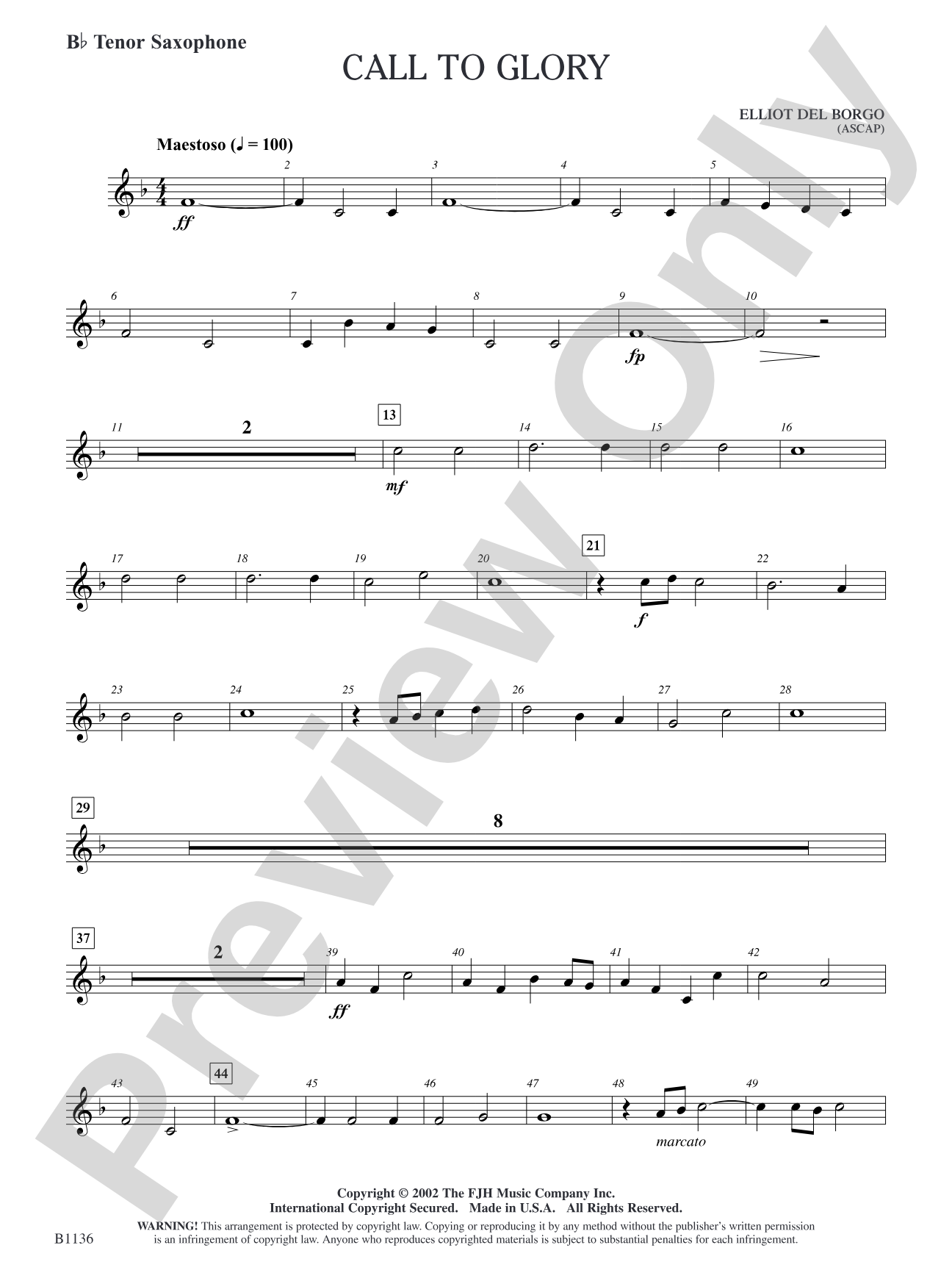
Call to Glory: B-flat Tenor Saxophone

By Elliot Del Borgo

Grade: 2

Item: 98-PC-DB1136_TX1

Digital Download
$7.00
Description
This extensive, processional-like piece is an easy grade 2 and will work nicely as either a contest warm-up or impressive concert finale. Most of the low brass and woodwinds are scored together and the second clarinet remains below the break. Eb is the highest pitch for trumpet. (3:50)

Call to Glory: B-flat Tenor Saxophone isn't in MakeMusic Cloud just yet...but it could be. Let us know you'd like to see it, and you'll help shape what comes next. In the meantime, start a free trial and dive into thousands of interactive titles your students can play along with today.

Sample Audio
0:00
0:00
Sample Video
Additional Details
Series: FJH Young Band
Publisher: The FJH Music Company, Inc.
SKU: 98-PC-DB1136_TX1

More about this title

About the Composer: Elliot Del Borgo

Elliot Del Borgo is a prolific composer and arranger whose catalog spans band, orchestra, and choral literature. His work has become a mainstay in music education, known for writing accessible yet musically substantial pieces that engage both young performers and audiences.

Why we love this

Del Borgo has crafted a piece that delivers genuine impact without demanding virtuosic technique. The processional character and strategic scoring of low brass and woodwinds together create a cohesive sound that reads easier than it sounds, making it an ideal choice when you need a strong closer that reflects well on your program.

What to expect

Call to Glory unfolds with ceremonial dignity and forward momentum. The writing generates warmth and resonance through its unified low voice and creates a sense of arrival and affirmation that resonates with audiences.

Who it's for

This piece works equally well for developing bands building confidence in concert performance and for more experienced ensembles needing a muscular opening or finale. Conductors appreciate its transparency and straightforward scoring, which allows rehearsal time to focus on musicality rather than technical problem-solving.

How to get the most out of it

  • Shape the processional pacing with slight flexibility in the conductor's beat; allow the piece to breathe rather than lock into metronomic time.
  • Balance the low brass and woodwind sections carefully since they carry the harmonic foundation together; ensure the trombones and tubas support without overwhelming the clarinet and saxophone voices.
  • Keep trumpet entries clean and secure, particularly given the strategic use of Eb as the ceiling; this restraint requires focus but prevents the top voice from piercing the texture.

How to use it

Program this as a concert finale to leave a lasting impression, or open your set with it to establish confidence and solid musicianship. It also serves as an excellent contest selection for bands seeking a piece that combines accessibility with presence and leaves judges with a positive final impression.

Skills your students will build

  • Balancing within a unified low register (brass and woodwind doubling)
  • Sustaining tone quality across phrase lengths
  • Following a conductor through rubato and processional pacing
  • Executing clean attacks and releases in an ensemble context

You May Also Like