Call of the Wilderness Sheet Music Preview

Call of the Wilderness: Piano

By Edwin McLean

Item: 98-DW9342

Digital Download
$2.95
Description
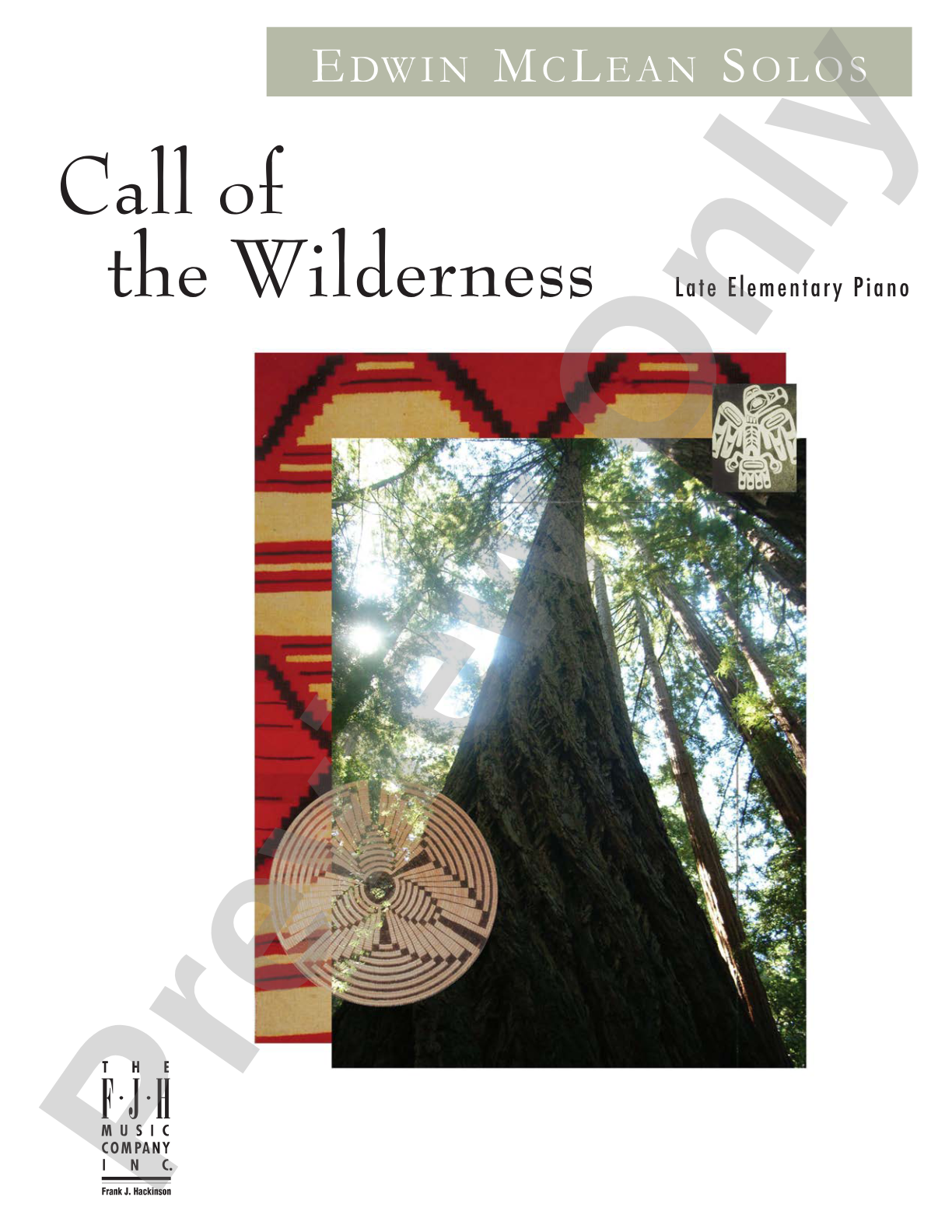
Built using simple pentascales and stepwise 5ths, this beautiful late elementary piece has a haunting sound that is reminiscent of a Native American flute. Skillful pedaling allows the melody to ring out as it floats from phrase to phrase. Sure to be a favorite with students!

Call of the Wilderness: Piano isn't in MakeMusic Cloud just yet...but it could be. Let us know you'd like to see it, and you'll help shape what comes next. In the meantime, start a free trial and dive into thousands of interactive titles your students can play along with today.

Sample Audio
No sample audio found.
Sample Video
Additional Details
Series: Written For You
Publisher: The FJH Music Company, Inc.
SKU: 98-DW9342

More about this title

Why we love this

This piece captures something genuinely atmospheric without relying on complex harmony or rapid passagework. The constraint of simple pentascales forces elegant compositional choices, and students respond to music that sounds mature but plays within their technical reach. Pedaling becomes a real compositional element here, not an afterthought.

What to expect

Contemplative and slightly mysterious, like standing in quiet wilderness at dusk. The melody drifts across open harmonic space, never rushing, inviting the listener into a reflective moment. The sustained pedal and gentle motion create a sense of timelessness.

Who it's for

Late elementary pianists ready for pieces that sound sophisticated and emotionally engaging. This works for students who have solid fundamentals in pentascale patterns and basic pedal technique, and who appreciate the challenge of making simple materials sing.

How to get the most out of it

  • Plan your pedal changes carefully during rests and phrase breaks so the texture stays clear. The haunting quality depends on sustain without muddiness.
  • Let the melody float by keeping the supporting material subordinate in volume. Think of the accompaniment as a backdrop for the primary voice.
  • Practice the hand independence between melody and accompaniment separately before combining them. The stepwise fifths provide a gentle harmonic base that should never overwhelm.
  • Work through the piece slowly to establish secure fingering and pedal coordination. Once these technical foundations are solid, the expressive quality emerges naturally.

How to use it

Program this as a recital opener to set a reflective mood, or pair it with more energetic pieces to showcase your student's range of expression. It works beautifully in spring or autumn recitals where mood programming feels natural.

Skills your students will build

  • Pedal control and timing
  • Sustaining melodic lines with appropriate voice leading
  • Playing within a restricted harmonic vocabulary (pentascales and stepwise fifths)
  • Hand independence between melody and accompaniment
  • Expressive phrasing at moderate tempos

You May Also Like