Call of the Meadowlark Sheet Music Preview

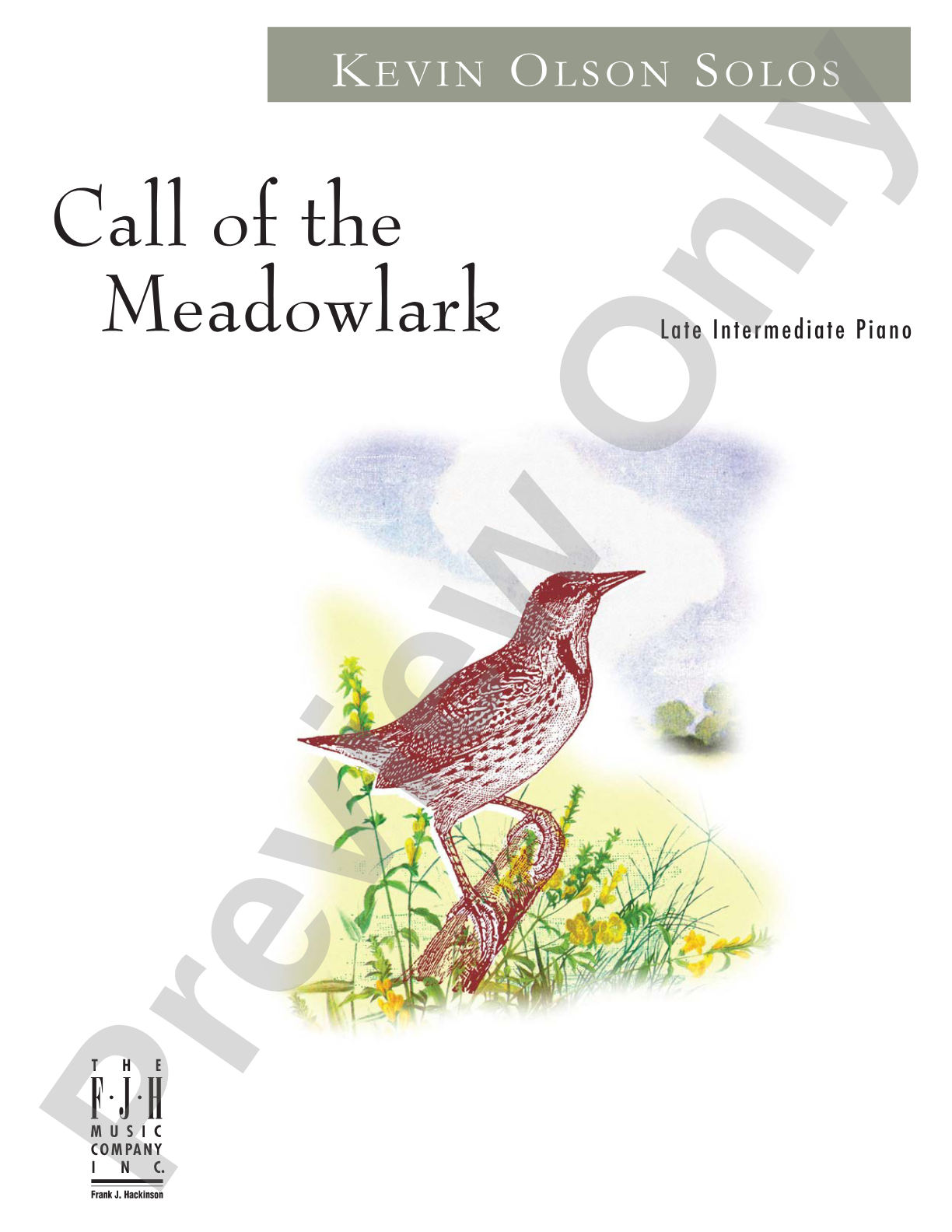
Call of the Meadowlark: Piano

By Kevin Olson

Item: 98-DW9263

Digital Download
$3.50
Description
An expressive melodic piece written in G minor with sections of arpeggios in contrary motion. Consists of a metric modulation from 4/4 to 3/4 and then back to 4/4 time. A great performance piece for the late intermediate student.

Call of the Meadowlark: Piano isn't in MakeMusic Cloud just yet...but it could be. Let us know you'd like to see it, and you'll help shape what comes next. In the meantime, start a free trial and dive into thousands of interactive titles your students can play along with today.

Sample Audio
No sample audio found.
Sample Video
Additional Details
Series: Written For You
Publisher: The FJH Music Company, Inc.
SKU: 98-DW9263

More about this title

Why we love this

Olson crafts a piece that gives late intermediate pianists meaningful work with metric modulation without overwhelming them. The contrary motion arpeggios provide excellent technical vocabulary, and the melodic line rewards expressive playing rather than merely fast fingers.

What to expect

The piece opens with expressive restraint in G minor, creating an intimate mood that feels more introspective than dramatic. As arpeggios in contrary motion develop, the texture thickens and the metric shift adds subtle tension, making the return to 4/4 feel like a resolution.

Who it's for

Late intermediate pianists ready to navigate metric modulation and hand independence work within a musically rewarding context. Students who can sustain a lyrical line while managing technical demands will find this piece both challenging and satisfying.

How to get the most out of it

  • Shape the melodic line with consistent voicing across the metric modulations; the shift from 4/4 to 3/4 can feel unsettling if the melody gets lost in the transition.
  • Practice the contrary motion arpeggios slowly enough to feel the independence of each hand, then build tempo gradually to maintain clarity rather than scrambling.
  • Honor the G minor tonality with warm, slightly darker tone quality; resist the urge to brighten the sound simply because you're building technical momentum.

How to use it

This works well as a recital opener or closing piece where you want to showcase a student's lyrical control and rhythmic sophistication without resorting to a showpiece. Pair it with contrasting repertoire in major keys to highlight the piece's minor tonality and expressive character.

Skills your students will build

  • Metric modulation between 4/4 and 3/4 time signatures
  • Contrary motion arpeggios with hand independence
  • Sustained melodic phrasing across metric changes
  • Tonal shaping and expressive control in minor keys

You May Also Like