

Calico Cat: 2-Part Choral Octavo
Words and music by Andy Beck
Item: 00-PO-0005977

$2.05
Minimum order quantity: 20 copies
Pickup currently not available
Related Items
Calico Cat: 2-Part Choral Octavo |
$2.05
|
View |
Description
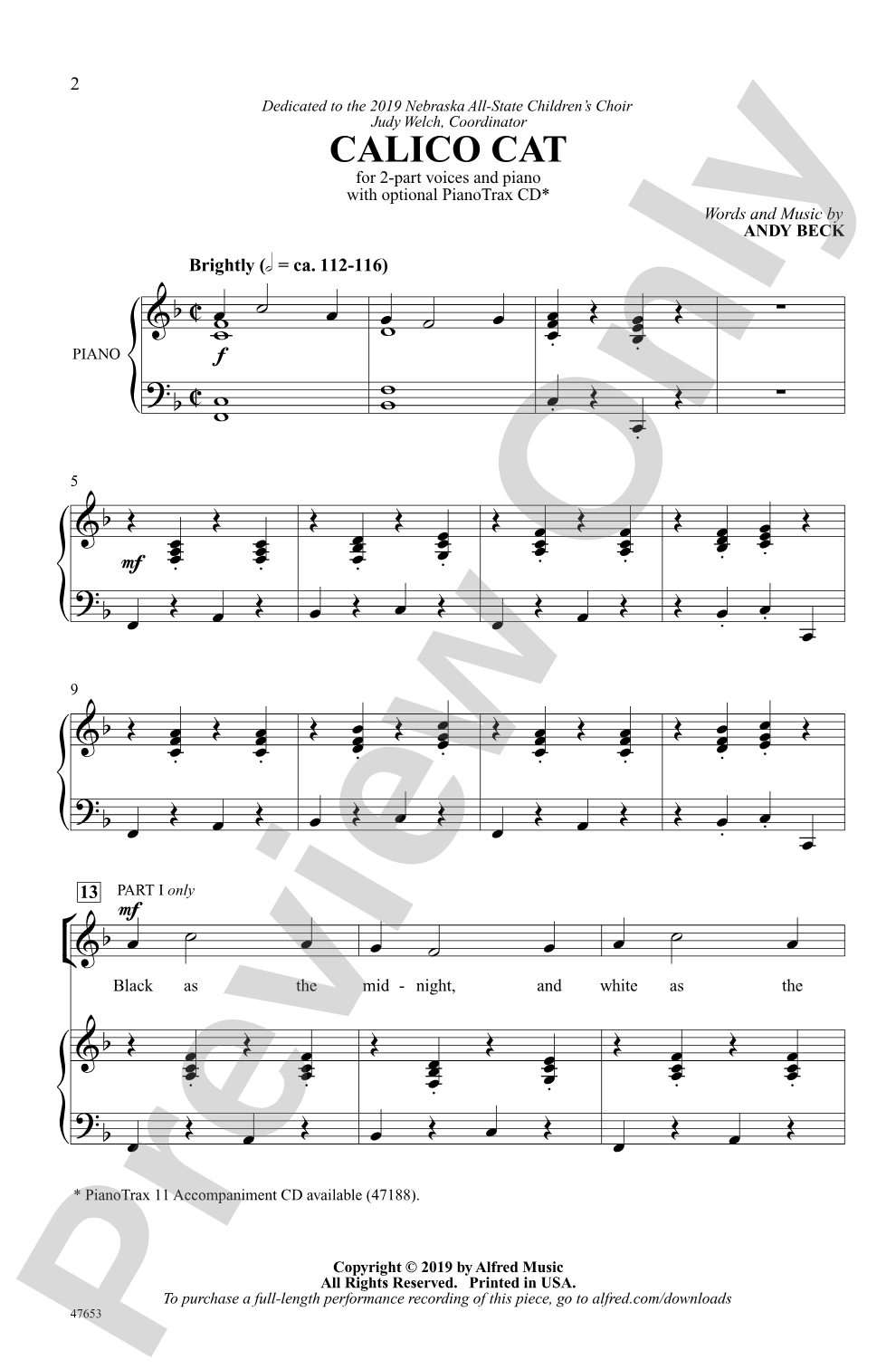
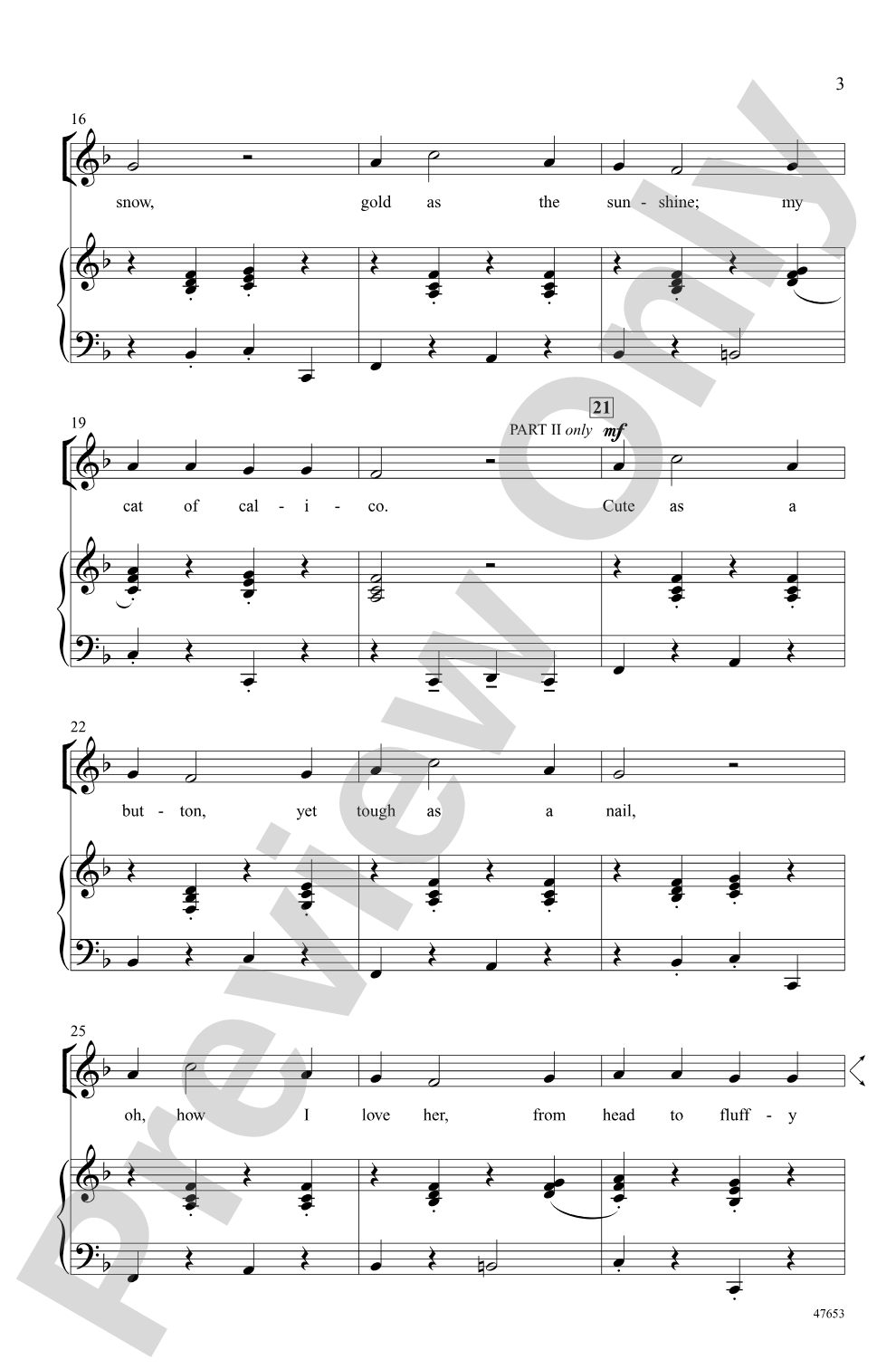
"Black as the midnight, and white as the snow; gold as the sunshine, my cat of calico." A bouncy and buoyant melody is supported by a folk-song-style piano accompaniment and some easy-to-sing harmonic patterns in this truly charming 2-part original by Andy Beck. Singers won't be able to get enough of the tongue-twisting patter text as they tell the tale of the whimsically colorful cat. Directors can take special pride in teaching the optional cue notes and accented descant that adds a fluffy coat near the end. This title is available in MakeMusic Cloud.


Don't just read it, hear it, play along with it, and watch your students grow with it. In MakeMusic Cloud, Calico Cat: 2-Part Choral Octavo comes alive with professional accompaniment, adjustable tempo, and built-in practice tools that turn solo practice into real progress.
Open in the Player
Jump straight in and assign it today.
Start Your Free Trial
Open this title and explore the full library in minutes.
Sample Audio
1
Audio File
--:--
0:00
0:00
Sample Video
Additional Details
Series:
Alfred Choral Designs
Publisher:
Alfred Music
Page Count:
12
SKU:
00-PO-0005977
More about this title
About the Composer: Andy Beck

Andy Beck directs choral publications at Alfred Music and has composed and arranged more than 450 works for singers of all ages, from children's musicals to advanced choral literature. His pedagogical resources, including Sing at First Sight and Vocalize! 45 Vocal Warm-Ups That Teach Technique, have shaped how choral directors approach sight-reading and vocal development across the country. Beck holds degrees in music education from Ithaca College and Northwest Missouri State University and regularly serves as a guest conductor and clinician for honor choirs, all-state ensembles, and music education conferences.
Beyond his work as a publisher and composer, Beck maintains an active performance career as a tenor, having sung as a studio artist for Alfred Music since 1992 and as a member of the North Carolina Master Chorale Chamber Choir. His work in musical theatre direction and his involvement as an adjudicator at state and regional festivals demonstrate a deep commitment to both choral artistry and music literacy in schools.
Why we love this
Beck crafts a melody that sits naturally in young voices while layering in genuine harmonic interest and a dash of theatrical flair. The optional descant and cue notes give your singers something to aspire to without demanding years of advanced training, and the patter text creates the kind of moment that audiences remember long after the concert ends.
What to expect
Bouncy and whimsical, with the rhythmic energy of a folk tale told around a campfire. The melody dances with a kind of mischievous warmth, while the piano accompaniment grounds everything in a timeless, storytelling quality that feels both comforting and genuinely delightful.
Who it's for
This works beautifully for developing choirs moving into 2-part harmony, as well as for experienced singers who need a confidence-building repertoire piece that doesn't sacrifice musical integrity. Directors seeking concert or festival material that engages both singers and audiences will find the combination of approachability and charm especially valuable.
How to get the most out of it
- Shape the phrasing around the text painting: let the melody breathe on color words ('black,' 'white,' 'gold') to highlight the imagery that makes this cat so visually appealing.
- Rehearse the tongue-twisting sections slowly and deliberately at first, then gradually increase tempo as diction clarity improves; this builds both confidence and precision.
- Balance Part 1 and Part 2 so the harmonic patterns serve as a foundation rather than overshadowing the main melody; the folk-song accompaniment style asks for transparent textures.
- If you include the optional descant, give those singers extra rehearsal time to hear how it weaves through the texture; mark entries clearly and have them shadow the main line before adding their part.
How to use it
Program this as a palate cleanser between weightier pieces, or use it to open a concert with immediate joy and accessibility. It pairs well with other animal-themed or narrative-driven repertoire and creates an ideal moment to showcase your singers' ability to handle text with character and precision.
Skills your students will build
- Singing sustained harmonic patterns within 2-part texture
- Articulating rapid patter text with clarity and rhythmic precision
- Responding to text imagery through phrasing and dynamic shape
- Reading optional cue notes and ornamental descant lines