
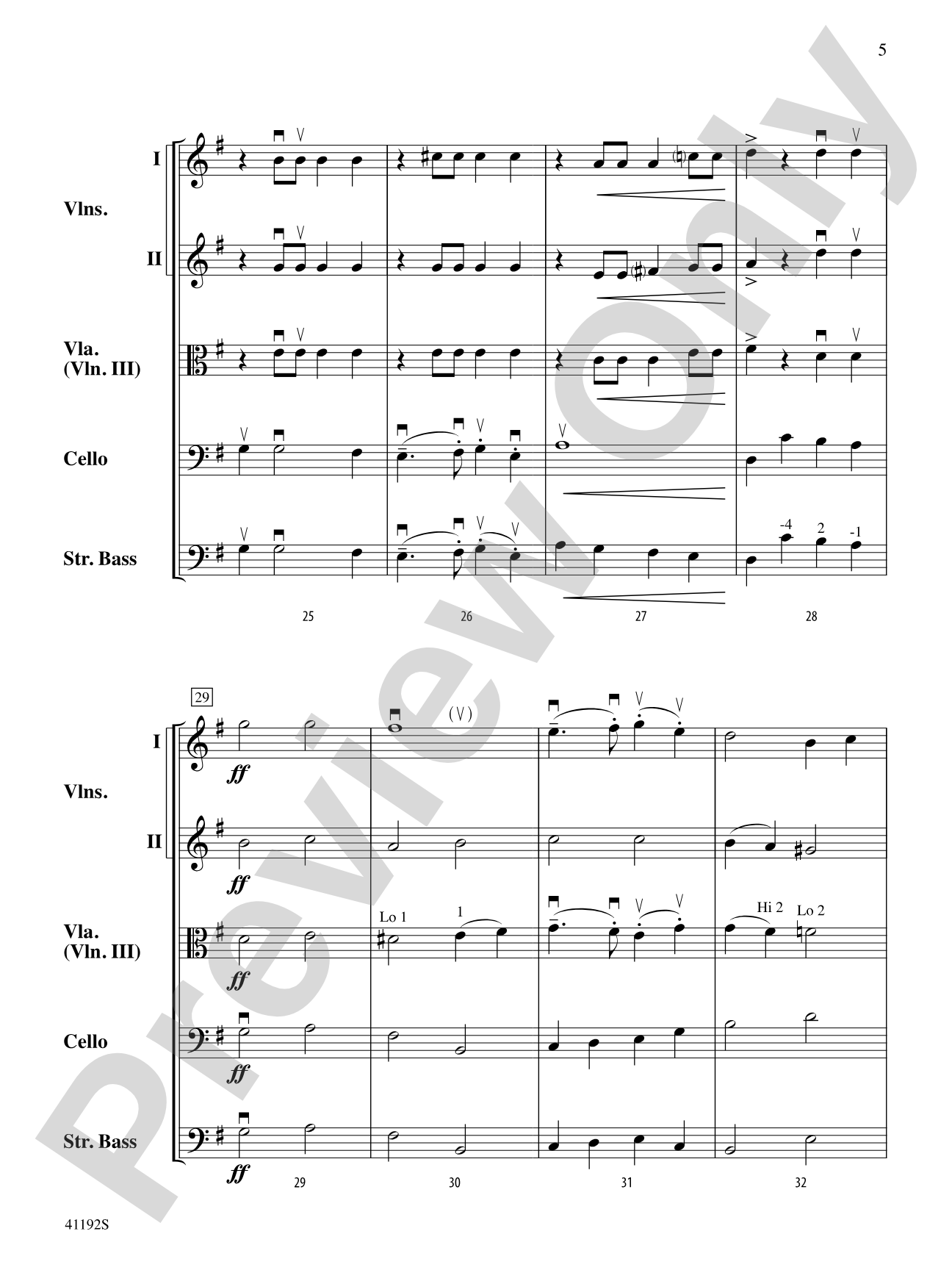
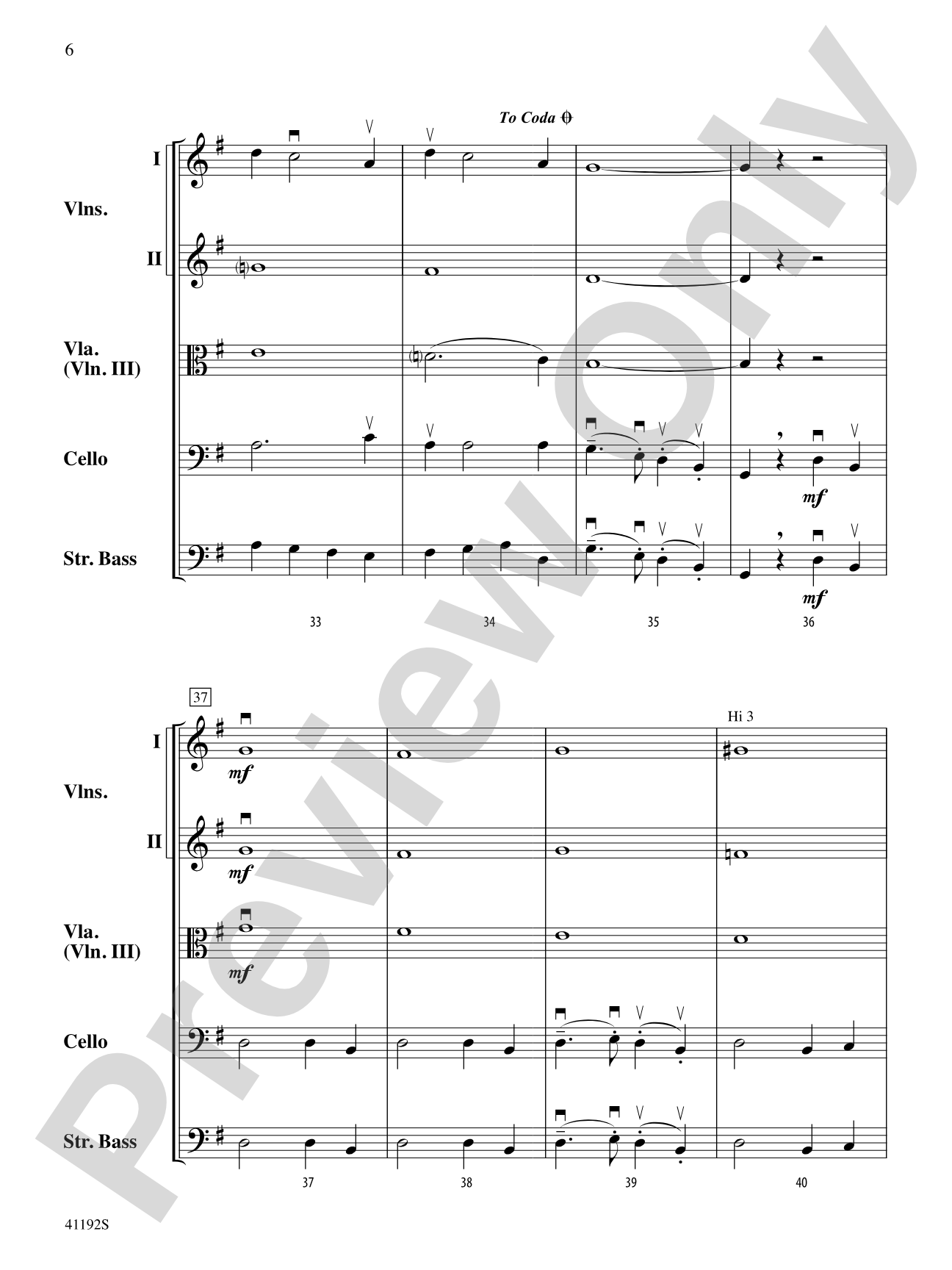
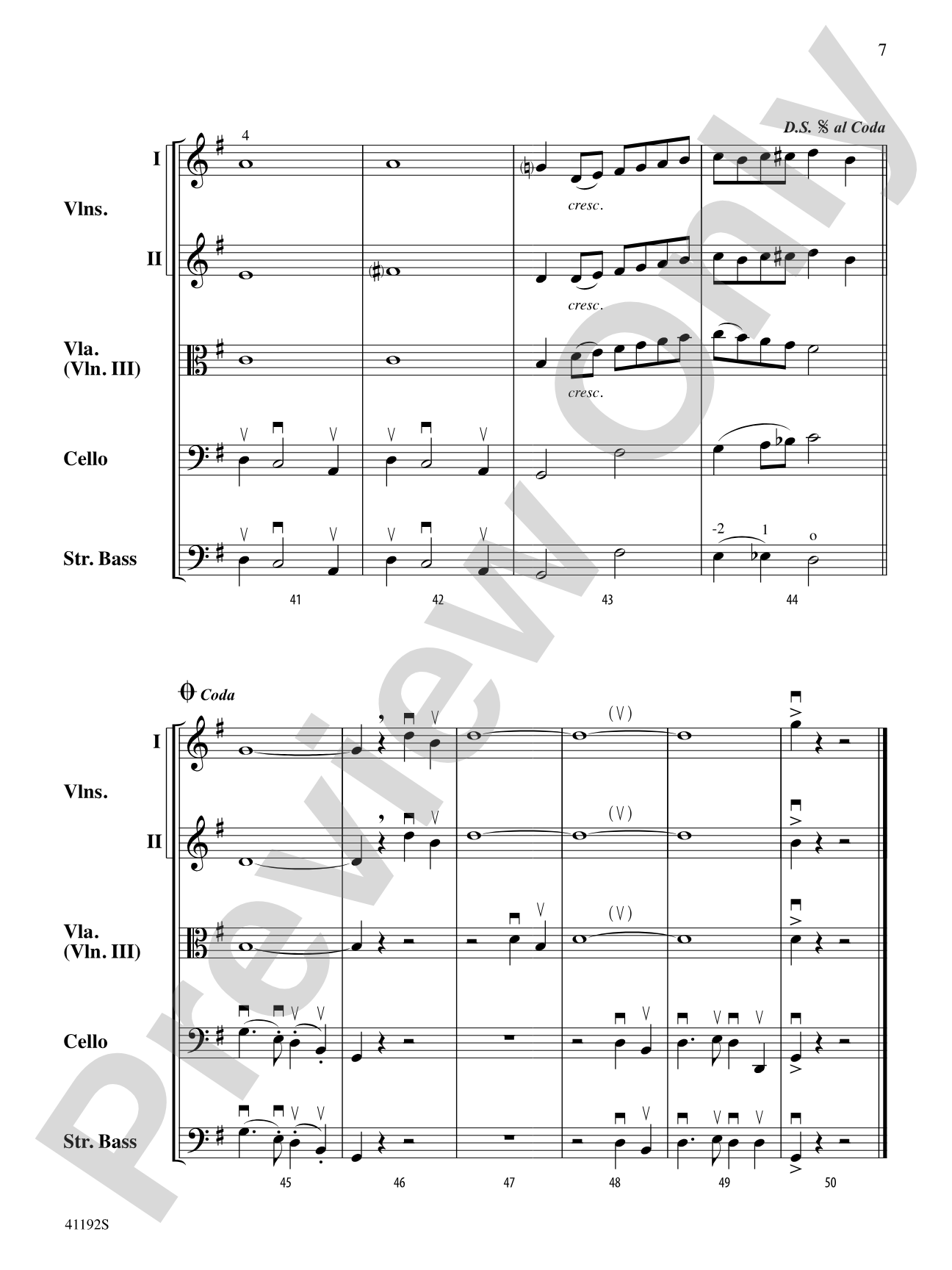

Caissons Go Rolling Along: String Orchestra Conductor Score & Parts
By Edmund L. Gruber / arr. Bob Cerulli
Grade: 1.5
Item: 00-PK-0006064

$46.00
Pickup currently not available
Buy Extra Parts (Digital PDF Download)
| Product | Price | Quantity |
|---|---|---|
| Caissons Go Rolling Along: Score | $6.00 | |
| Caissons Go Rolling Along: 1st Violin | $5.99 | |
| Caissons Go Rolling Along: 2nd Violin | $5.99 | |
| Caissons Go Rolling Along: 3rd Violin (Viola [TC]) | $5.99 | |
| Caissons Go Rolling Along: Viola | $5.99 | |
| Caissons Go Rolling Along: Cello | $5.99 | |
| Caissons Go Rolling Along: String Bass | $5.99 |
Parts Added to Cart!
Related Items
Caissons Go Rolling Along: String Orchestra Conductor Score |
$6.00
|
View |
Description
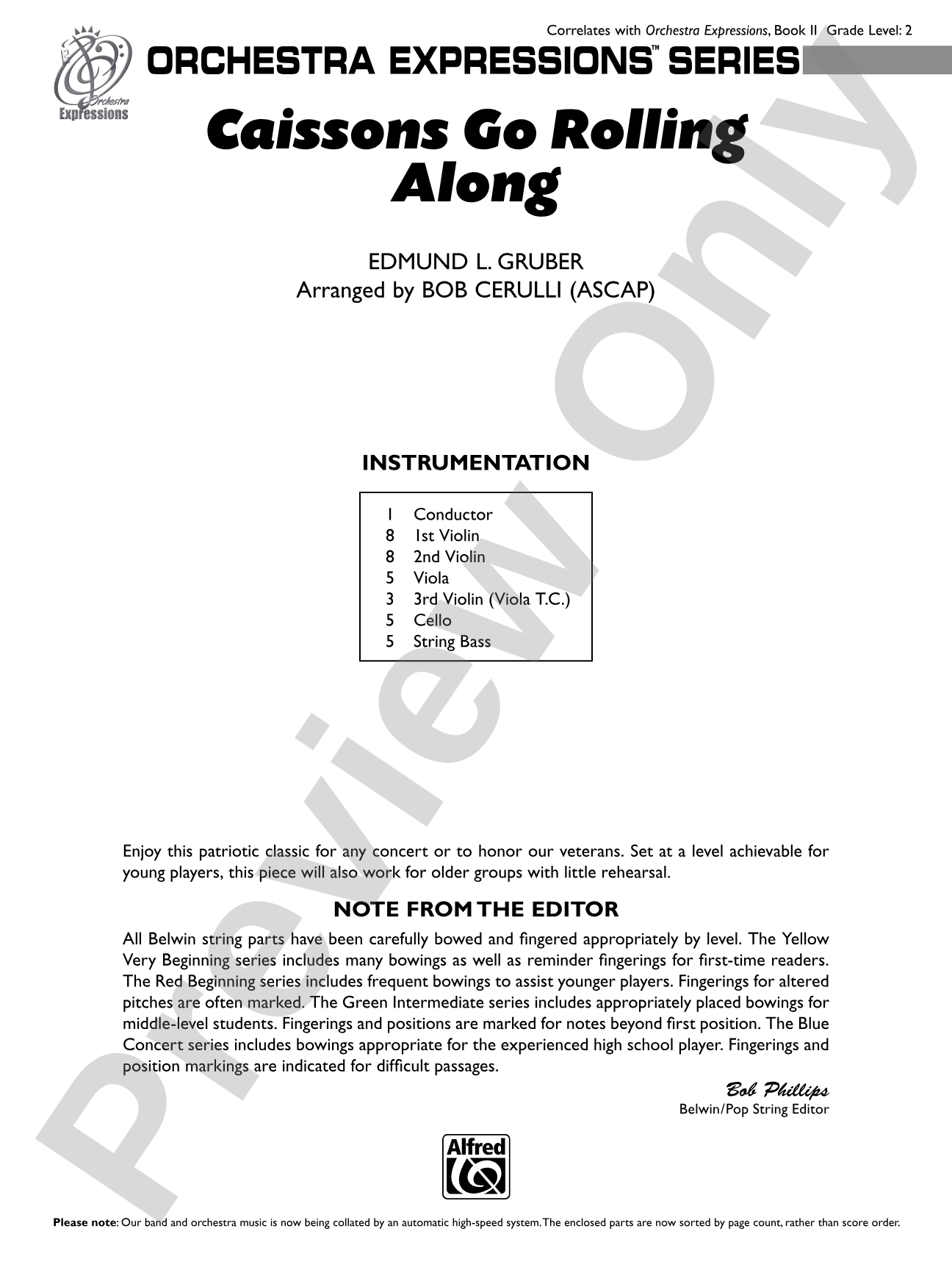
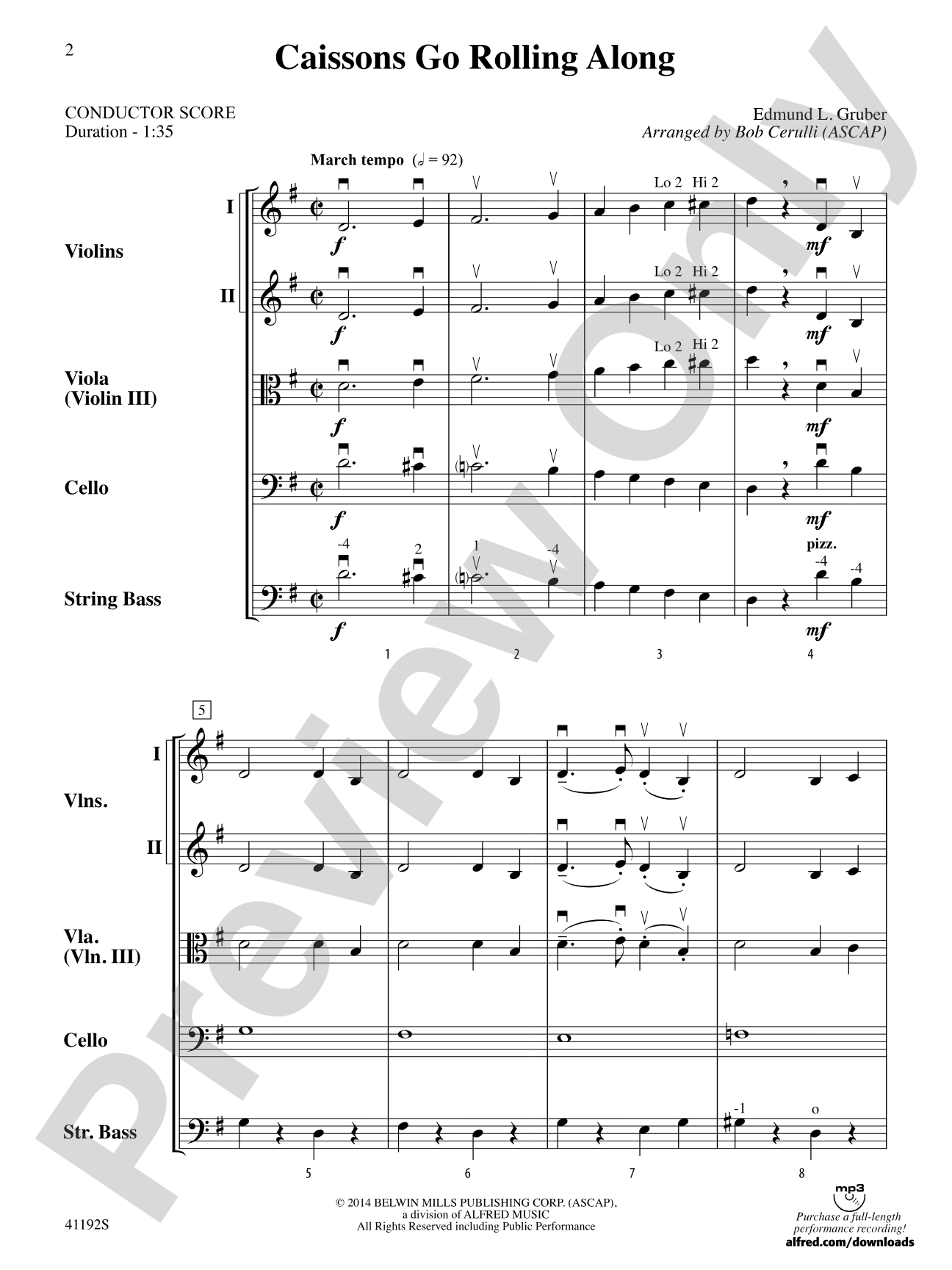
Enjoy this patriotic classic for any concert or to honor our veterans. Set at a level achievable for young players, this piece will also work for older groups with little rehearsal. (2:10)
Correlates to Orchestra Expressions Book 2. This title is available in MakeMusic Cloud.


Correlates to Orchestra Expressions Book 2. This title is available in MakeMusic Cloud.
Don't just read it, hear it, play along with it, and watch your students grow with it. In MakeMusic Cloud, Caissons Go Rolling Along: String Orchestra Conductor Score & Parts comes alive with professional accompaniment, adjustable tempo, and built-in practice tools that turn solo practice into real progress.
Open in the Player
Jump straight in and assign it today.
Start Your Free Trial
Open this title and explore the full library in minutes.
Sample Audio
1
Audio File
--:--
0:00
0:00
Sample Video
No sample videos found.
Additional Details
Series:
Orchestra Expressions
Publisher:
Alfred Music
Page Count:
68
SKU:
00-PK-0006064
More about this title
About the Composer: Edmund L. Gruber
Edmund L. Gruber composed "The Caissons Go Rolling Along" in 1908 while serving as a U.S. Army bandmaster. The march became the official song of the Field Artillery and has remained a staple of military ceremonies and patriotic celebrations for over a century. Gruber's gift for memorable melodies and straightforward harmonic language made his compositions accessible to military bands of varying skill levels, a quality that has allowed his work to endure in educational settings.
Why we love this
This arrangement captures the march's unmistakable energy and dignity while keeping the orchestration lean enough for developing string players to execute cleanly. Bob Cerulli's scoring respects the original character without oversimplifying, so young orchestras sound confident without needing advanced technical skills. It's a piece that builds morale in the rehearsal room and lands genuinely well in concert.
What to expect
Straightforward and proud, the march moves with steady purpose and uncomplicated joy. The melody is instantly recognizable and carries a sense of forward motion and dignity that feels uplifting without being overwrought.
Who it's for
Young string orchestras working at Grade 1.5 and above will find this well within reach, while more advanced groups can program it without additional rehearsal time. Directors seeking patriotic material for summer concerts, Independence Day celebrations, or veteran recognition events will find a piece that connects with audiences of all ages.
How to get the most out of it
- Shape the main melody with clear dynamic contours; the march works best when the tune feels purposeful rather than merely loud.
- Balance the march rhythm across the ensemble so the steady pulse drives forward without any section pulling back or rushing.
- Mark the key harmonic moments with slight emphasis to help the piece breathe and prevent it from feeling flat or mechanical.
How to use it
Slot this into a patriotic concert segment or use it to open a program that honors military service. Its brevity (2:10) and accessible difficulty make it ideal for a summer or outdoor concert where you want solid impact without demanding extensive rehearsal time.
Skills your students will build
- Reading straight rhythmic patterns in a march setting
- Maintaining steady tempo while executing dynamic shaping
- Balancing melody and accompaniment across string voices
- Playing with clarity and articulation at moderate to brisk tempos