

Cada Cosa: SATB Choral Octavo
Words by Laura Cavazos, music by Eddie Cavazos and Trevor Phillips
Item: 00-PO-0007528
$2.30
Minimum order quantity: 20 copies
Pickup currently not available
Description
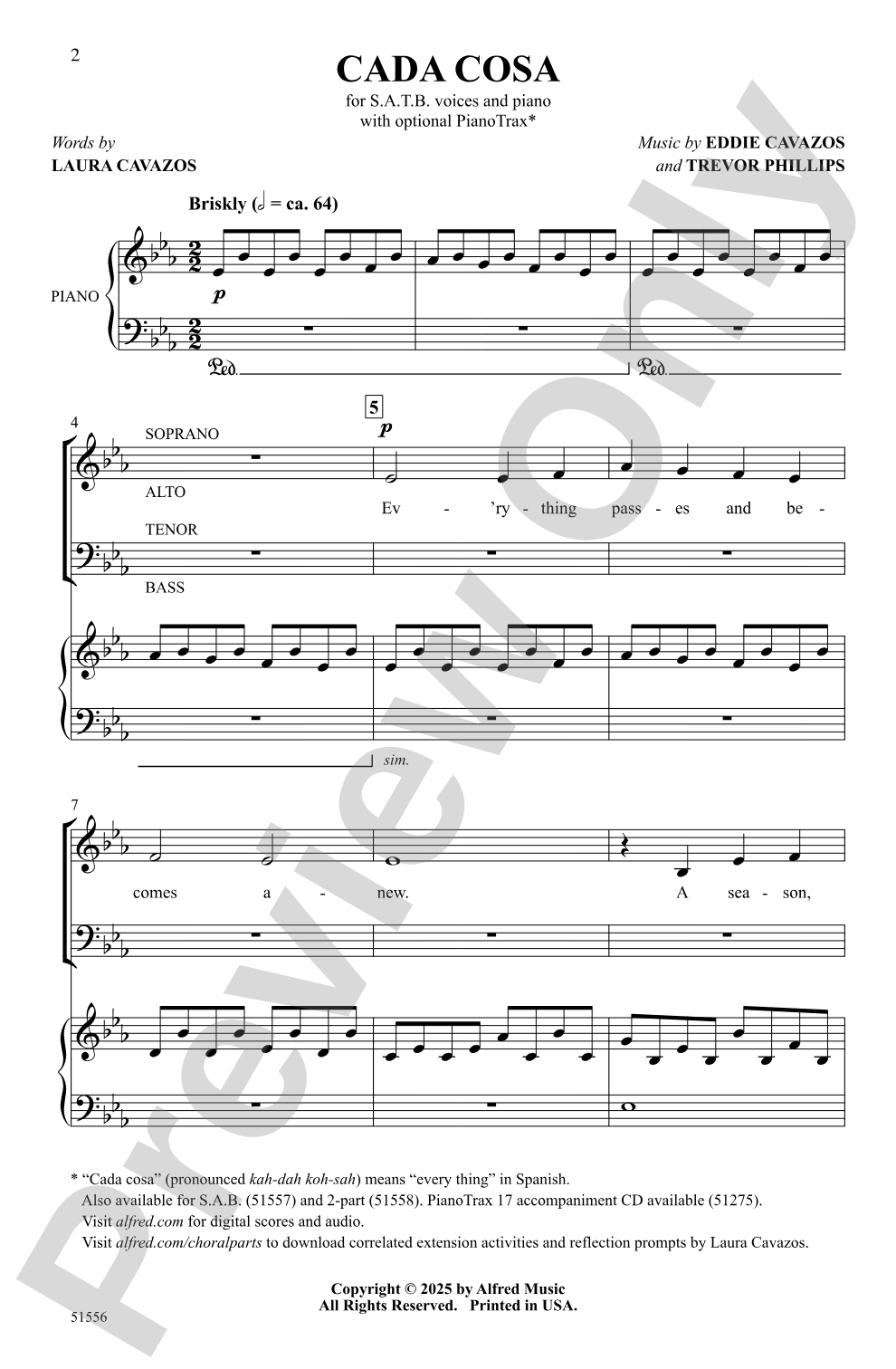
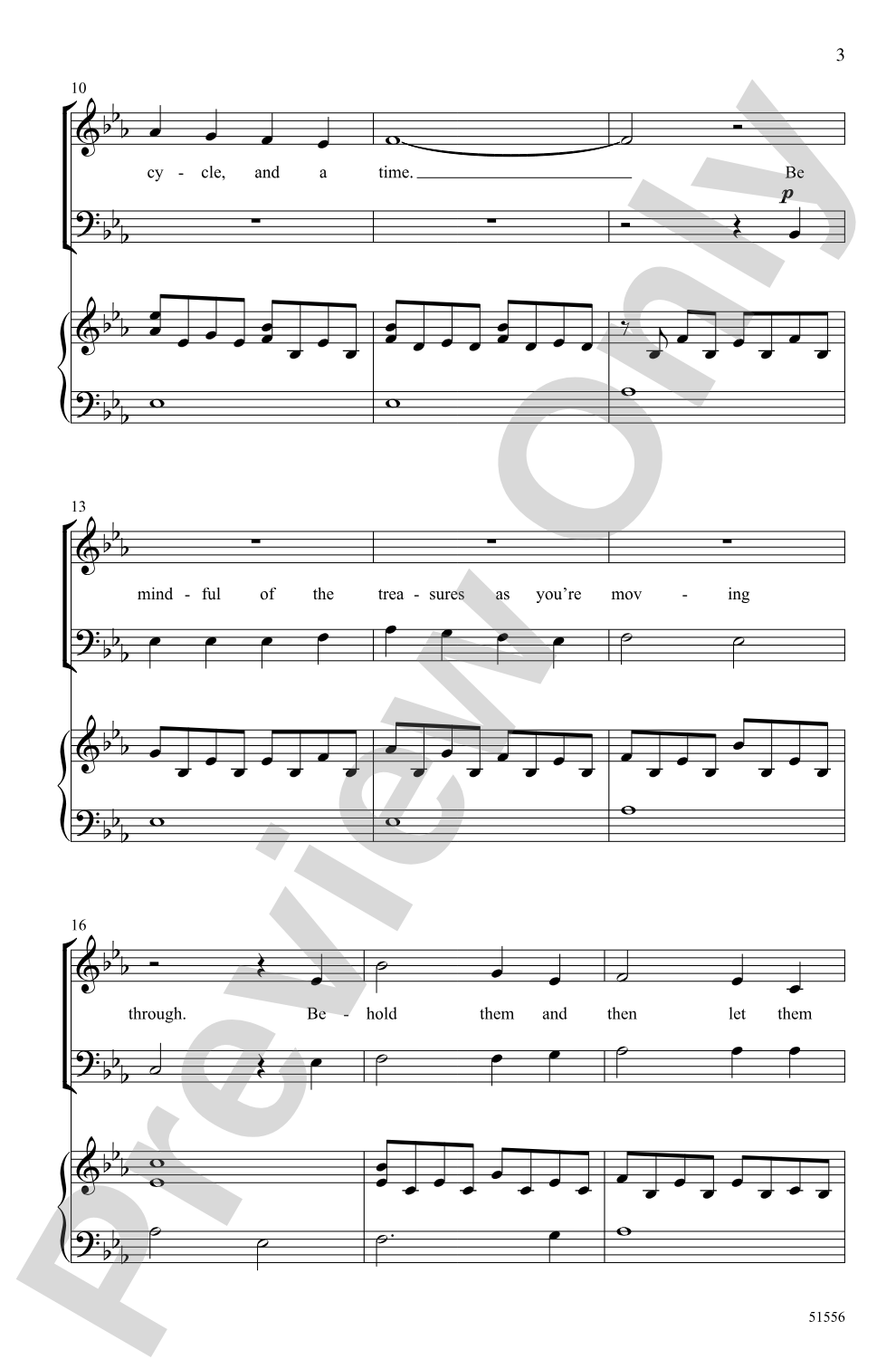
Using English text and the title phrase (which means "every thing" in Spanish), this breathtaking work tells us to have our "hearts wide open to receive" the unfolding of life. Legato choral phrases float effortlessly over a sparkling piano part, which always supports but never doubles the voices. Equally effective for choirs of all ages. Extension activities and reflection prompts by lyricist Laura Cavazos are available as a free download.


Cada Cosa: SATB Choral Octavo isn't in MakeMusic Cloud just yet...but it could be. Let us know you'd like to see it, and you'll help shape what comes next. In the meantime, start a free trial and dive into thousands of interactive titles your students can play along with today.
Request This Title
Tell us you want it.
Start Your Free Trial
Explore everything that's ready to play right now.
Sample Audio
1
Audio File
--:--
0:00
0:00
Sample Video
Additional Details
Series:
Alfred Choral Designs
Publisher:
Alfred Music
Page Count:
12
SKU:
00-PO-0007528
More about this title
About the Composer: Eddie Cavazos

Eddie Cavazos brings four decades of experience as a music minister and educator to his compositions, which span choral anthems, church settings, praise and worship music, and arrangements rooted in folk tradition. A three-time Teacher of the Year, he holds degrees in Music Education from The University of Texas at San Antonio and has shaped elementary music programs throughout his career. His works appear regularly in publications by Alfred Music, GIA, Hal Leonard, Walton Music, and others, sung by choirs and congregations worldwide.
Cavazos collaborates with his wife Laura, who contributes lyrics and educational resources to his projects. Together they live in San Antonio, surrounded by their four children and four grandchildren.
Why we love this
The piano part here operates with genuine sophistication, enriching the harmonic landscape without ever shadowing the choir's independence. Cavazos and Phillips crafted something that works equally well for high school and adult ensembles, neither talking down to younger singers nor demanding unnecessary virtuosity. The spiritual core of the text pairs perfectly with accessible, beautifully shaped legato writing.
What to expect
There's an openness to this piece that feels invitational rather than demanding. The choir's legato phrases seem to float on the piano's shimmering foundation, creating a sense of contemplation and gentle affirmation. The music reflects its text directly: an encouragement to move through life with receptivity and grace.
Who it's for
Any SATB choir seeking a contemporary work that speaks to universal human experience without requiring advanced technique. The piece works for concert settings, festival competitions, and worship contexts, making it valuable for school choirs, community ensembles, and church choirs alike.
How to get the most out of it
- Let the piano establish the piece's floating quality in the introduction; the choir's first phrase enters into that space rather than beginning the momentum.
- Shape each legato phrase as a complete breath unit, even across multiple measures. The sparkling accompaniment can tempt choral lines to shorten, but the lyrical intent asks for sustained line.
- Balance dynamics carefully between the sections; legato voicing requires restraint so that no part crowds the ensemble texture.
- Pair the recorded accompaniment with rehearsals to lock the floating quality early, then gradually pull back to conductor-only as the choir internalizes the harmonic support.
How to use it
Program this as a centerpiece for a contemporary choral concert or as a meaningful moment within a mixed repertoire set that explores themes of openness and growth. Its accessibility and spiritual sensibility also position it well for festival performances or as part of a spring concert celebrating reflection and renewal.
Skills your students will build
- Sustaining legato phrasing across longer melodic lines
- Balancing blend when the piano accompaniment is active and complex
- Following independent vocal lines that don't double the harmonic support
- Interpreting text-driven dynamics and expression in contemporary choral writing