Cabaret Sheet Music Preview

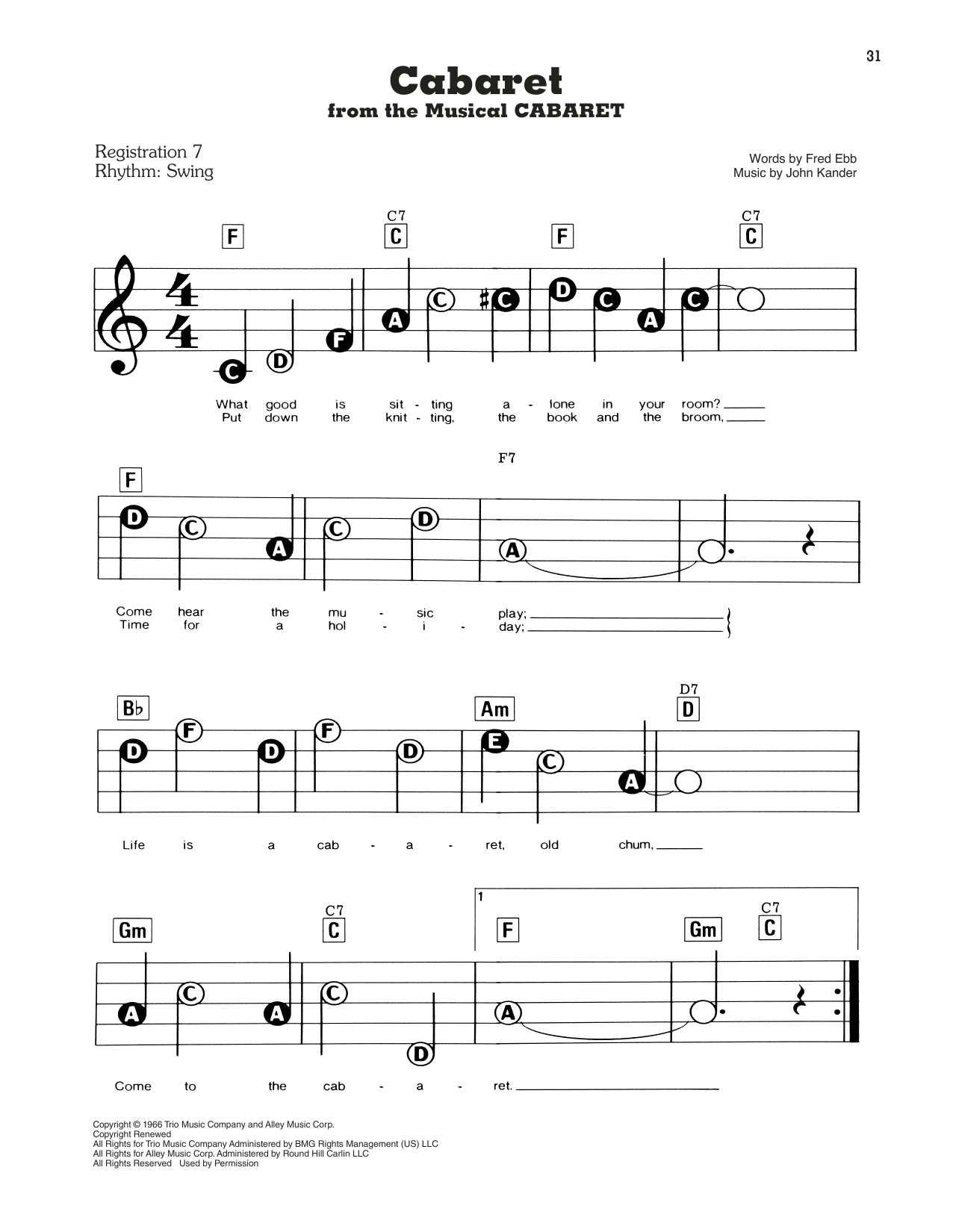
Cabaret: E-Z Play Today

As performed by Kander & Ebb

Item: 35-DS00447623

Digital Download
$4.99
Description

Cabaret: E-Z Play Today isn't in MakeMusic Cloud just yet...but it could be. Let us know you'd like to see it, and you'll help shape what comes next. In the meantime, start a free trial and dive into thousands of interactive titles your students can play along with today.

Sample Audio
No sample audio found.
Sample Video
Additional Details
Publisher: Hal Leonard
Page Count: 3
SKU: 35-DS00447623

More about this title

About the Artist: Kander & Ebb

John Kander and Fred Ebb formed one of Broadway's most distinctive compositional partnerships, creating scores that blend jazz idioms with theatrical storytelling. Their work on Cabaret revolutionized the musical theater form, using song as character development and social commentary rather than mere entertainment interlude.

Why we love this

Cabaret's songs have real theatrical meat on them. The melodies sit naturally under the hands, the harmonies feel conversational rather than decorative, and every number reveals character in ways that make pianists (and their audiences) understand why these songs endure on concert stages.

What to expect

Cabaret inhabits a world of theatrical sophistication and emotional directness. The music carries the weight of Weimar cabaret culture while remaining immediately expressive; even in simplified form, these songs carry their original character of world-weary glamour and human vulnerability.

Who it's for

This arrangement opens Cabaret's material to pianists developing their jazz vocabulary and musicality, particularly those preparing audition songs or exploring Broadway beyond traditional vocal standards. Teachers introducing students to post-1960s musical theater composition will find these transcriptions both accessible and artistically substantial.

How to get the most out of it

  • Let the rhythmic swing breathe naturally; these songs were written for a pit orchestra's forward motion, so avoid metronomic precision in the accompaniment figures.
  • Study the original production recordings to hear how Kander voiced these arrangements for solo piano, which often simplifies the orchestration without losing dramatic impact.
  • Balance lyrical clarity with the jazz inflections embedded in the harmonies; the E-Z Play reduction should still hint at the sophisticated chord colors Kander favored.

How to use it

Pair this with study of the musical's cultural and historical context to deepen students' understanding of how composers use song to build dramatic narrative. The three-page length makes it ideal for recital programming or as a teaching example when discussing how theater music differs from concert repertoire.

Skills your students will build

  • Interpreting jazz harmonies and swing rhythms in a notated score
  • Managing rubato and rhythmic flexibility within popular song form
  • Balancing accompaniment texture with vocal line support
  • Understanding how theatrical context shapes musical interpretation

You May Also Like