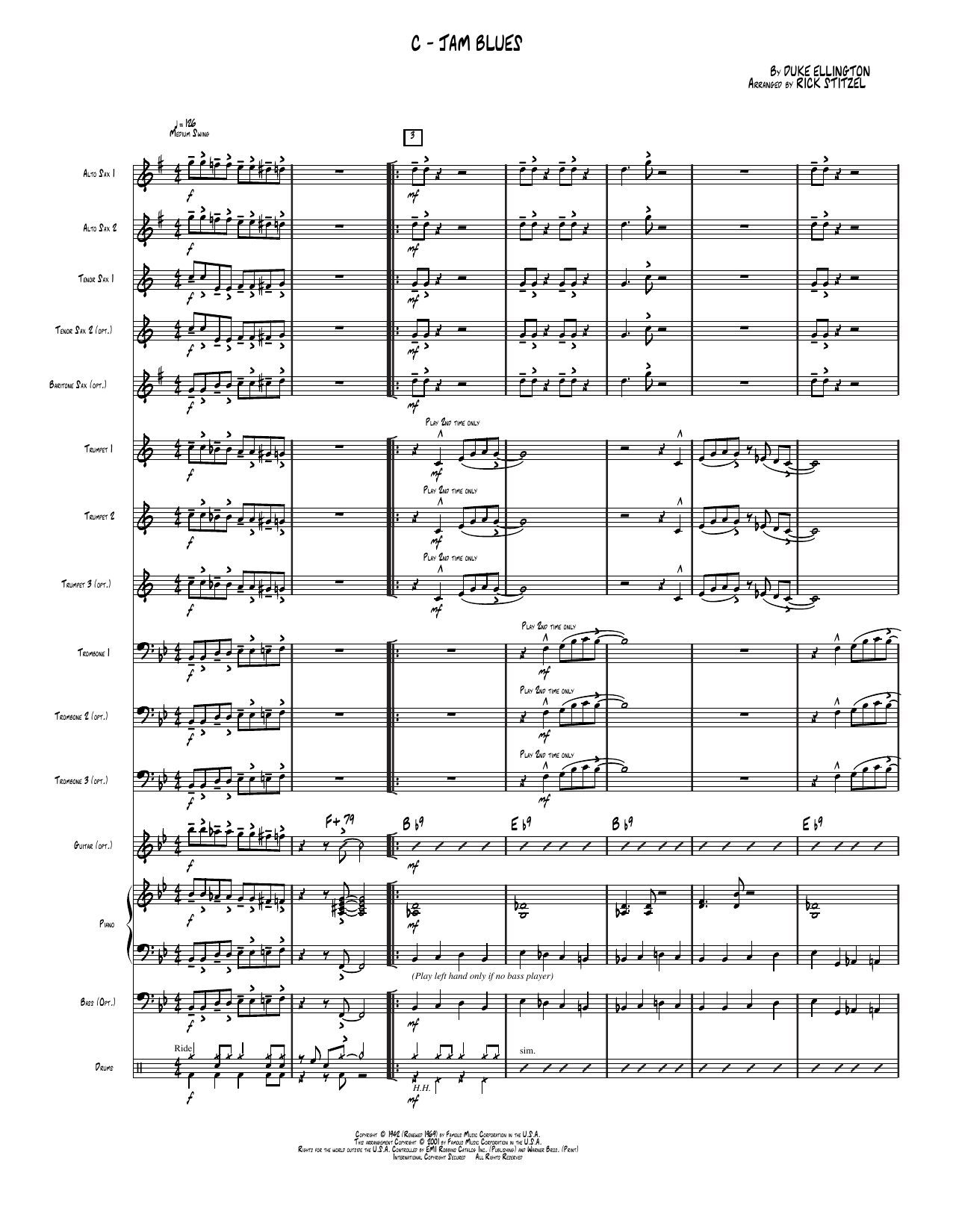
Duke Ellington stands as one of the twentieth century's most prolific and innovative composers, creating a body of work that transcends jazz into the realm of American classical music. His approach to orchestration revolutionized what large ensembles could achieve, layering colors and textures with unprecedented sophistication while maintaining the swing and immediacy that defines jazz.
Why we love this
C-Jam Blues hits that rare sweet spot where accessibility and authenticity coexist. Rick Stitzel's Grade 1 arrangement preserves Ellington's harmonic intelligence and blues sensibility without sacrificing the straightforward structures young players need to build confidence and musicality simultaneously.
What to expect
Straightforward and soulful, like stepping into a smoky room where the band knows exactly where it's going and invites you along. The blues changes feel inevitable and familiar even on a first listen, yet Ellington's voice keeps the arrangement from ever sounding generic.
Who it's for
Young jazz ensembles discovering how blues changes work in an orchestral setting, or directors seeking repertoire that teaches authentic jazz vocabulary without overwhelming inexperienced players. The Grade 1 level makes this ideal for middle school jazz bands and first-year high school programs.
How to get the most out of it
Lock the ensemble into a relaxed, medium swing feel; pushing tempo here undermines the groove and makes intonation suffer across the section.
Balance the melody against the comping voices. The blues tradition thrives on conversational interplay, not soloists shouting over accompaniment.
Listen carefully to recorded versions by Ellington's orchestra to absorb the tonal character and phrasing; the written notes are only half the story.
How to use it
Open a jazz concert with this piece to establish the ensemble's command of swing and blues fundamentals before moving into more complex material. It also works beautifully as a teaching piece mid-season when you want to reinforce rhythmic precision and section balance without introducing new harmonic concepts.
Skills your students will build
Playing authentic blues changes and responding to harmonic movement
Sustaining a consistent swing feel across an ensemble
Balancing melody with comping parts in a jazz context
Reading and interpreting jazz articulation and phrasing marks
Listening and responding to other voices while playing your own part
You May Also Like
Scan to Complete Your Purchase
Use your phone's camera to scan the code below
You'll log in on your phone and the order will be added to your account