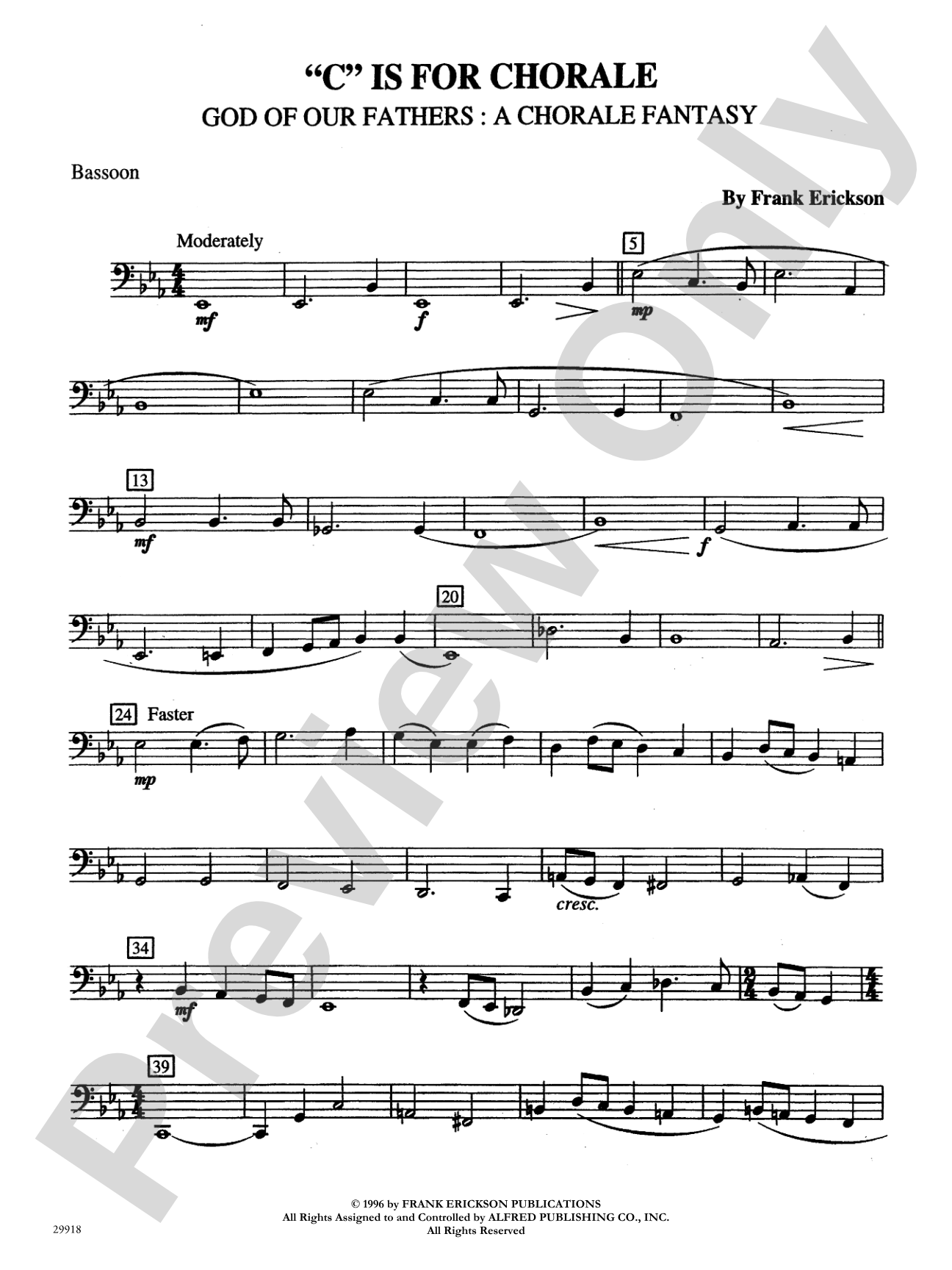
"C" Is for Chorale (God of Our Fathers: A Chorale Fantasy): Bassoon Sheet Music Preview

"C" Is for Chorale (God of Our Fathers: A Chorale Fantasy): Bassoon

By Frank Erickson

Grade: 3 (Medium Easy)

Item: 00-PC-0001641_B1

Digital Download
$3.00
Description
The Choral Fantasy varies from the Choral Prelude in that it is much freer in form and style. This number opens with a variation of the fanfare that has been traditionally inserted as an introduction and interlude between stanzas. The chorale is then presented in a traditional harmonization by the full band. The second section is in a faster tempo, and is based on statements of the opening motive of the hymn presented in fugal style.

Don't just read it, hear it, play along with it, and watch your students grow with it. In MakeMusic Cloud, "C" Is for Chorale (God of Our Fathers: A Chorale Fantasy): Bassoon comes alive with professional accompaniment, adjustable tempo, and built-in practice tools that turn solo practice into real progress.

Sample Audio
No sample audio found.
Sample Video
Additional Details
Series: Frank Erickson Publications
Publisher: Alfred Music
Page Count: 268
SKU: 00-PC-0001641_B1

More about this title

About the Composer: Frank Erickson

Frank Erickson (1923-1996) composed and arranged extensively for school and community bands, establishing himself as one of the most prolific and widely performed band composers of the mid-twentieth century. His catalog spans overtures, marches, fantasies, and transcriptions that remain core repertoire in concert band programs across North America, valued for their musical substance and accessibility to developing ensembles.

Why we love this

Erickson's gift for transformation shines here: he takes a familiar hymn tune and unlocks its potential through two distinct musical landscapes—a stately, traditional chorale statement followed by a energetic fugal treatment that keeps players engaged and audiences listening closely. The piece balances structural clarity with harmonic interest, making it rewarding for bands that are ready to move beyond basic textures but still developing their ensemble blend.

What to expect

The piece opens with ceremonial brightness before settling into the quiet reverence of a hymn sung by the full band in four-part harmony. Energy builds as the music shifts tempo, transforming the familiar hymn melody into overlapping fragments that weave through the ensemble like a conversation among different sections, creating momentum without losing the spiritual foundation.

Who it's for

Concert bands at the Grade 3 level who are developing control over full-ensemble balance and beginning to tackle contrapuntal textures. Conductors seeking sacred repertoire that avoids cliché arranging while remaining musically and technically accessible will find a strong option here.

How to get the most out of it

  • Shape the opening fanfare variation with clear articulation and consistent dynamic control across all sections; this introductory gesture sets the character for the entire work.
  • Bring out the chorale melody in the full-band statement by ensuring supporting voices sit back slightly, allowing the harmonic integrity to support rather than compete with the tune.
  • In the fugal section, establish a steady tempo before the faster material begins; clarity of individual voices will emerge more readily when the foundation remains metrically secure.
  • Balance the fugal statements across different instrumental choirs so that the opening motive builds in weight and visibility as it accumulates through the texture.

How to use it

Program this as the centerpiece of a sacred or patriotic concert section, where it can stand alone or pair with shorter chorale arrangements. Its moderate length and Grade 3 accessibility make it ideal for mid-year concert programming, once your band has developed ensemble cohesion but before tackling the most demanding Grade 4 literature.

Skills your students will build

  • Balancing melody against harmonic support in four-part textures
  • Executing clean entrances in fugal-style passages
  • Controlling dynamics across a full ensemble to support phrasing
  • Maintaining steady tempo while managing stylistic contrasts between sections
  • Recognizing and responding to the same thematic material in different instrumental contexts

You May Also Like