
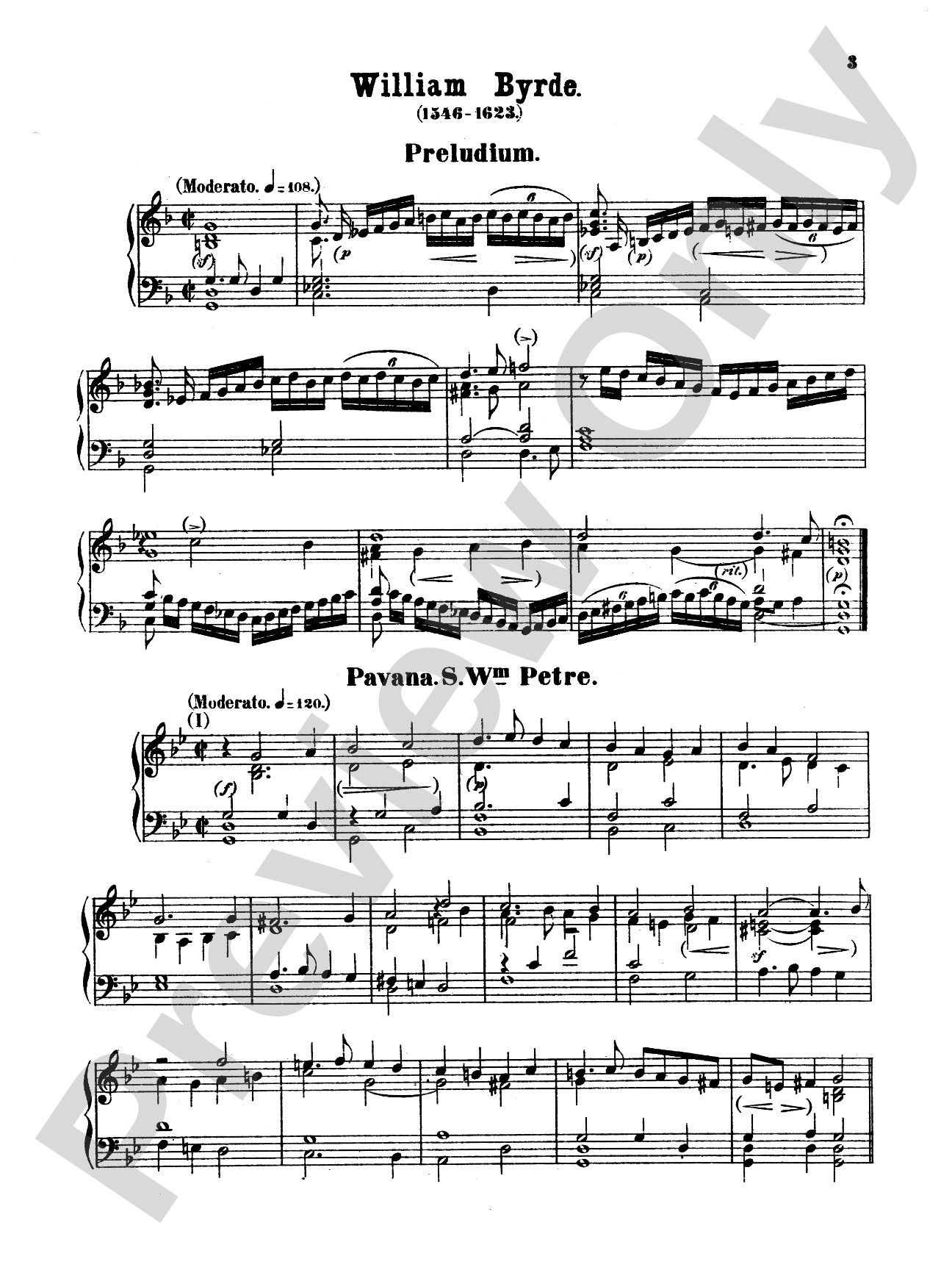

Byrd: Compositions: Piano Book
By William Byrd
Item: 00-PK-0002986

$7.99
Pickup currently not available
Buy Extra Parts (Digital PDF Download)
| Product | Price | Quantity |
|---|---|---|
| Byrd: Compositions | $0.99 | |
| Byrd: Compositions | $0.99 | |
| Byrd: Compositions | $0.99 | |
| Byrd: Compositions | $0.99 | |
| Byrd: Compositions | $0.99 | |
| Byrd: Compositions | $0.99 | |
| Byrd: Compositions | $0.99 | |
| Byrd: Compositions | $0.99 | |
| Byrd: Compositions | $0.99 | |
| Byrd: Compositions | $0.99 |
Parts Added to Cart!
Related Items
Compositions: Piano Book |
$7.95
|
View |
Description
William Byrde (1540--1623), an English composer of the Renaissance era, wrote various types of sacred and secular polyphony, keyboard, and consort music. This collection contains several of Byrde's popular works for keyboard. 24 pages.


Don't just read it, hear it, play along with it, and watch your students grow with it. In MakeMusic Cloud, Byrd: Compositions: Piano Book comes alive with professional accompaniment, adjustable tempo, and built-in practice tools that turn solo practice into real progress.
Open in the Player
Jump straight in and assign it today.
Start Your Free Trial
Open this title and explore the full library in minutes.
Sample Audio
No sample audio found.
Sample Video
No sample videos found.
Additional Details
Series:
Kalmus Edition
Publisher:
Alfred Music
Page Count:
24
SKU:
00-PK-0002986
More about this title
About the Composer: William Byrd
William Byrd (1540, 1623) stands as one of the Renaissance's most prolific and versatile composers. His output spans sacred motets, secular madrigals, consort music, and keyboard works, all marked by sophisticated counterpoint and emotional depth. As a Catholic working under Protestant rule in England, Byrd composed music for both the Latin liturgy and the English church, navigating religious and political complexity through his art.
For keyboard players and music students, Byrd's instrumental works represent a crucial bridge between early polyphonic traditions and the emerging keyboard idiom. His pieces demand clarity of voice leading and sensitivity to harmonic rhythm, making them invaluable for developing Renaissance performance practice and understanding how counterpoint translates to the keyboard.
Why we love this
Byrd's keyboard works balance historical authenticity with genuine musical interest in a way that engages students rather than simply checking a "Renaissance repertoire" box. The pieces in this collection showcase the harmonic and contrapuntal richness of late Renaissance keyboard writing while remaining performable without requiring specialized historical knowledge or technique.
What to expect
These pieces exude quiet formality and intellectual clarity. Byrd's keyboard writing moves with purpose and restraint, favoring elegant contrapuntal unfolding over emotional intensity. There's a meditative quality to much of this music, a sense of careful construction that rewards close listening and thoughtful playing.
Who it's for
This collection serves intermediate to advanced pianists studying Renaissance keyboard literature, as well as musicians exploring pre-baroque compositional techniques. Students preparing portfolios that include historical repertoire or those interested in how keyboard writing evolved will find substantial material here.
How to get the most out of it
- Attend carefully to the harmonic rhythm. Renaissance keyboard music often moves in long note values that can feel static if the underlying harmonic progression isn't clearly voiced. Shape phrases by following where the harmony naturally resolves.
- Ornamentation in Byrd's writing is structural, not decorative. Even simple passages benefit from subtle articulation and separation that clarify the independence of individual lines.
- Balance independence with connection when managing multiple voices. The contrapuntal lines should breathe as separate musical entities while remaining bound by the overall phrase structure.
- Let the keyboard layout inform your touch. These pieces were written for instruments with different action and damping characteristics than modern pianos. A lighter, more detached approach often suits the music better than romantic-era legato.
How to use it
Program individual pieces from this collection as recital fillers between larger modern works, or build a complete concert or lecture-recital around Renaissance keyboard masters. These works pair naturally with contemporary consort music or with Byrd's vocal music when exploring his broader compositional legacy.
Skills your students will build
- Voice independence and contrapuntal clarity in keyboard writing
- Harmonic analysis and progression in Renaissance tonality
- Ornamentation style appropriate to the Renaissance period
- Articulation and touch that accommodate both keyboard layout and historical context
- Phrase shaping across longer note values