Byrd: 21 Pieces for the Organ (The Byrd Organ Book) Sheet Music Preview

Byrd: 21 Pieces for the Organ (The Byrd Organ Book)

By William Byrd

Item: 00-PC-0011657

Digital Download
$0.99
Description
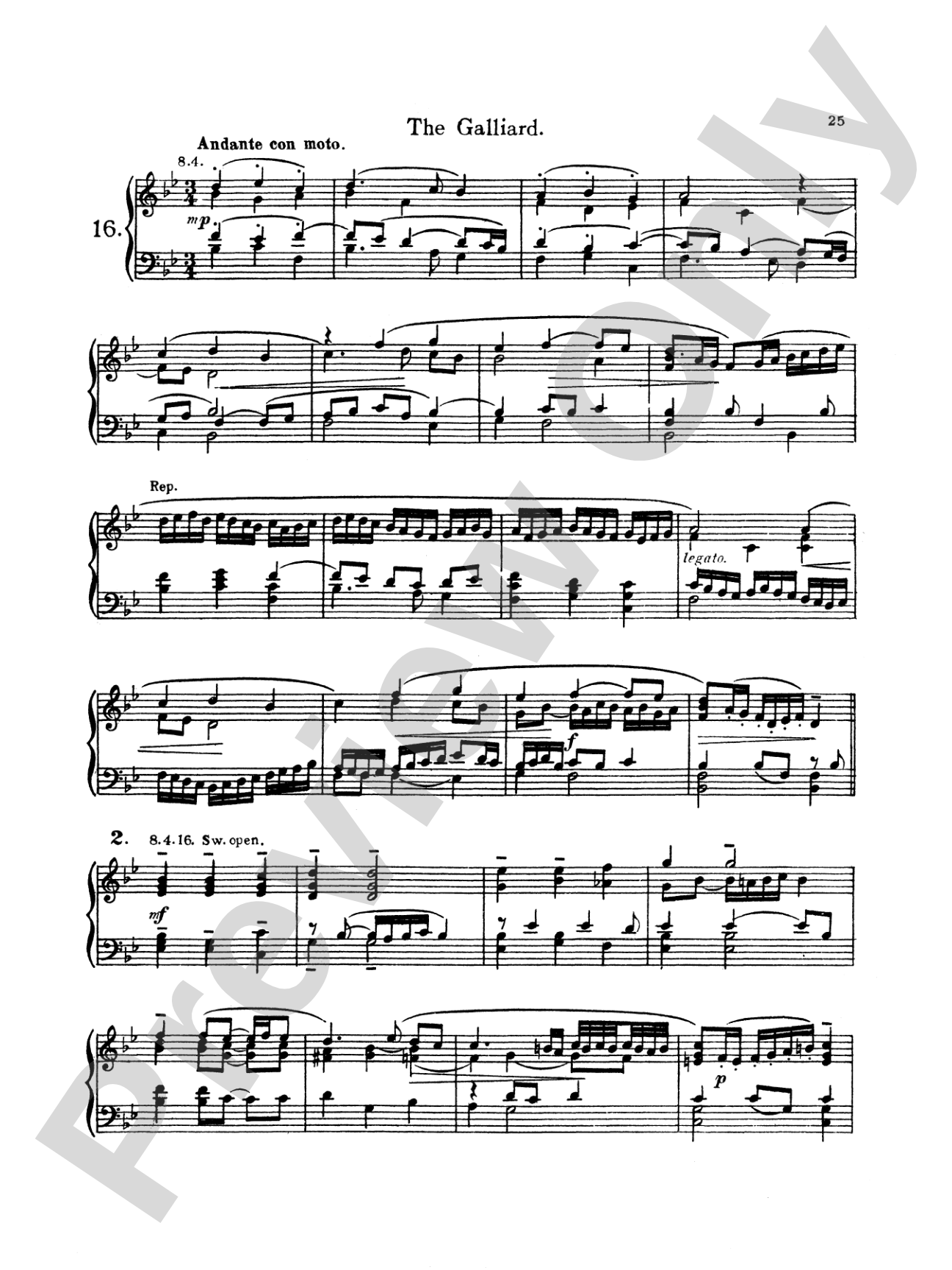
A collection of organ solos expertly composed by William Byrd.

Don't just read it, hear it, play along with it, and watch your students grow with it. In MakeMusic Cloud, Byrd: 21 Pieces for the Organ (The Byrd Organ Book) comes alive with professional accompaniment, adjustable tempo, and built-in practice tools that turn solo practice into real progress.

Sample Audio
No sample audio found.
Sample Video
Additional Details
Series: Kalmus Edition
Publisher: Alfred Music
Page Count: 44
SKU: 00-PC-0011657

More about this title

About the Composer: William Byrd

William Byrd (1540-1623) was England's greatest Renaissance composer and one of the most prolific keyboard composers of his era. A master of counterpoint and liturgical music, Byrd wrote extensively for the organ and virginals, leaving a body of sacred and secular keyboard works that defined English Renaissance keyboard style. His organ music balances technical sophistication with spiritual depth, combining intricate contrapuntal writing with memorable melodic lines that remain central to the organ repertoire today.

Why we love this

Byrd's organ pieces offer organists repertoire of genuine artistic substance without requiring virtuosic pyrotechnics. The collection spans shorter character pieces and more ambitious works, making it invaluable for recital programming, church services, and student recitals where Renaissance authenticity and musical integrity matter.

What to expect

Byrd's organ music embodies the clarity and spiritual restraint of Renaissance sacred writing, yet with moments of unexpected harmonic richness and melodic grace. Each piece invites the performer into an intricate contrapuntal conversation, where voices interweave with logic and purpose, creating music that feels both intellectually rigorous and deeply expressive.

Who it's for

This collection serves organists preparing recital programs, church musicians needing substantial Renaissance repertoire for liturgical use, and students studying keyboard music history and Renaissance counterpoint. The range of difficulty across 21 pieces makes it accessible for organists at intermediate to advanced levels seeking genuine masterworks rather than simplified arrangements.

How to get the most out of it

  • Attend carefully to the counterpoint in each voice; Byrd's inner voices often carry thematic material, not just harmonic padding.
  • Use period-appropriate registrations when available, keeping the texture transparent and allowing individual lines to emerge clearly.
  • Shape phrases according to Renaissance harmonic rhythm rather than Romantic-era rubato; the music's architecture supports a steadier structural pulse.
  • Balance the organ's natural sustain against Byrd's often rapid harmonic movement by considering selective use of the sustain pedal rather than holding it continuously.

How to use it

Shorter pieces work effectively as voluntaries or service music in church programming, while the more substantial works anchor organ recitals alongside later Baroque composers. The collection's stylistic consistency and historical importance make it ideal for programming entire Byrd recitals or creating thematic concerts exploring Renaissance keyboard music.

Skills your students will build

  • Renaissance counterpoint and voice leading
  • Reading and interpreting figured bass and Renaissance notation
  • Registration choices for historically informed performance
  • Maintaining clear articulation across polyphonic textures
  • Understanding harmonic rhythm and phrasing in Renaissance keyboard writing

You May Also Like