
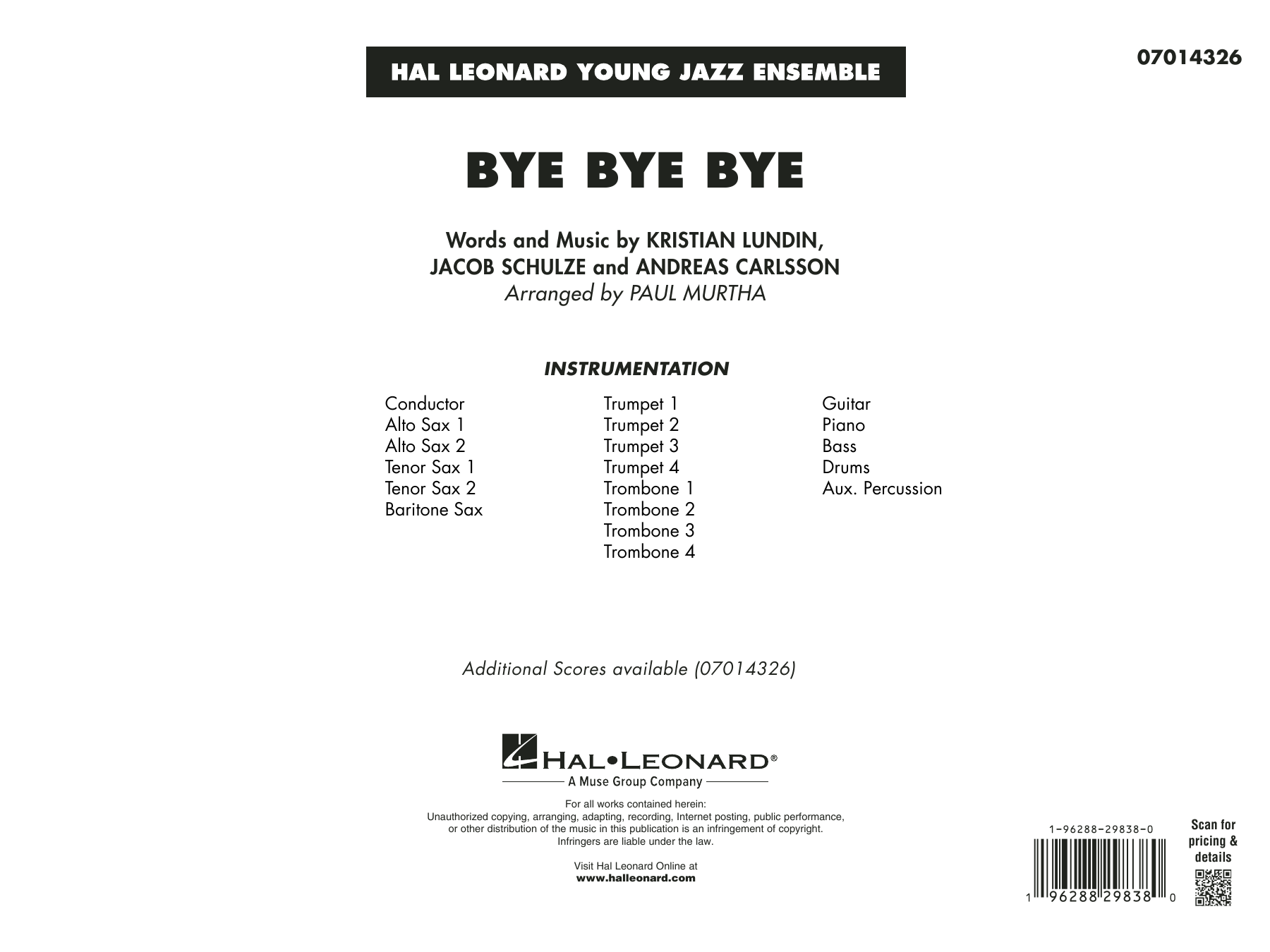

Bye Bye Bye (arr. Paul Murtha): Jazz Ensemble Conductor Score & Parts
As performed by *NSYNC / Arranged by Paul Murtha
Grade: 3
Item: 35-PK01585697
$50.00
Pickup currently not available
Buy Extra Parts (Digital PDF Download)
Parts Added to Cart!
Description
This brilliant arrangement of the signature hit from the iconic boy band *NSYNC is the perfect change of pace at your next concert. The rhythm section lays down the irresistable dance groove while the melody is perfectly scored for all of the sections kicking off with a trombone solo and also a brief feature for the trumpet in the bridge. Lead trumpet plays A, lead trombone plays F#.


Bye Bye Bye (arr. Paul Murtha): Jazz Ensemble Conductor Score & Parts isn't in MakeMusic Cloud just yet...but it could be. Let us know you'd like to see it, and you'll help shape what comes next. In the meantime, start a free trial and dive into thousands of interactive titles your students can play along with today.
Request This Title
Tell us you want it.
Start Your Free Trial
Explore everything that's ready to play right now.
Sample Audio
No sample audio found.
Sample Video
No sample videos found.
Additional Details
Publisher:
Hal Leonard
SKU:
35-PK01585697
More about this title
About the Artist: *NSYNC
*NSYNC defined late-1990s pop music with their synchronized performances, intricate vocal harmonies, and infectious hooks that dominated radio and MTV. Their catalog of hits represents some of the most recognizable melodies in contemporary popular music, making their arrangements natural fits for jazz ensembles seeking material that connects with student musicians and audiences alike.
Why we love this
Murtha's arrangement captures the song's propulsive energy while giving your ensemble real work to do across all sections. The trombone solo opening establishes personality immediately, and the trumpet feature in the bridge provides that moment of contrast that keeps audiences engaged from start to finish.
What to expect
Propulsive and modern, with that signature late-90s pop sheen translated into jazz language. The rhythm section drives the groove while the melody sections trade phrases with solo voices, creating a dance floor sensibility that's genuine rather than novelty.
Who it's for
Jazz ensembles at the intermediate level looking for repertoire with immediate appeal and solid musicianship demands. Directors programming concerts that need to reach broader audiences without sacrificing arranging quality.
How to get the most out of it
- Keep the rhythm section tight and locked; the groove lives in the precision of your drums and bass interacting with the piano comp.
- Balance the melody line so it floats above the accompaniment rather than sitting on top of it; this creates space for the arrangement to breathe.
- Give the trombone soloist room to swing; Murtha's scoring suggests flexibility around the beat, which is where the personality emerges.
- Let the trumpet bridge solo breathe as well; it's a moment to showcase your lead trumpet's tone and phrasing before the ensemble returns.
How to use it
Place this toward the middle or end of a set where you want to shift energy and bring the audience into the room. It works especially well as a palate cleanser between standard jazz repertoire, or as a standalone statement about what contemporary jazz ensembles can do with familiar material.
Skills your students will build
- Comping rhythmically accurate jazz chords with independence from the melody
- Swinging eighth-note feel in a pop context
- Trading solo and ensemble passages without losing ensemble cohesion
- Balancing written articulations with the stylistic demands of pop-influenced phrasing