
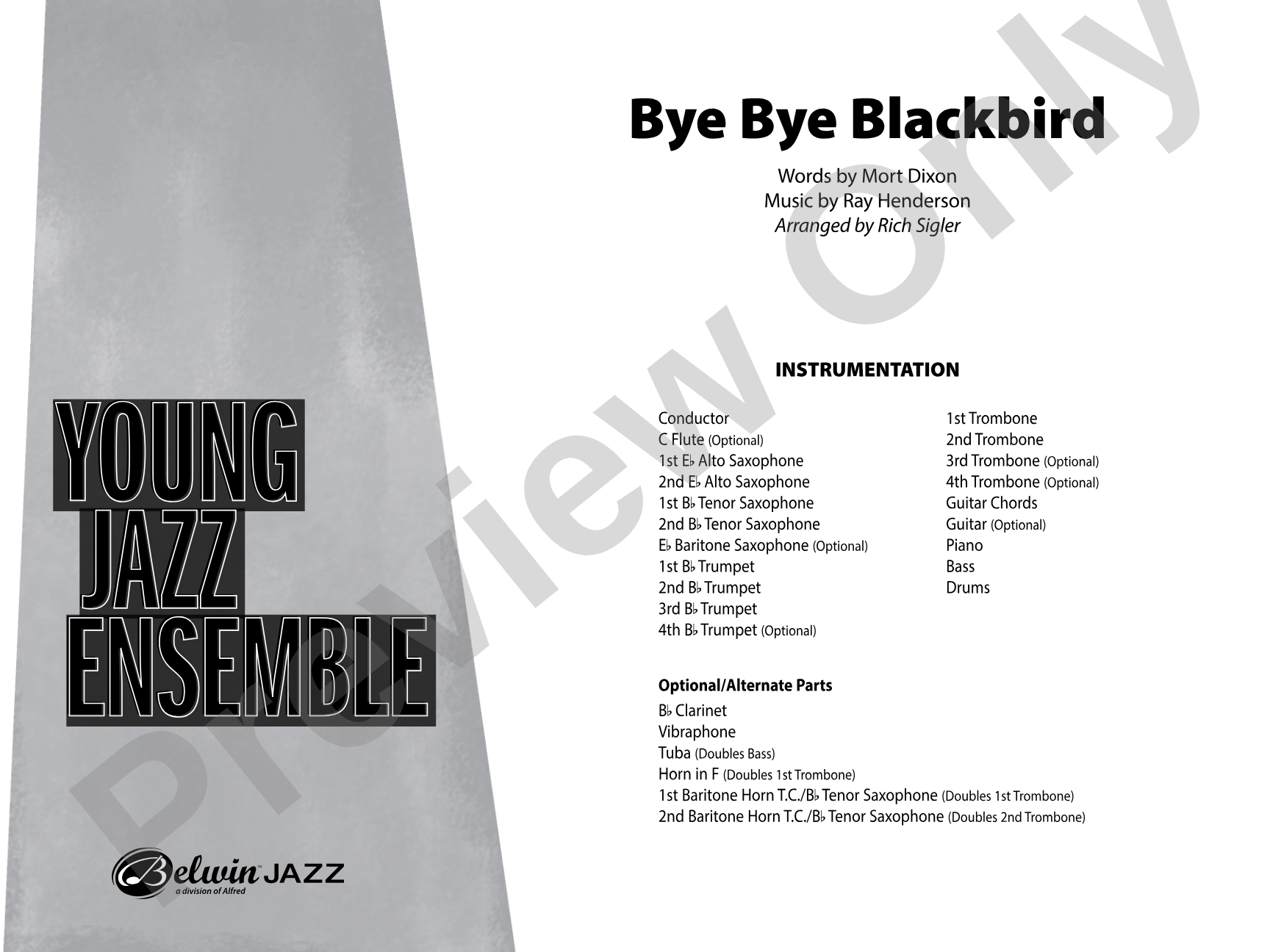
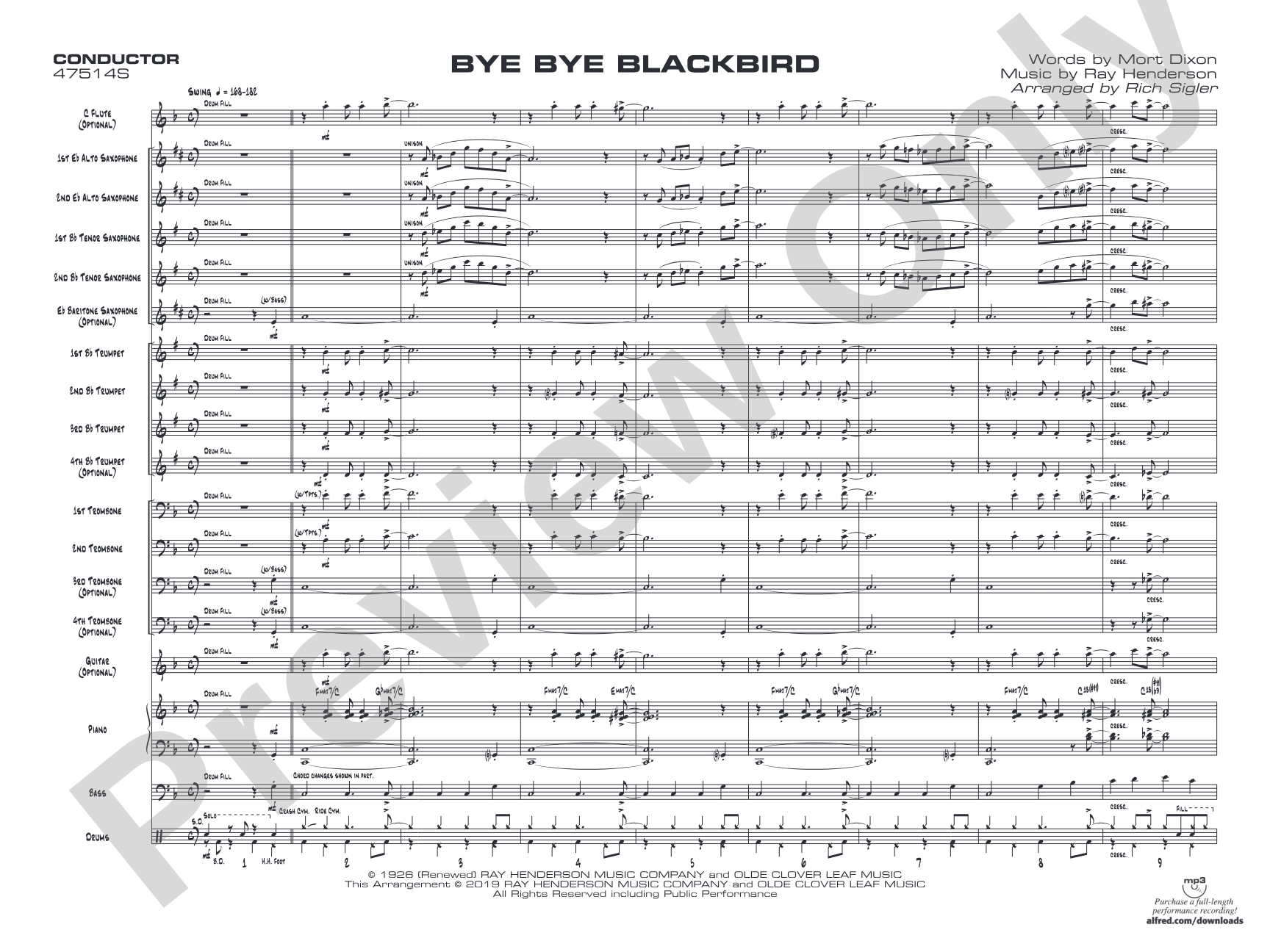
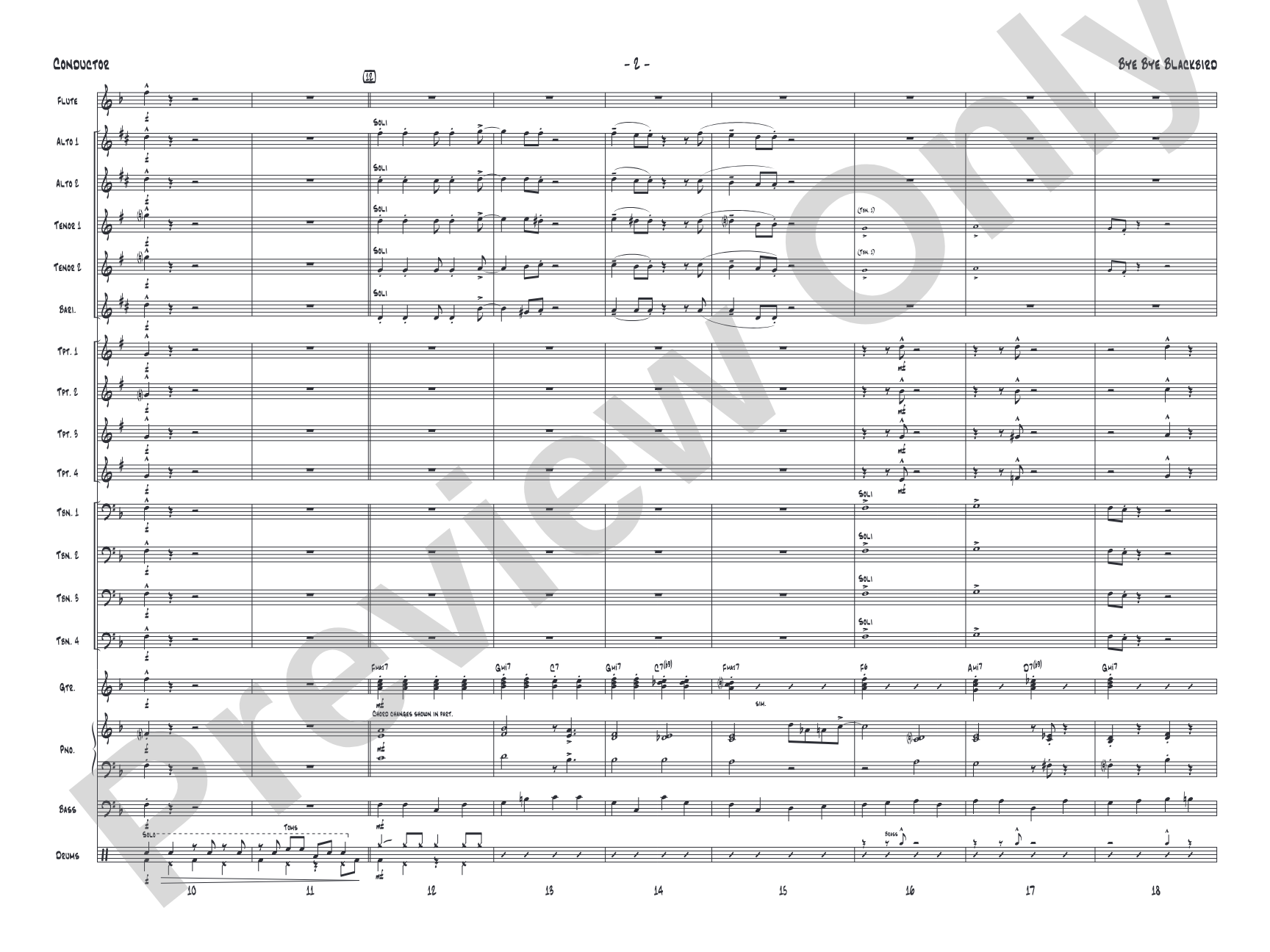
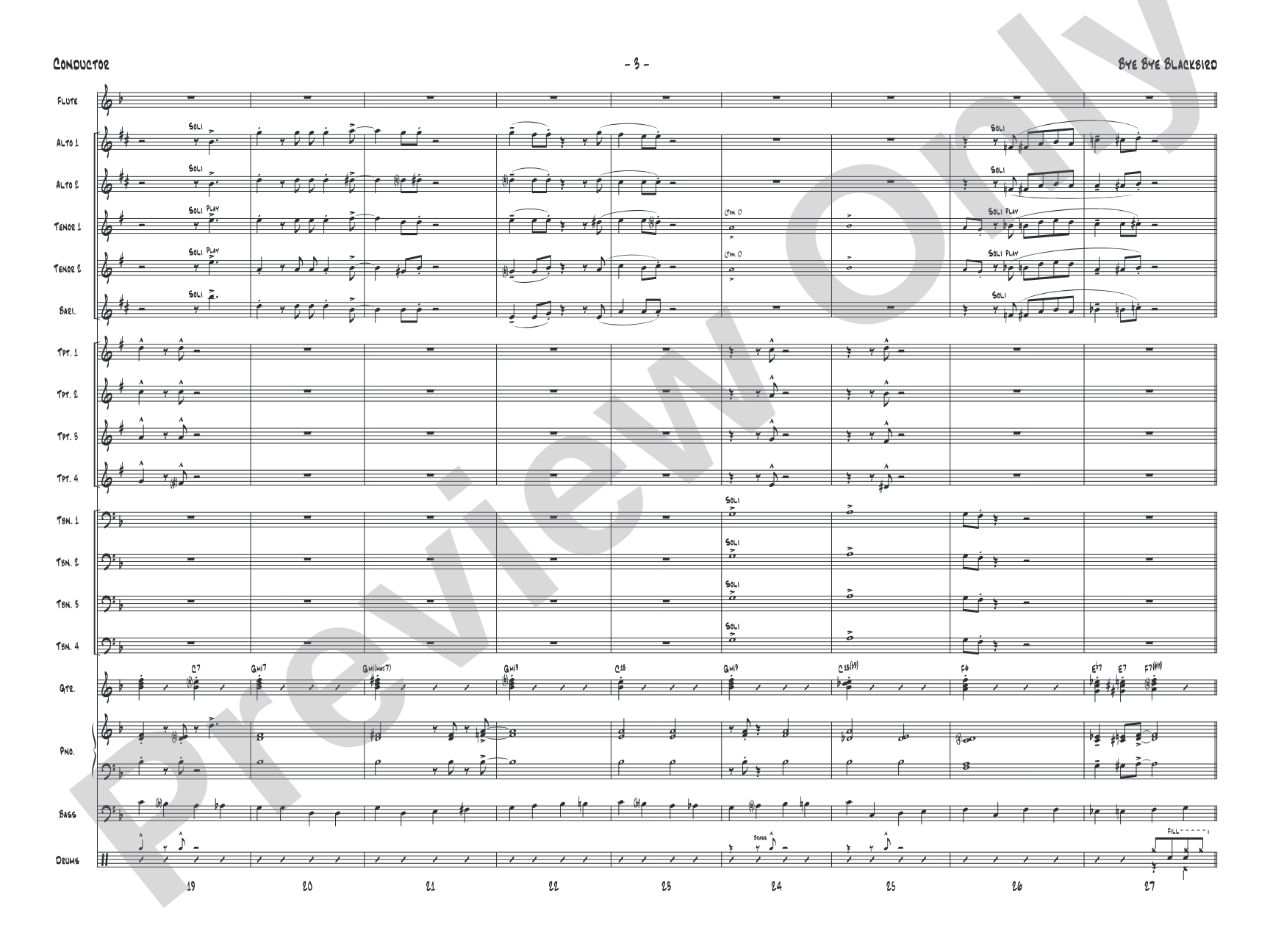
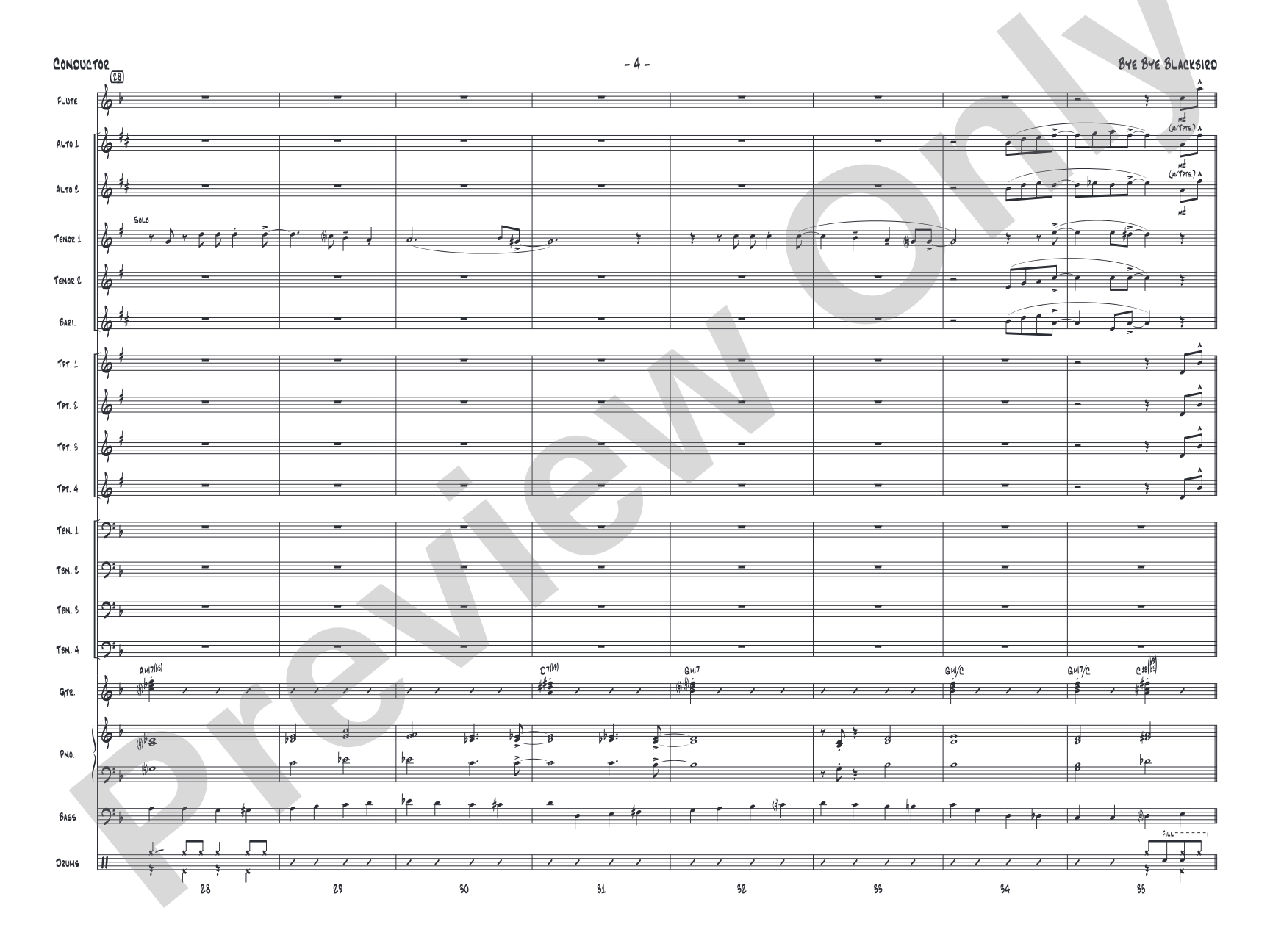
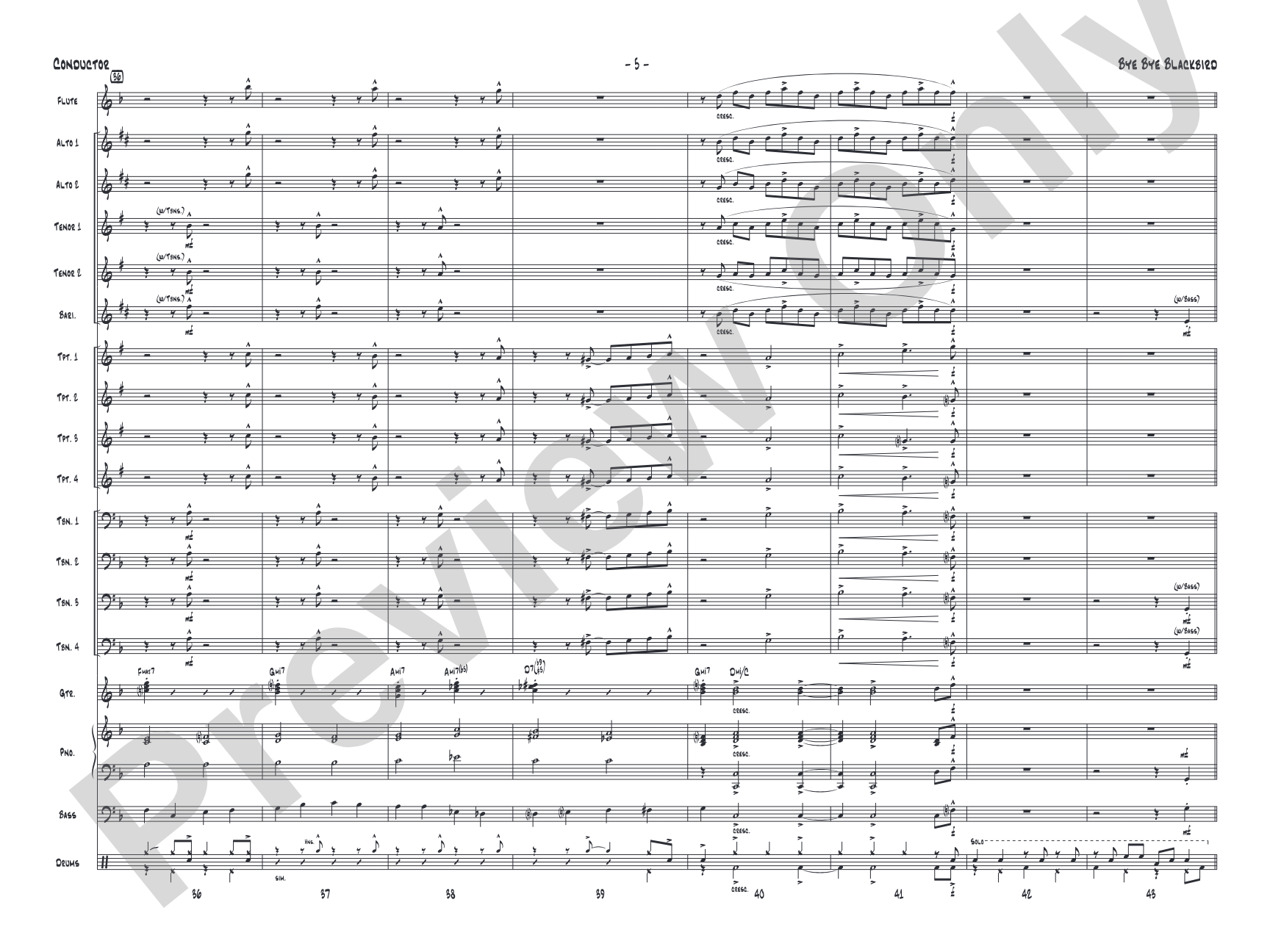
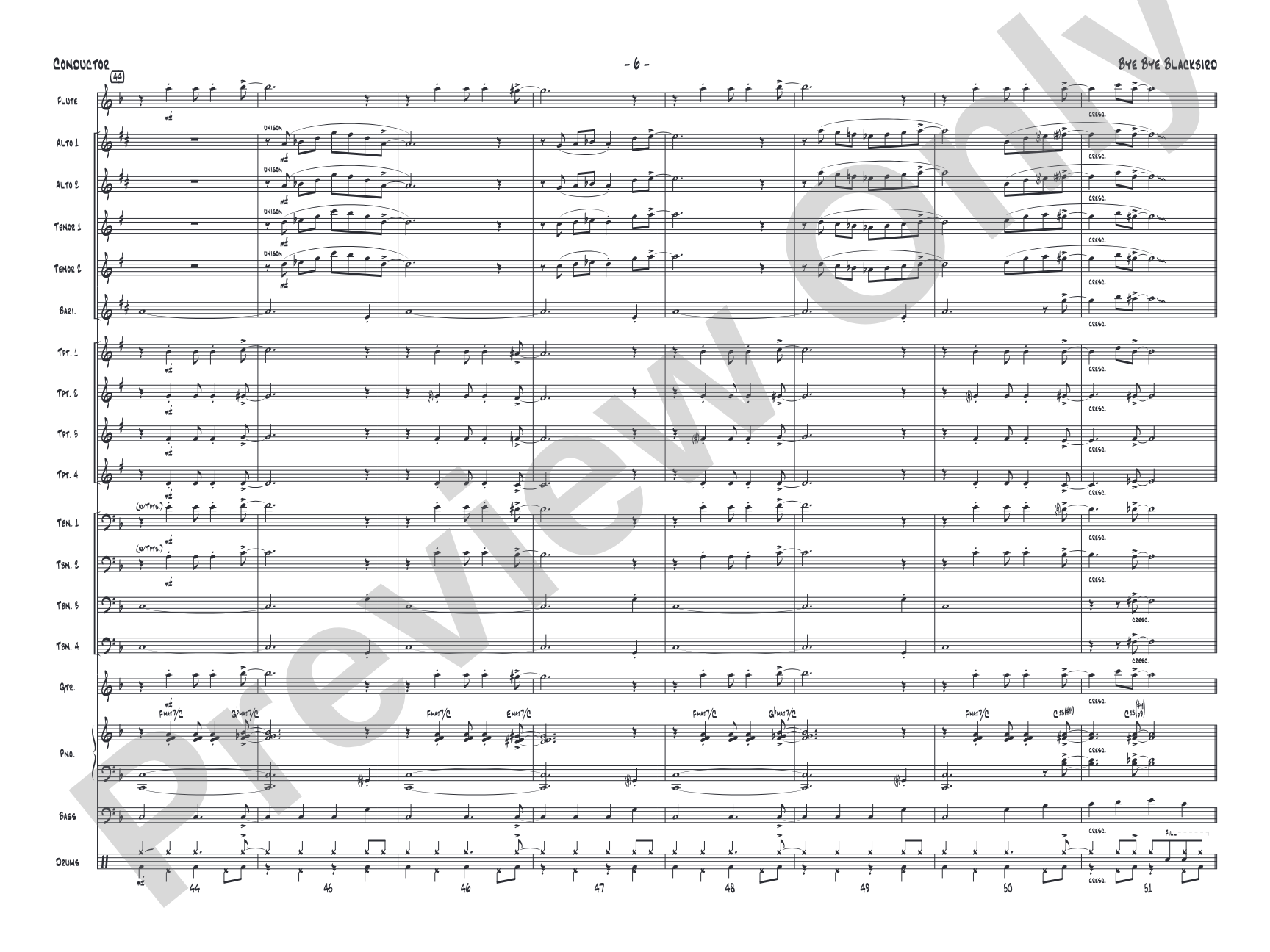
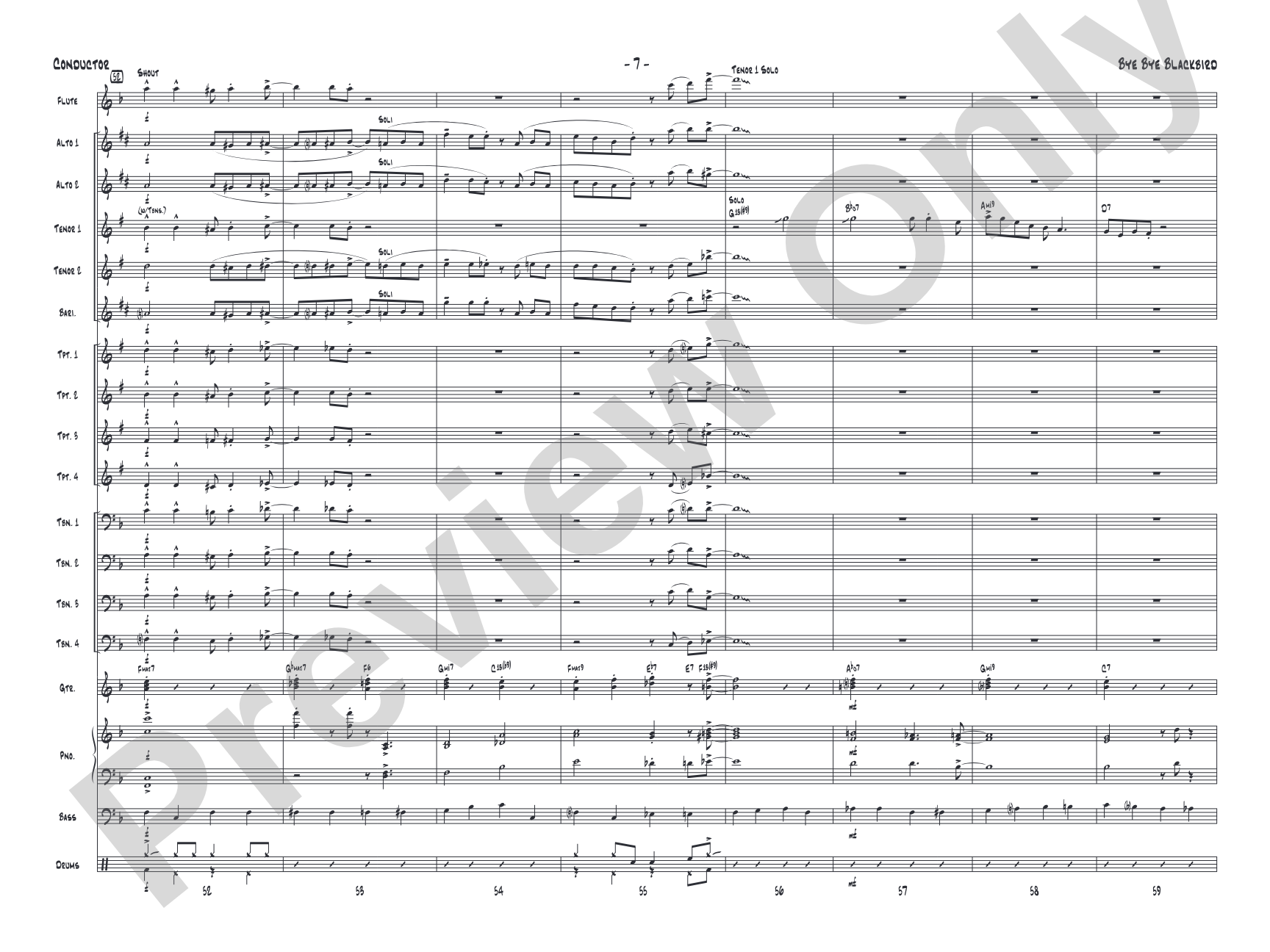
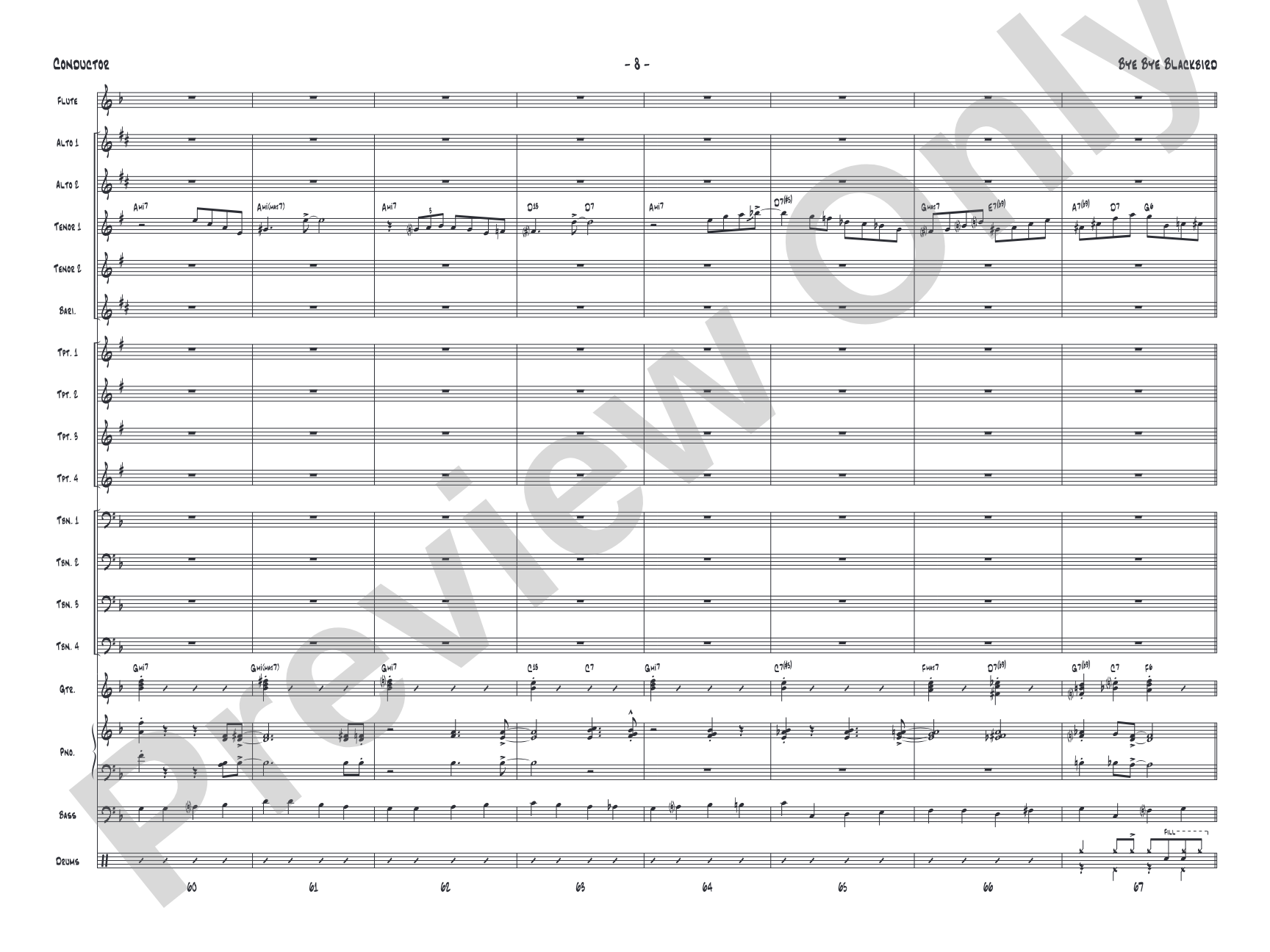
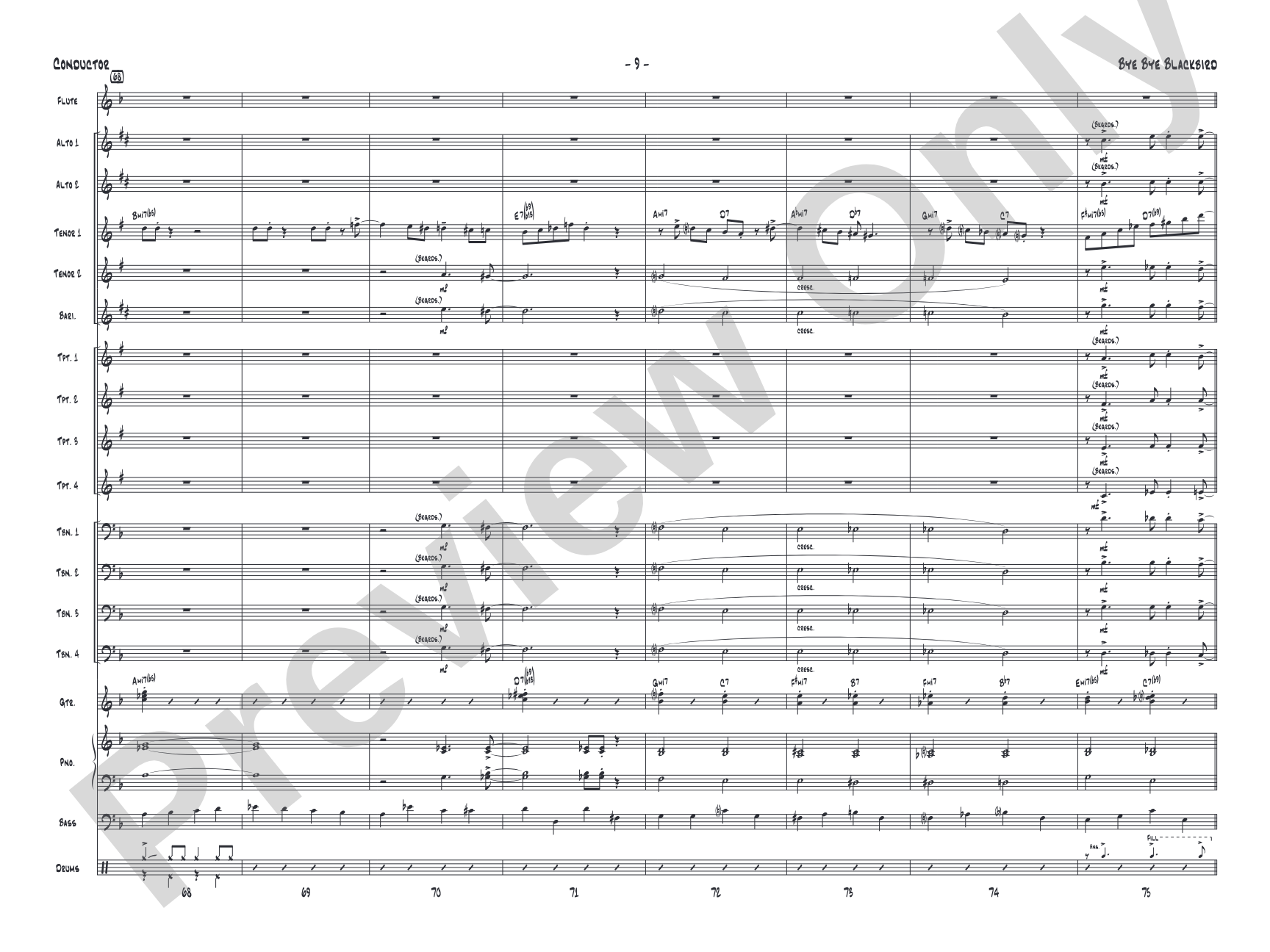
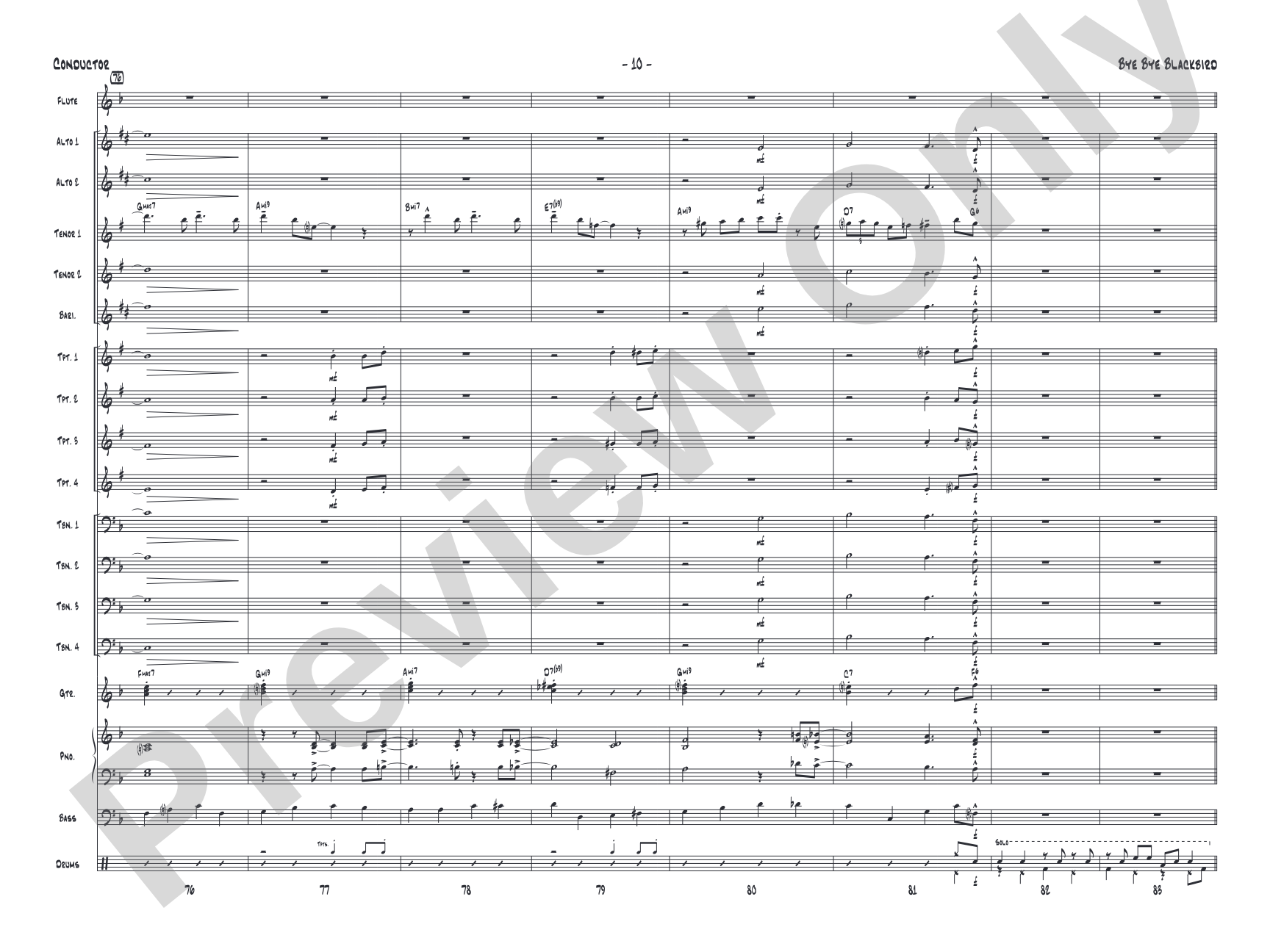
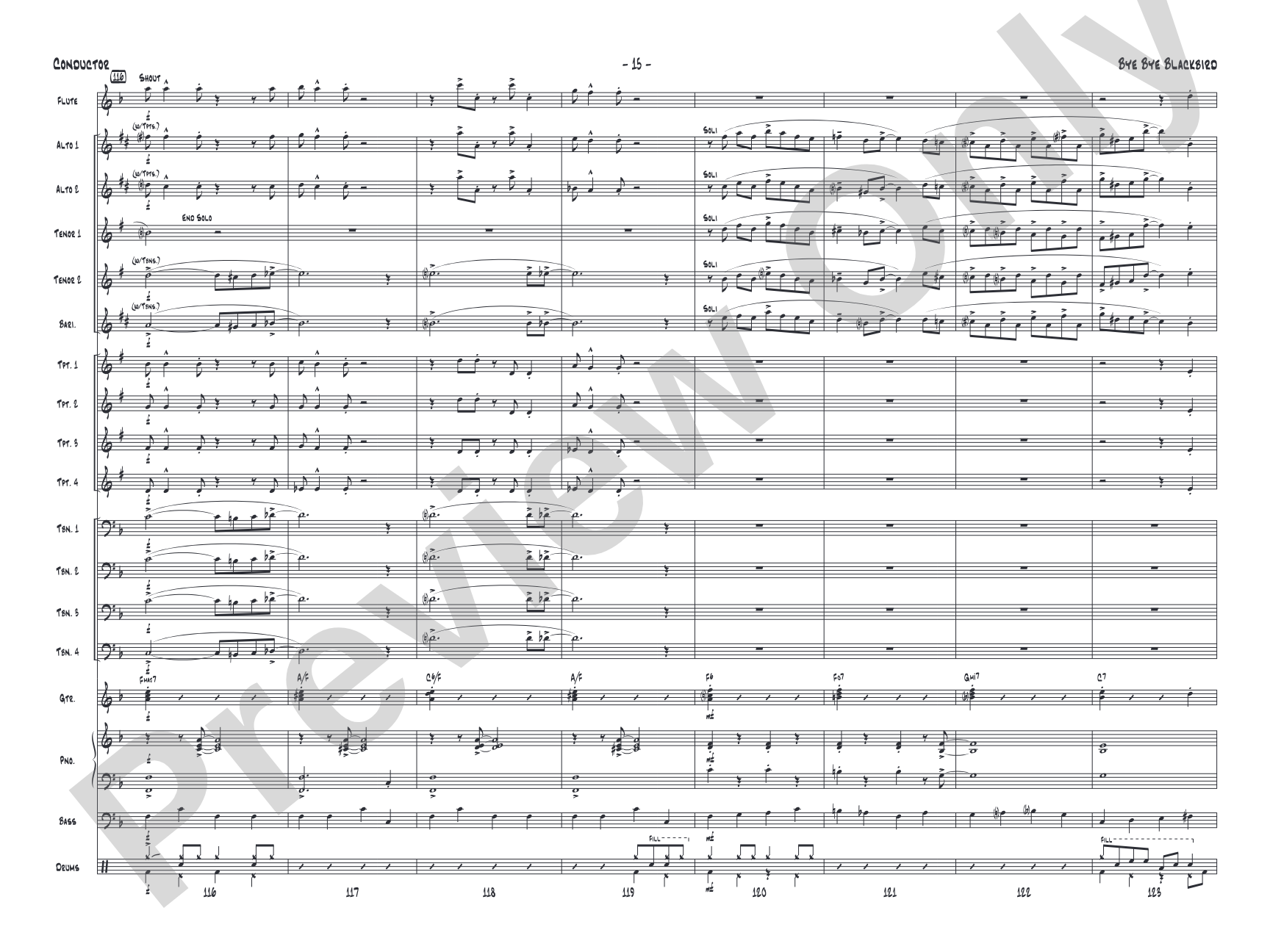
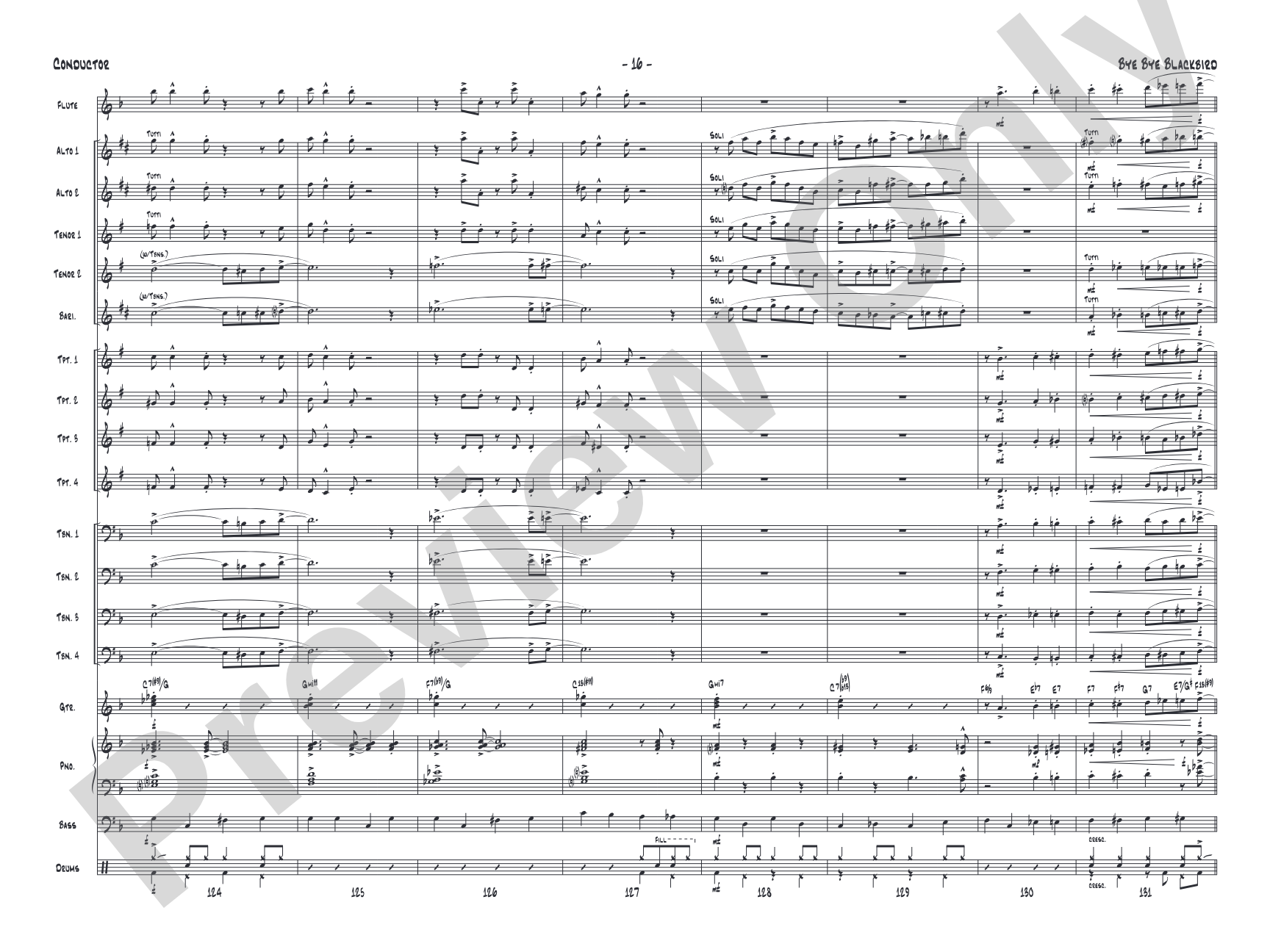
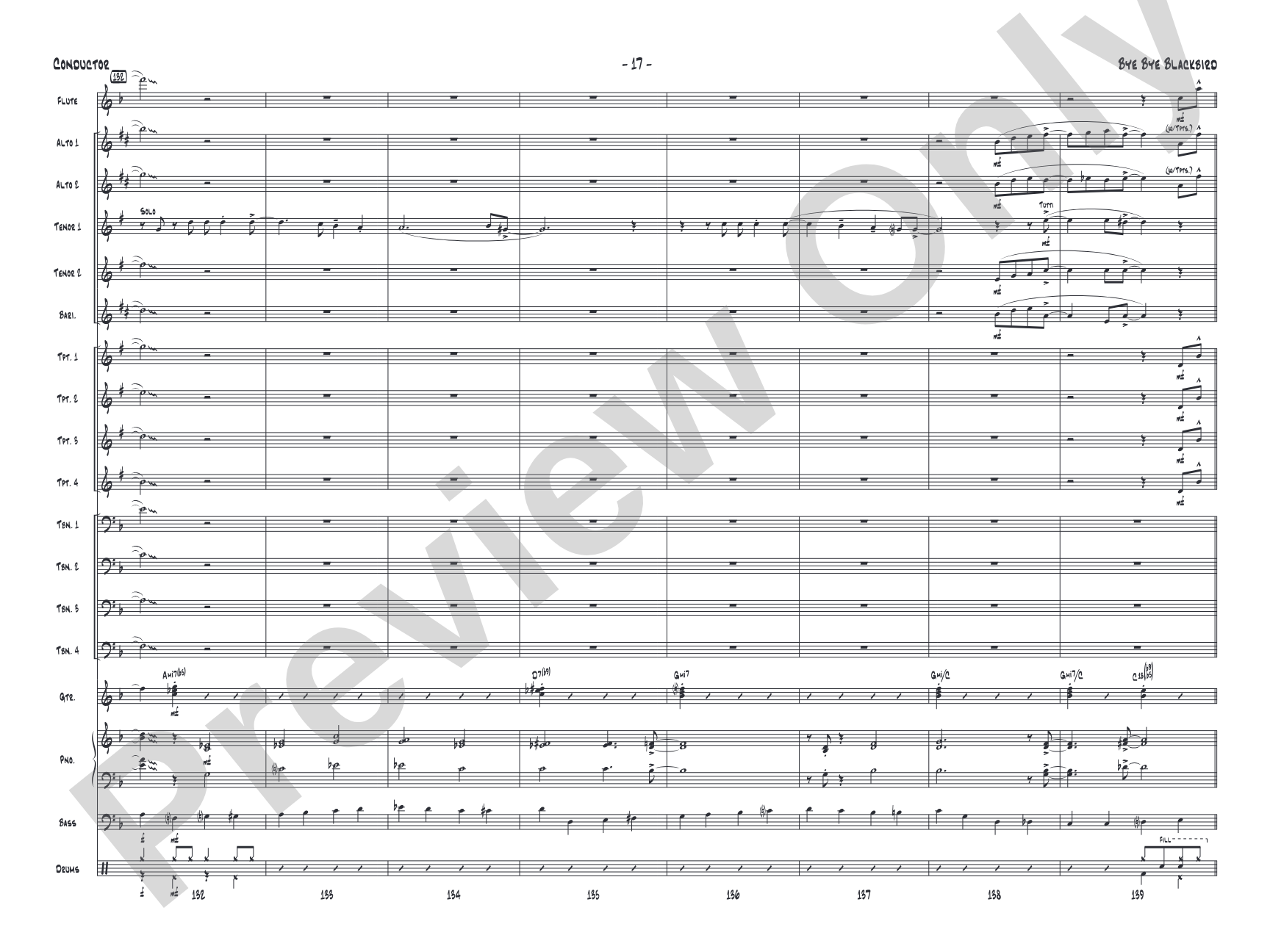
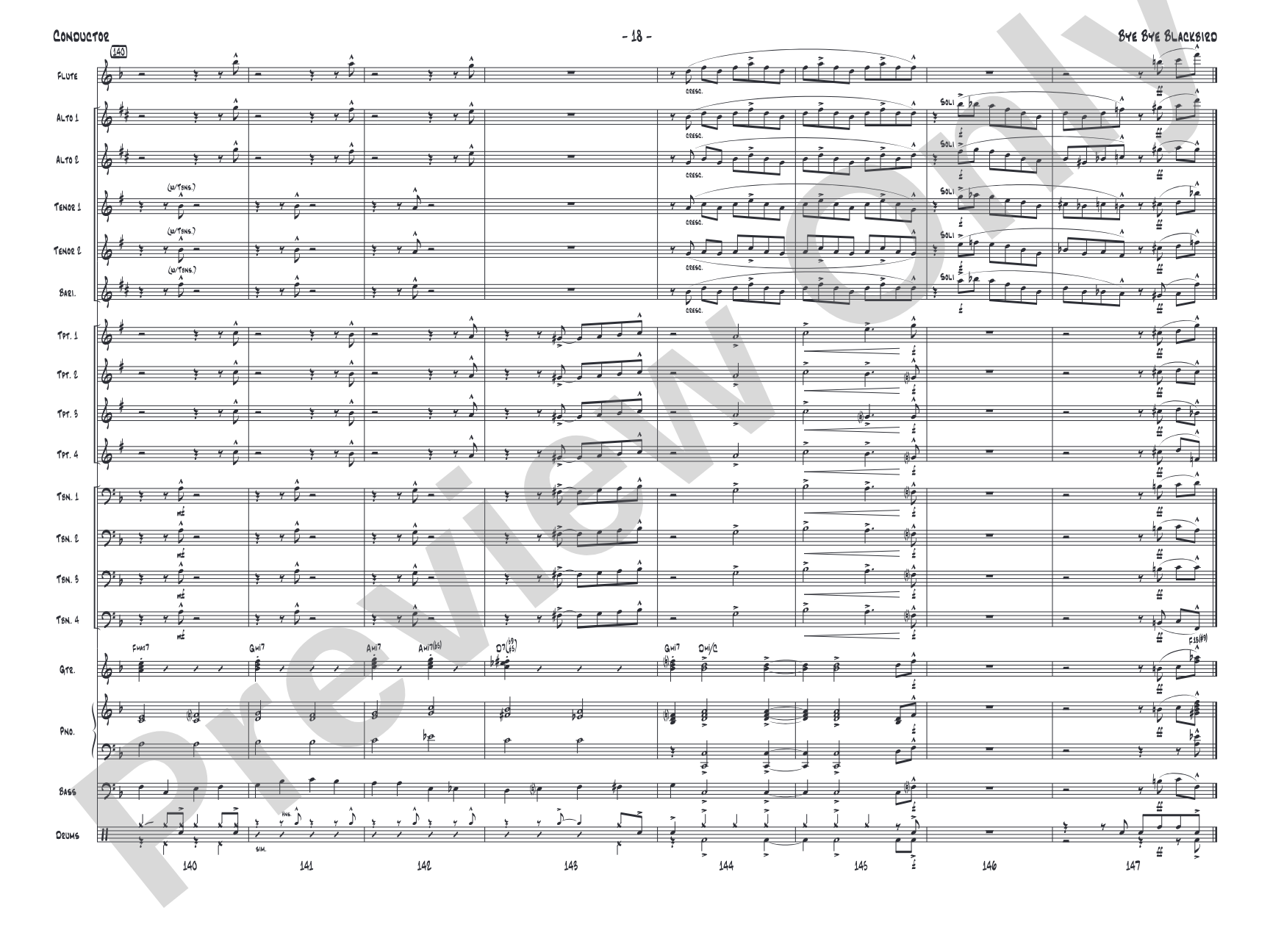

Bye Bye Blackbird: Jazz Ensemble Conductor Score & Parts
Words by Mort Dixon, music by Ray Henderson / arr. Rich Sigler
Grade: 2 (Medium Easy)
Item: 00-PK-0007730

$50.00
One moment…
Description
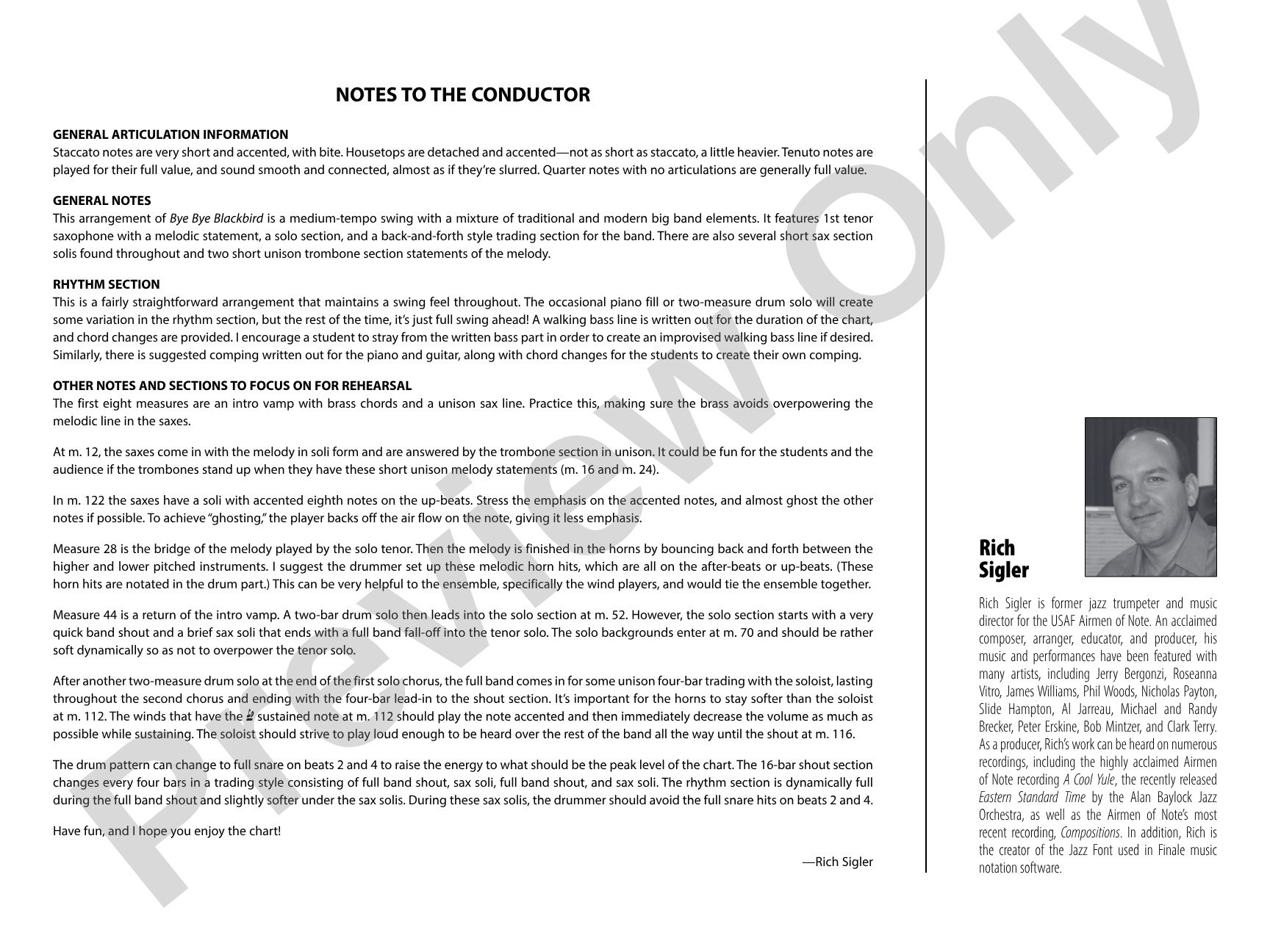
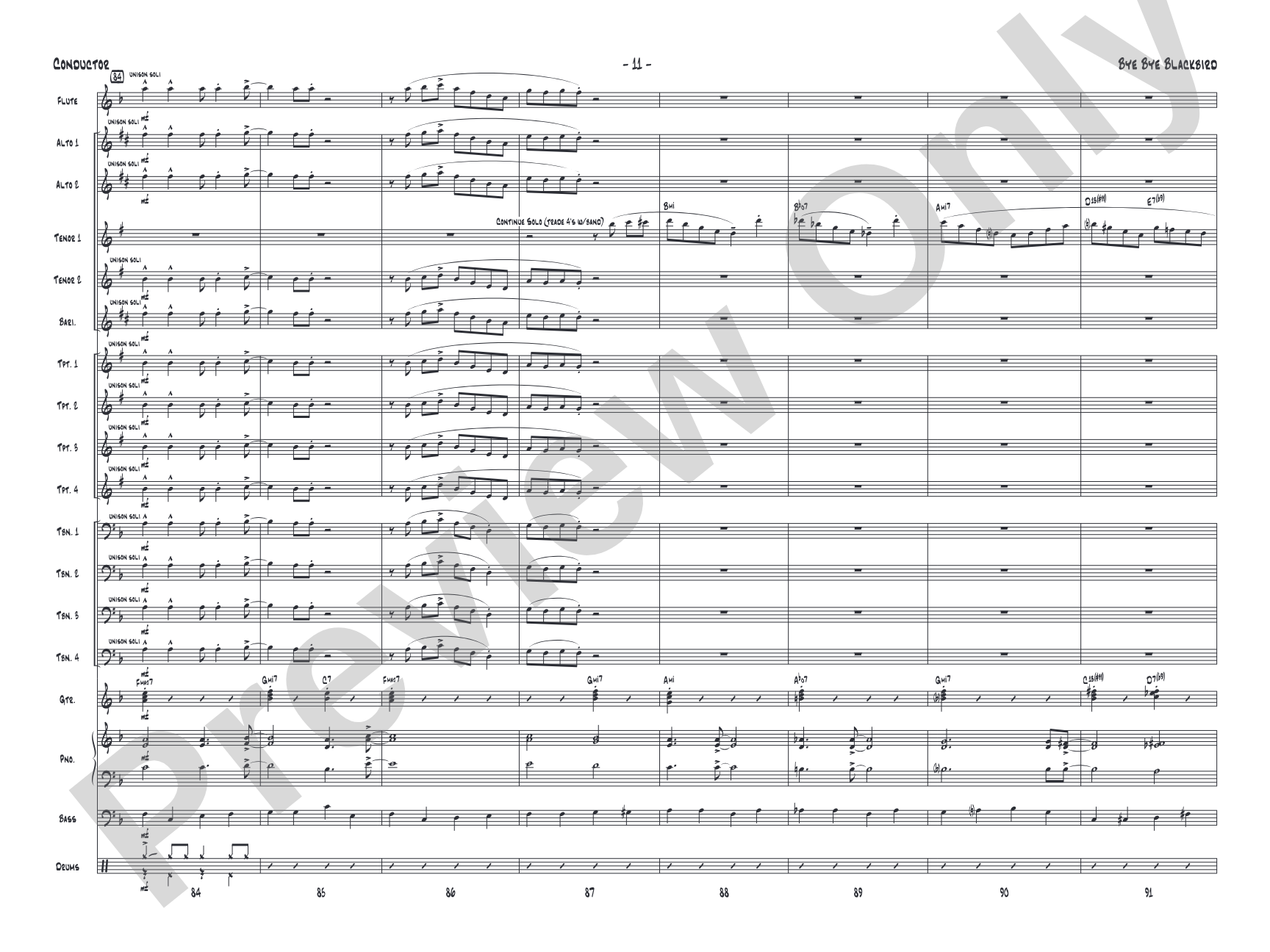
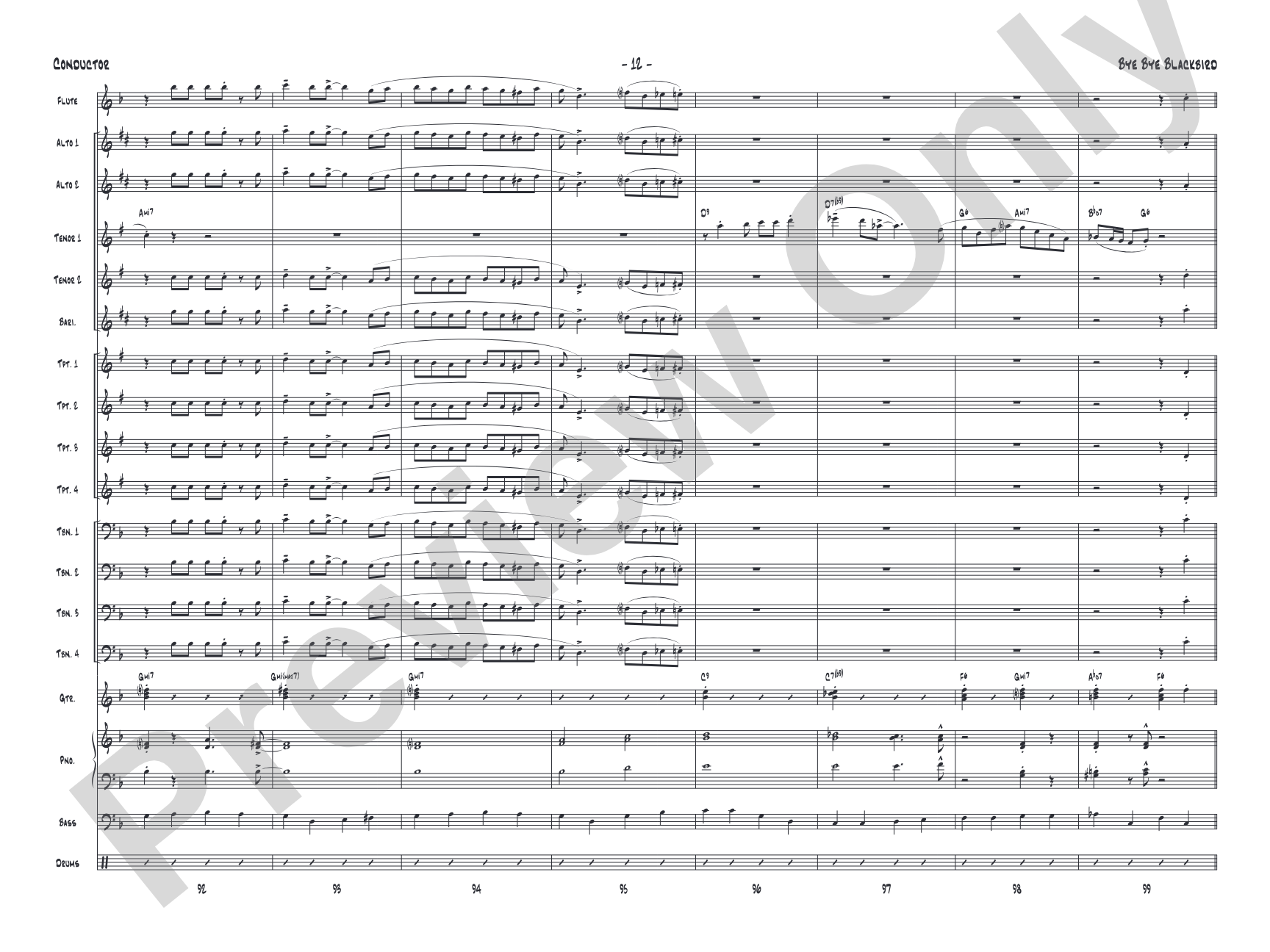
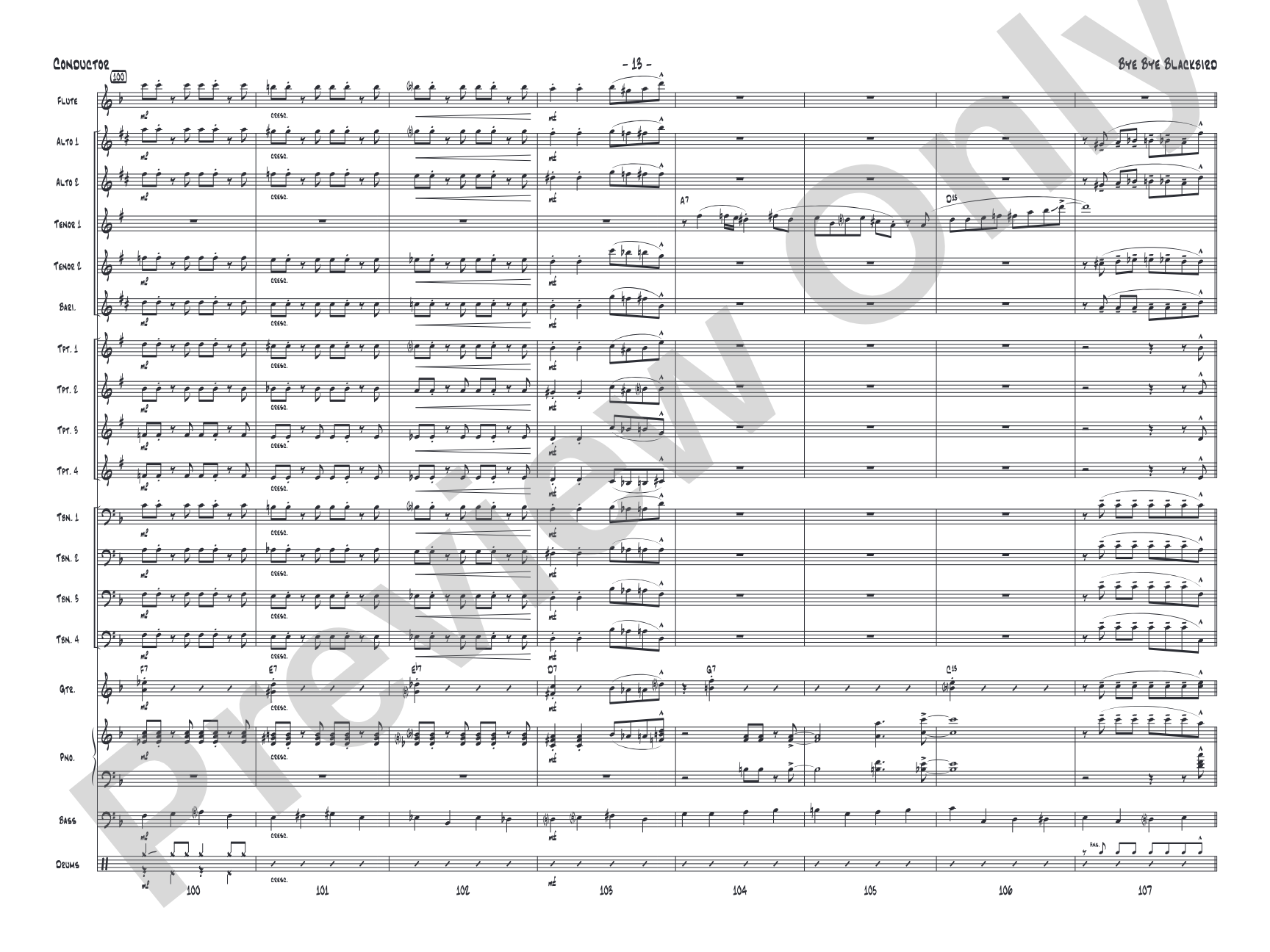
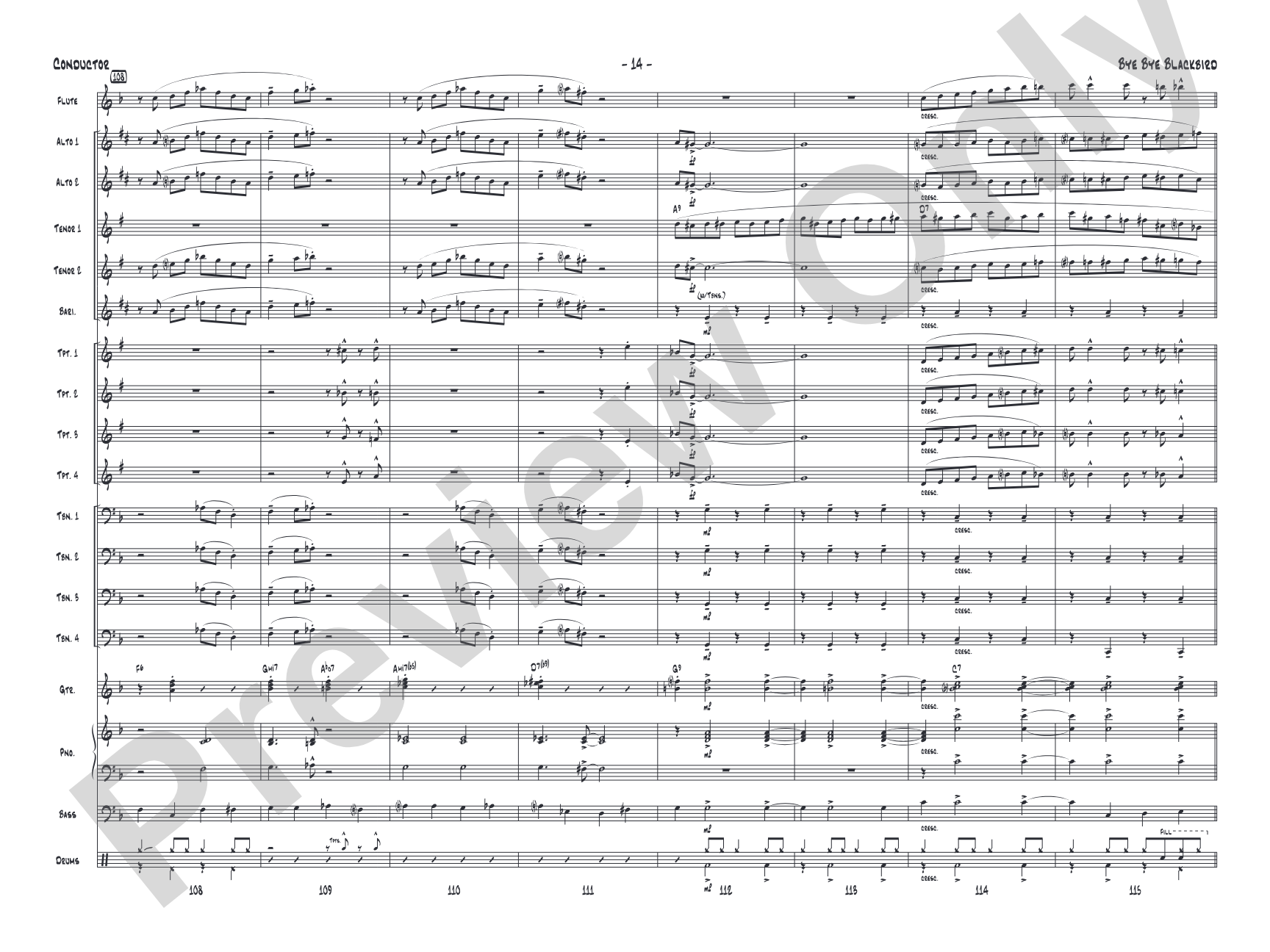
This swing chart is a great vehicle for your tenor sax soloist. The solo part ranges from written melody to a written-out suggested solo, all very doable, especially when the tenor sax trades fours with the ensemble. Lead trumpet range is to written G on top of the staff. Includes optional clarinet and vibes parts too!


Don't just read it, hear it, play along with it, and watch your students grow with it. In MakeMusic Cloud, Bye Bye Blackbird: Jazz Ensemble Conductor Score & Parts comes alive with professional accompaniment, adjustable tempo, and built-in practice tools that turn solo practice into real progress.
Open in the Player
Jump straight in and assign it today.
Start Your Free Trial
Open this title and explore the full library in minutes.
Sample Audio
1
Audio File
--:--
0:00
0:00
Sample Video
Additional Details
Series:
Young Jazz Ensemble
Publisher:
Alfred Music
Page Count:
102
SKU:
00-PK-0007730
More about this title
About the Composer: Ray Henderson
Ray Henderson (1896-1970) was a prolific American composer of popular songs and Broadway music during the 1920s and 1930s. He wrote dozens of standards that remain central to the Great American Songbook, collaborating frequently with lyricists Buddy DeSylva and Lew Brown. "Bye Bye Blackbird" (1926) became one of his most enduring compositions, recorded by countless artists and adapted across genres from swing to bebop to modern jazz.
Henderson's melodies are marked by singable lines and harmonic sophistication that translate beautifully to jazz contexts. His work laid groundwork for the jazz repertoire that student ensembles explore today.
Why we love this
Rich Sigler's arrangement balances accessibility with authentic swing style, giving your tenor sax player real solo authority without requiring advanced harmonic navigation. The written-out suggested solo paired with four-bar trading keeps ensemble momentum alive while spotlighting your soloist, and the optional vibes and clarinet parts expand instrumentation possibilities across different ensemble configurations.
What to expect
Bright, buoyant swing that bounces along with genuine groove despite its straightforward harmonic structure. The melody is immediately recognizable; the solo section opens up space for your tenor player to breathe and express while the band swings behind them.
Who it's for
Jazz ensemble directors working with developing players who need exposure to swing standards and solo forms without advanced harmonic demands. This arrangement serves ensembles with a solid tenor sax player capable of carrying a feature and a rhythm section ready to comp and trade.
How to get the most out of it
- Establish the swing feel early in rehearsal by isolating the rhythm section for two bars before bringing in the horn line; lock the ride cymbal and walking bass first, then add the comping chords.
- Shape the tenor sax solo trading section by cueing clearly on each entrance; the four-bar exchange gains energy when the ensemble listens actively and responds with tight ensemble attacks.
- Bring out the lead trumpet's written melody line in the opening head; at Grade 2, clarity on the top voice helps ground the arrangement's harmonic foundation.
- If you're using the optional vibes part, balance it lightly underneath the comping section so the underlying swing groove remains the focus, not the percussion texture.
How to use it
Program this as a concert opener or a lighter moment between heavier contemporary jazz works, or enter it in Grade 2 festival competition where it can showcase both your tenor soloist and your rhythm section's developing swing feel. The optional parts make it flexible for schools with variable instrumentation.
Skills your students will build
- Reading and executing swing articulation and phrasing
- Accompanying a soloist with comping chords and steady harmonic support
- Trading fours between soloist and ensemble with accurate cutoffs and ensemble entries
- Interpreting a written-out solo as a learning model for improvisation
- Balancing melody and background parts in a multi-layered arrangement