Bye Bye Blackbird Cover Image

Bye Bye Blackbird: Jazz Ensemble Conductor Score & Parts

$44.00 USD
Sale price  $44.00 USD Regular price 
Skip to product information
Bye Bye Blackbird Cover Image

Bye Bye Blackbird: Jazz Ensemble Conductor Score & Parts

Arr. Kris Berg

Grade: 2 (Medium Easy)

Item: 00-JE9949

$44.00
Shipped

One moment…

Description
This classic '20s song was featured in many movies, most notably performed by Peggy Lee in Pete Kelly's Blues. Kris Berg gives us an extraordinary arrangement that is right on the money and perfect for your young jazz ensemble. Easy (3:12)

Bye Bye Blackbird: Jazz Ensemble Conductor Score & Parts isn't in MakeMusic Cloud just yet...but it could be. Let us know you'd like to see it, and you'll help shape what comes next. In the meantime, start a free trial and dive into thousands of interactive titles your students can play along with today.

Sample Pages

Sample Audio
No sample audio found.
Sample Video
Additional Details
Series: Young Jazz Ensemble
Publisher: Alfred Music
Page Count: 122
UPC: 654979000211
SKU: 00-JE9949

More about this title

About the Arranger: Kris Berg
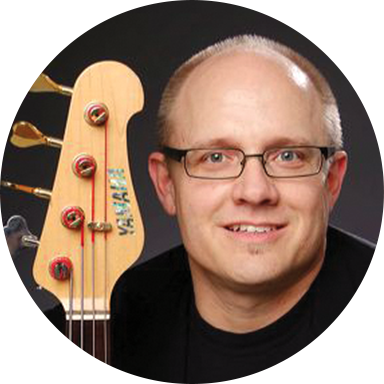
Kris Berg

Kris Berg directs the jazz program at Collin County Community College in Texas, where he earned both his bachelor's and master's degrees in jazz studies from the University of North Texas. His arrangements have been performed and recorded internationally, and he serves as a clinician and artist for Yamaha Corporation of America, having shared the stage with musicians including Kurt Elling, Randy Brecker, Peter Erskine, and Clark Terry.

Berg founded both the Collin Jazz Fest and the Texas All-Star Jazz Camp, establishing himself as a leader in jazz education and performance. His published arrangements for Belwin Jazz have become standards in the big band repertoire, and he authored the widely used method book Bass Lines in Minutes. The ensembles under his direction have received multiple invitations to perform at the Montreux Jazz Festival.

Why we love this

Berg's arrangement captures the swinging elegance of this 1920s standard while keeping the writing accessible for younger ensembles. The voicing is clean and the rhythmic language straightforward, which means students can focus on jazz articulation, phrasing, and ensemble balance rather than wrestling with complexity. This is the kind of arrangement that sounds sophisticated in performance but doesn't demand years of jazz experience from your players.

What to expect

Nostalgic and relaxed, with the casual sophistication of a 1920s jazz standard. The tune has a wistful, conversational quality that invites lyrical playing, and Berg's arrangement preserves that warmth while giving the ensemble room to breathe and respond to each other.

Who it's for

Directors of high school and college jazz ensembles at the Grade 2 level who want to build repertoire that swings authentically without overwhelming younger or less-experienced players. Students will find the part-writing manageable while still encountering real jazz language, making this a ideal stepping stone between purely educational material and more demanding jazz charts.

How to get the most out of it

  • Balance the melody against the supporting voices; the tune should sing without overshadowing the ensemble's harmonic foundation and rhythmic pocket.
  • Lock the rhythm section early in rehearsals. A tight drummer and bassist will anchor everything else, so spend dedicated time on the groove before layering horn parts.
  • Shape the phrases idiomatically. This tune breathes in jazz time, so encourage subtle pushes and pulls rather than metronomic precision.
  • Pay attention to dynamics in the ensemble passages. Young players often play at one volume, but this arrangement rewards light-and-shade playing that mirrors the song's laid-back character.

How to use it

Program this during a jazz history or American songbook concert to highlight the standards era. It pairs well alongside other early jazz repertoire and serves as an excellent vehicle for teaching students how to play with proper jazz style without demanding the technical chops of more advanced arrangements. The 3-minute-plus runtime makes it substantial enough for a full concert set without monopolizing rehearsal time.

Skills your students will build

  • Jazz articulation and phrasing (swing feel, note shaping)
  • Ensemble balance and blend in a jazz context
  • Listening and responding to rhythm section groove
  • Reading and performing jazz chord symbols in context
  • Stylistic flexibility (distinguishing jazz interpretation from classical precision)

You May Also Like