By the River's Edge: 2nd B-flat Clarinet Sheet Music Preview

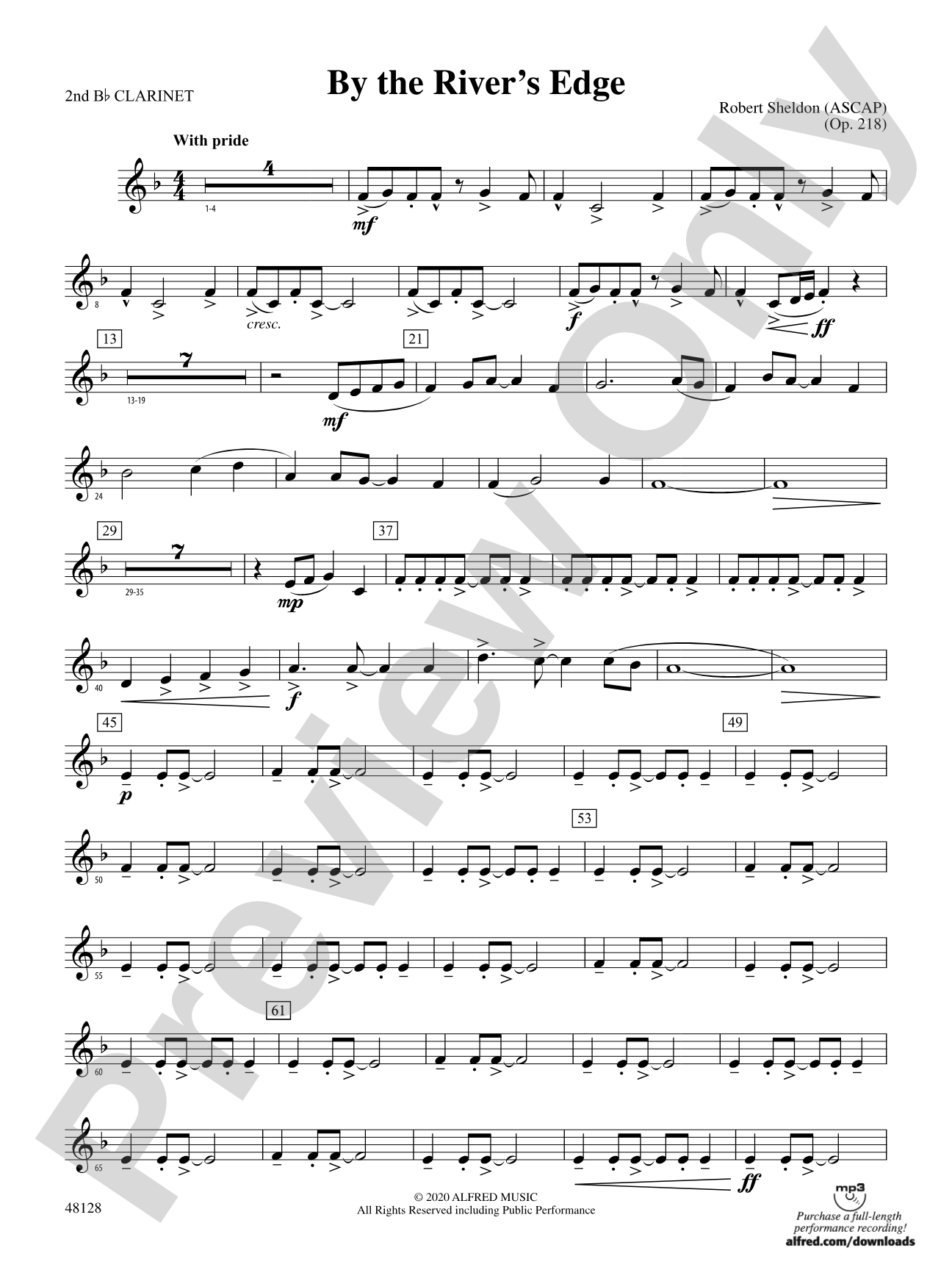
By the River's Edge: 2nd B-flat Clarinet

By Robert Sheldon

Grade: 2.5 (Medium Easy)

Item: 00-PC-0018440_C2

Digital Download
$3.00
Description
Brimming with tuneful melodies and rhythmic textures, By the River's Edge exudes feelings of confidence and pride, while also providing moments of introspection. Additionally, everyone has parts that are fun to play! (4:00) Print-on-demand Grade .5 parts compatible to this arrangement are available (item 00-48128) as well as Grade 1.5 parts (item 00-48128YB).

Don't just read it, hear it, play along with it, and watch your students grow with it. In MakeMusic Cloud, By the River's Edge: 2nd B-flat Clarinet comes alive with professional accompaniment, adjustable tempo, and built-in practice tools that turn solo practice into real progress.

Sample Audio
0:00
0:00
Sample Video
Additional Details
Series: Young Symphonic
Publisher: Alfred Music
Page Count: 254
SKU: 00-PC-0018440_C2

More about this title

About the Composer: Robert Sheldon

Robert Sheldon

Robert Sheldon stands among today's most frequently performed composers for wind bands, with his works appearing on concert stages and festival programs across the globe. His honors include recognition from the American School Band Director's Association, Phi Beta Mu, and the American Society of Composers, Authors and Publishers. Beyond composing, Sheldon co-authored Sound Innovations for Concert Band and maintains an active schedule as guest conductor for All-State and Regional Honor Bands.

Sheldon's conducting and clinician work has taken him throughout North America, Europe, Asia, and Australia, including performances at Carnegie Hall, Boston's Symphony Hall, the Sydney Opera House, and the Kennedy Center. He fields regular commissions and releases multiple publications annually. In 2020, VanderCook College of Music awarded him an honorary doctorate in recognition of his contributions to music education.

Why we love this

Sheldon writes for the strengths of intermediate ensembles without sacrificing musical depth. The piece balances accessibility with genuine expression, offering your band moments of emotional weight alongside passages that naturally sit well under student hands. At 2.5 grade level, it avoids the trap of feeling simplistic; instead, it respects both the players and the listeners.

What to expect

The music radiates quiet assurance and forward momentum, with open textures that invite singers and players alike to inhabit the sound. Moments of introspection break the surface like a stone dropped into still water, creating contrast without losing the underlying sense of purpose and presence.

Who it's for

Middle school and early high school bands seeking a concert piece that combines melodic appeal with solid compositional craftsmanship. Directors building programs that balance confidence-building repertoire with material worthy of festival consideration will find strong value here.

How to get the most out of it

  • Shape the melodic lines with intentional phrasing rather than playing through them mechanically. The tuneful themes deserve the same care for line and direction you'd give an advanced work.
  • Balance your band textures by letting different sections carry the primary material. Sheldon distributes thematic responsibility across the ensemble, so resist the urge to let the upper voices dominate throughout.
  • Mark the moments of introspection distinctly in rehearsal. These quieter passages create essential contrast and will land more powerfully if the ensemble understands exactly when the musical mood shifts.

How to use it

Place this as your central selection on a concert where you want to showcase growth and musicianship without overwhelming a developing ensemble. It pairs well with lighter opener selections and serves as an excellent festival choice in the 2.5 to 3 grade range.

Skills your students will build

  • Sustaining phrased lines over eight and sixteen bar phrases
  • Dynamic control in passages requiring significant contrast
  • Part independence within a cohesive ensemble texture
  • Responding to expressive character changes within a single piece

You May Also Like