
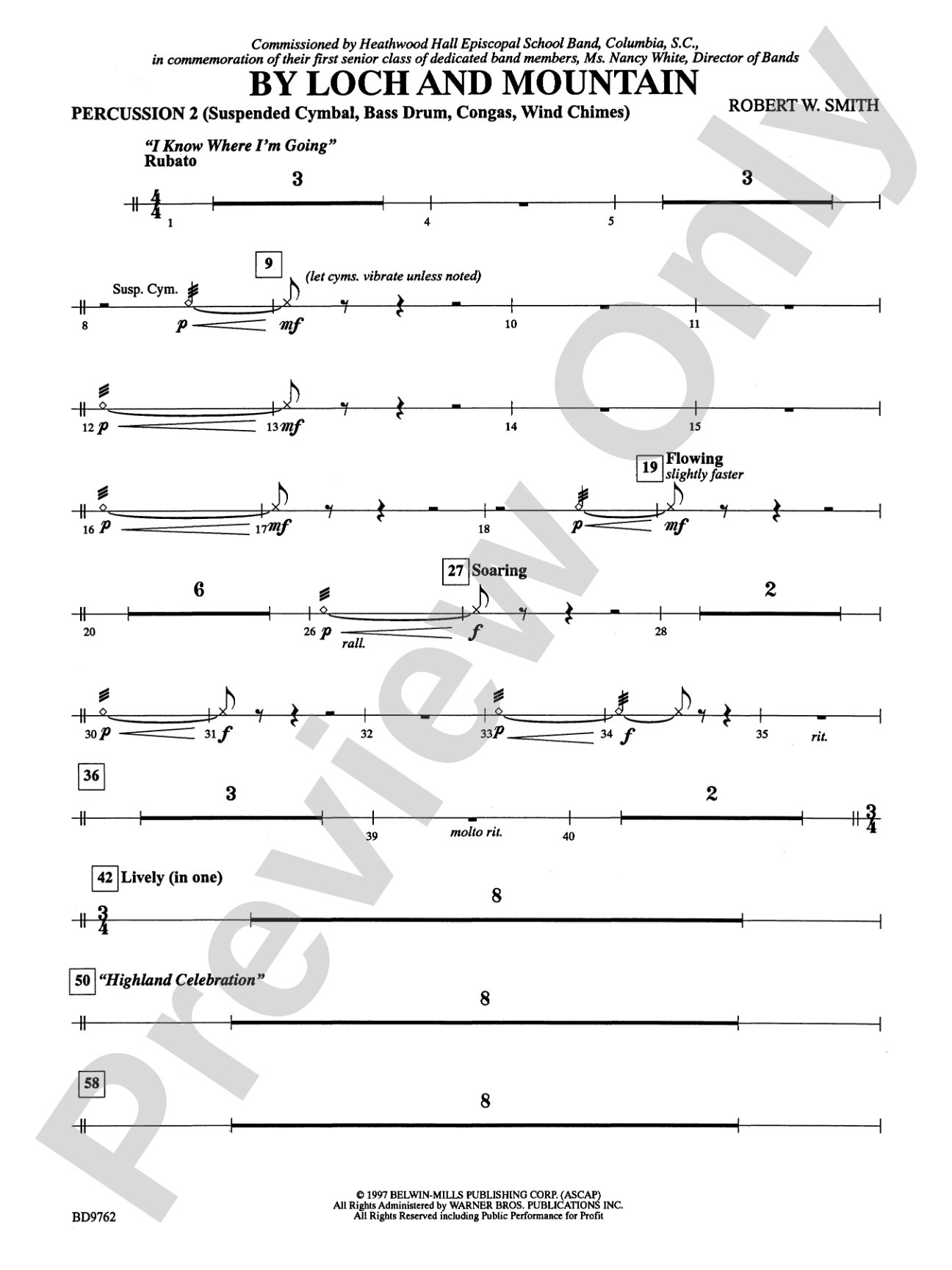

By Loch and Mountain: 2nd Percussion
Baritone/Euphonium Solo
By Robert W. Smith
Grade: 3 (Medium Easy)
Item: 00-PC-0002062_PC2
$3.00
Pickup currently not available
Description
Like the mist off the moors, a peaceful, quiet solo baritone/euphonium begins our journey to the land of castles and kilts. Robert W. Smith's recent visit to the British Isles was the catalyst and the inspiration for this true musical celebration, complete with magnificent ethnic underpinnings, textures, colors and sensational percussion. Mr. Smith's high sense of drama has never been better expressed. This is theater for the ears! (duration 4:45) This title is available in MakeMusic Cloud.


Don't just read it, hear it, play along with it, and watch your students grow with it. In MakeMusic Cloud, By Loch and Mountain: 2nd Percussion comes alive with professional accompaniment, adjustable tempo, and built-in practice tools that turn solo practice into real progress.
Open in the Player
Jump straight in and assign it today.
Start Your Free Trial
Open this title and explore the full library in minutes.
Sample Audio
1
Audio File
--:--
0:00
0:00
Sample Video
Additional Details
Series:
Belwin Concert Band
Publisher:
Alfred Music
Page Count:
232
SKU:
00-PC-0002062_PC2
More about this title
About the Composer: Robert W. Smith

Robert W. Smith stands among America's most recorded composers for concert band and orchestra, with more than 400 published works distributed internationally. He earned his Bachelor's degree in Music Education from Troy State University and his Master's degree from the University of Miami, establishing himself early as a composer whose music bridges accessible musicality with substantial artistic depth.
Smith's catalog includes symphonic works that have circulated across five continents, from The Divine Comedy and The Odyssey to The Tempest and beyond. His compositions have appeared in contexts ranging from national television broadcasts to the Olympic Games, the Macy's Thanksgiving Day Parade, and opening ceremonies honoring world leaders. As both conductor and clinician, he has led ensembles throughout North America, Europe, Asia, and Australia, bringing direct engagement with the musicians who perform his music.
Why we love this
Smith constructs a genuine journey here, anchored by a luminous baritone or euphonium solo that sets the emotional tone while the ensemble layers in Scottish color and harmonic warmth. The work captures his signature theatrical instinct without relying on bombast; instead, he builds drama through orchestration, texture, and the interplay between soloist and band. For a Grade 3 program, this delivers the musical substance and programming appeal of something much more sophisticated.
What to expect
Mist rolling across moorland, the suggestion of ancient castles glimpsed through fog. The opening is introspective and intimate, with the solo voice carrying both vulnerability and quiet authority. As the band gradually joins, the texture deepens and expands, building theatrical presence while maintaining a contemplative, almost mystical quality throughout.
Who it's for
Concert bands working at Grade 3 and seeking a substantial solo feature that doesn't compromise ensemble musicianship. The baritone or euphonium soloist must be secure and musical, but the piece rewards thoughtful preparation from the entire band.
How to get the most out of it
- Balance the opening solo carefully against subtle ensemble textures. The baritone or euphonium line should float clearly above the accompaniment, but the band's harmonic foundation must remain audible and supportive.
- Attend to the ethnic and folk character embedded in the melodic writing and harmonic choices. This isn't generic accompaniment; the Scottish sensibility should color every phrase.
- Use percussion strategically to enhance atmosphere and drama rather than drive momentum. Smith's percussion writing serves the landscape and emotional arc of the piece.
- Shape the ensemble passages with the same care you'd give a vocal line. The band's role shifts from accompanist to full participant, and smooth transitions between these roles clarify the narrative.
How to use it
This works beautifully as the centerpiece of a concert themed around landscape, heritage, or journeys. Its 4:45 duration and emotional arc make it an ideal contrast piece between more energetic selections. The combination of introspection and theatrical color also suits it well for festival or contest programming where judges appreciate compositional craft alongside technical facility.
Skills your students will build
- Balancing a prominent solo voice with ensemble accompaniment
- Sustaining atmospheric textures and harmonic color across an extended form
- Responding to ethnic and folk musical idioms in articulation, phrasing, and tone
- Controlling dynamic nuance in both quiet and building passages
- Interpreting theatrical narrative through purely instrumental means