


By a Stream: String Orchestra Conductor Score & Parts
By Susan H. Day
Grade: 2.5
Item: 00-PK-0009200
$60.00
Pickup currently not available
Buy Extra Parts (Digital PDF Download)
| Product | Price | Quantity |
|---|---|---|
| By a Stream: Score | $10.00 | |
| By a Stream: 1st Violin | $3.00 | |
| By a Stream: 2nd Violin | $3.00 | |
| By a Stream: 3rd Violin (Viola [TC]) | $3.00 | |
| By a Stream: Viola | $3.00 | |
| By a Stream: Cello | $3.00 | |
| By a Stream: String Bass | $3.00 | |
| By a Stream: Piano Accompaniment | $3.00 |
Parts Added to Cart!
Description
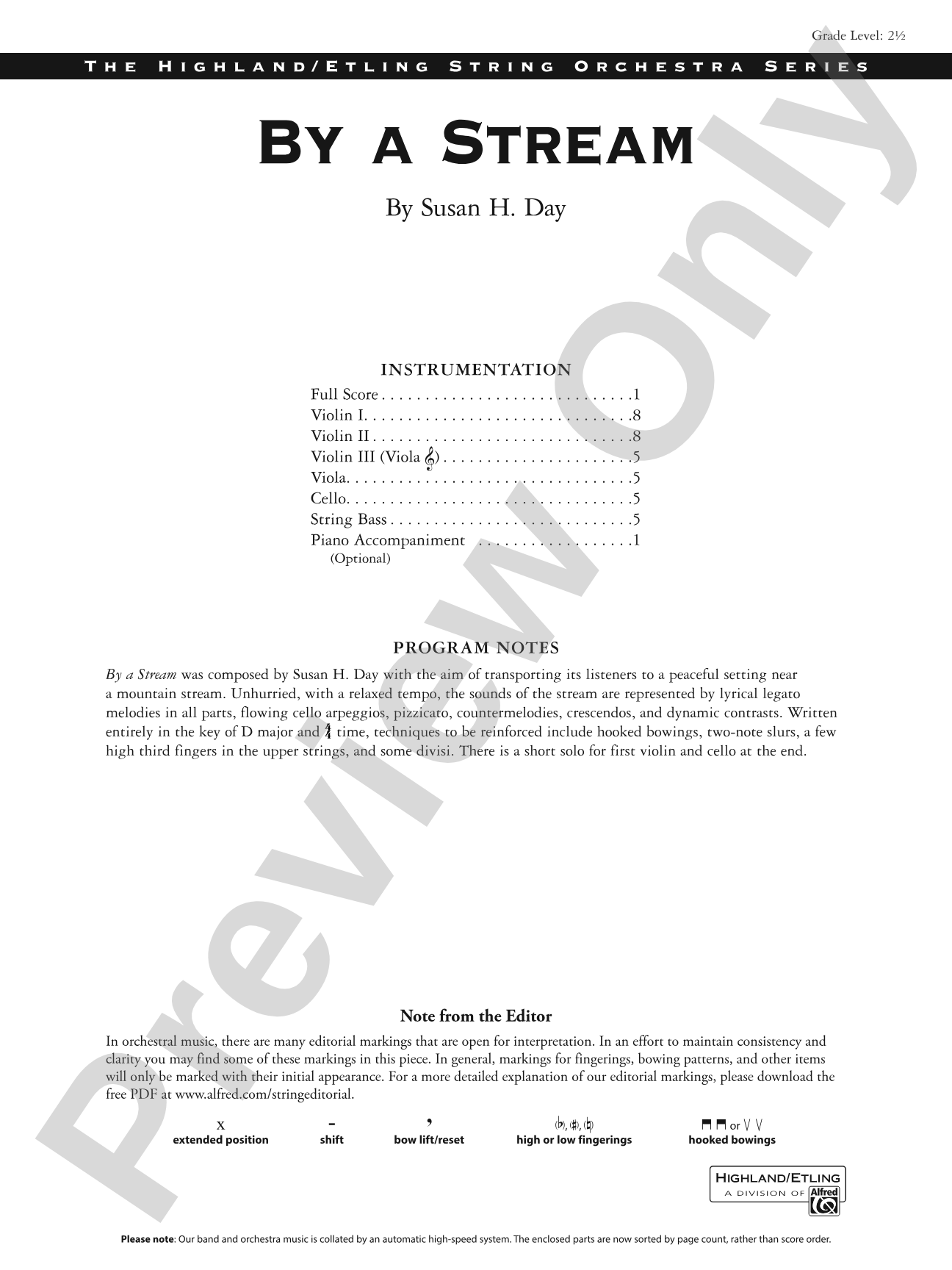
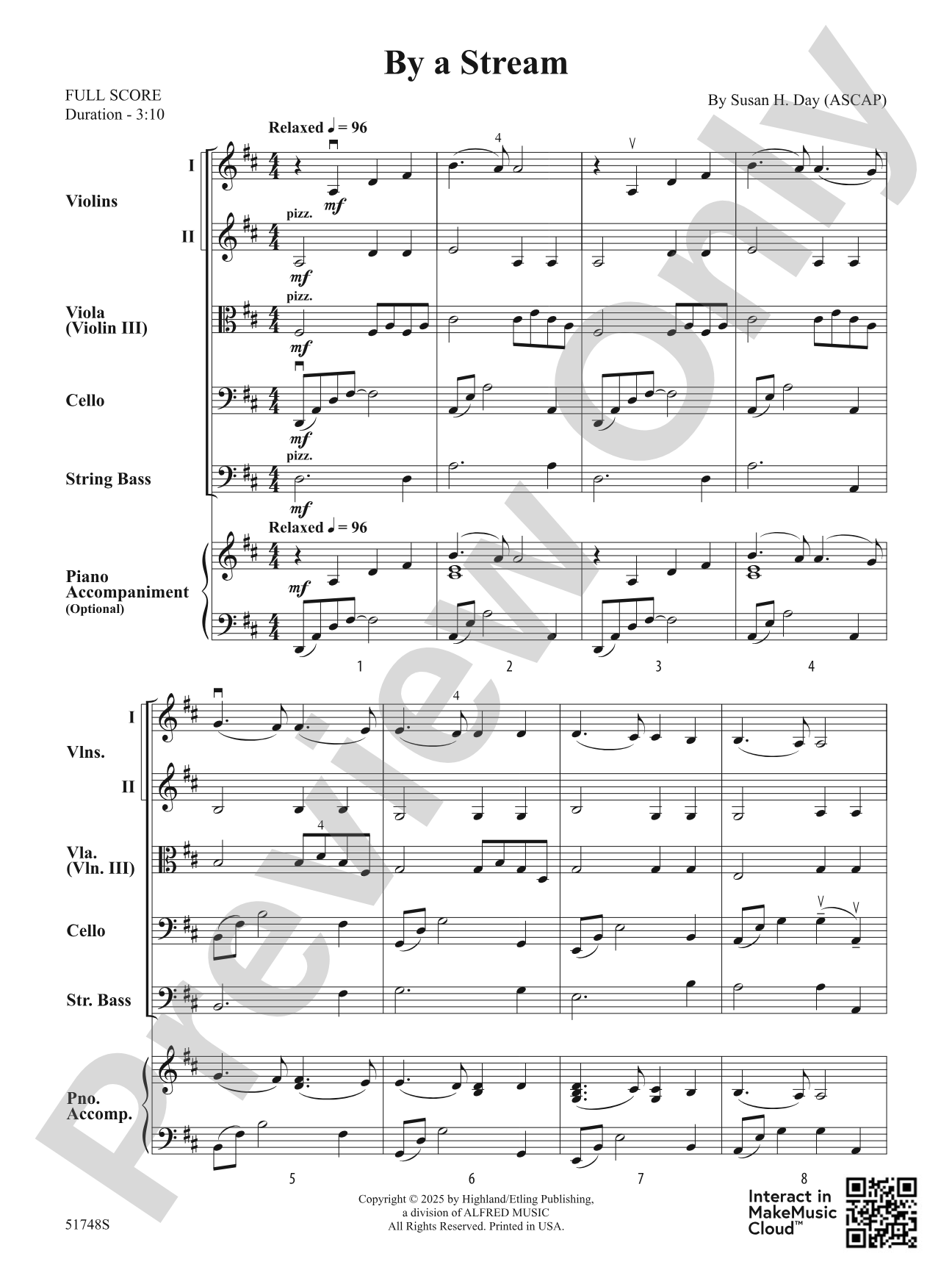
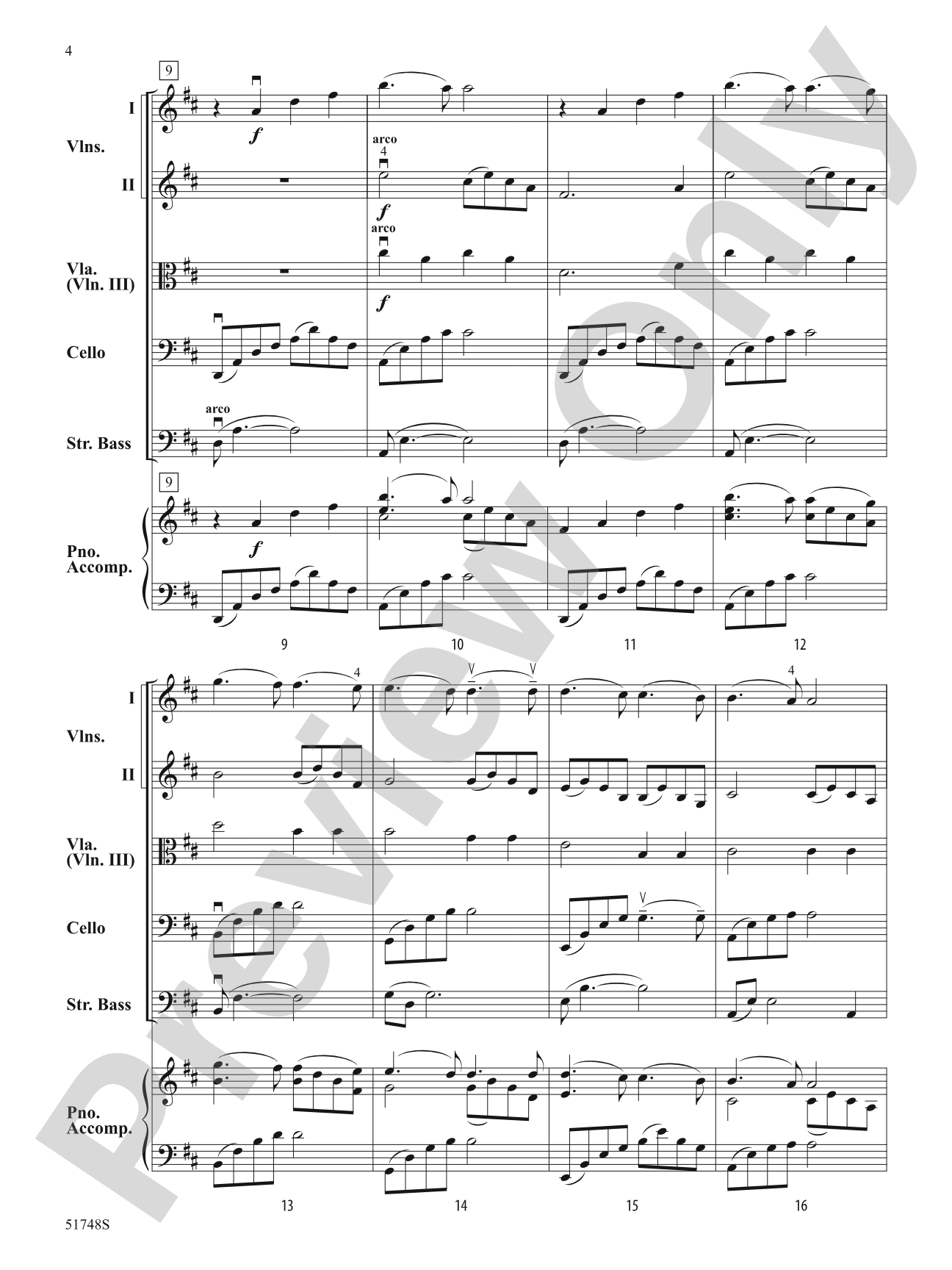
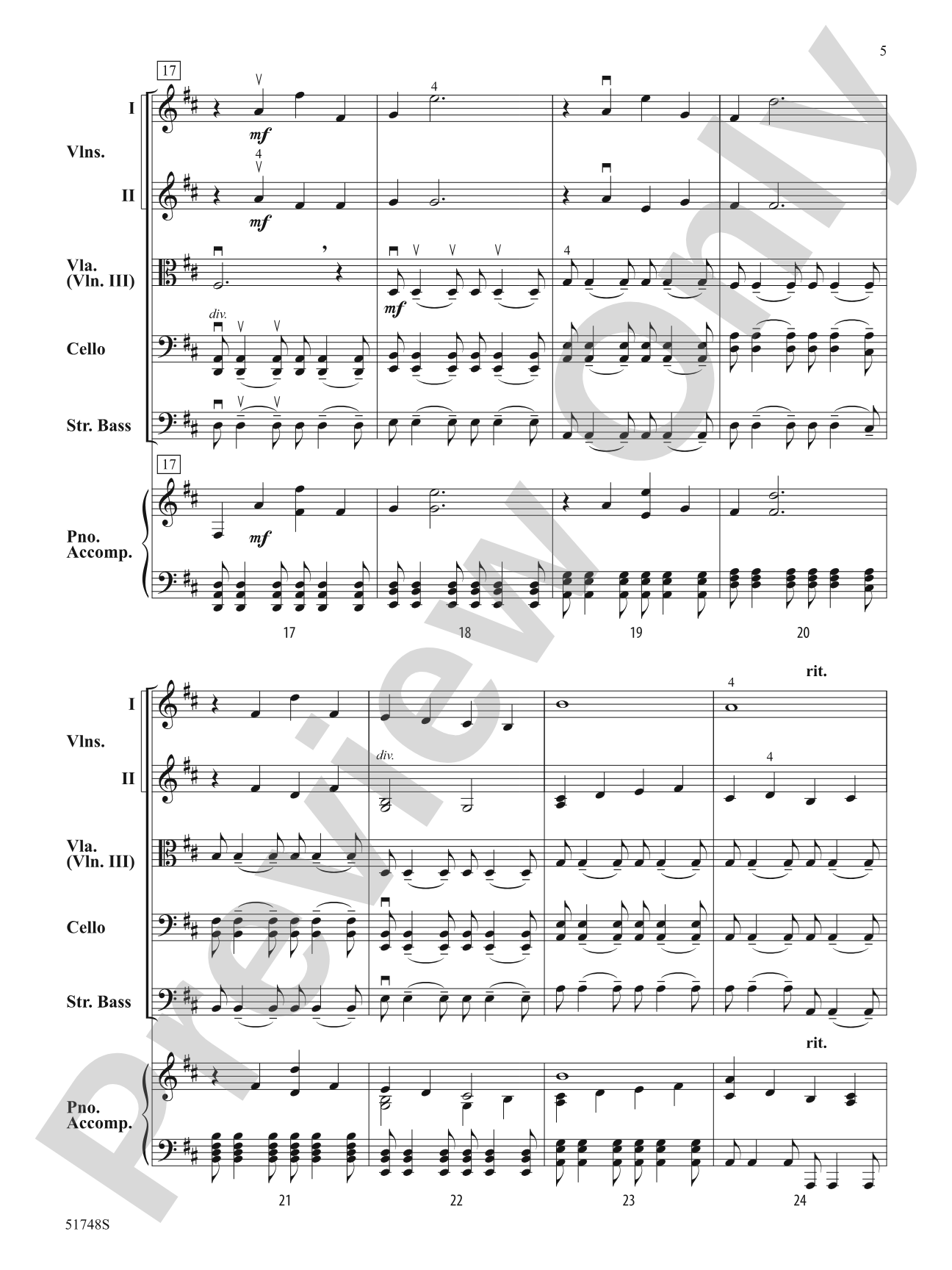
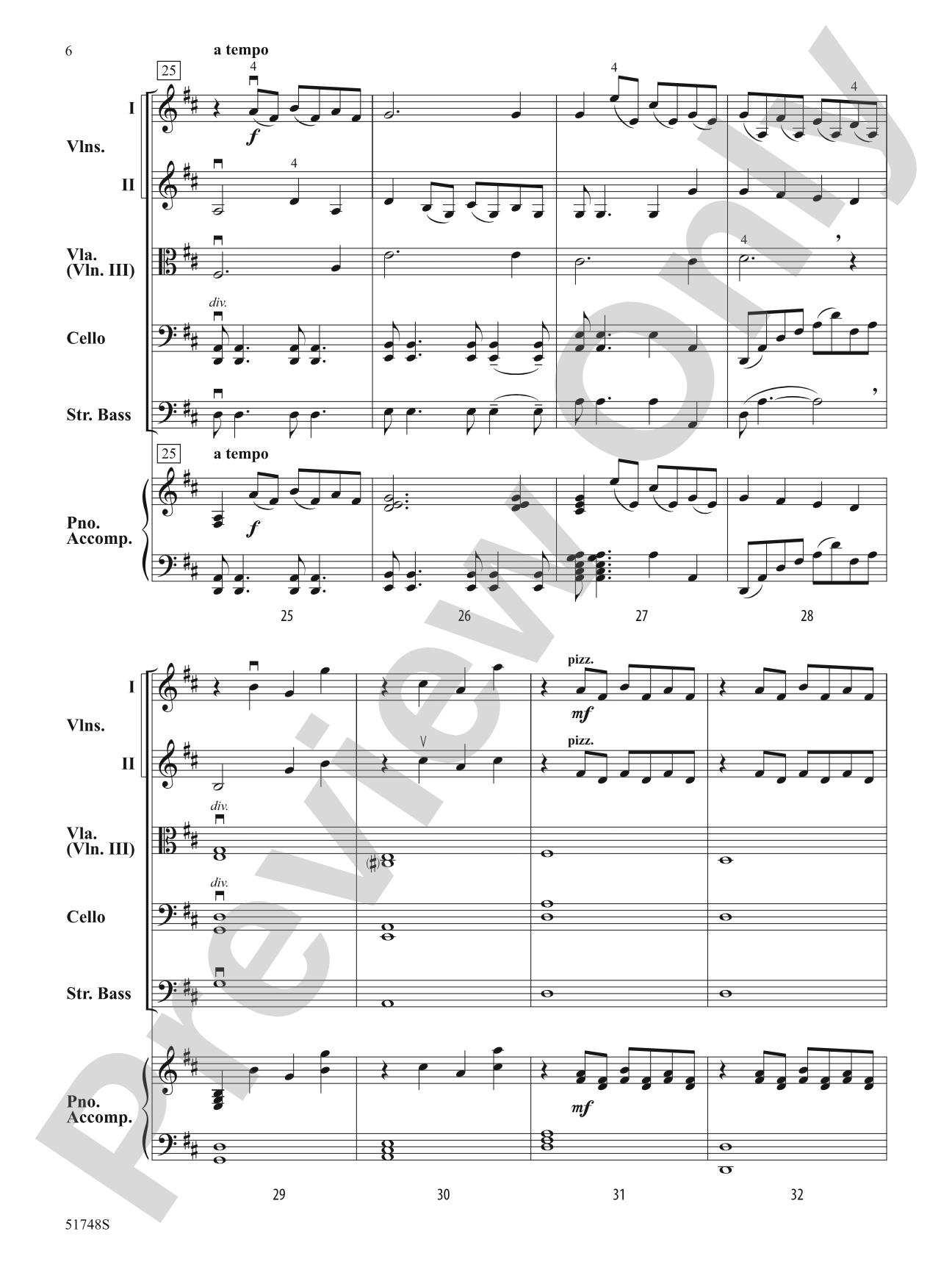
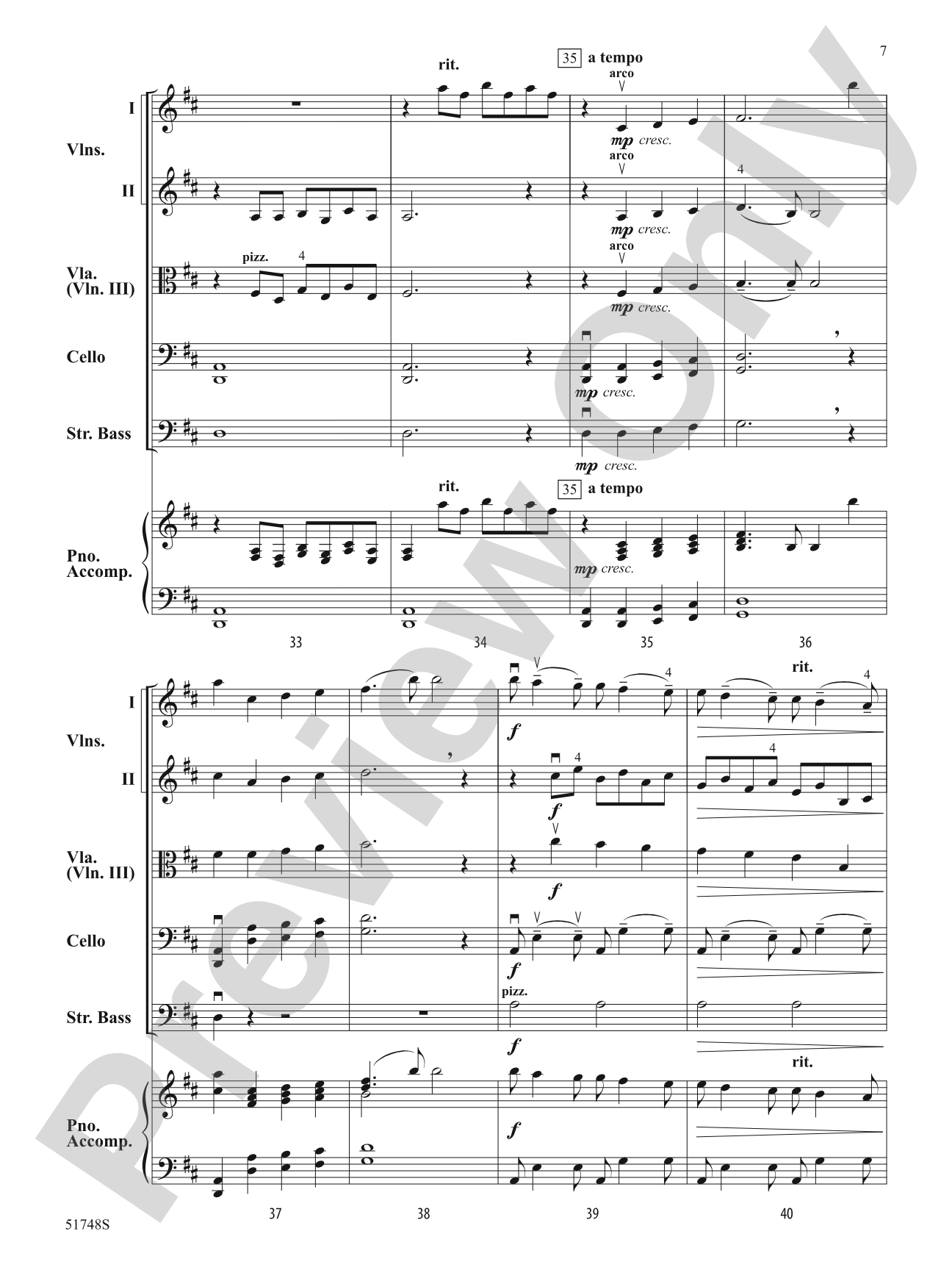
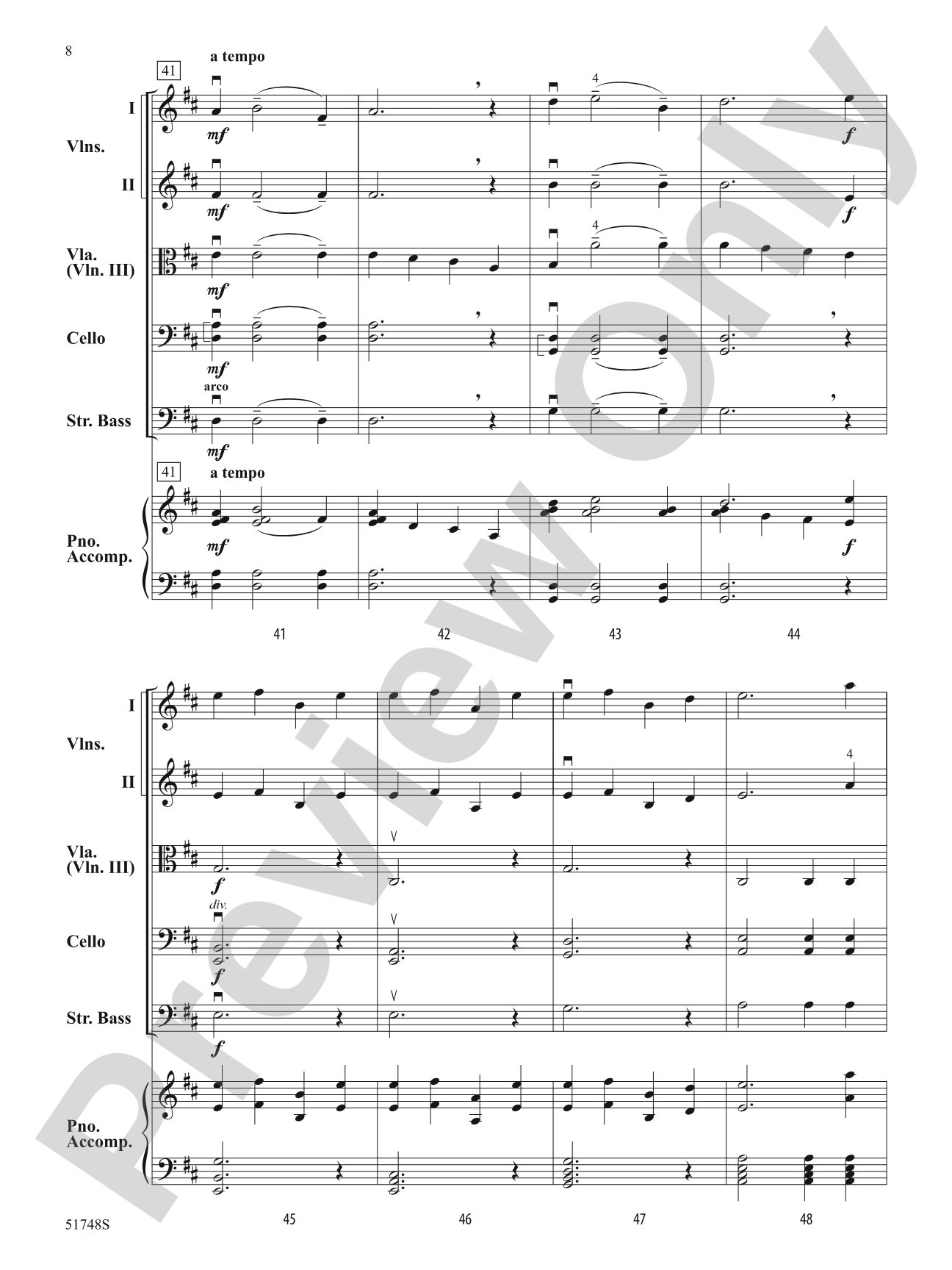
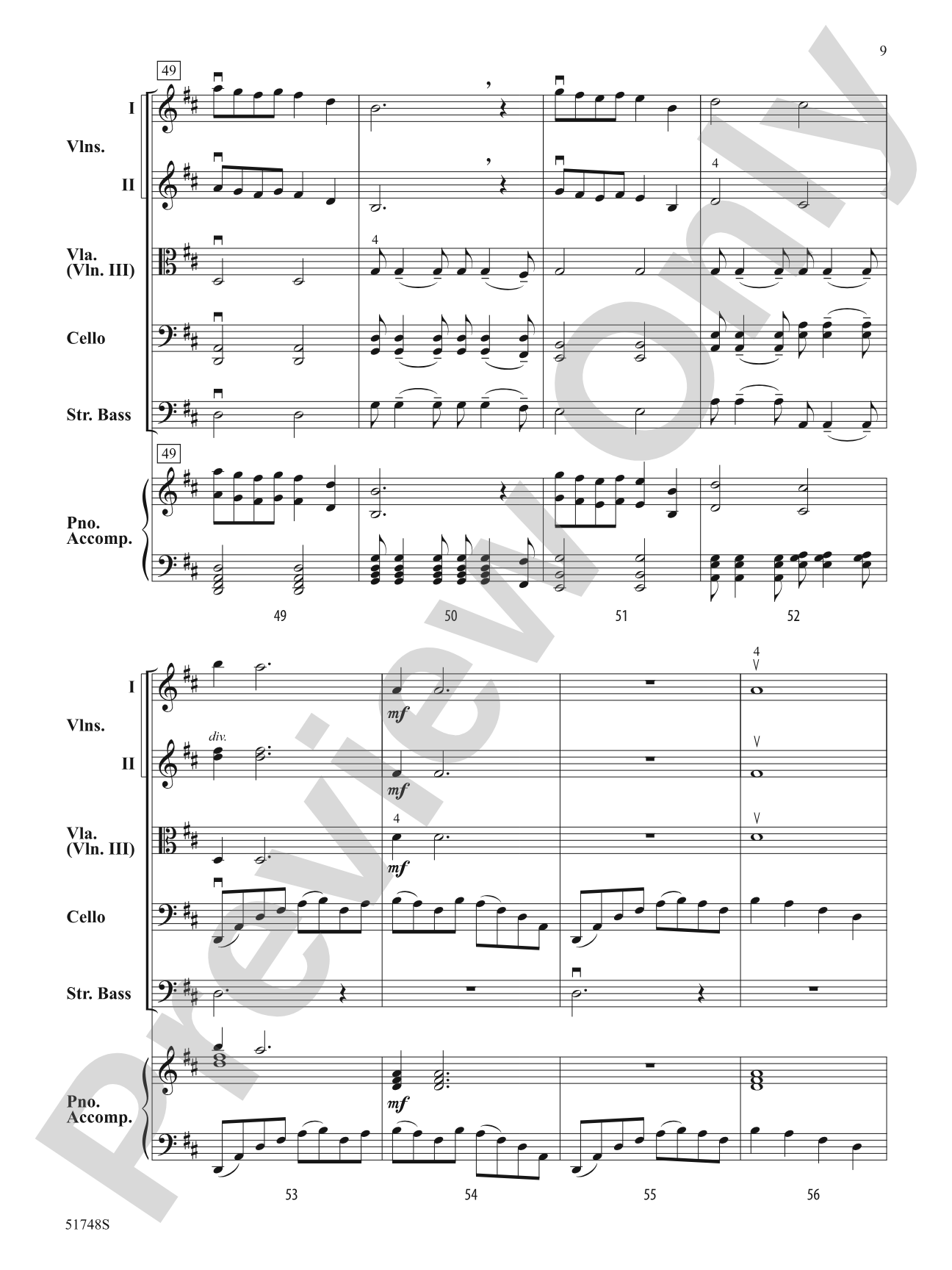
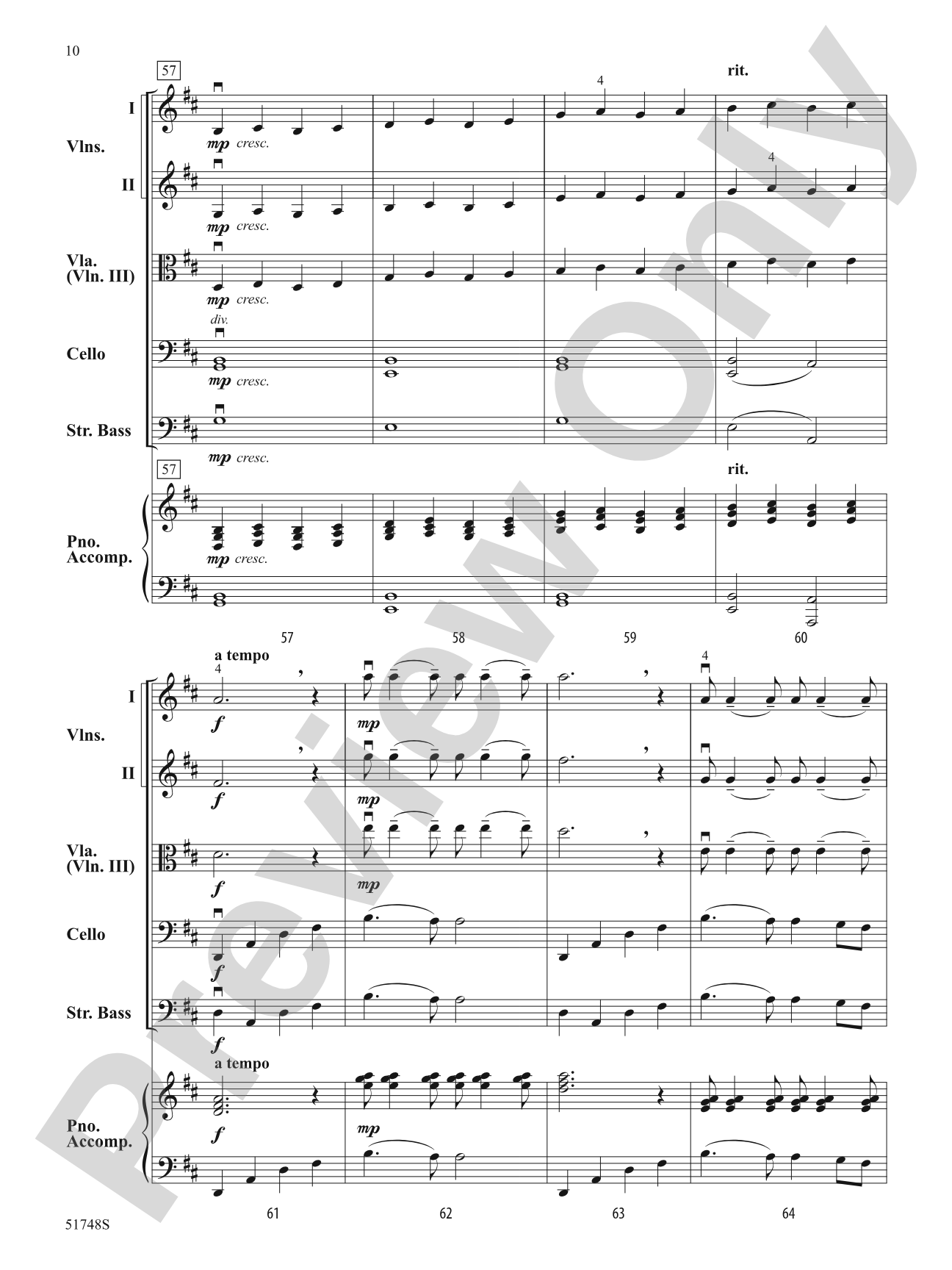
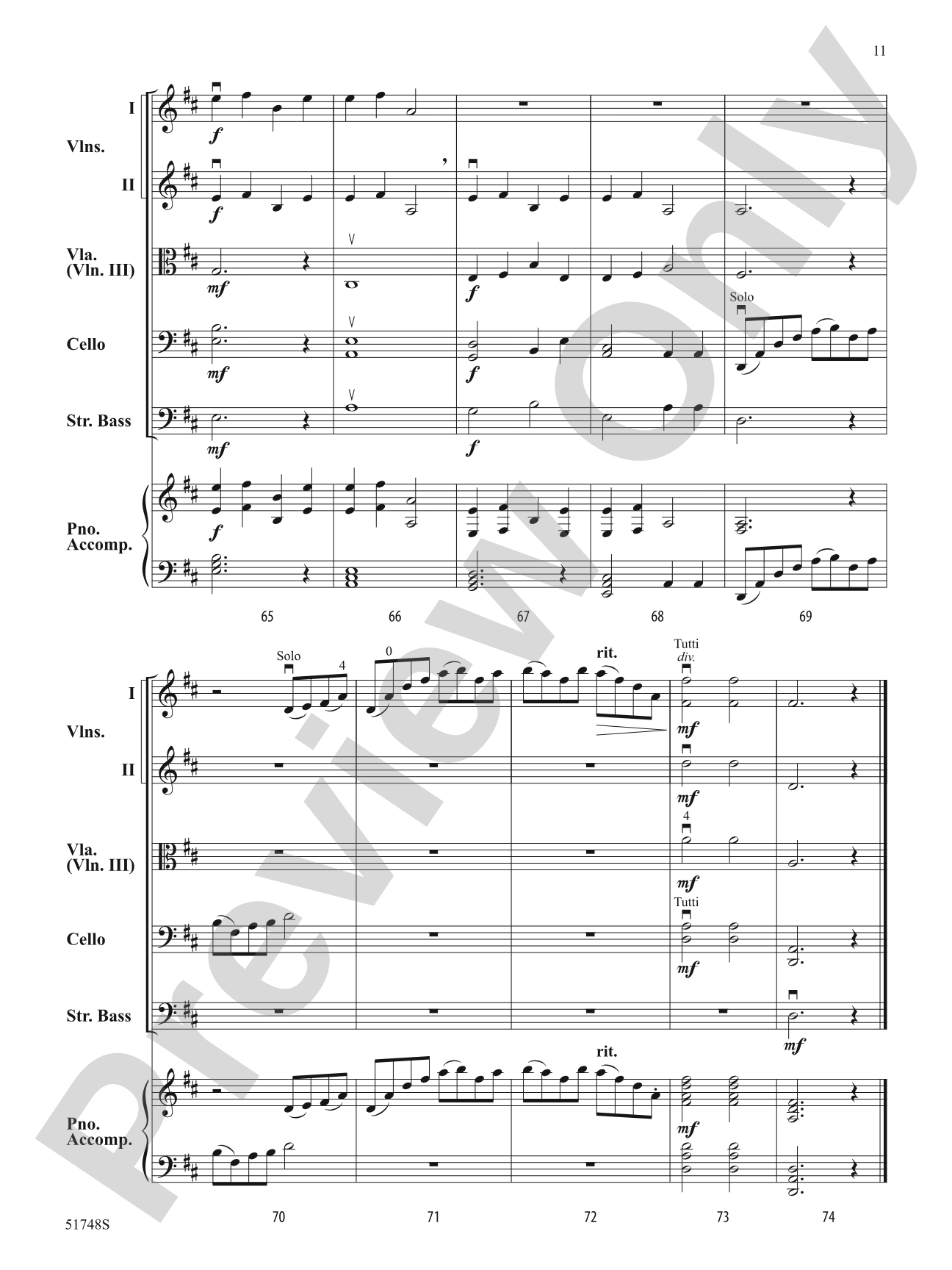
By a Stream was composed by Susan H. Day with the aim of transporting its listeners to a peaceful setting near a mountain stream. Unhurried, with a relaxed tempo, the sounds of the stream are represented by lyrical legato melodies in all parts, flowing cello arpeggios, pizzicato, countermelodies, crescendos, and dynamic contrasts. Written entirely in the key of D major and 4/4 time, techniques to be reinforced include hooked bowings, two note slurs, a few high third fingers in the upper strings, and some divisi. There is a short solo for first violin and cello at the end. Piano is optional. (3:10)


By a Stream: String Orchestra Conductor Score & Parts isn't in MakeMusic Cloud just yet...but it could be. Let us know you'd like to see it, and you'll help shape what comes next. In the meantime, start a free trial and dive into thousands of interactive titles your students can play along with today.
Request This Title
Tell us you want it.
Start Your Free Trial
Explore everything that's ready to play right now.
Sample Audio
1
Audio File
--:--
0:00
0:00
Sample Video
Additional Details
Series:
Highland String Orchestra
Publisher:
Alfred Music
SKU:
00-PK-0009200
More about this title
Why we love this
Day writes with genuine care for what intermediate string orchestras can actually accomplish. The piece uses straightforward technical demands to build musicianship rather than showcase difficulty, and the programmatic context gives students a clear reason to shape every phrase and dynamic shift. You'll find your ensemble genuinely engaged because the music asks them to paint a picture, not just play notes.
What to expect
Calm and immersive. The piece wraps you in the sound of flowing water, with arpeggios that ripple beneath lyrical melodies and dynamics that shift like light moving across rocks. There's no urgency here, only the patient beauty of a mountain stream captured in string sound.
Who it's for
Intermediate string orchestras seeking repertoire that develops musicianship through character and imagery rather than technical display. This works well for groups ready to manage hooked bowings, two-note slurs, and divided parts without becoming overwhelmed.
How to get the most out of it
- Shape the legato melodies with continuous bow contact and subtle dynamic swells. Listeners should hear the water's gentle movement, not static, even lines.
- Balance the pizzicato accompaniment figures carefully so they support rather than overpower the singing lines above them.
- Rehearse the divisi sections by part so each player understands their role in the texture before bringing the full orchestra together.
- Give the solo passages at the end breathing room. The first violin and cello solos deserve space and time to bloom without rushing.
How to use it
Program this on a concert built around nature imagery or poetry, where it can sit alongside other programmatic works. Its unhurried three-minute duration makes it an ideal opening piece to settle an audience and establish mood before moving to contrasting repertoire.
Skills your students will build
- Hooked bowings and two-note slurs
- Sustained legato playing with dynamic shaping
- Pizzicato coordination with arco textures
- Divisi string writing and part independence
- High third-finger technique in upper strings
- Responding to programmatic intent through musical choices
- Solo line projection with accompaniment support