
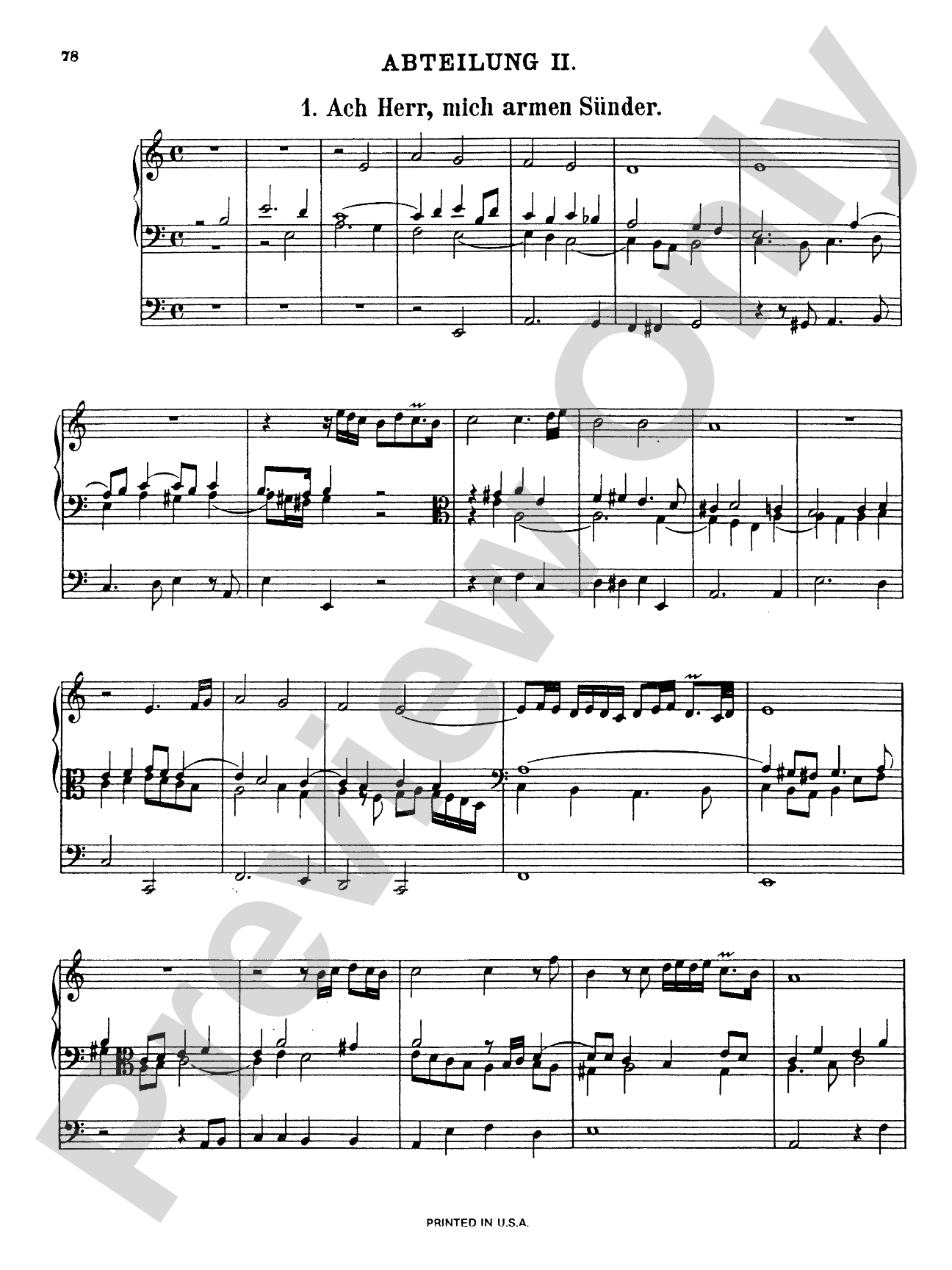
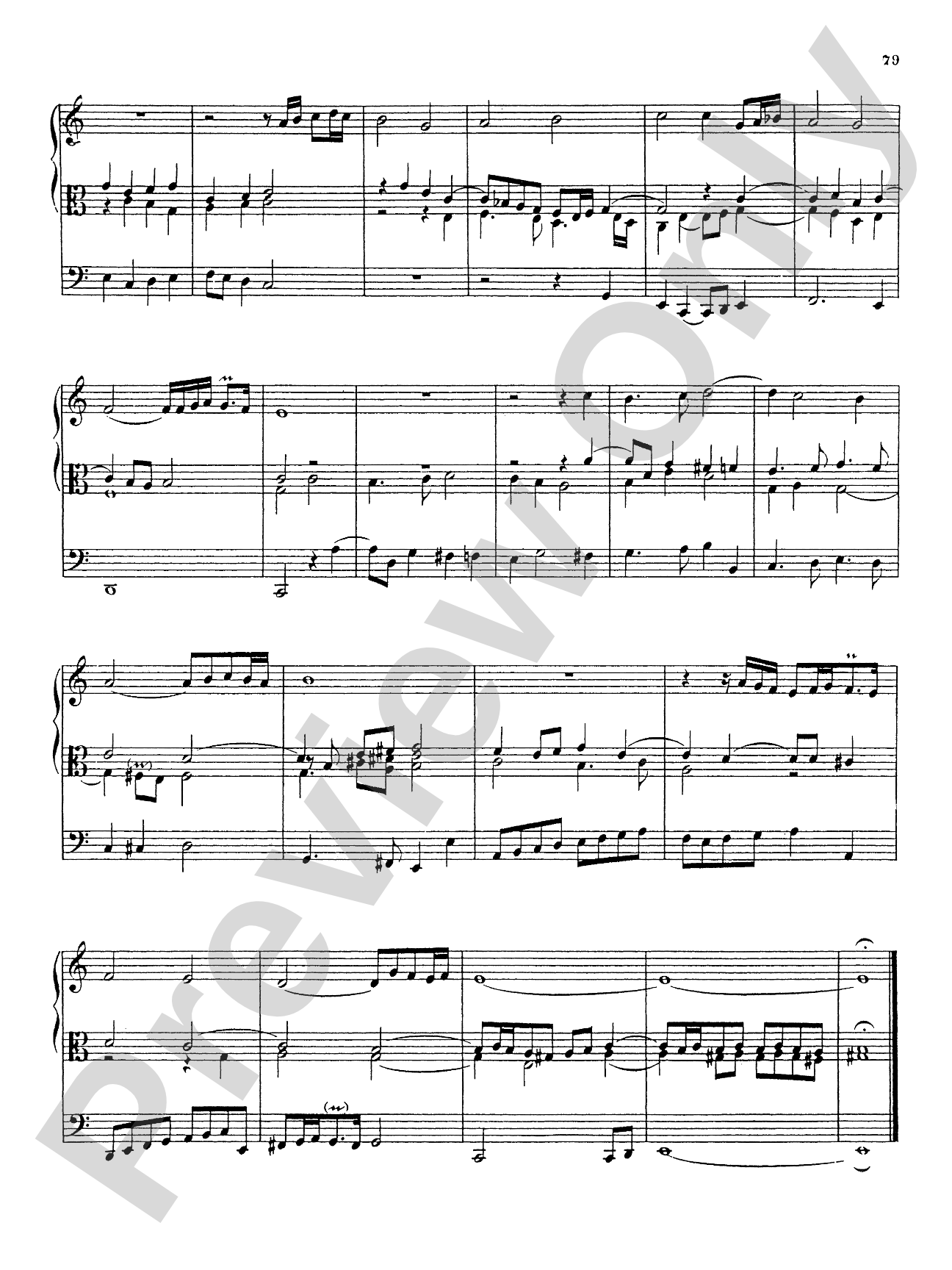

Buxtehude: Organ Works, Volume IV: Organ Book
By Dietrich Buxtehude
Item: 00-PK-0002984

$14.99
Pickup currently not available
Buy Extra Parts (Digital PDF Download)
Parts Added to Cart!
Related Items
Organ Works, Volume IV: Organ Book |
$14.95
|
View |
Description
Transcriptions


Don't just read it, hear it, play along with it, and watch your students grow with it. In MakeMusic Cloud, Buxtehude: Organ Works, Volume IV: Organ Book comes alive with professional accompaniment, adjustable tempo, and built-in practice tools that turn solo practice into real progress.
Open in the Player
Jump straight in and assign it today.
Start Your Free Trial
Open this title and explore the full library in minutes.
Sample Audio
No sample audio found.
Sample Video
No sample videos found.
Additional Details
Series:
Kalmus Edition
Publisher:
Alfred Music
Page Count:
60
SKU:
00-PK-0002984
More about this title
About the Composer: Dietrich Buxtehude
Dietrich Buxtehude (1637, 1707) was one of the most influential organ composers of the Baroque era, working primarily in Lübeck, Germany, where he held the position of organist at the Marienkirche for over fifty years. His compositional output profoundly shaped the keyboard music that followed, influencing both J.S. Bach and George Frideric Handel, both of whom traveled significant distances to hear him perform and study his work.
Buxtehude's organ compositions combine rigorous counterpoint with expressive harmonic language and virtuosic passagework. He developed the chorale fantasia as a major form and wrote extensively in the prelude and fugue tradition, establishing many of the techniques that would define Baroque keyboard writing. His music demands not only technical facility but also a deep understanding of registration and the ability to shape phrases across complex polyphonic textures.
Why we love this
This collection represents some of the most rewarding Baroque keyboard literature available to intermediate and advanced organists. The works sit at a crucial historical moment where organ music gained both structural complexity and expressive depth, offering players genuine artistic challenges while remaining accessible to those with solid fundamentals.
What to expect
Buxtehude's organ writing inhabits a world of rich harmonic color and contrapuntal ingenuity. These works move between moments of strict voice-leading and passages of surprising emotional intensity, creating a sense of musical conversation between formal discipline and expressive freedom.
Who it's for
Intermediate to advanced organists seeking to deepen their knowledge of Baroque repertoire and to explore works that bridge the keyboard styles of Froberger and Bach. This collection works equally well for individual study, graduate-level coursework, or recital programming.
How to get the most out of it
- Approach the articulation of runs and figuration with clarity and precision; Buxtehude's keyboard writing rewards clean separation between voices even in rapid passages.
- Pay close attention to harmonic rhythm and suspensions, which often carry dramatic weight in these works despite their brief duration.
- Experiment with registration choices to highlight the contrapuntal layers; Buxtehude's voices often move in independent lines that deserve distinct tonal color.
- Balance ornamentation with structural integrity; these pieces benefit from thoughtful expression without obscuring their underlying harmonic architecture.
How to use it
Feature selections from this volume as standalone recital pieces, particularly in programs exploring the evolution from Renaissance to Baroque keyboard music. They also serve as natural stepping stones for students preparing to tackle the Bach organ works that followed a generation later.
Skills your students will build
- Baroque articulation and phrasing conventions
- Independent voice leading and counterpoint across two manuals
- Registration choices and tonal orchestration on the organ
- Navigation of harmonic progressions typical of mid-to-late Baroque practice
- Interpretation of figured bass and implied ornamentation