
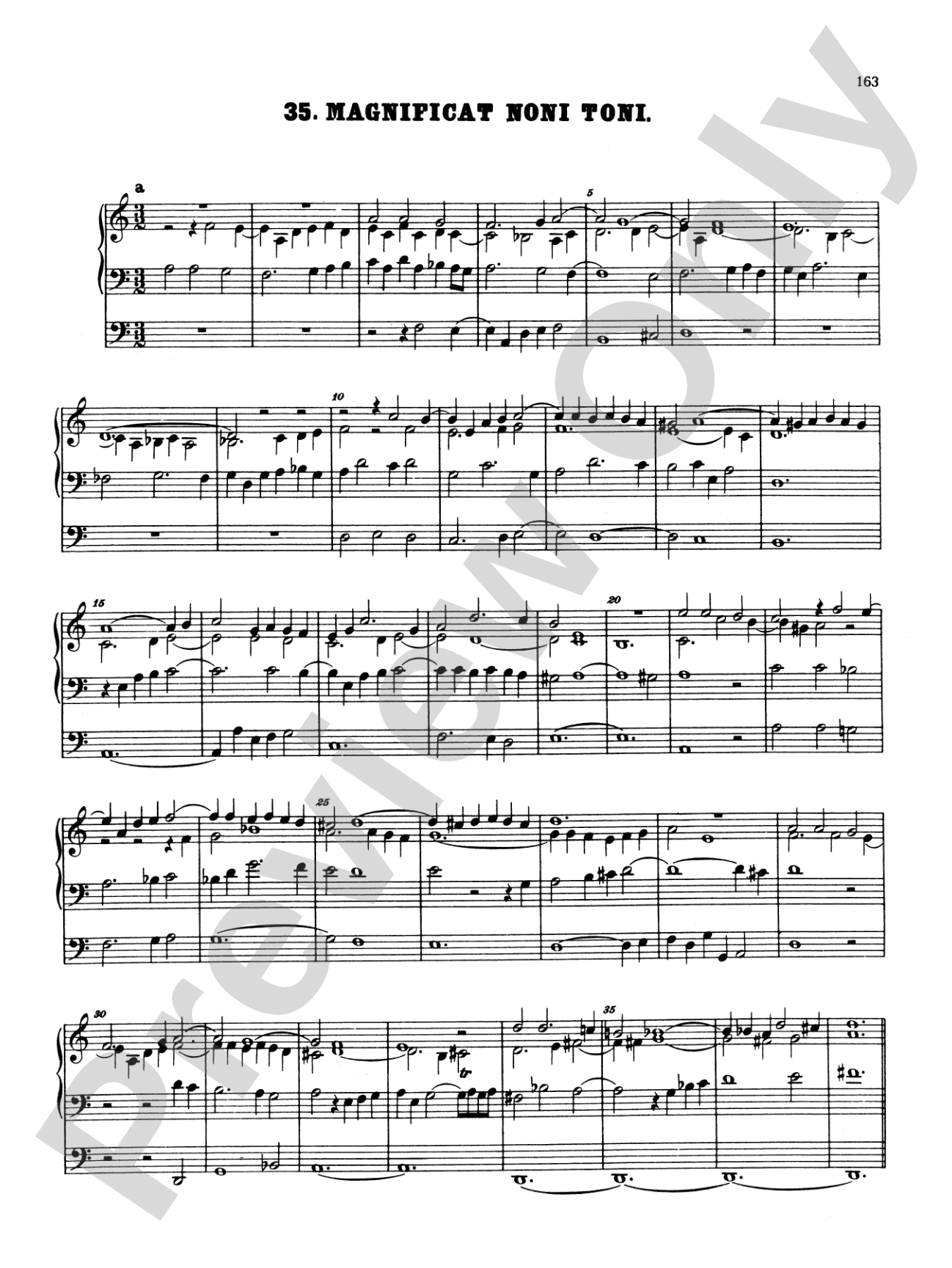

Buxtehude: Organ Works, Volume II
By Dietrich Buxtehude
Item: 00-PC-0005885
$0.99
Pickup currently not available
Description
Free Compositions. "Toccata in F Major (BuxWV 157)" is a Federation Festivals 2016-2020 selection.


Don't just read it, hear it, play along with it, and watch your students grow with it. In MakeMusic Cloud, Buxtehude: Organ Works, Volume II comes alive with professional accompaniment, adjustable tempo, and built-in practice tools that turn solo practice into real progress.
Open in the Player
Jump straight in and assign it today.
Start Your Free Trial
Open this title and explore the full library in minutes.
Sample Audio
No sample audio found.
Sample Video
No sample videos found.
Additional Details
Series:
Kalmus Edition
Publisher:
Alfred Music
Page Count:
92
SKU:
00-PC-0005885
More about this title
About the Composer: Dietrich Buxtehude
Dietrich Buxtehude (1637-1707) was a dominant figure in Baroque organ music and a towering influence on the generation of composers who followed him. Working primarily in Lübeck, Germany, he developed a distinctive compositional voice that balanced the improvisatory freedom of the toccata with rigorous fugal writing, establishing a model that would shape organ music for decades. His keyboard works were so revered that the young J.S. Bach walked 250 miles to hear him perform.
Butxehude's organ compositions reveal a composer deeply invested in the expressive and technical possibilities of the instrument. His toccatas especially showcase a virtuosic command of form and harmony, combining passages of dramatic affect with passages of crystalline counterpoint. For organists and music educators, his works represent essential Baroque repertoire that demands both interpretive maturity and considerable technical facility.
Why we love this
Volume II collects the free compositions (toccatas and preludes) that reveal Buxtehude's genius for dramatic rhetoric and harmonic depth, offering organists substantial, rewarding material that sits comfortably between Bach and his earlier German contemporaries. The inclusion of the "Toccata in F Major" as a Federation Festivals selection ensures you have authenticated, performance-standard repertoire with institutional recognition. These works repay careful study: they demand secure fingerwork, independence between hands, and the interpretive judgment to shape long harmonic arcs without losing momentum.
What to expect
These toccatas unfold with the confidence and rhetorical sweep of a master improviser. Dramatic outbursts of broken figuration give way to moments of harmonic richness and contrapuntal intricacy, creating a sense of architectural inevitability even as the music surprises. The writing feels idiomatic to the organ in the best sense: exploiting the instrument's power and sustain while demanding precision and control from the player.
Who it's for
This collection serves advanced organists preparing repertoire for recitals, festivals, and auditions, as well as organ teachers seeking substantial Baroque works that challenge technique while building interpretive maturity. Organists studying the historical roots of Bach will find these works invaluable; they offer direct insight into the compositional language and keyboard idioms that shaped Bach's own organ writing.
How to get the most out of it
- Map the harmonic progressions before you begin; Buxtehude's toccatas move through unexpected key areas, and knowing where you're headed prevents tentative pedaling and rushed passagework.
- Differentiate the texture between the free, improvisatory sections and the stricter fugal writing by adjusting touch and registration; the toccata's dramatic power depends on this contrast.
- Practice the hand crossings and rapid figuration separately, then at tempo; rushing the technical passages undermines the rhetorical weight Buxtehude builds in the slower harmonic sections.
- Pay attention to the organ's specific resources in your venue; Buxtehude's works are written idiomatically for the North German organ and reward thoughtful registration choices that honor both the printed part and the instrument's capabilities.
How to use it
Program Buxtehude's toccatas on recitals exploring Baroque keyboard music, particularly in a pairing with his contemporaries or as a bridge toward Bach. These works also serve as performance requirements for organists pursuing advanced degrees or preparing for competitions where Baroque repertoire is mandated. Within a teaching studio, they function as the intermediate-to-advanced milestone that signals a student's readiness to engage with the historical organ literature on its own terms.
Skills your students will build
- Reading and executing rapid passagework and hand crossings at tempo
- Harmonic independence and secure pedal technique across key modulations
- Interpretive decision-making in free, improvisatory sections
- Touch differentiation and registration planning to clarify texture and form
- Baroque articulation and ornamentation conventions specific to the organ