Butterfly Game Sheet Music Preview

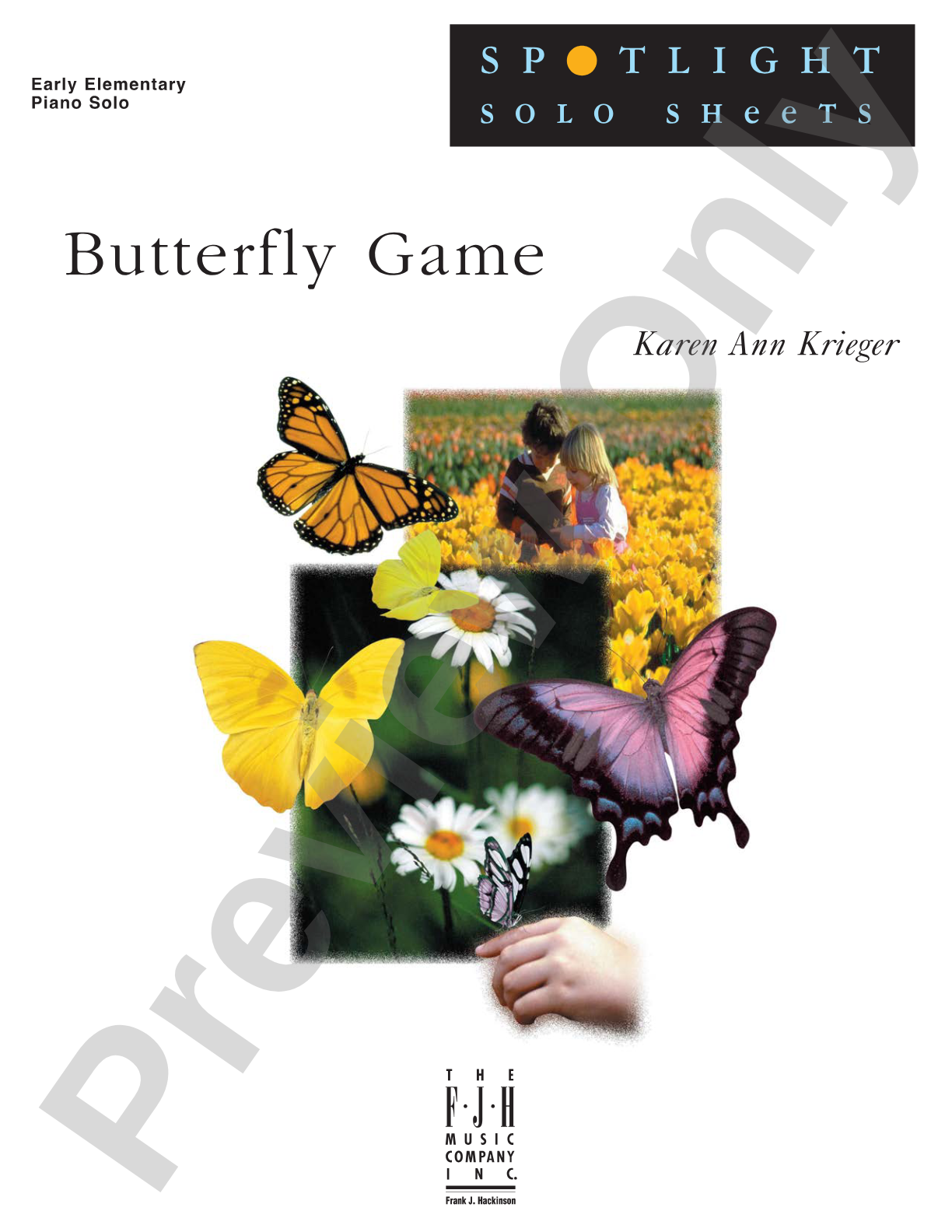
Butterfly Game: Piano

By Karen Ann Krieger

Item: 98-DS4078

Digital Download
$5.50
Description
Written in Middle C position, this piece is a playful study in both legato and staccato touches. Lyrical lines promote expressive phrasing.

Butterfly Game: Piano isn't in MakeMusic Cloud just yet...but it could be. Let us know you'd like to see it, and you'll help shape what comes next. In the meantime, start a free trial and dive into thousands of interactive titles your students can play along with today.

Sample Audio
No sample audio found.
Sample Video
Additional Details
Series: Spotlight Solo Sheets
Publisher: The FJH Music Company, Inc.
SKU: 98-DS4078

More about this title

Why we love this

Krieger balances technical instruction with genuine musicality here. Students work on two fundamental touch qualities simultaneously, yet the piece never feels like a technique exercise because the melodic idea is genuinely singable and the animal theme gives them something to imagine.

What to expect

Playful and light, with a sense of movement and delicate observation. The combination of smooth and bouncy touches creates a fluttering quality that matches its title, inviting students to think musically about how their fingers shape each note.

Who it's for

Early elementary pianists working in Middle C position who are ready to explore articulation beyond playing everything the same way. This piece works for students around late primer or early level 1 who have basic hand position and finger independence but need guided practice in touch variety.

How to get the most out of it

  • Map out legato and staccato sections before playing through. Mark the score clearly so you know exactly where each touch begins and ends.
  • Let the lyrical lines breathe. Even in staccato passages, maintain the musical arc of the melody rather than treating short notes as disconnected.
  • Practice hands separately first, especially if coordinating different touches between hands. This isolates the tactile memory each hand needs.
  • Record yourself and listen for contrast. The piece works when legato and staccato feel intentional and expressive, not mechanical.

How to use it

Pair this with other animal or nature pieces to build a thematic recital section. It's also effective as a method reinforcement piece in a studio setting where you want students to demonstrate control over two distinct touches in a single performance context.

Skills your students will build

  • Legato touch and finger control for sustained melodic lines
  • Staccato touch with consistent articulation and finger rebound
  • Coordinating different articulations within a single piece
  • Reading and interpreting articulation markings
  • Musical phrasing and expressive shaping in elementary repertoire

You May Also Like