Butterfly Ballet Sheet Music Preview

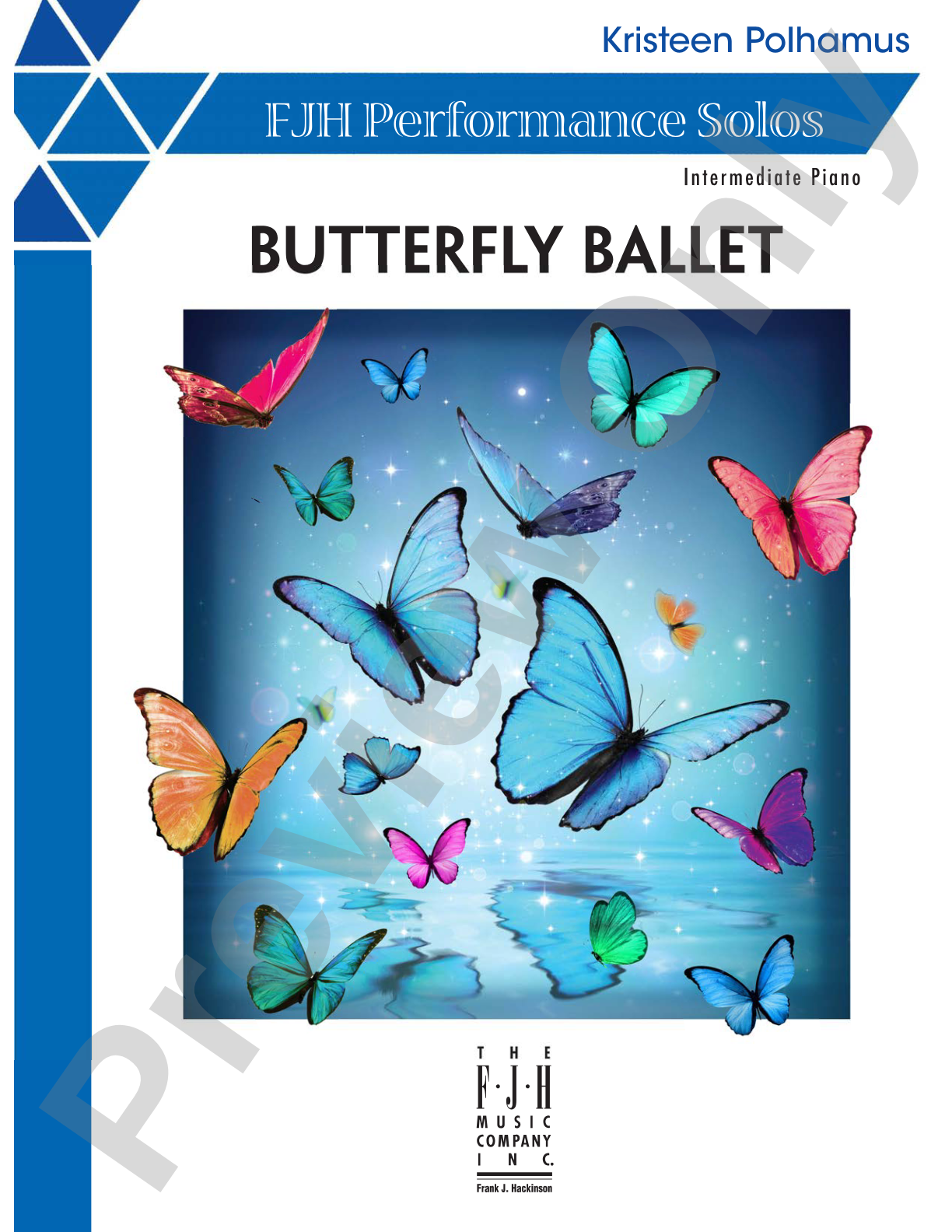
Butterfly Ballet: Piano

By Kristeen Polhamus

Item: 98-DP2036

Digital Download
$5.50
Description
A light and flowing intermediate piano solo that evokes colorful moods in a waltzing meter. Frequent pedal is used giving the impression blending harmonies while adding grace notes for a delicate effect.

Butterfly Ballet: Piano isn't in MakeMusic Cloud just yet...but it could be. Let us know you'd like to see it, and you'll help shape what comes next. In the meantime, start a free trial and dive into thousands of interactive titles your students can play along with today.

Sample Audio
No sample audio found.
Sample Video
Additional Details
Series: FJH Performance Solos
Publisher: The FJH Music Company, Inc.
SKU: 98-DP2036

More about this title

Why we love this

Polhamus captures something genuinely lyrical here, using the waltz meter not as nostalgia but as a natural container for rolling harmonic motion. The pedal work becomes an integral part of the composition rather than an optional effect, which means students engage with sustain as a musical voice from the start.

What to expect

Imagine colored light shifting as a butterfly moves through air. The piece floats in waltz time without heaviness, buoyant and shimmering. Harmonies blend and separate as the pedal engages and releases, creating impressionistic washes of sound punctuated by delicate grace notes that feel almost weightless.

Who it's for

Intermediate pianists with solid hands position and comfort sustaining phrases through pedal. This solo suits students ready to move beyond simple accompaniment patterns and explore how pedal shapes harmonic color.

How to get the most out of it

  • Listen for the phrase shape beneath the flowing figurations. The waltzing meter can encourage mechanical metering; instead, let each harmonic progression breathe by varying the weight on beat one across phrases.
  • Coordinate pedal changes with harmonic shifts rather than foot position. Frequent pedal use here means you're constantly adjusting, so practice marking exactly where each change happens and what sonority you're supporting.
  • Balance the grace notes delicately; they're ornamental but not incidental. They should land softly and land early in the gesture, never stealing time from the main melodic line.

How to use it

Program this as a graceful contrast to more structured or dramatic pieces on a recital. It works well in early positions on a concert where a lighter mood can reset the audience's attention before deeper work follows. The intermediate level and approachable character also make it valuable for student recitals or studio demonstrations.

Skills your students will build

  • Pedal control and coordination with harmonic rhythm
  • Phrasing in waltz meter beyond metronomic counting
  • Grace note placement and timing within flowing passages
  • Dynamic shaping through harmonic blending and resonance
  • Sustaining legato lines across hand position changes

You May Also Like