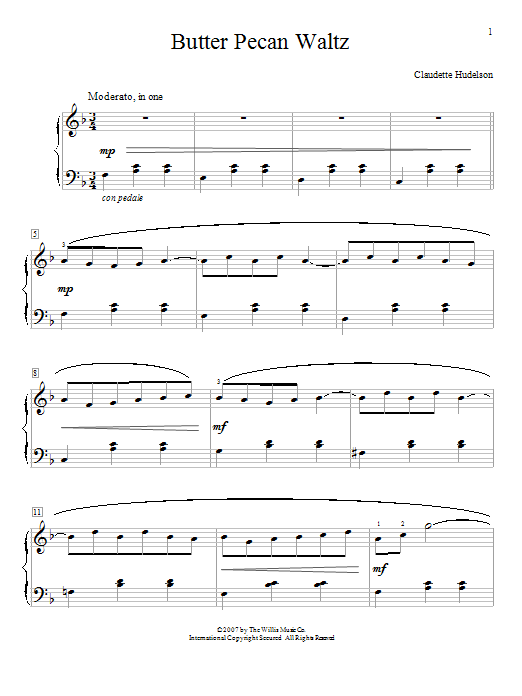
Hudelson writes with a clear sense of what young pianists can actually execute at this level, avoiding the trap of oversimplifying melody at the expense of harmonic interest. The waltz form gives students a structured framework for understanding phrase architecture while the pedagogical voice keeps technique demands proportional to the musical reward.
What to expect
Warm and graceful, like a small musical box winding through a gentle three-beat dance. The waltz evokes nostalgia without ever feeling precious or overly sentimental.
Who it's for
Elementary and early intermediate pianists building confidence with traditional forms and cultivating musicality beyond note accuracy. Teachers seeking repertoire that sounds refined while remaining accessible.
How to get the most out of it
Shape the melody through subtle dynamic swelling rather than aggressive accents; the waltz's three-beat pulse should feel natural and floating.
Anchor the left hand with consistent, unhurried accompaniment patterns to establish the waltz's rhythmic foundation before polishing the right hand line.
Listen for places where repeated figures can be colored differently on the second or third statement to prevent the piece from feeling static.
How to use it
Feature this in a student recital centered on classical forms, pairing it with other waltzes at varying levels to show stylistic continuity. It also works beautifully as an encore piece when students need something polished but not technically demanding.
Skills your students will build
Reading and executing waltz time (3/4) with steady accompaniment patterns
Phrasing and shaping lyrical melody over repeated harmonic structures
Balancing two-hand independence in a consistent textural role
Sustaining musical interest through variation and dynamic color rather than technical display
You May Also Like
Scan to Complete Your Purchase
Use your phone's camera to scan the code below
You'll log in on your phone and the order will be added to your account