Butcher Boy Sheet Music Preview

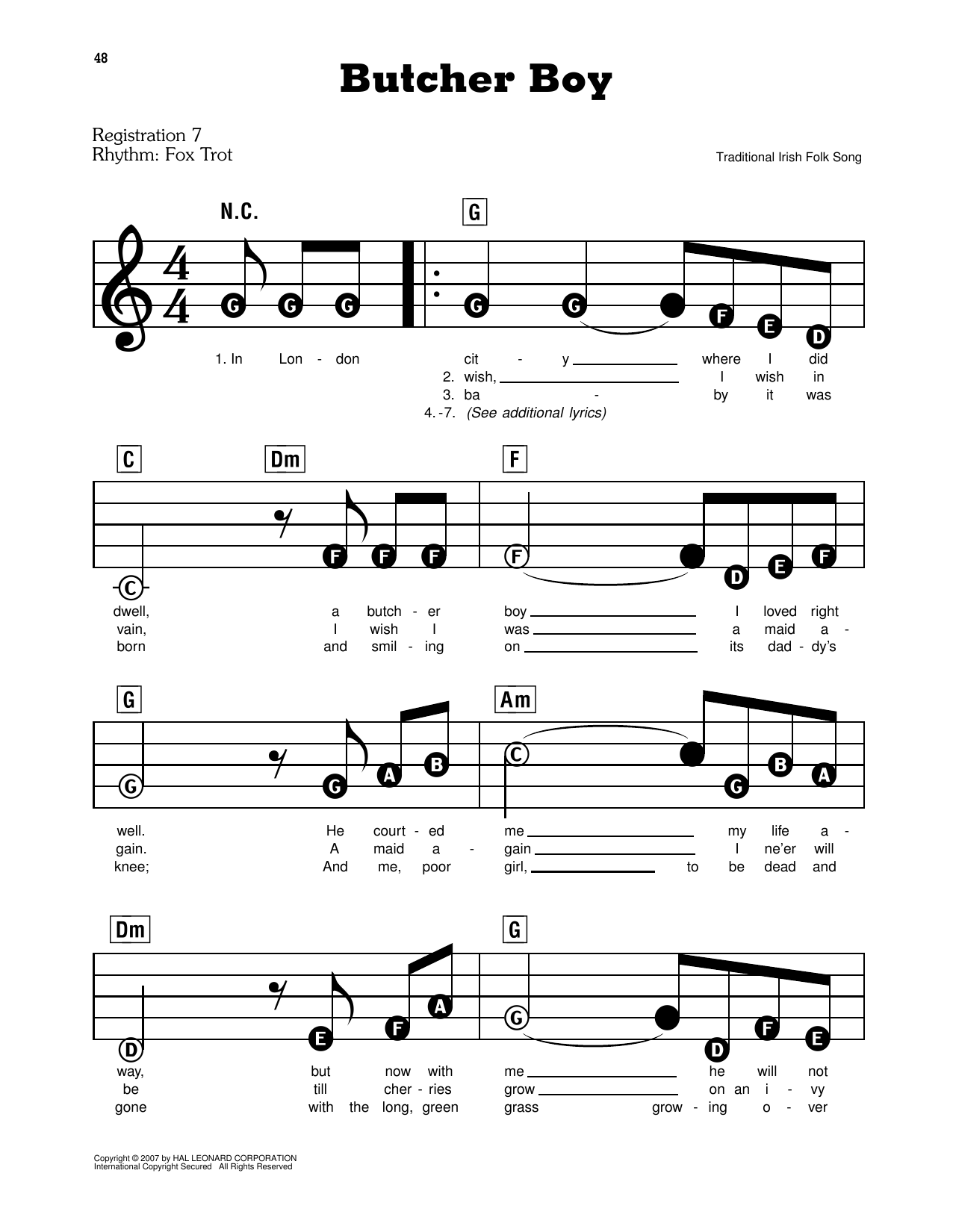
Butcher Boy: E-Z Play Today

Item: 35-DS00520722

Digital Download
$4.99
Description

Butcher Boy: E-Z Play Today isn't in MakeMusic Cloud just yet...but it could be. Let us know you'd like to see it, and you'll help shape what comes next. In the meantime, start a free trial and dive into thousands of interactive titles your students can play along with today.

Sample Audio
No sample audio found.
Sample Video
Additional Details
Publisher: Hal Leonard
Page Count: 2
SKU: 35-DS00520722

More about this title

Why we love this

E-Z Play Today arrangements strip away unnecessary complexity while preserving the melodic and harmonic heart of a song, and this Irish folk standard is no exception. Pianists at early intermediate levels get to own a recognizable tune without fighting through dense voicings or awkward hand positions. The brevity of the score also makes it realistic for students juggling multiple pieces in a semester.

What to expect

Haunting and intimate. The minor key and the spare storytelling create a minor-key melancholy that lingers. This is a tune that settles into a room quietly but leaves an impression.

Who it's for

Beginning pianists who want to play something with cultural substance and historical grounding. This works equally well for students exploring folk traditions, classroom teachers building a multicultural repertoire, or pianists seeking accessible repertoire that feels complete rather than diluted.

How to get the most out of it

  • Lean into the narrative quality of the melody. 'Butcher Boy' tells a story, and your phrasing should guide the listener through it rather than treat it as abstract material.
  • Keep left-hand accompaniment steady but not mechanical. Folk repertoire benefits from a conversational rhythm that breathes with the melody.
  • Explore the minor tonality. This tune carries emotional weight, so avoid playing it as purely neutral or cheerful.
  • Experiment with rubato in the final phrase if the arrangement permits it. A small ritardando at the end honors the song's reflective conclusion.

How to use it

Pair this with other folk traditions from around the world to build a concert exploring how different cultures preserve stories through song. Alternatively, use it as a solo piece in a casual recital or as a palette cleanser between heavier contemporary works.

Skills your students will build

  • Reading and performing in minor keys with confidence
  • Accompaniment patterns that support rather than overshadow melody
  • Phrasing and expression beyond the written note values
  • Comfort with two-page scores and longer melodic lines

You May Also Like