But Not For Me (from An American In Paris) Sheet Music Preview

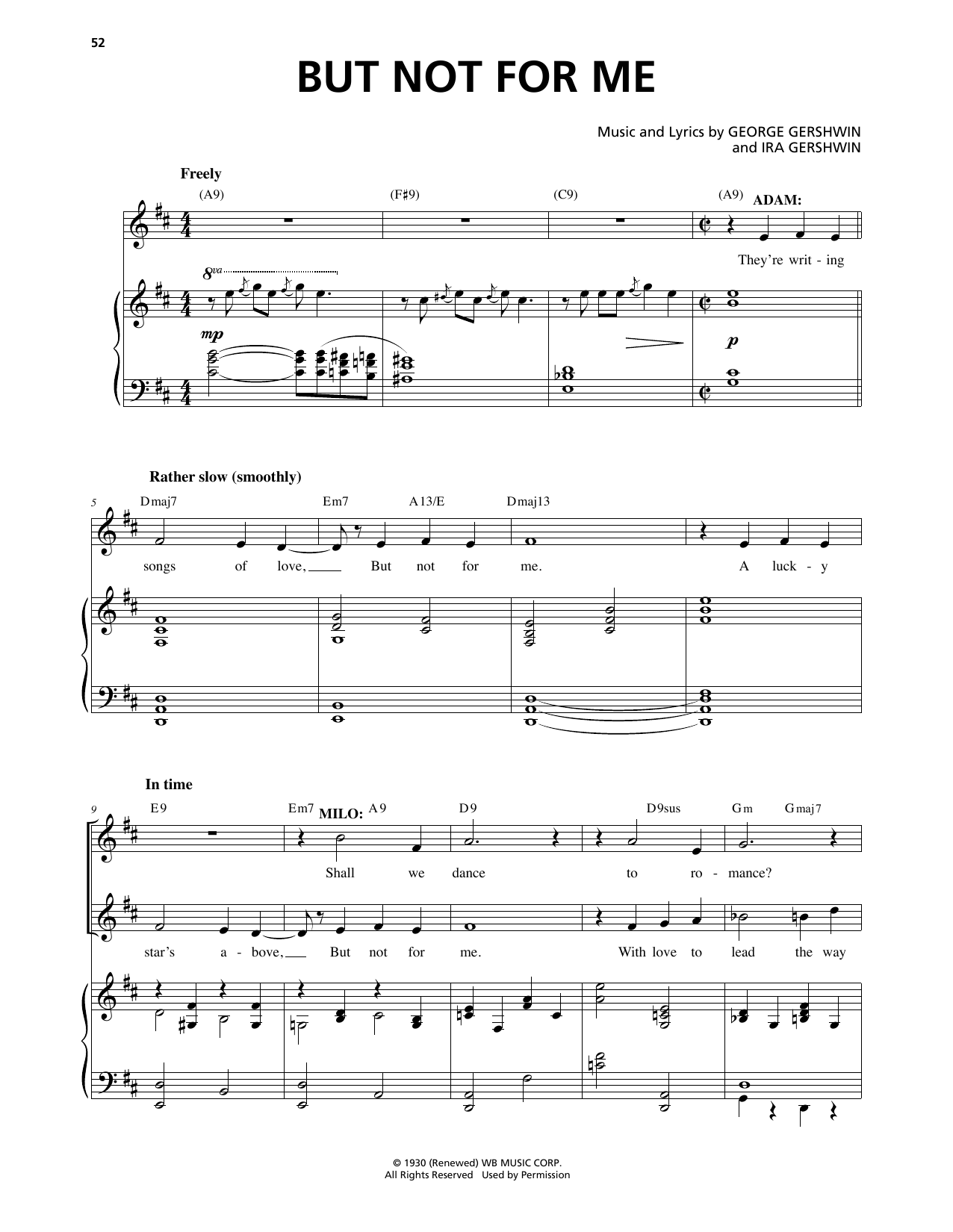
But Not For Me (from An American In Paris): Piano Vocal

Item: 35-DS00458588

Digital Download
$5.99

One moment…

Description

But Not For Me (from An American In Paris): Piano Vocal isn't in MakeMusic Cloud just yet...but it could be. Let us know you'd like to see it, and you'll help shape what comes next. In the meantime, start a free trial and dive into thousands of interactive titles your students can play along with today.

Sample Audio
No sample audio found.
Sample Video
Additional Details
Publisher: Hal Leonard
Page Count: 4
SKU: 35-DS00458588

More about this title

About the Creator: George Gershwin

George Gershwin composed "But Not For Me" for the 1930 musical film An American in Paris, where it became one of his signature standards. Gershwin's gift for blending jazz idioms with classical sophistication defined an era of American songwriting, and this number exemplifies his talent for creating melodies that feel both conversational and deeply memorable.

Why we love this

This standard sits at the sweet spot between jazz and Broadway, making it accessible for singers who are building jazz vocabulary without demanding virtuosic scat or complex harmonic reinterpretation. The melody is instantly singable, yet the harmonic movement underneath offers enough sophistication to keep pianists engaged and give arrangers real material to work with.

What to expect

Wistful and clever without sentimentality, this piece captures the ache of romantic disappointment with wry humor. The melody drifts through subtle harmonic turns that feel both inevitable and surprising, creating an intimate conversation between singer and piano rather than a grand statement.

Who it's for

Singers developing a jazz ballad repertoire will find this a natural stepping stone into American songbook standards. Pianists looking for accompaniment work that combines technical interest with ensemble sensitivity will appreciate its balance of support and independence.

How to get the most out of it

  • Shape the vocal line with natural speech rhythms rather than mechanical phrasing; the lyrics drive the emotional arc, so let the storytelling take priority over strict metric regularity.
  • Voice the piano accompaniment lightly in the verses to keep focus on the singer's narrative quality, then build textural support during the refrain.
  • Honor the jazz origins by allowing slight flexibility in the rhythm section; a bit of swing in the piano's offbeats can refresh what might otherwise feel like a straight ballad.

How to use it

Pair this with other Gershwin works in a jazz standards concert, or feature it alongside other American songbook classics from the same era. It works equally well as a recital piece for an advanced singer or as a teaching vehicle in a jazz ensemble setting.

Skills your students will build

  • Interpreting swing eighth notes in a ballad context
  • Navigating chromatic chord changes and extended harmony
  • Balancing rhythmic freedom with metric precision
  • Accompanying a soloist with textural awareness and dynamic control

You May Also Like