But Not For Me: Lead Sheet Digital Sheet Music

But Not For Me: Lead Sheet Digital Sheet Music

George Gershwin, Harry James, Judy Garland, Ginger Rogers

Item: 00-PS-0002095

Digital Download
$1.99
Description

But Not For Me: Lead Sheet Digital Sheet Music isn't in MakeMusic Cloud just yet...but it could be. Let us know you'd like to see it, and you'll help shape what comes next. In the meantime, start a free trial and dive into thousands of interactive titles your students can play along with today.

Sample Audio
No sample audio found.
Sample Video
Additional Details
SKU: 00-PS-0002095

More about this title

About the Artist: Judy Garland

Judy Garland (1922-1969) was a vocalist and actor whose interpretive gifts shaped American popular song. Her ability to inhabit a lyric with emotional specificity made her a standard-bearer for the Great American Songbook, influencing generations of singers who studied how she balanced technical control with genuine feeling.

Garland's legacy in music education extends beyond her recordings. Her approach to phrasing and her instinctive understanding of how to serve a song's narrative remain touchstones for jazz singers, musical theater performers, and anyone learning to bring character and vulnerability to a melody.

Why we love this

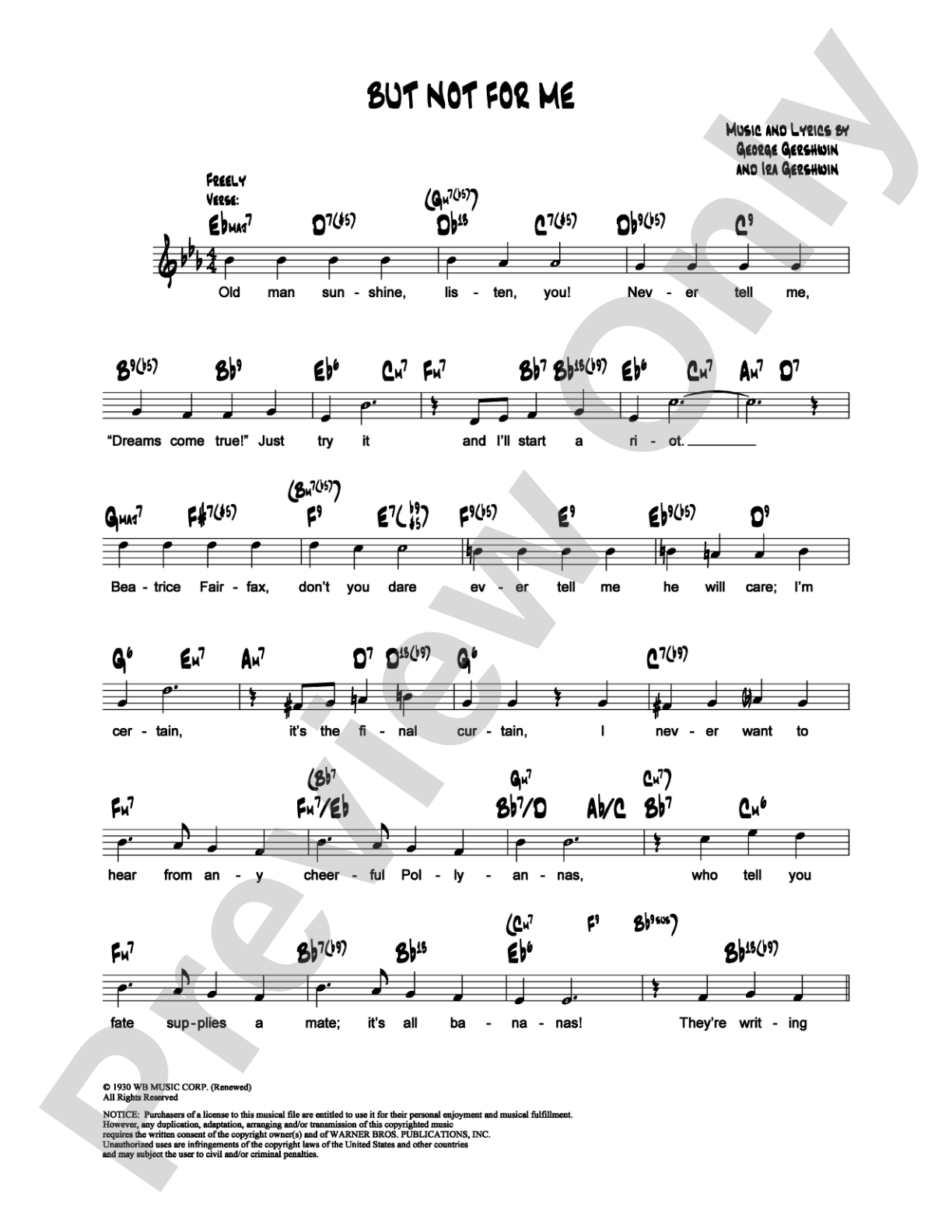
This lead sheet captures a sophisticated pop standard with genuine emotional depth. The melody and chord changes reward thoughtful interpretation, and the song's compact structure makes it ideal for students learning to balance rubato with rhythmic clarity while exploring jazz harmony.

What to expect

Wistful and introspective, "But Not For Me" carries a touch of bittersweet resignation paired with quiet dignity. The melody and harmony work together to create a sense of acceptance rather than despair, making it feel like a confessional moment shared between performer and listener.

Who it's for

Jazz singers and pop vocalists working on standard repertoire will find this lead sheet essential for understanding the song's harmonic and melodic architecture. Piano players and guitarists accompanying vocalists can use this to explore comping choices and reharmonization possibilities while maintaining the integrity of the original melody.

How to get the most out of it

  • Pay attention to the phrasing marks and lyrical contours on the lead sheet. This melody breathes in phrases, not by measure, so let the structure of the lyric guide your tempo and articulation choices.
  • The chord changes contain some chromatic movement and extensions. Practice hearing the harmonic movement rather than just reading the changes vertically; this deepens your sense of forward motion through the progression.
  • Experiment with the pickup notes and how they set up each phrase. Judy Garland's recordings show how she used space and expectation to make listeners lean in for what comes next.

How to use it

Pair this with other standards from the same era to build a jazz or cabaret-style concert set. It also works well as a teaching tool for students learning to interpret lead sheets, since the changes are approachable but the emotional content demands maturity in performance.

Skills your students will build

  • Reading and interpreting lead sheet notation
  • Understanding jazz harmony and chord extensions
  • Phrasing and rubato within a structured melodic form
  • Connecting harmonic movement to expressive choices

You May Also Like