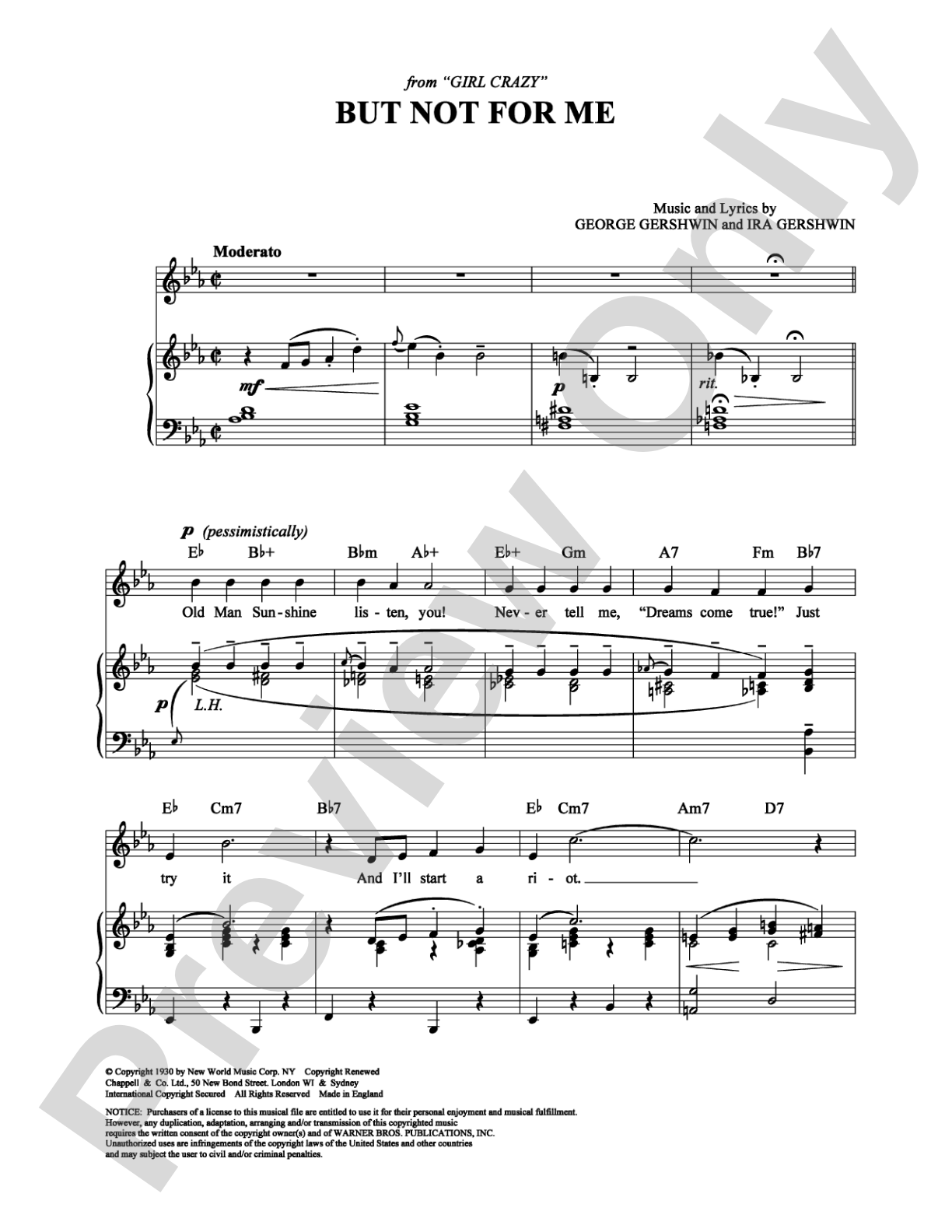
But Not For Me: Piano/Vocal/Chords Digital Sheet Music

But Not For Me: Piano/Vocal/Chords Digital Sheet Music

George Gershwin, Judy Garland

Item: 00-PS-0002094

Digital Download
$3.99
Description

But Not For Me: Piano/Vocal/Chords Digital Sheet Music isn't in MakeMusic Cloud just yet...but it could be. Let us know you'd like to see it, and you'll help shape what comes next. In the meantime, start a free trial and dive into thousands of interactive titles your students can play along with today.

Sample Audio
No sample audio found.
Sample Video
Additional Details
SKU: 00-PS-0002094

More about this title

About the Artist: Judy Garland

Judy Garland (1922-1969) shaped American popular song through her distinctive vocal artistry and emotional directness. Her interpretations of standards became definitive recordings, influencing how generations of singers approach the Great American Songbook.

Why we love this

Garland's signature recording of this standard carries weight and maturity that makes it ideal for advanced student singers and accompanists learning to support a vocalist with interpretive sensitivity. The vocal line contains the phrasing choices and emotional contours that define this song, giving pianists and singers a clear roadmap for understanding how the melody can breathe and bend without losing its harmonic foundation.

What to expect

Bittersweet resignation tinged with lingering hope. The song moves through acceptance without losing its wit, and Garland's voice carries both the sting of rejection and the grace of moving forward. There's a conversational quality here, as though she's confiding in you across time.

Who it's for

Intermediate to advanced pianists who accompany singers, and vocalists working to develop artistry in interpreting standards. This pairing works well for students studying how great singers approach the American Songbook and learning to balance technical accuracy with emotional expression.

How to get the most out of it

  • Balance the vocal line above the accompaniment by listening to what the singer needs in each phrase; the piano's role shifts from providing harmonic support to stepping back when the melody requires space.
  • Pay attention to the lyrical rhythm and allow slight rubato in the vocal line without losing the steady pulse of the accompaniment.
  • Examine how Garland's phrasing departs from strict melodic notation, using her recording as a guide for expressive choices while maintaining your own interpretive voice.

How to use it

Pair this with other standards in a recital or cabaret-style concert exploring interpretations of classic American songs. For students, use it as a model for understanding how recorded performances inform present-day interpretation and stylistic choice.

Skills your students will build

  • Accompanying a vocalist with responsive dynamic support
  • Interpreting rhythm and phrasing choices from a recorded performance
  • Reading chord symbols and voicing them idiomatically for this style
  • Understanding the relationship between melody, harmony, and emotional expression in standards

You May Also Like