
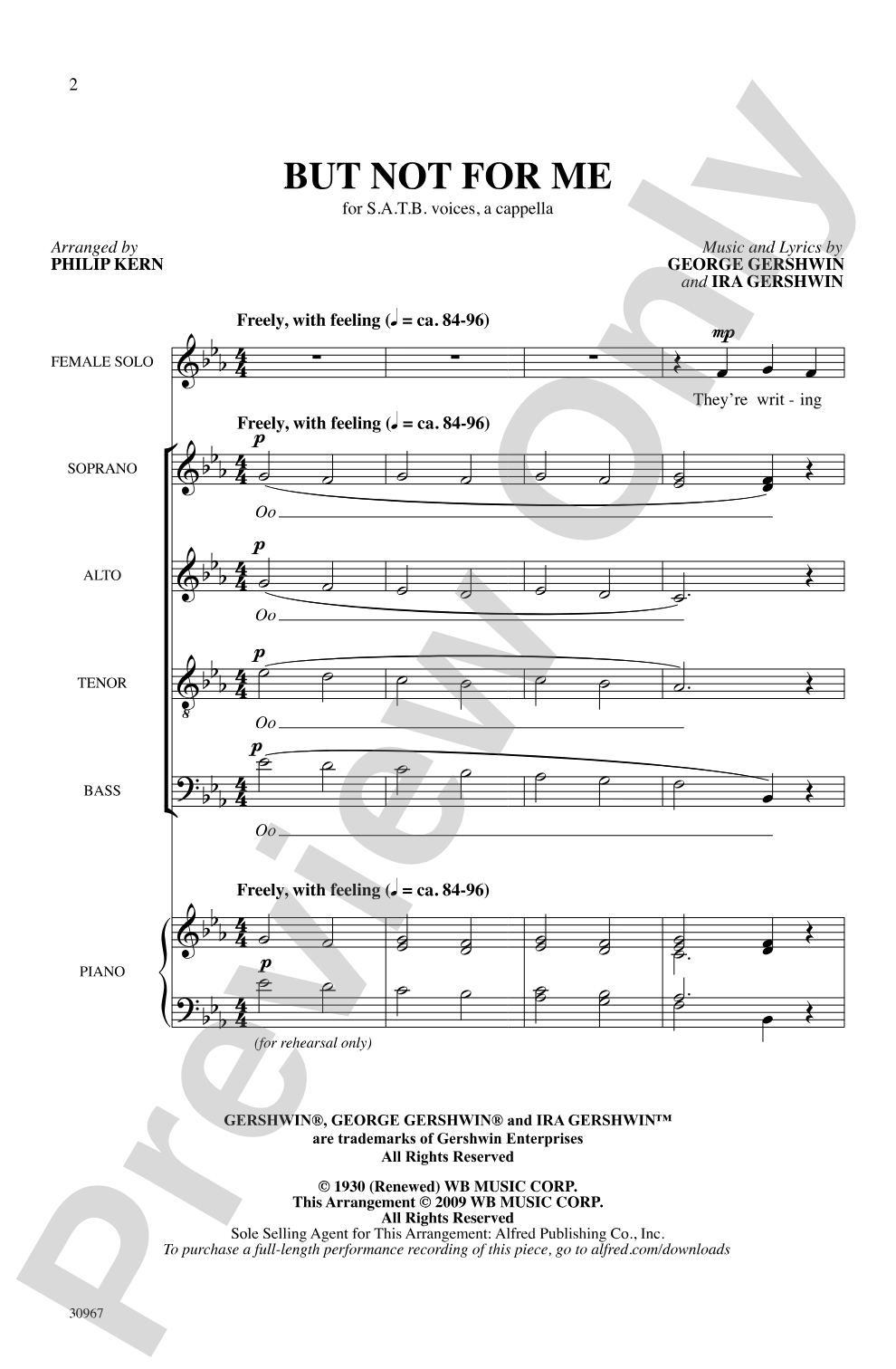
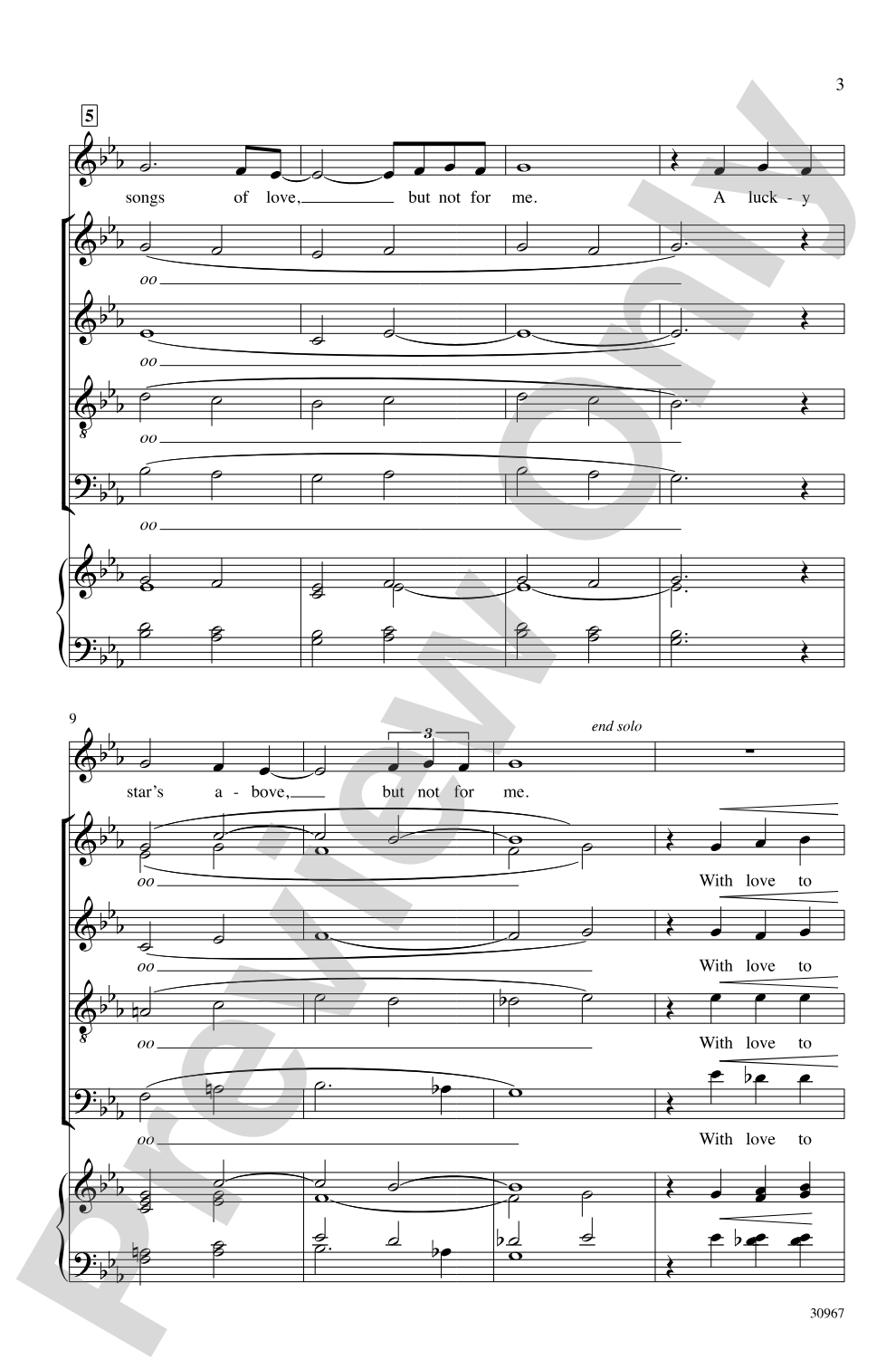

But Not for Me: SATB a cappella Choral Octavo
Music and lyrics by George Gershwin and Ira Gershwin / arr. Phillip Kern
Item: 00-PO-0007637
$2.25
Minimum order quantity: 20 copies
One moment…
Related Items
But Not for Me: SATB a cappella Choral Octavo |
$2.25
|
View |
Description
Your jazz, show, and concert choirs will all sound fantastic singing this classic Gershwin ballad. This new a cappella arrangement offers beautiful lush harmonies with a female solo feature. Closes with one of Ira's most creative lyrics: "But there's no knot for me."


But Not for Me: SATB a cappella Choral Octavo isn't in MakeMusic Cloud just yet...but it could be. Let us know you'd like to see it, and you'll help shape what comes next. In the meantime, start a free trial and dive into thousands of interactive titles your students can play along with today.
Request This Title
Tell us you want it.
Start Your Free Trial
Explore everything that's ready to play right now.
Sample Audio
1
Audio File
--:--
0:00
0:00
Sample Video
No sample videos found.
Additional Details
Series:
Alfred Pop Choral Series
Publisher:
Alfred Music
Page Count:
8
SKU:
00-PO-0007637
More about this title
About the Composer: George Gershwin
George Gershwin (1898, 1937) bridged classical and popular music in ways that still shape how we think about American composition. His gift for melody and harmonic sophistication made him equally at home writing concert works, Broadway scores, and standards that jazz musicians would adopt as their own.
Ira Gershwin's lyrics for "But Not for Me" showcase his craft at its finest. His ability to convey longing and wit through precise, singable language made him one of the most recorded lyricists in American music history. Together, the Gershwin brothers created songs that remain central to both the choral and jazz repertoires.
Why we love this
Phillip Kern's arrangement captures everything that makes this ballad timeless while stripping away accompaniment to let the voices do the storytelling. The lush harmonies sit well across all four parts, and the solo feature gives your best singers a moment to shine without pulling focus from the ensemble. This is the kind of standard that works equally well in a jazz choir concert, a show choir set, or a mixed repertoire recital because it carries real musical substance alongside its immediate appeal.
What to expect
Wistful and urbane, the way a beautiful song feels when sung in close harmony. The a cappella texture creates intimacy, and Gershwin's melody floats over lush underlying harmonies like a conversation overheard in a dimly lit room. There's melancholy here, but also the grace of acceptance; the song never tips into despair.
Who it's for
Any SATB choir looking to expand their ballad repertoire with a piece that works in classical, jazz, and contemporary contexts. This arrangement is accessible enough for strong high school choirs yet sophisticated enough to engage experienced singers; the solo feature makes it ideal when you have a standout soprano or mezzo ready for a feature moment.
How to get the most out of it
- Shape the solo line with genuine vulnerability. This isn't a showstopper moment; it's an intimate confession. Let the soloist breathe naturally and support her with hushed, responsive harmonic movement from the ensemble.
- Balance the chord voicings carefully. A cappella arrangements reveal every voice; take time in rehearsal to identify which parts carry the harmony's color and which provide foundation, then weight them accordingly.
- Attend to the text setting and lyrical arc. Gershwin's melody bends with the emotional turns of Ira's words. Precise diction and thoughtful phrasing make the difference between a pleasant performance and one that lands.
- Consider the ending with special care. That final statement about no knot deserves stillness and clarity, not a rush to resolution. Let it sit.
How to use it
This works beautifully as a set piece in a mixed choral concert, particularly when you're balancing uptempo show choir material with something more introspective. It also sits naturally in a jazz or pop choral program, where its harmonic sophistication signals growth from simpler arrangements. Pair it with other standards or with modern ballads to create a thematic concert section on love, loss, or resilience.
Skills your students will build
- Balancing solo line with ensemble harmony in a cappella contexts
- Singing in lush jazz-influenced chord voicings
- Shaping a ballad line for emotional storytelling rather than technical display
- Blending voices across SATB parts with minimal reference tones
- Interpreting lyrics with sophistication and restraint