But Not for Me Sheet Music Preview

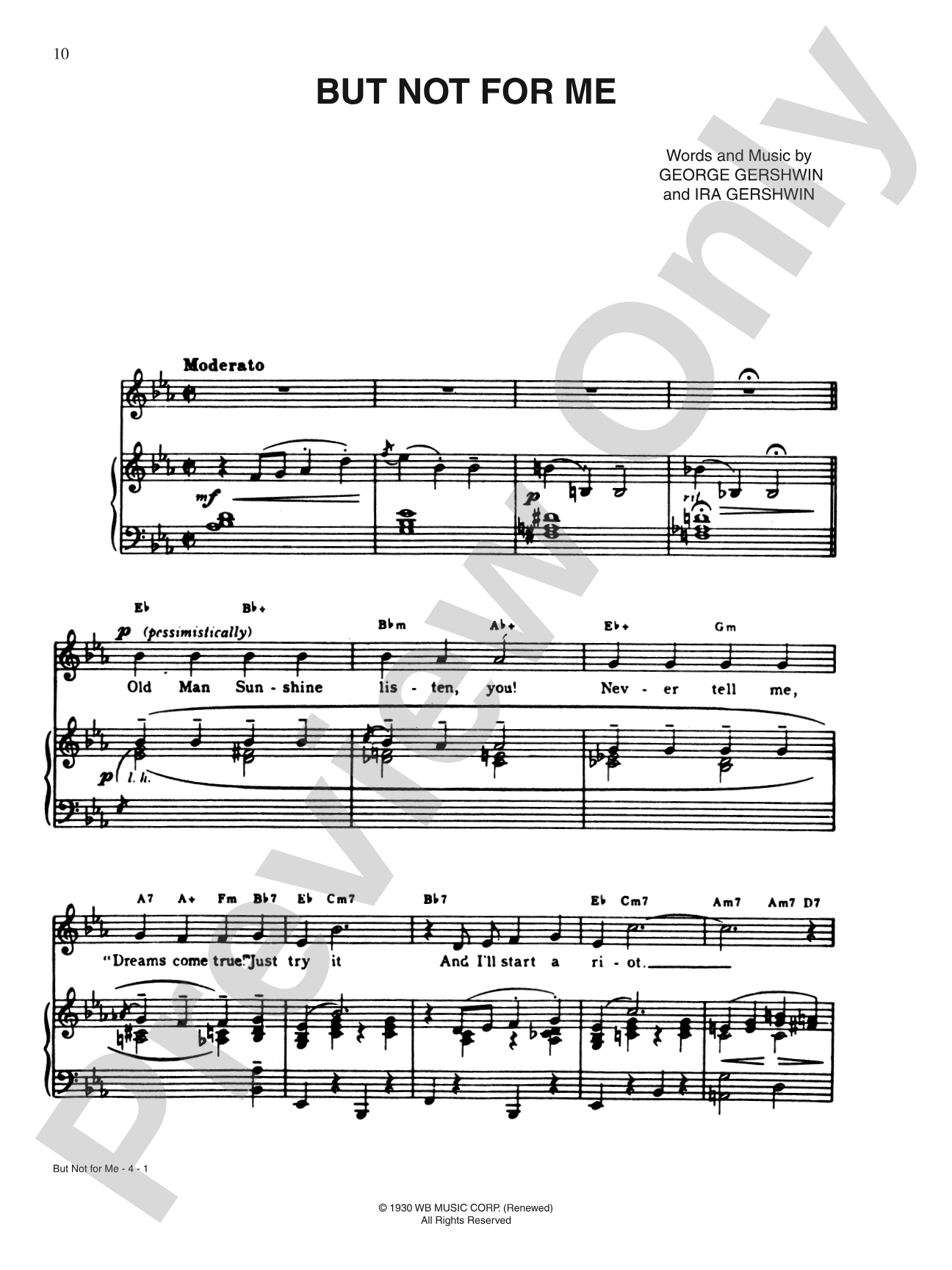
But Not for Me: Piano/Vocal/Chords

Music and lyrics by George Gershwin and Ira Gershwin

Item: 00-PIP-000073

Digital Download
$3.99

One moment…

Description

But Not for Me: Piano/Vocal/Chords isn't in MakeMusic Cloud just yet...but it could be. Let us know you'd like to see it, and you'll help shape what comes next. In the meantime, start a free trial and dive into thousands of interactive titles your students can play along with today.

Sample Audio
No sample audio found.
Sample Video
Additional Details
Series: Deluxe Edition
Publisher: Alfred Music
Page Count: 4
SKU: 00-PIP-000073

More about this title

About the Composer: George Gershwin

George Gershwin (1898-1937) bridged classical tradition and American popular song with an originality that transformed both. His gift for melody and harmonic sophistication made him one of the most performed composers of the 20th century, and his influence on music education extends from concert halls to jazz ensembles to vocal studios worldwide.

Gershwin's Broadway scores, written in collaboration with his brother Ira, established a new standard for theatrical music. His understanding of the voice, the piano, and the possibilities of jazz-inflected harmony made these songs enduringly teachable. Performers and students continue to find in his work a masterclass in musical storytelling.

Why we love this

This standard sits at the intersection of jazz sensibility and Broadway craft, offering singers and pianists a sophisticated vehicle that rewards both technical control and interpretive depth. The harmonic language is rich enough to sustain serious musical study while the melodic shape is immediately singable, making it equally valuable in a vocal studio, a jazz ensemble, or a cabaret setting.

What to expect

Wistful and introspective, this ballad carries the bittersweet resignation of love that cannot be. The harmonic language moves through unexpected colors, mirroring emotional nuance, while the melody maintains a graceful, almost conversational quality that invites the listener into an intimate moment.

Who it's for

Vocalists working in jazz, standards, or music theater repertoire will find a song that demands refined breath control and emotional maturity. Pianists accompanying singers benefit from the clear chord symbols and voicing guidance. Intermediate to advanced performers will appreciate the harmonic sophistication and the opportunity to explore interpretive flexibility.

How to get the most out of it

  • Shape the melodic line through the bridge with attention to the harmonic shifts; let the piano voicings support without drowning the vocal line.
  • The rhythm section feel should sit comfortably between swing and straightforward ballad time. Communicate this with your pianist before the performance.
  • Honor the vulnerability in the lyric by resisting the urge to oversell the emotional arc. Understated delivery often lands harder.
  • Pay close attention to how the piano voices the chords in the Deluxe Edition voicings; they often suggest interpretive choices for phrasing and breath placement.

How to use it

Program this as a recital showcase for a vocalist with enough maturity to inhabit the emotional landscape. It pairs naturally with other American standards in a cabaret-style concert or as a solo feature in a jazz ensemble setting. Consider it for accompanying singers in classical voice study who are expanding into the American songbook.

Skills your students will build

  • Interpreting jazz chord voicings and understanding seventh chord function in a harmonic context
  • Sustaining a legit vocal line through a longer form with multiple harmonic areas
  • Collaboration between vocalist and pianist in negotiating tempo, phrasing, and harmonic freedom
  • Understanding the relationship between lyrical content and musical form in a standard

You May Also Like