
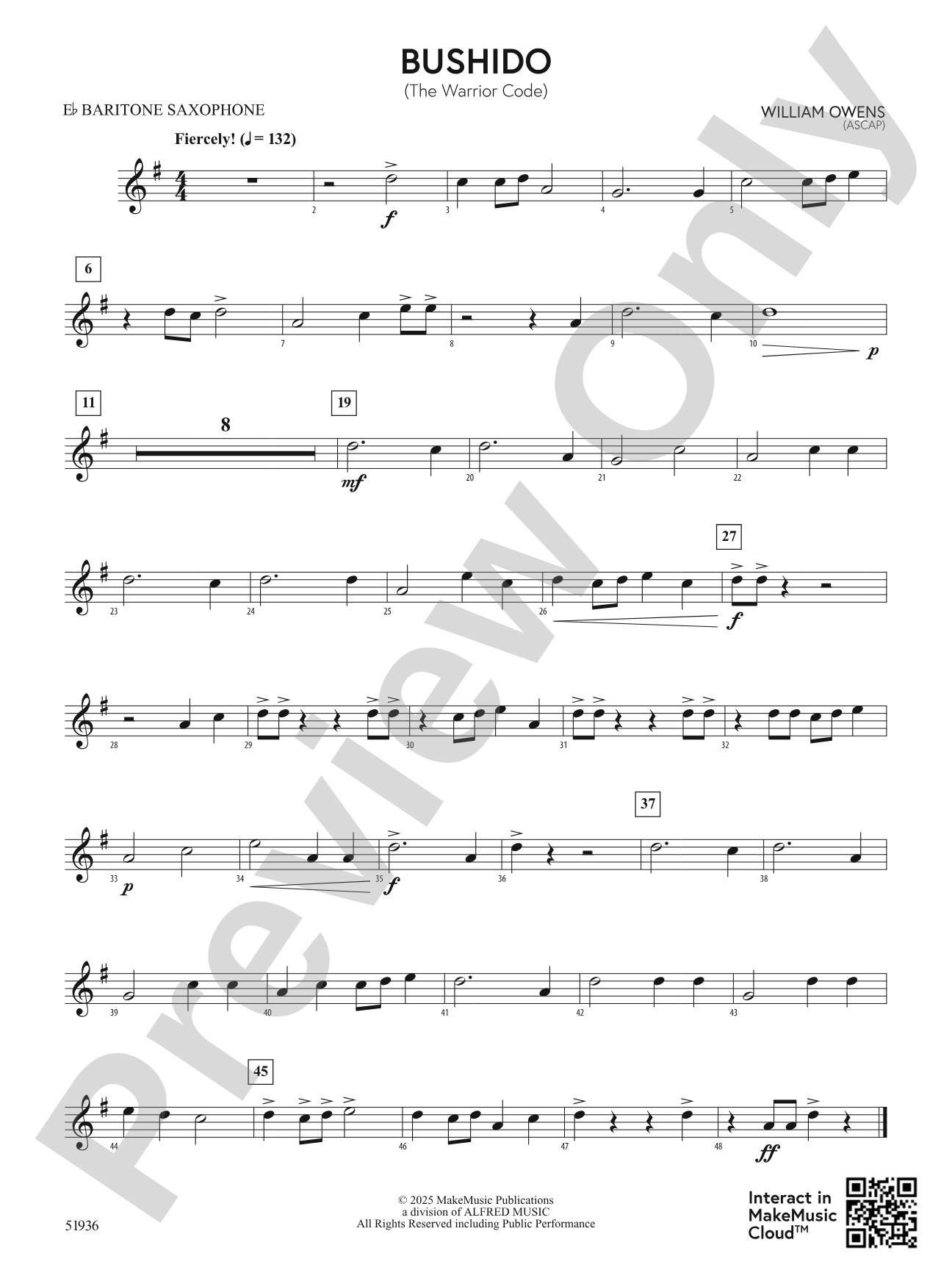

Bushido: E-flat Baritone Saxophone
(The Warrior Code)
By William Owens
Level:.5
Item: 00-PC-0019427_BTX
$3.00
Pickup currently not available
Description
Honor the legacy of the warrior class Samurai with Bushido, a powerful work by William Owens for first-year bands! Bold and energetic from beginning to end, the music embodies the virtuous code by which the Samurai warrior lived. Justice, courage, mercy, honor, loyalty, character---this work portrays it all and more! (1:30)


Don't just read it, hear it, play along with it, and watch your students grow with it. In MakeMusic Cloud, Bushido: E-flat Baritone Saxophone comes alive with professional accompaniment, adjustable tempo, and built-in practice tools that turn solo practice into real progress.
Open in the Player
Jump straight in and assign it today.
Start Your Free Trial
Open this title and explore the full library in minutes.
Sample Audio
1
Audio File
--:--
0:00
0:00
Sample Video
Additional Details
Series:
MakeMusic First Performance Band
Publisher:
MakeMusic Publications
SKU:
00-PC-0019427_BTX
More about this title
About the Composer: William Owens
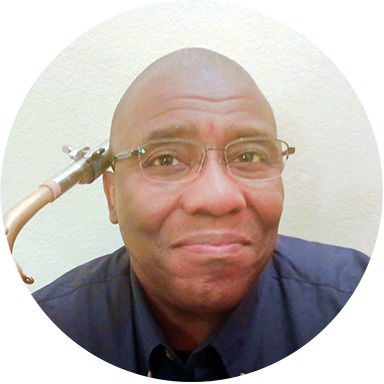
William Owens brings three decades of classroom experience to his prolific output as a composer. A VanderCook College of Music graduate and Distinguished Alumnus, he has written over 300 works for concert band, string orchestra, and small ensemble since 1993, earning recognition through commissions from the South Plains College Department of Fine Arts, Phi Beta Mu International, and the American Bandmasters Association.
Owens' compositional approach combines musical sophistication with practical pedagogy, making his work a fixture on required music lists across North America. His contributions to young band literature have been analyzed in educational texts and studied by music educators nationwide. He held a 30-year tenure as a band director in Texas before retiring in 2014 and currently resides in Fort Worth with his wife, Georgia.
Why we love this
Owens understands what first-year bands need: music that sounds substantial without sacrificing playability. Bushido accomplishes this rare balance by grounding its energy in straightforward instrumental writing while delivering genuine artistic content that keeps young musicians engaged from start to finish. The Samurai theme gives your students something meaningful to play for, not just notes on a page.
What to expect
Bushido captures the martial energy and honor of its subject matter through bold, direct orchestration and propulsive rhythmic drive. The music unfolds with the confidence of a warrior at full strength, never wavering or apologizing, yet remaining accessible enough that young musicians can inhabit this character without strain.
Who it's for
First-year concert bands seeking repertoire that sounds impressive without requiring extensive rehearsal or advanced technique. Directors building confidence in developing ensembles will appreciate music that respects their students' current abilities while delivering a polished performance result.
How to get the most out of it
- Establish a strong tempo from the opening bars. The piece thrives on forward momentum; rushing weakens the dramatic impact, but dragging dulls the energetic character entirely.
- Balance the melody across sections as it passes between brass and woodwinds. First-year bands often feature uneven strength between sections, so deliberate voice leading ensures the narrative stays clear.
- Shape phrases with slight dynamic contours rather than playing at a single level throughout. Even a young ensemble can execute subtle swells that add sophistication to straightforward material.
- Let the percussion articulate the rhythmic drive without overpowering the band. At this level, young percussionists benefit from hearing the ensemble balance their contribution creates.
How to use it
This works beautifully as an opener that sets a strong, professional tone for a concert or festival performance. Its thematic clarity and exciting energy also make it an effective choice for community events where the audience appreciates music with cultural substance and immediate appeal.
Skills your students will build
- Reading and sustaining energetic rhythmic figures in first-year keys and meters
- Balancing melodic lines as they migrate between instrumental sections
- Executing dynamic control and phrasing in march-like, programmatic contexts
- Developing ensemble precision without sacrificing the martial character
- Connecting cultural and thematic meaning to instrumental performance choices