Burgmüller: Eighteen Characteristic Studies, Op. 109 Sheet Music Preview

Burgmüller: Eighteen Characteristic Studies, Op. 109

By Johann Friedrich Burgmüller

Item: 00-PC-0005840

Digital Download
$0.99
Description
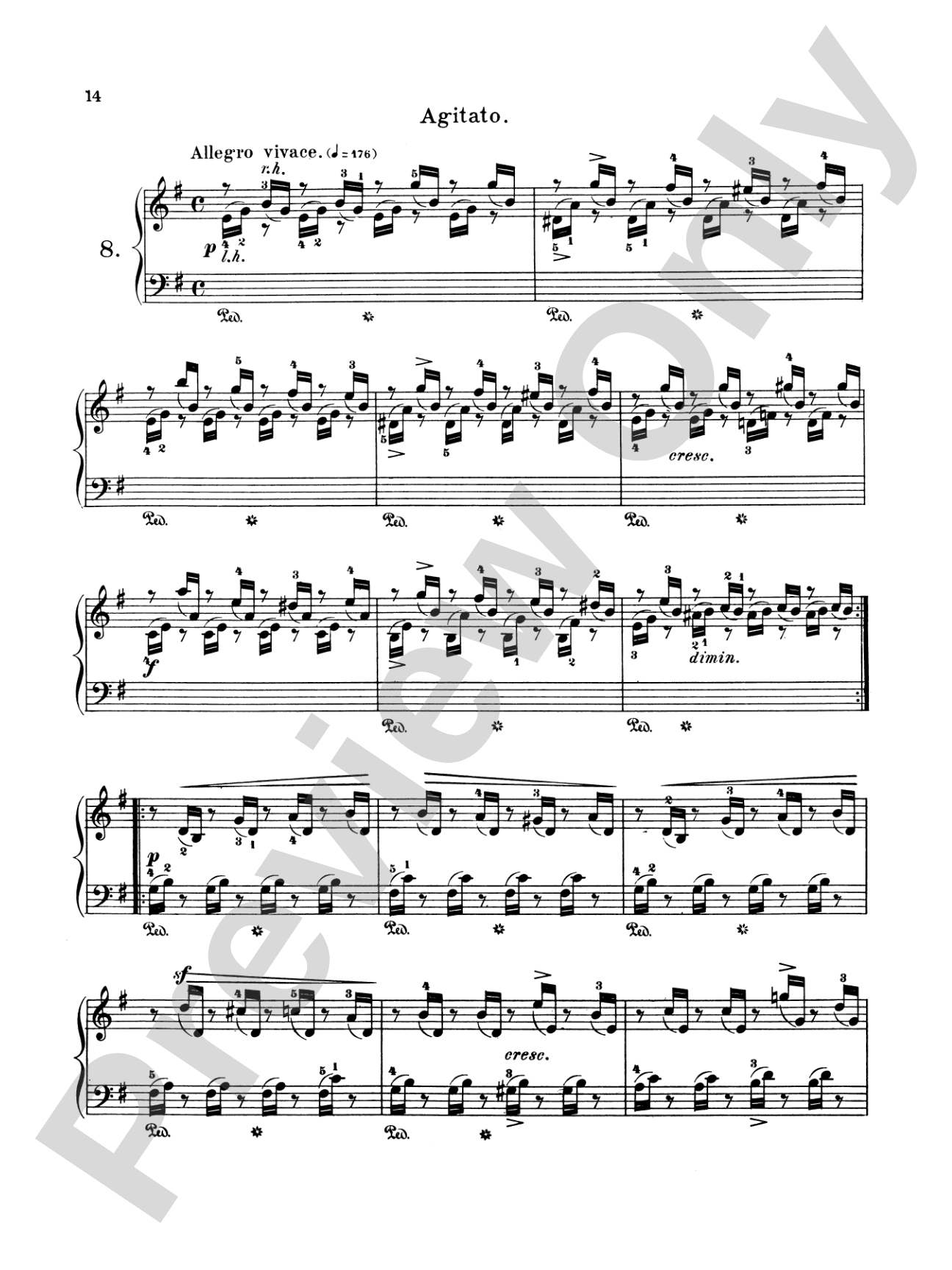
Friedrich Burgmüller, (1806--1874) was a German pianist and composer. This collection of technical works includes: Confidence * The Pearls * The Shepherd's Return * The Gypsies * The Spring * Light-hearted Maiden * Lullaby * Agitato * Matin Bell * Velocity * Serenade * Awakening in the Wood * The Storm * Lay of the Gondolier * Les Sylphes * Parting * March * At the Spinningwheel.

Don't just read it, hear it, play along with it, and watch your students grow with it. In MakeMusic Cloud, Burgmüller: Eighteen Characteristic Studies, Op. 109 comes alive with professional accompaniment, adjustable tempo, and built-in practice tools that turn solo practice into real progress.

Sample Audio
No sample audio found.
Sample Video
Additional Details
Series: Kalmus Edition
Publisher: Alfred Music
Page Count: 36
SKU: 00-PC-0005840

More about this title

About the Composer: Johann Burgmüller

Johann Friedrich Franz Burgmüller (1806–1874) was a German pianist and composer whose technical studies became cornerstones of piano pedagogy across Europe. Though he spent much of his career in Paris, where he taught and performed, his compositions for piano students achieved lasting influence because they combined genuine musical interest with carefully graded technical challenges. His works bridged the gap between mechanical drills and artistic expression, making them essential to intermediate piano training.

Why we love this

These eighteen studies work because they refuse to sacrifice musicality for technique. Each piece has a distinct character and narrative title that students actually care about executing well, transforming what could be dry finger work into genuinely engaging performance experiences. Teachers reach for Burgmüller when they need studies that students will practice willingly.

What to expect

A journey through nineteenth-century salon music and character sketches that balance crystalline finger work with romantic warmth. The collection moves from energetic confidence through tender scenes and dramatic storms, creating a listening experience that rewards both performer and audience while laying solid technical foundations.

Who it's for

Intermediate pianists (roughly grades 4-5 RCM or equivalent ABRSM levels) who have mastered basic repertoire and are ready for studies that combine technical development with genuine artistry. These pieces suit students preparing for conservatory entrance exams or those seeking substantial solo material that builds professional-level technique without requiring advanced virtuosity.

How to get the most out of it

  • Attend to the marked tempos and character indications as seriously as the technical passages. The title "The Pearls" demands clarity and luminosity; "The Storm" needs dramatic intensity. Technical facility without musical intention sounds hollow.
  • Shape phrases through dynamic tapering rather than rigid tempo. These pieces live in rubato and gentle breathing, especially the more lyrical studies like "Lullaby" and "Lay of the Gondolier."
  • Isolate the technical figure in each study and practice it separately at a slow tempo with full attention to evenness and control before integrating it into the musical whole.
  • Use the descriptive titles as a reminder that these are miniature character pieces first. Ask yourself what story each study is telling, and let that guide your interpretation of ornaments, dynamics, and pacing.

How to use it

Select individual pieces as concert openers or filler items that showcase technical growth without intimidating audiences; "Confidence" and "The Pearls" are particularly effective recital staples. Alternatively, program several contrasting studies together to demonstrate the breadth of a student's technical and interpretive range, or use them as teaching examples when introducing phrasing and character work to younger students.

Skills your students will build

  • Scalar and arpeggio fluency across multiple registers and hand positions
  • Pedal management for tonal control and color without muddying clarity
  • Tempo flexibility and rubato within a rhythmic framework
  • Rhythmic precision in rapid passagework (especially in "Velocity" and "Agitato")
  • Phrasing and narrative interpretation of miniature forms
  • Even finger articulation in repeated note and tremolo figures

You May Also Like