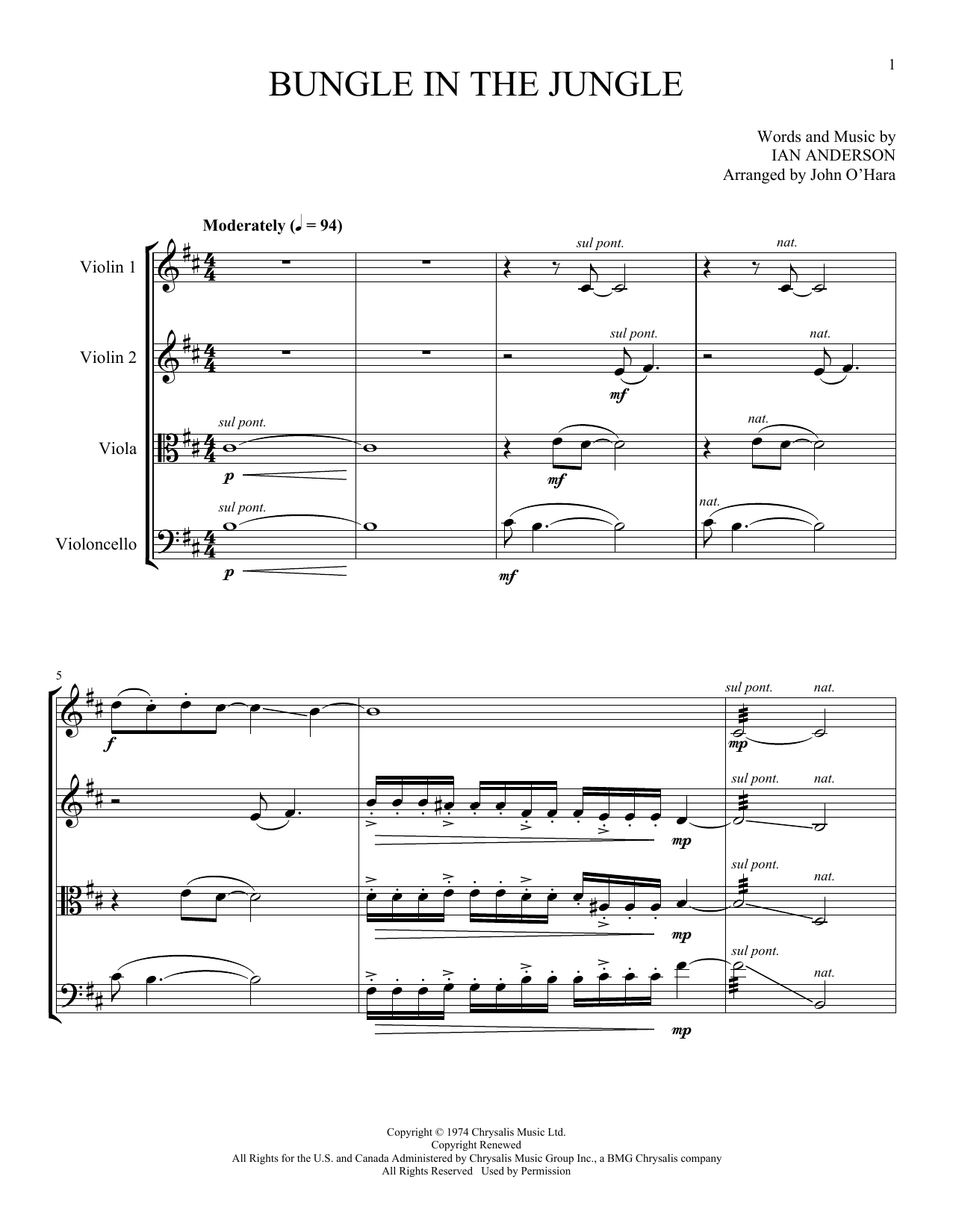
Bungle (arr. John O'Hara) Sheet Music Preview

Bungle (arr. John O'Hara)

As performed by Jethro Tull / Arranged by John O'Hara

Item: 35-PK00487904

Digital Download
$12.99
Description
String Quartet

Bungle (arr. John O'Hara) isn't in MakeMusic Cloud just yet...but it could be. Let us know you'd like to see it, and you'll help shape what comes next. In the meantime, start a free trial and dive into thousands of interactive titles your students can play along with today.

Sample Audio
No sample audio found.
Sample Video
Additional Details
Publisher: Hal Leonard
SKU: 35-PK00487904

More about this title

About the Artist: Jethro Tull

Jethro Tull emerged from the British rock scene in 1968 with a distinctive blend of progressive rock, folk, and blues that challenged the conventions of popular music. Led by flautist and vocalist Ian Anderson, the band became known for intricate instrumental arrangements, conceptual albums, and a theatrical approach to performance that demanded serious musicianship from its players. Their catalogue offers string arrangers rich material to work with; the sophisticated harmonic language and rhythmic complexity that defined their studio recordings translate beautifully to chamber settings.

Why we love this

John O'Hara's arrangement brings unexpected sophistication to a rock classic by treating it as a genuine chamber work rather than a simple transcription. The string writing preserves the propulsive energy of the original while creating conversation between voices, giving advanced student quartets a chance to tackle contemporary rock repertoire with real musical substance.

What to expect

Propulsive and inventive, with the swagger of a rock anthem filtered through the elegance of string writing. The arrangement maintains the original's momentum while inviting players to inhabit melodic and harmonic roles that feel fresh even to those familiar with the song.

Who it's for

Advanced high school and early college string quartets ready to explore arrangements of recognizable rock repertoire. Students comfortable with contemporary idioms and looking to expand their performance experience beyond traditional classical material will find this engaging and rewarding.

How to get the most out of it

  • Establish the rhythmic groove early in rehearsal; string players often underestimate the importance of a rock song's pocket, and locking into the pulse will make the arrangement sing.
  • Balance the melodic line carefully across parts so the arrangement's harmonic richness doesn't obscure what listeners recognize from the original track.
  • Pay attention to articulation and bow direction changes that mark structural shifts in the piece; these details shape the arrangement's narrative arc.
  • Record a rough run-through against the original recording to calibrate tempo and feel before relying solely on the printed score.

How to use it

Consider this as a closing piece for a concert pairing classical and contemporary works, or as the centerpiece of a chamber concert exploring how classical ensembles interpret popular music. Its accessibility makes it an excellent choice for outreach events where you want to showcase your advanced students to audiences who might not otherwise attend classical concerts.

Skills your students will build

  • Playing with rhythmic precision in contemporary idioms
  • Balancing multiple melodic lines while maintaining groove
  • Interpreting stylistic articulations and bow direction shifts
  • Ensemble cohesion across syncopated and syncopated rhythmic material

You May Also Like