
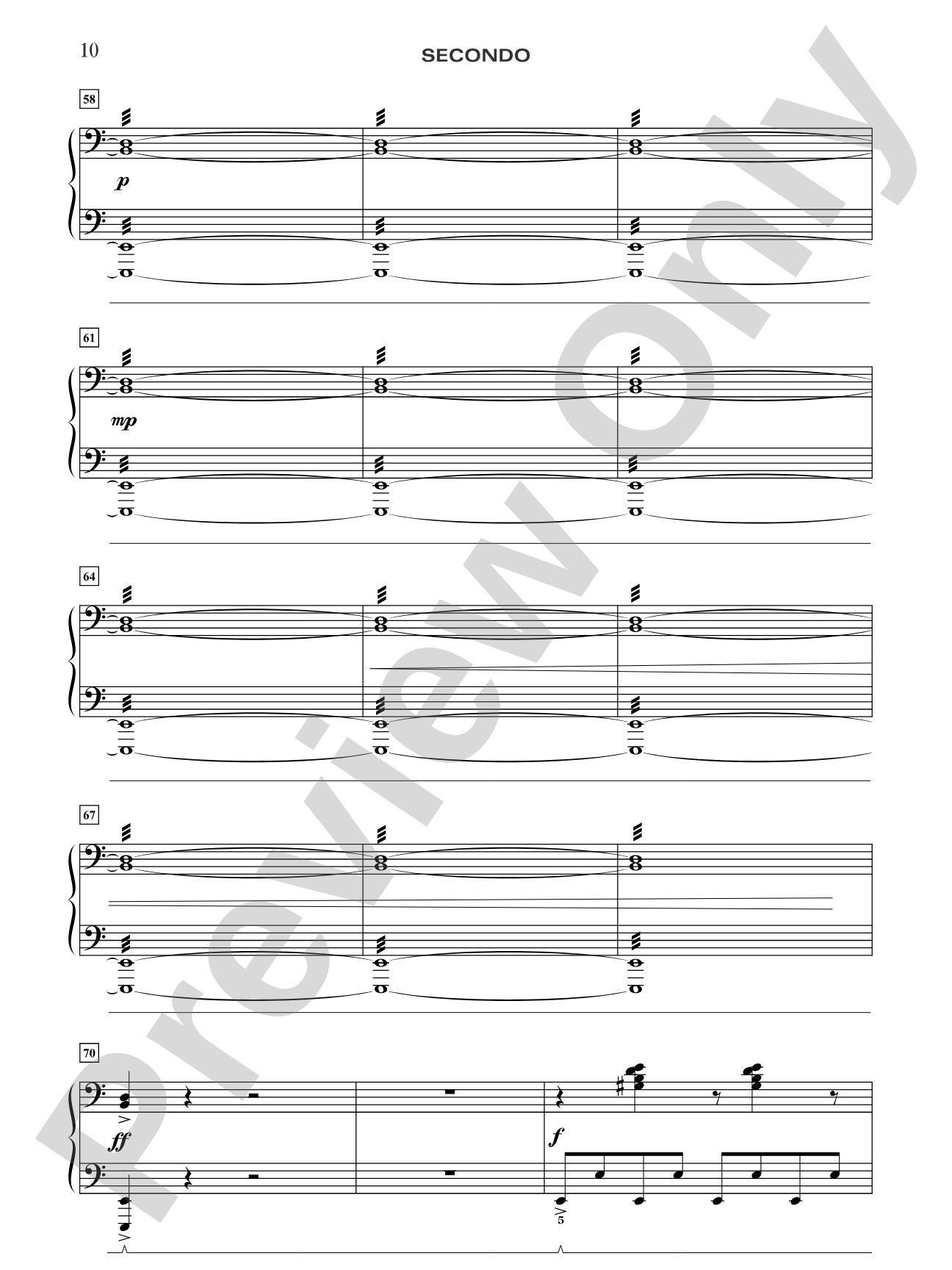
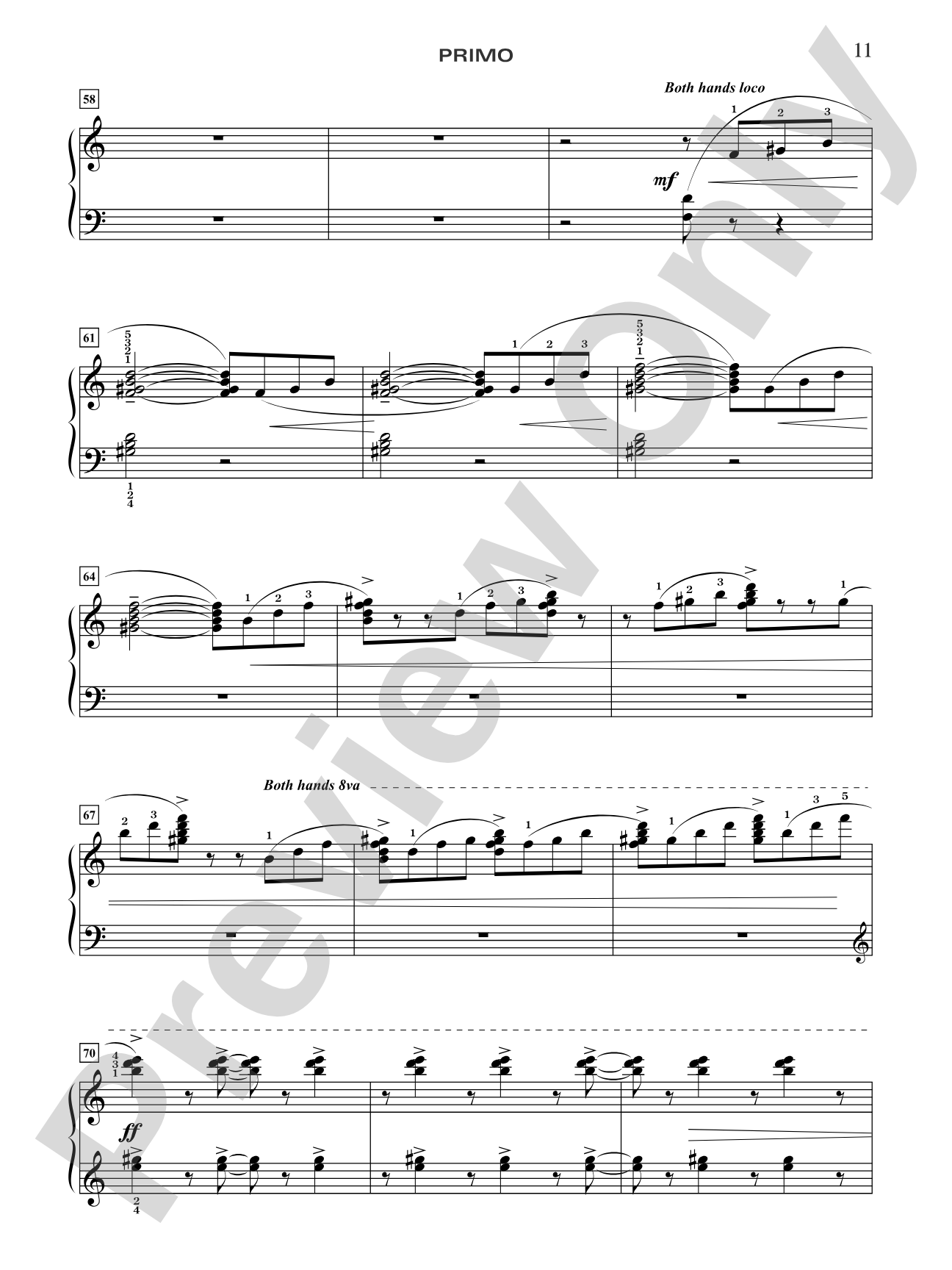
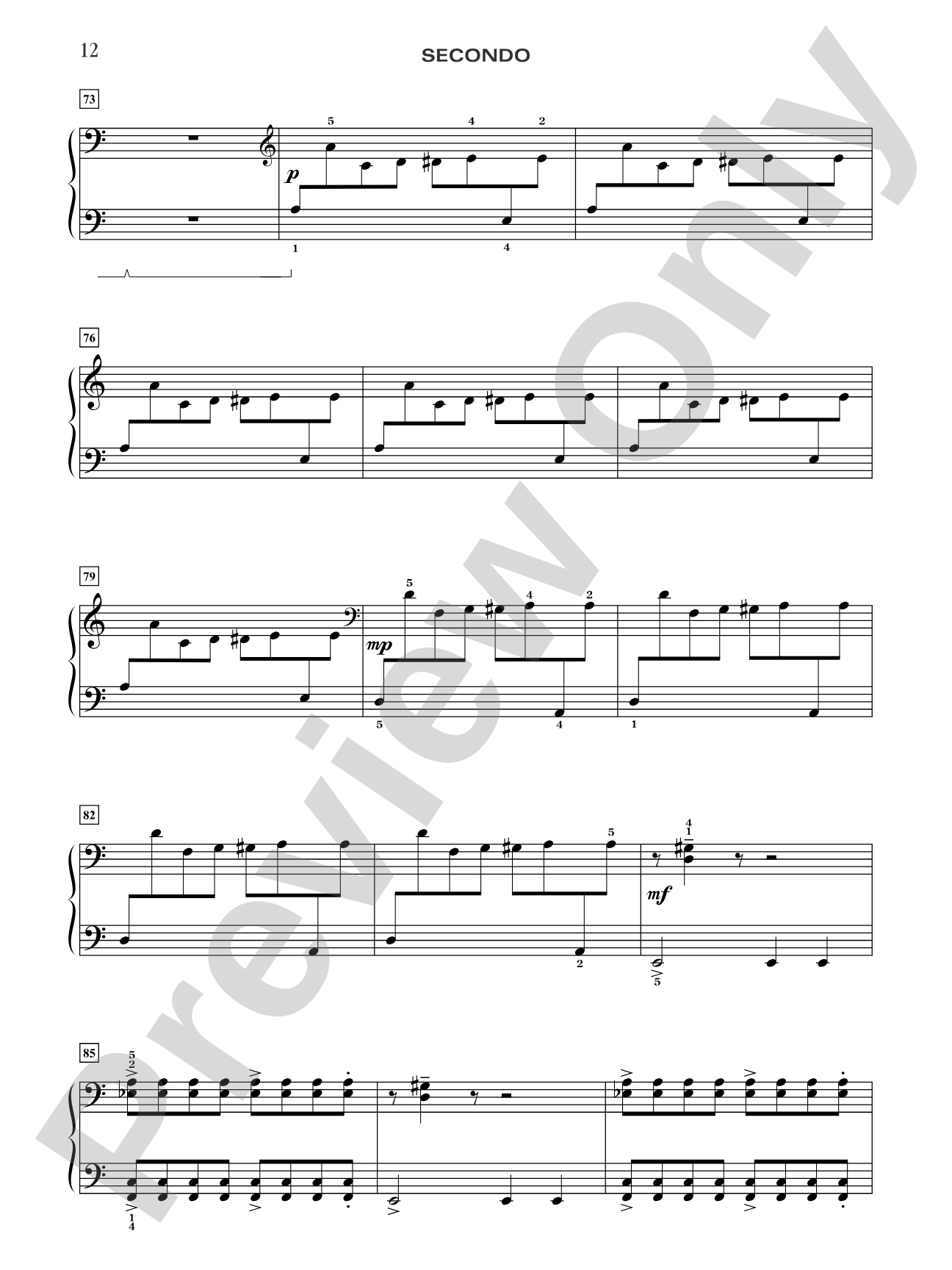

Bumble Boogie - Piano Quartet (2 Pianos, 8 Hands): Piano
By Jack Fina / arr. Lucy Wilde Warren
Level: Late Intermediate
Item: 00-PB-0000401
$19.99
Pickup currently not available
Related Items
Bumble Boogie: Piano Quartet (2 Pianos, 8 Hands) Sheet (2 copies included) |
$19.99
|
View |
Description
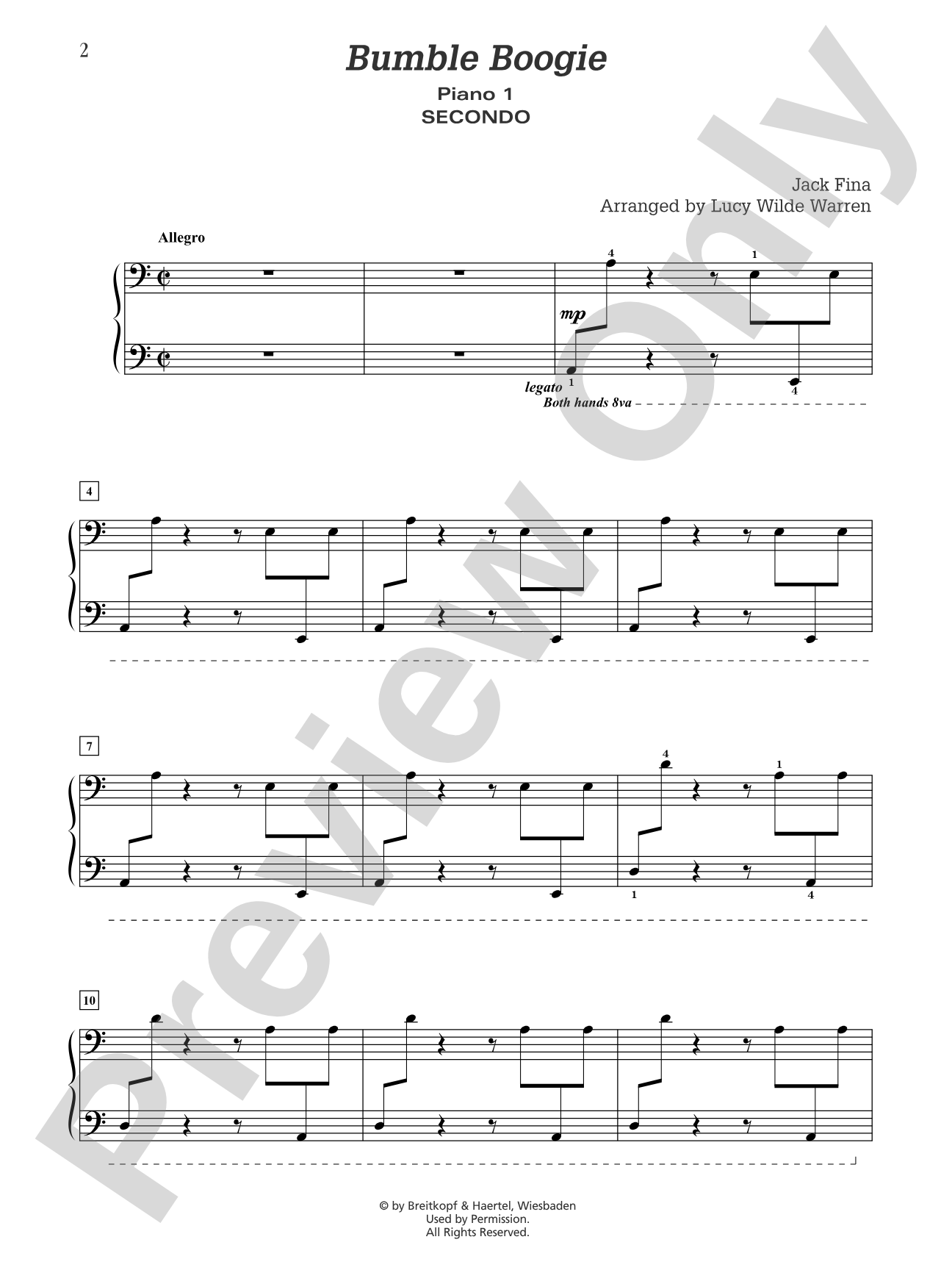
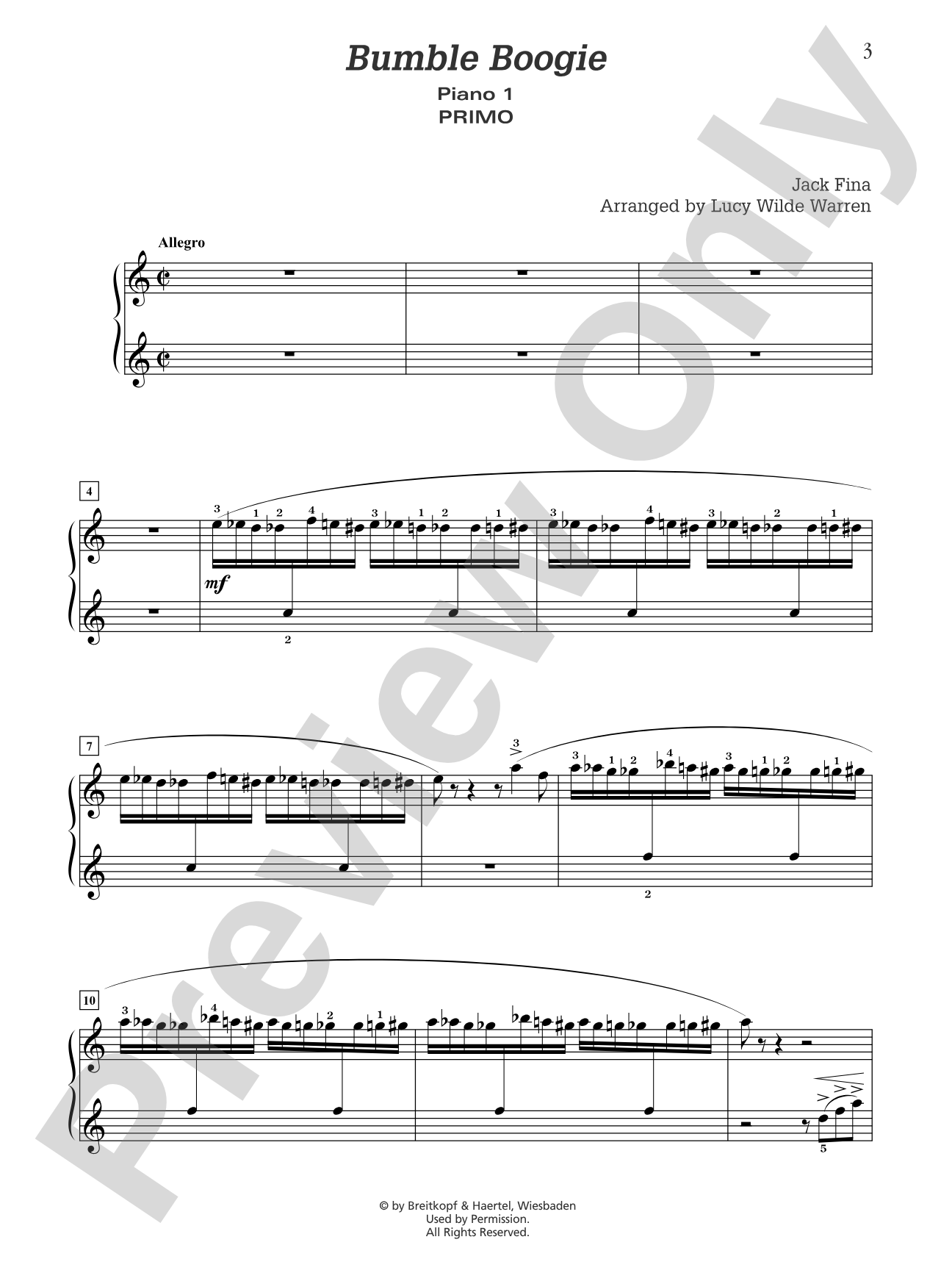
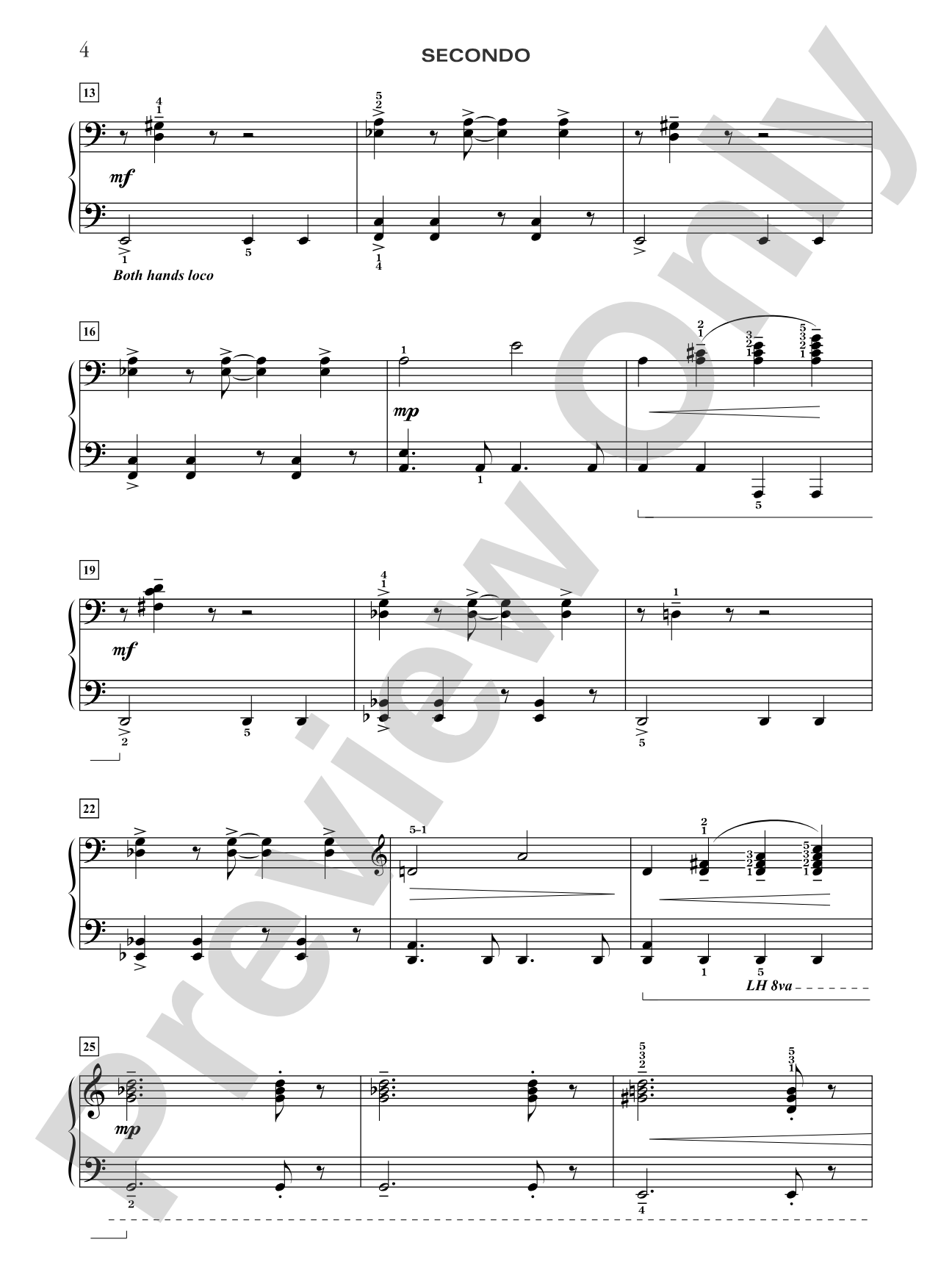
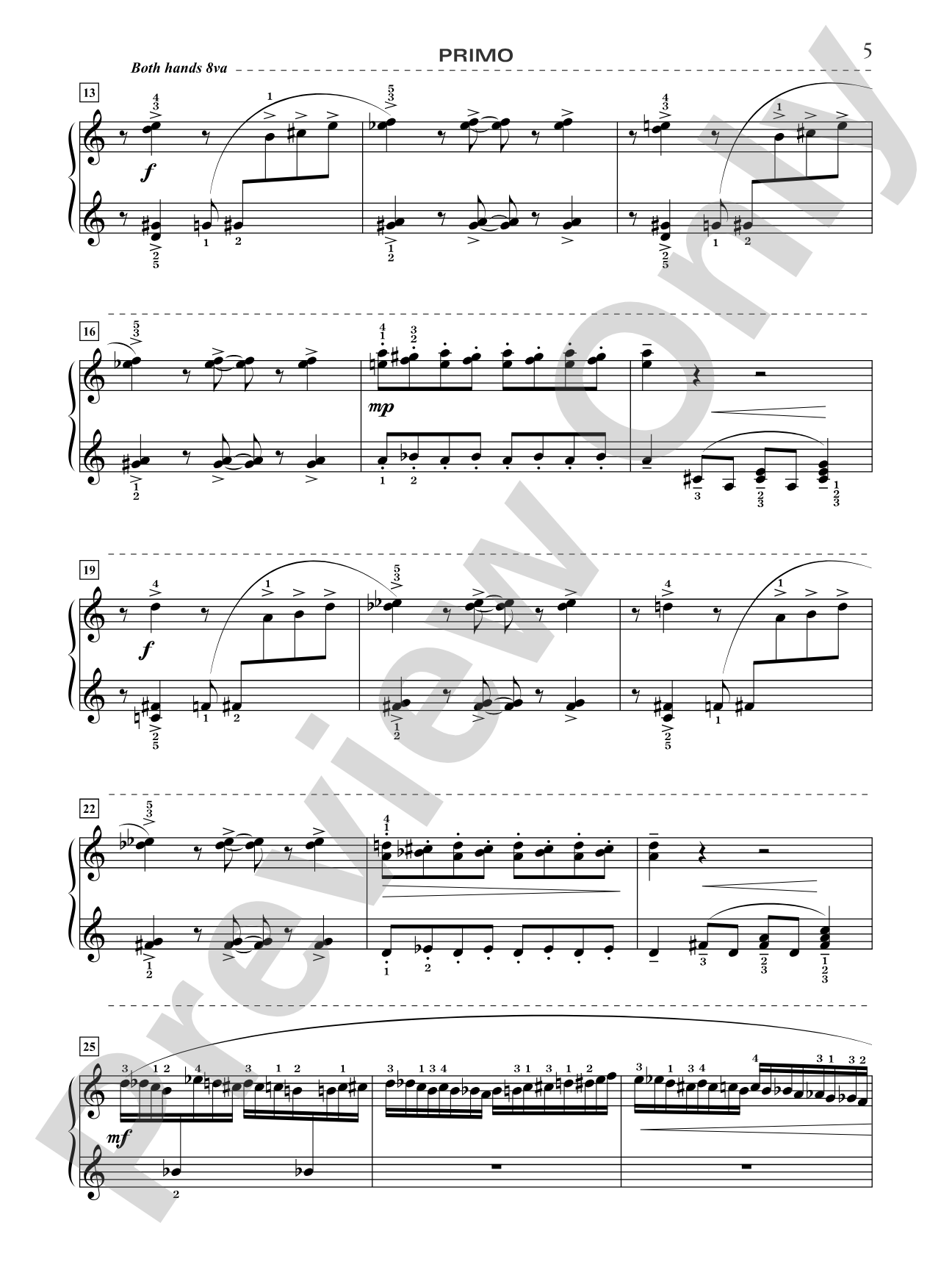
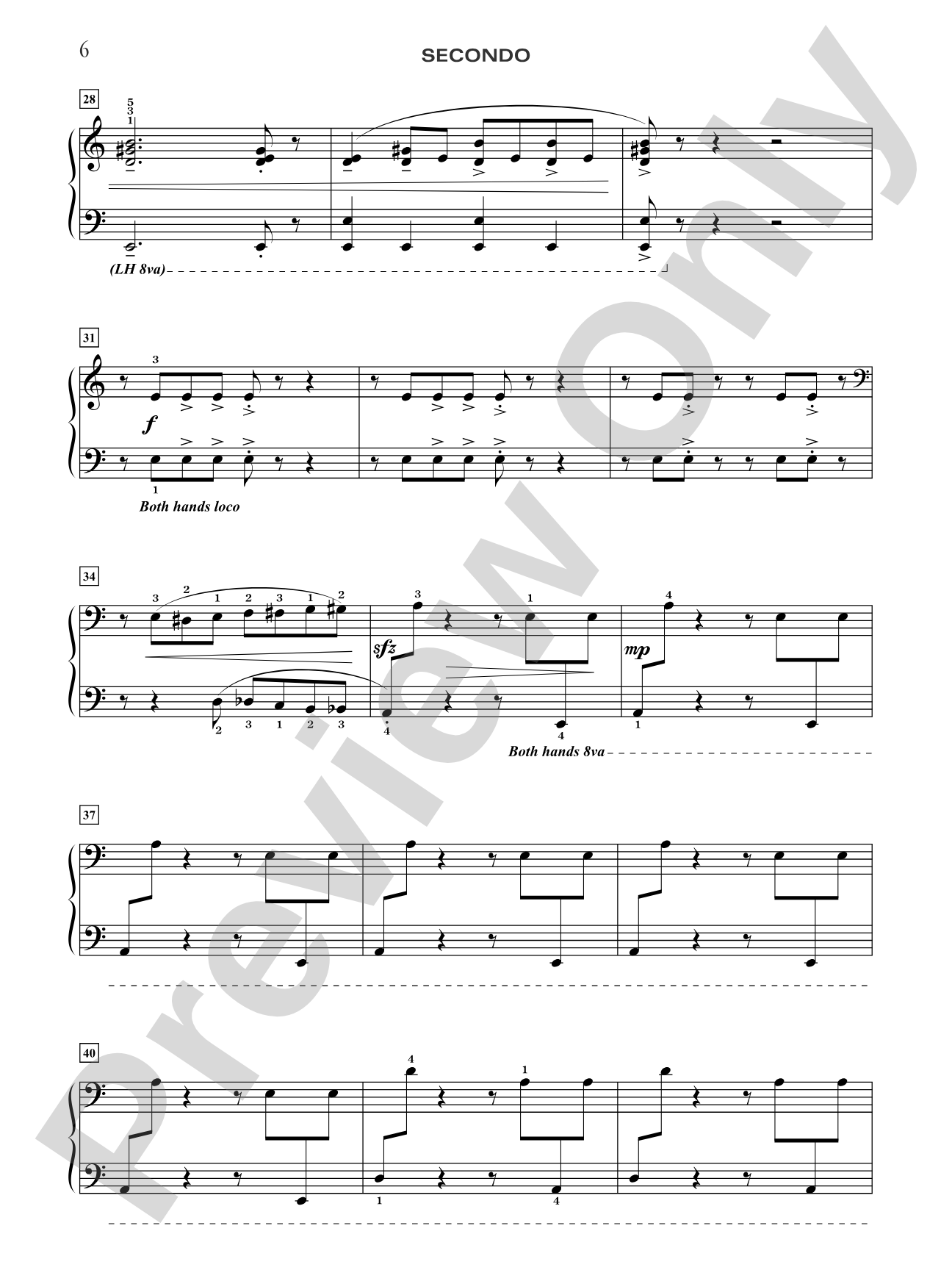
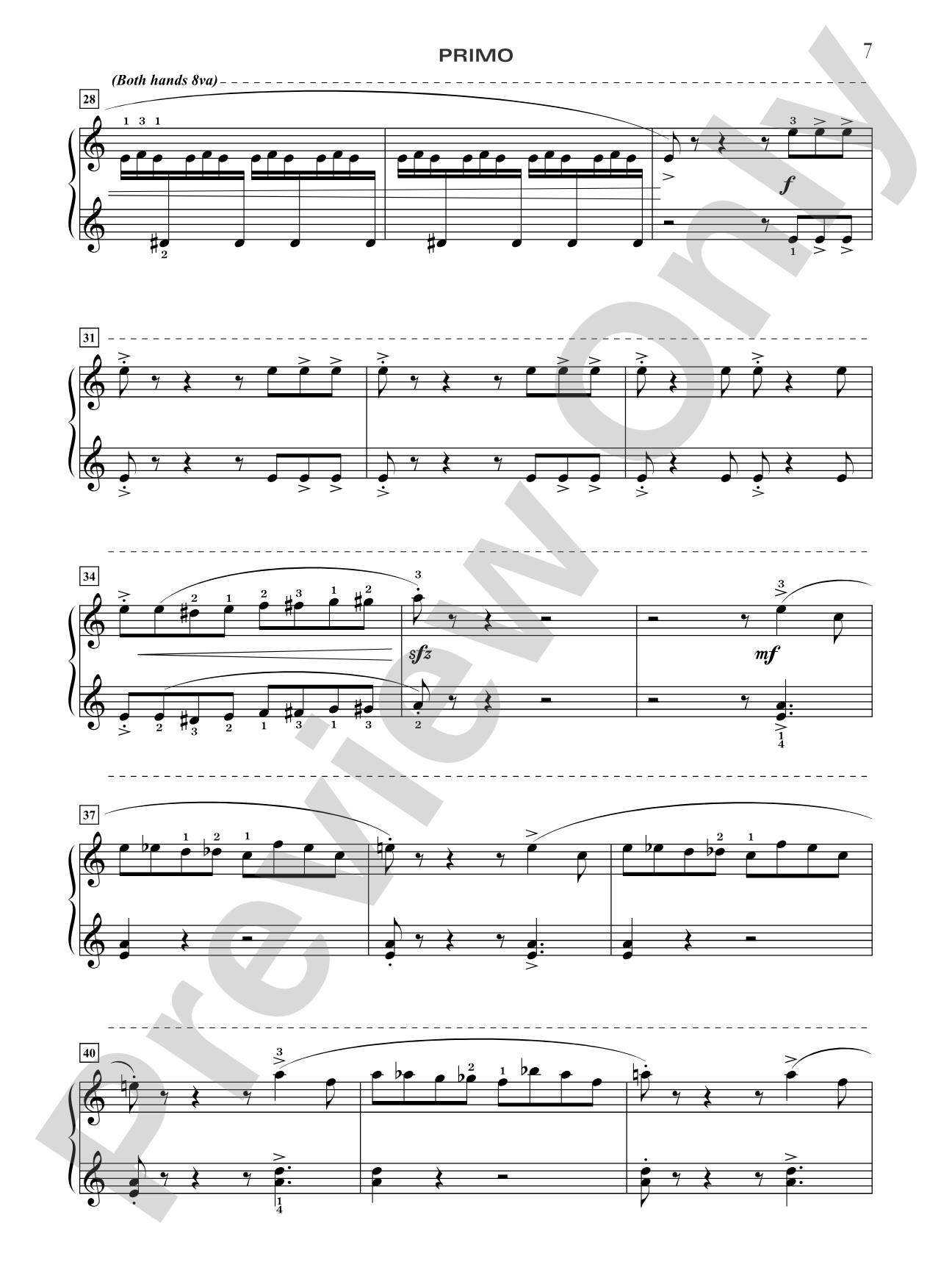
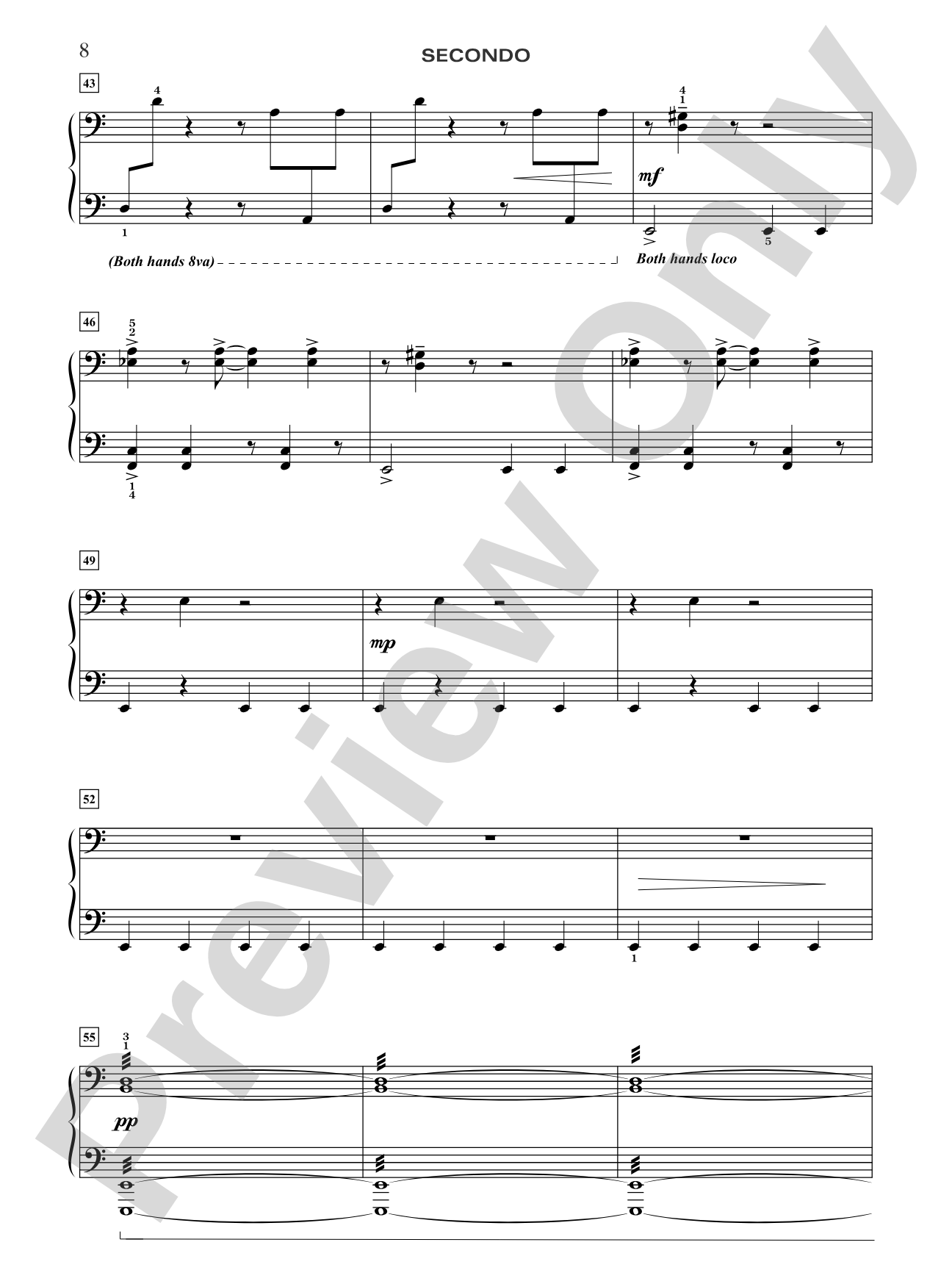
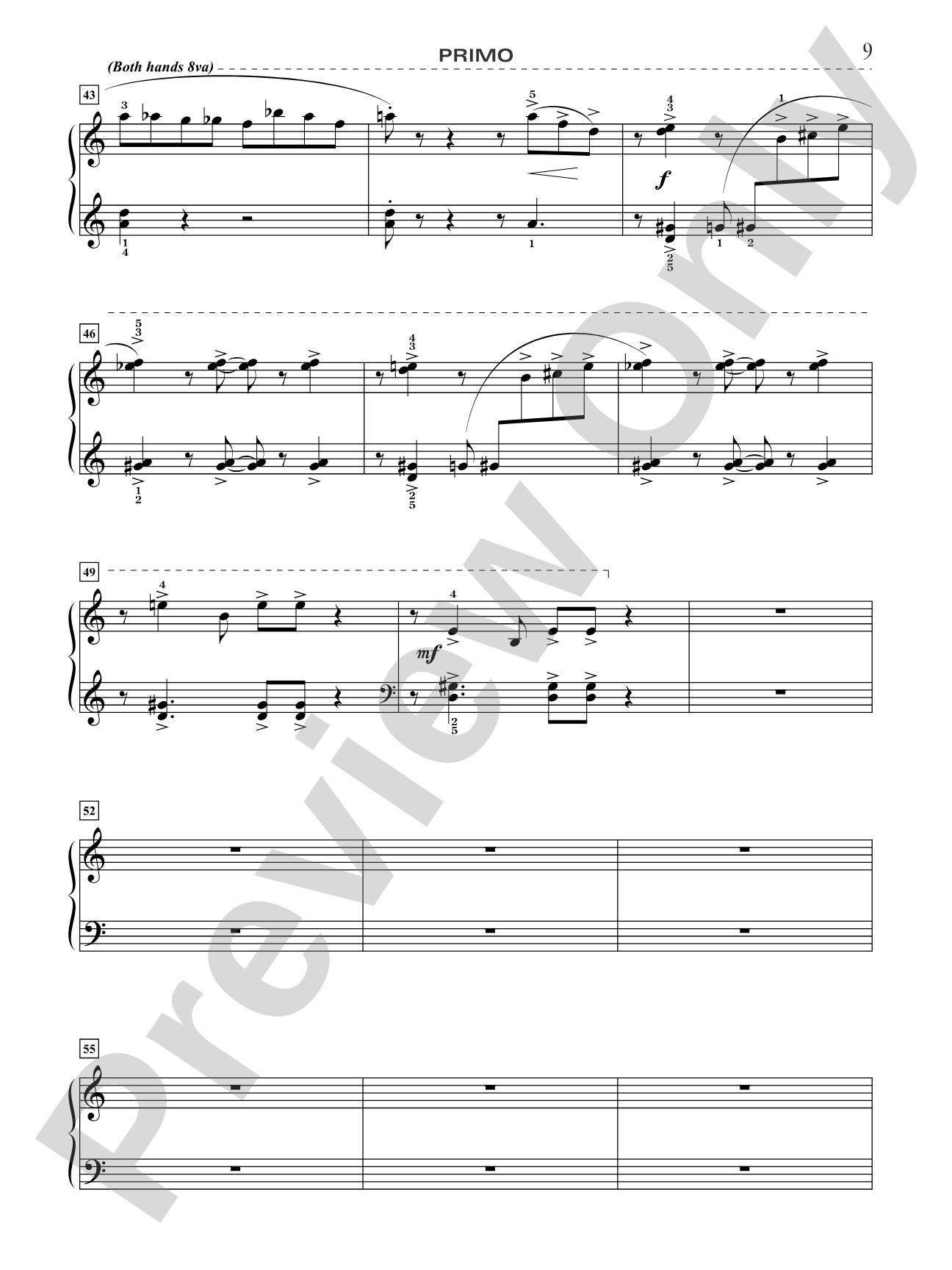
Pianist, composer, and bandleader Jack Fina's popular 1946 hit, "Bumble Boogie," is based on Nikolai Rimsky-Korsakov's "Flight of the Bumble Bee." Lucy Wilde Warren's arrangement for two-pianos, eight-hands is written for late-intermediate pianists and set up as two duets (Piano 1 and Piano 2) with the primo and secondo parts on facing pages. This high-energy audience pleaser is fun to play while providing important listening skills, technique, rhythmic control, and musicianship. "Bumble Boogie" is excellent for recitals, piano ensemble classes, and "monster" concerts. A Federation Festivals 2024-2028 selection.


Bumble Boogie - Piano Quartet (2 Pianos, 8 Hands): Piano isn't in MakeMusic Cloud just yet...but it could be. Let us know you'd like to see it, and you'll help shape what comes next. In the meantime, start a free trial and dive into thousands of interactive titles your students can play along with today.
Request This Title
Tell us you want it.
Start Your Free Trial
Explore everything that's ready to play right now.
Sample Audio
No sample audio found.
Sample Video
No sample videos found.
Additional Details
Publisher:
Alfred Music
Page Count:
80
SKU:
00-PB-0000401
More about this title
About the Composer: Jack Fina
Jack Fina (1912-1984) was a pianist, composer, and bandleader whose energetic arrangements and original pieces brought swing and boogie-woogie sensibilities to American popular music. His 1946 composition "Bumble Boogie" became one of his signature works, demonstrating his gift for combining classical source material with infectious rhythmic vitality and accessible melodies that appealed to both concert and casual audiences.
Why we love this
This arrangement transforms a beloved novelty number into a legitimate ensemble piece for developing pianists. Lucy Wilde Warren's two-piano setup keeps both players equally engaged and allows students to experience the fun of collaborative playing without sacrificing musical substance or technical challenge.
What to expect
Playful, energetic, and infectious. The piece captures the original "Bumble Bee" melody's frantic scurrying in a jazz-boogie idiom that's immediately recognizable yet fresh. Audiences respond to the obvious technical demands and the obvious joy pianists have playing together.
Who it's for
Late-intermediate pianists looking for high-impact ensemble repertoire that entertains audiences and builds collaborative skills. This piece works equally well in piano ensemble classes, studio recitals, and group performance contexts where multiple pianists share the stage.
How to get the most out of it
- Establish a rock-solid tempo between the two pianos before performance; the energy of this piece depends on rhythmic lock between parts. Use practice rehearsals specifically devoted to ensemble timing without focusing on individual technique.
- Balance the dialogue between Piano 1 and Piano 2 so that the driving accompaniment patterns remain supportive rather than drowning out the melody. Experiment with dynamic adjustments during rehearsal to find the sweet spot.
- Pay attention to the facing-page layout of primo and secondo parts; this visual arrangement makes it easier for partners to track each other during performance and rehearsal.
- Keep the piece bouncy and light even at a brisk tempo. Avoid heavy-handed articulation that can muddy the inner rhythmic patterns and syncopations that make "Bumble Boogie" sparkle.
How to use it
Program this as an audience opener or finale in a recital or ensemble concert where you want to shift the energy and remind listeners that classical music can be fun. It pairs well with more serious contemporary pieces, offering contrast that keeps concert pacing varied and engaging.
Skills your students will build
- Rhythmic independence between left and right hands across changing syncopated patterns
- Reading two staves simultaneously with confidence at faster tempos
- Ensemble listening and response in a two-piano setting
- Coordination with a collaborative partner through visual and aural cues
- Jazz articulation and swing feel applied to a notated score
- Stamina and technical control during sustained fast passages