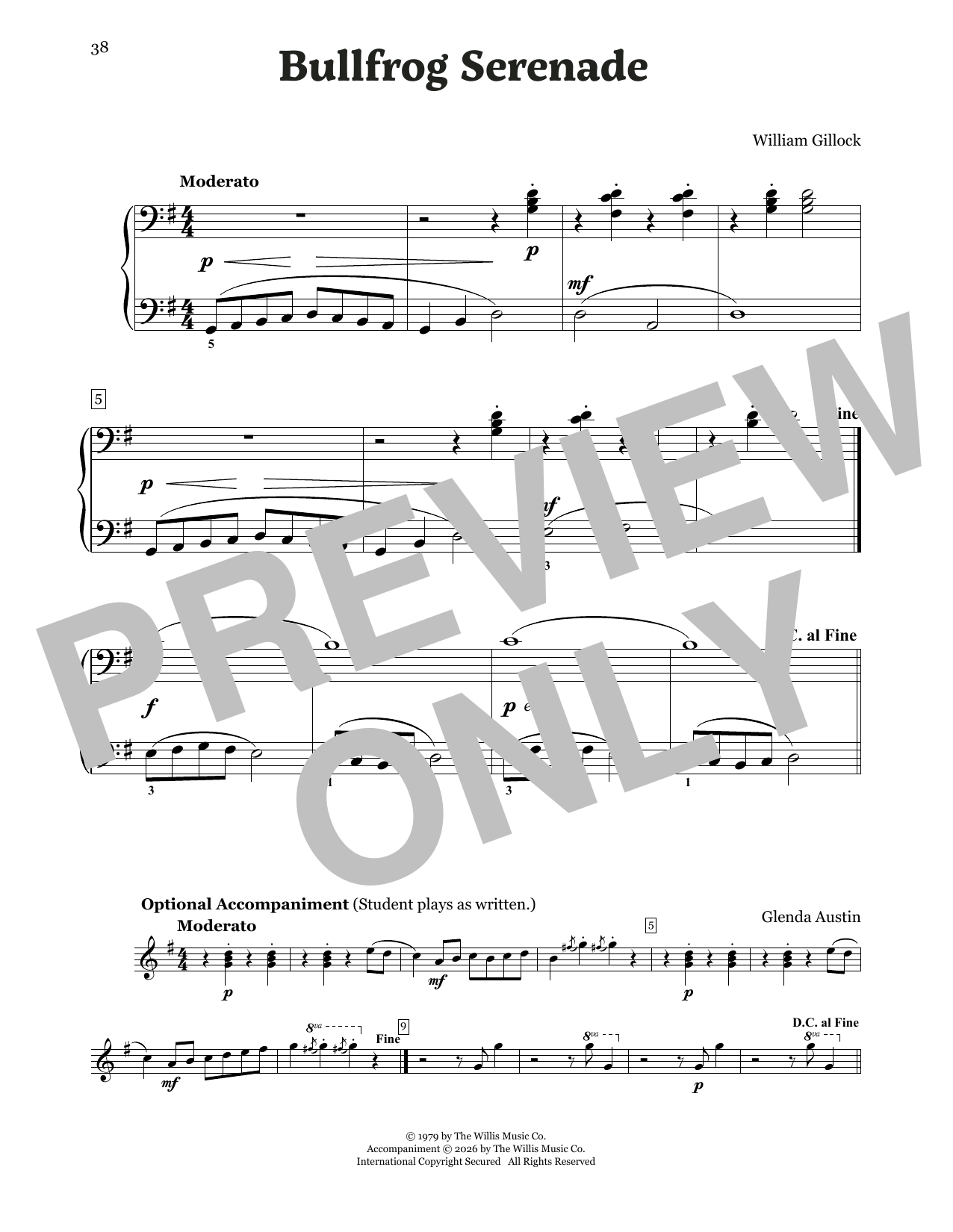
William Gillock (1917-2002) shaped American piano pedagogy through a prolific catalog of pieces that balance technical demands with genuine musicality. His works appear in curricula worldwide because they solve a real compositional challenge: writing for intermediate students without talking down to them. Gillock understood that young pianists deserve music that sparkles and engages, and his catalog reflects decades of classroom experience and genuine affection for the instrument.
Why we love this
Gillock's ability to pack character and harmonic interest into a single page remains unmatched at this level. Students leave the practice room genuinely excited about what they've learned rather than relieved the piece is over.
What to expect
Charming and slightly mischievous. The piece captures the croaking personality of its subject through a mix of chromatic motion, unexpected harmonic turns, and rhythmic playfulness that keeps both player and listener engaged.
Who it's for
Early intermediate pianists ready for pieces with personality and harmonic color beyond basic triads. This works equally well as a lesson repertoire piece or a short recital selection for students who thrive when music feels like storytelling.
How to get the most out of it
Cultivate a conversational tone in the melodic line; the piece reads like a frog's charming monologue to an audience rather than a display of technique.
Shape the accompaniment to support without overwhelming the main voice. Keep left hand rhythms clean and slightly lighter in weight than the melody.
Lean into the character moments with slight tempo flexibility. Gillock's playful passages reward gentle rubato that feels natural rather than imposed.
How to use it
Pair this with other animal character pieces for a recital or studio class day that celebrates program music. Its brevity makes it ideal as an encore or as part of a "Musical Storytelling" concert theme alongside comparable Gillock selections.
Skills your students will build
Legato pedaling and managing sustain across harmonic changes
Playing a vocal melody against rhythmic accompaniment patterns
Reading chromatic passing tones and altered harmonies
Shaping short phrases with dynamic clarity on a single page
You May Also Like
Scan to Complete Your Purchase
Use your phone's camera to scan the code below
You'll log in on your phone and the order will be added to your account