

Bull: Two Pieces (Vexilla Regis Prodeunt; Fantasia on the Flemish Chorale "Laet ons Met Herten Reijne"): Organ Book
For Organ
By John Bull
Item: 00-PK-0003860

$7.99
Pickup currently not available
Buy Extra Parts (Digital PDF Download)
Parts Added to Cart!
Description
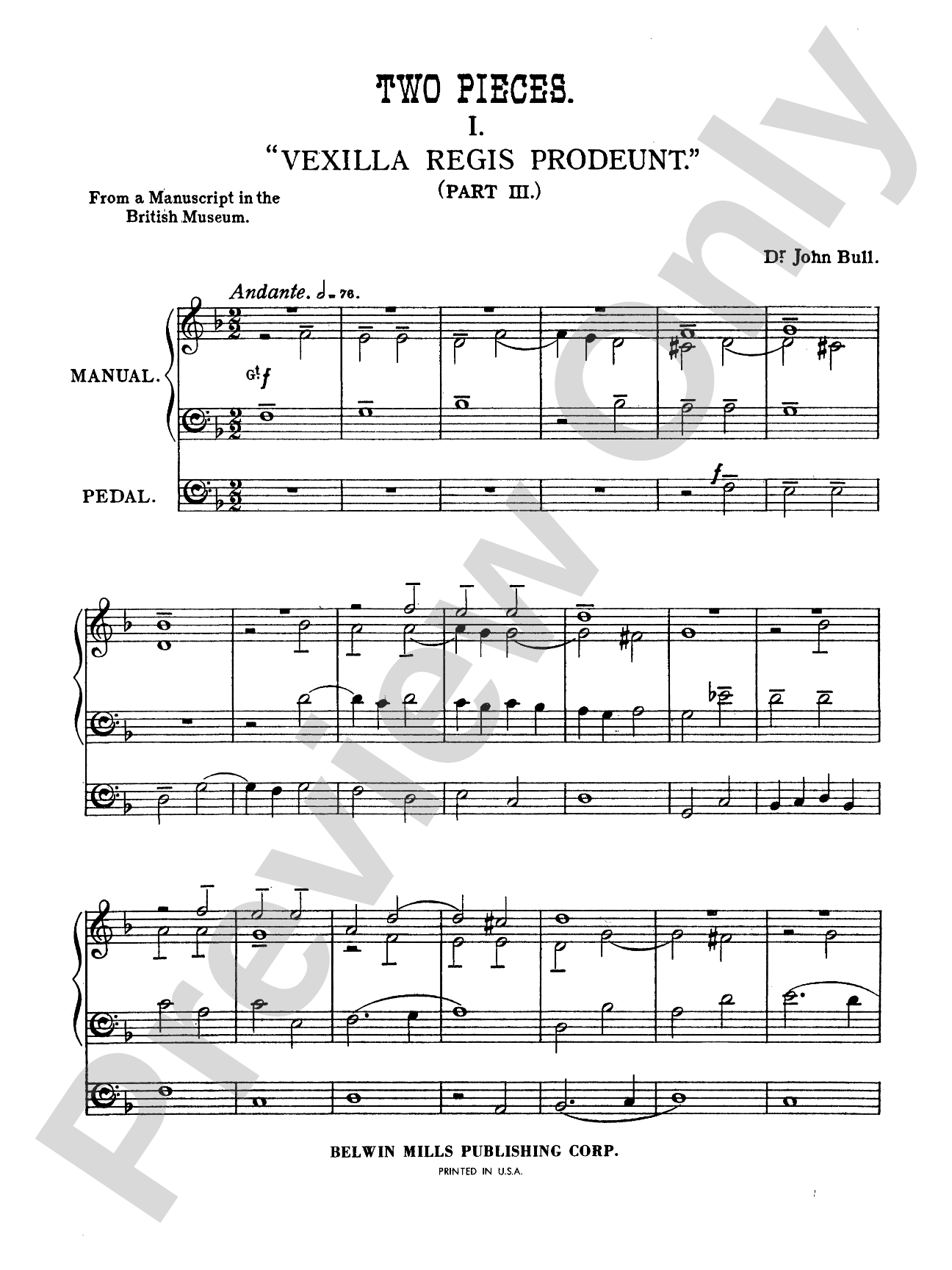
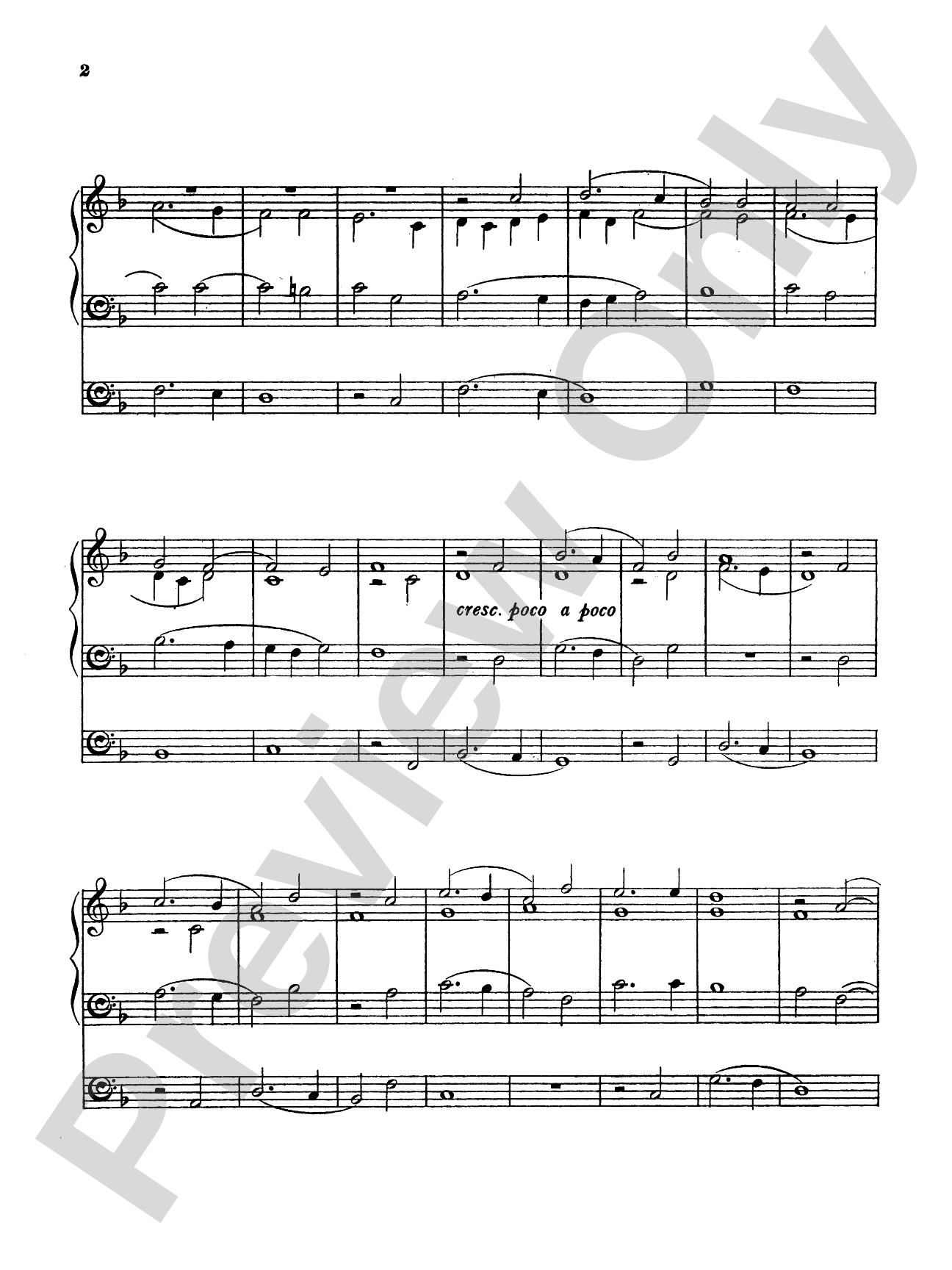
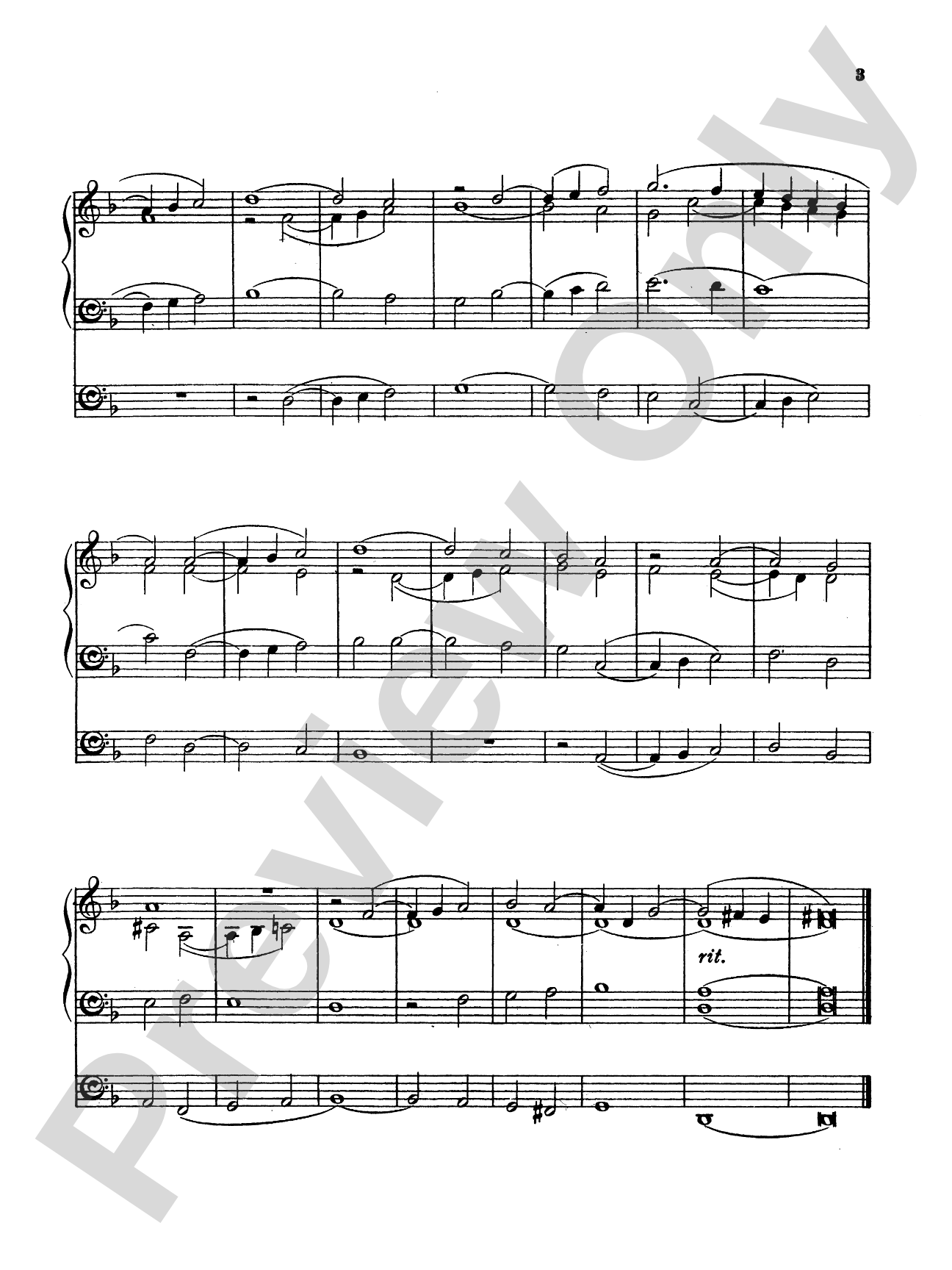
Two pieces for organ composed by Dr. John Bull and edited by John E. West. Titles: I. Vexilla Regis Prodeunt * II. Fantasia on the Flemish Chorale "Laet ons Met Herten Reijne").


Don't just read it, hear it, play along with it, and watch your students grow with it. In MakeMusic Cloud, Bull: Two Pieces (Vexilla Regis Prodeunt; Fantasia on the Flemish Chorale "Laet ons Met Herten Reijne"): Organ Book comes alive with professional accompaniment, adjustable tempo, and built-in practice tools that turn solo practice into real progress.
Open in the Player
Jump straight in and assign it today.
Start Your Free Trial
Open this title and explore the full library in minutes.
Sample Audio
No sample audio found.
Sample Video
No sample videos found.
Additional Details
Series:
Kalmus Edition
Publisher:
Alfred Music
Page Count:
12
SKU:
00-PK-0003860
More about this title
About the Composer: John Bull
John Bull (1562, 1628) stands among the most technically accomplished keyboard composers of the Renaissance, with a legacy that shaped organ and virginal music across Northern Europe. A composer, organist, and teacher who served at the English royal court and later at Antwerp Cathedral, Bull wrote music of stunning contrapuntal density and virtuosic demands that continue to challenge organists today.
Why we love this
Bull's organ writing here spans two distinct approaches that reward very different interpretive choices. The first piece draws on plainchant tradition, while the second builds a fantasia around a Flemish chorale, giving organists material that honors liturgical roots while allowing genuine compositional flair. This pairing lets you program Renaissance organ music that speaks to both scholarly and devotional contexts.
What to expect
The first piece carries the gravity of plainchant, with solid harmonic grounding beneath measured counterpoint. The fantasia, by contrast, flows with rhythmic independence and ornamental figures that dance around a sturdy chorale foundation, creating dialogue between embellishment and declaration.
Who it's for
Organists seeking substantial Renaissance repertoire that sits between liturgical function and concert interest. Advanced students preparing for recitals or study of keyboard history, as well as church musicians building a working collection of organ literature beyond the Baroque.
How to get the most out of it
- Balance the contrapuntal lines clearly; Bull's part writing benefits from articulation choices that define each voice without sacrificing legato.
- Approach the fantasia's ornamentation and passage work with character rather than pure speed, letting the Flemish melody emerge through the figuration.
- Adapt registration to your instrument's capabilities; these pieces work across different organ sizes when you select stops that honor both clarity and weight.
How to use it
Program these as an exploration of Renaissance keyboard language on a recital exploring music before Bach, or use the first piece in a liturgical context where the plainchant connection matters. The fantasia pairs naturally with other chorale-based organ works from the same period.
Skills your students will build
- Renaissance counterpoint and voice independence
- Ornamentation and figuration technique in early keyboard style
- Chorale melody recognition and registration choices
- Pedal independence in contrapuntal writing
- Navigating period notation and editorial conventions