Bull: Compositions
By John Bull
Item: 00-PC-0005786
Pickup currently not available
Description
Don't just read it, hear it, play along with it, and watch your students grow with it. In MakeMusic Cloud, Bull: Compositions comes alive with professional accompaniment, adjustable tempo, and built-in practice tools that turn solo practice into real progress.
Jump straight in and assign it today.
Open this title and explore the full library in minutes.
Sample Audio
Sample Video
Additional Details
More about this title
About the Composer: John Bull
John Bull (1562 or 1563–1628) was among the most celebrated keyboard virtuosos of the English Renaissance. He served as organist at the Chapel Royal, where he established himself as a master of the virginals, the plucked keyboard instrument that defined English musical life in the late 16th and early 17th centuries. His technical innovations and compositional sophistication made him a foundational figure in keyboard music.
Bull's output includes over 100 keyboard works, many preserved in the Fitzwilliam Virginal Book, one of the era's most important musical manuscripts. His pieces range from elaborate fantasias to dance forms and variations, showcasing the ornamental style and rhythmic vitality that characterize the virginalist school. Though he spent his later years in continental Europe, his influence on English keyboard composition remained profound.
Why we love this
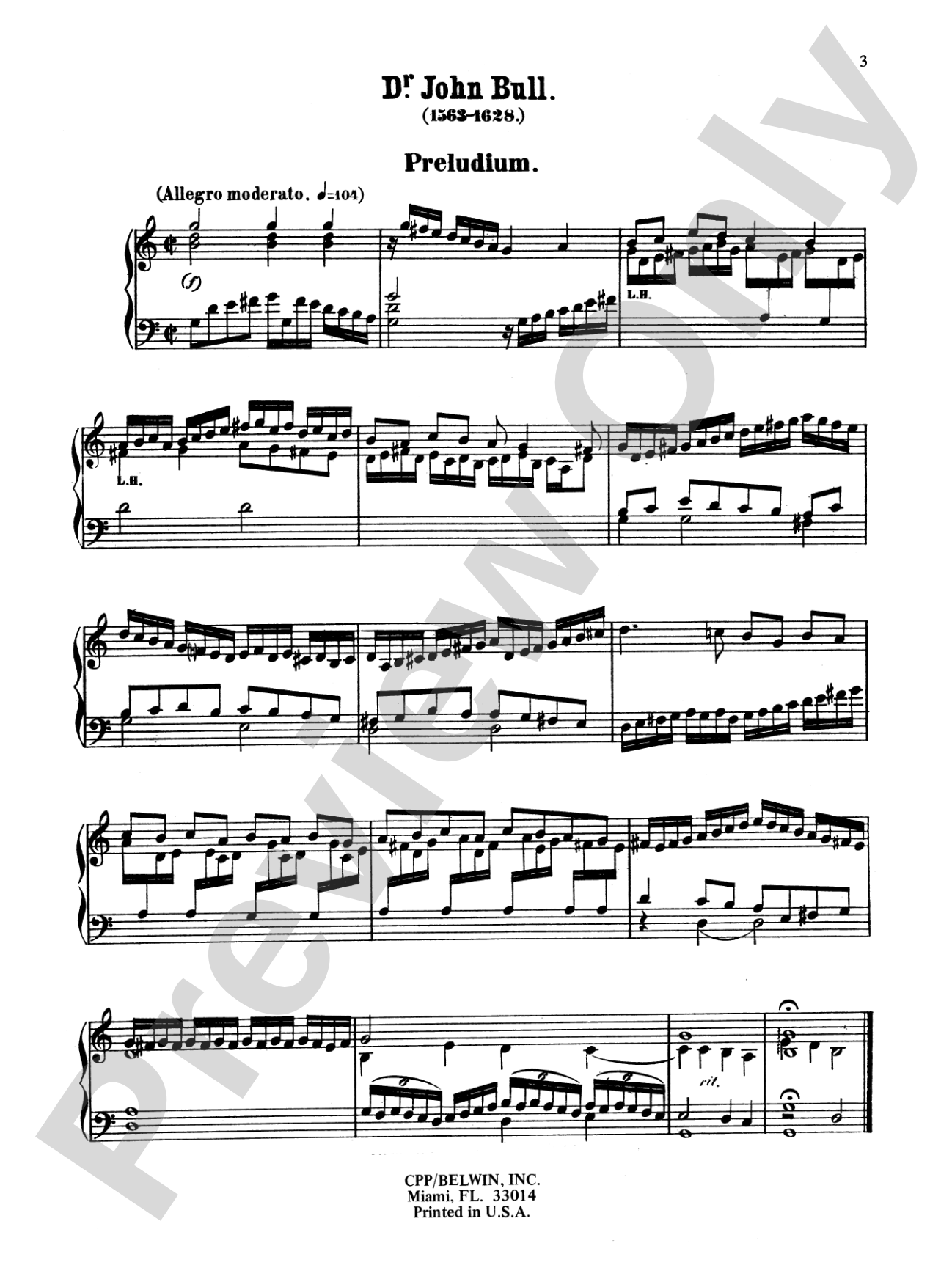
This collection gives pianists direct access to keyboard music written when the genre was still finding its voice. Bull's pieces move beyond mere technical display; the dances carry genuine character, the variations reveal his melodic gift, and the architecture of pieces like the Preludium shows compositional thinking that rewards careful interpretation. Playing Renaissance keyboard music on modern piano opens up a different sound world and asks pianists to rethink rubato, ornamentation, and phrasing in ways that strengthen their musicianship across all repertoire.
What to expect
These works pulse with the rhythmic energy of courtly dances and the ornamental elegance of the virginalist school. Each piece balances structural clarity with decorative figuration, creating music that feels both intimate and brilliantly alive. The harmonic language is direct and luminous, free from Baroque density but rich with the particular character of English Renaissance musical thought.
Who it's for
Advanced undergraduate piano students and performers seeking to expand beyond Baroque masterworks into the earlier keyboard repertoire. Teachers preparing students for historically informed performance, college auditions, or recitals that benefit from Renaissance programming. Pianists interested in exploring how keyboard writing evolved and how modern technique serves music from an earlier instrumental tradition.
How to get the most out of it
- Shape the melodic line with subtle dynamic inflection rather than relying on pedal for color. Renaissance ornamentation sits on top of structural harmony, so clarity of texture matters more than sonic wash.
- Treat repeated sections as opportunities for variation rather than exact repetition. Embellish the second pass with additional passagework or different articulation, staying true to the period practice of diminution.
- Approach the rapid passagework with buoyant clarity rather than virtuosic speed. These figures function as melodic elaboration, not mere display, and benefit from controlled articulation and even tone.
- Notice the shift between dance rhythms and more freely structured sections. Allow the dance pieces their metric regularity, but give the Preludium and fantasias room to breathe across barlines.
How to use it
Program one or two of these pieces in a recital devoted to keyboard history, pairing them with Byrd or Sweelinck to show the virginalist tradition in context. Use the gailiards and courantes as lighter contrasts in a mixed solo recital. The Preludium works particularly well as an opening or interlude piece that signals stylistic range without demanding a full historical concert frame.
Skills your students will build
- Ornamentation and diminution practice from the Renaissance keyboard tradition
- Rhythmic clarity in dance forms (galliard, courante, pavane)
- Voice independence and counterpoint in multiple-line textures
- Period-informed rubato and phrasing across non-metric sections
- Rapid passagework articulation with evenness and control