
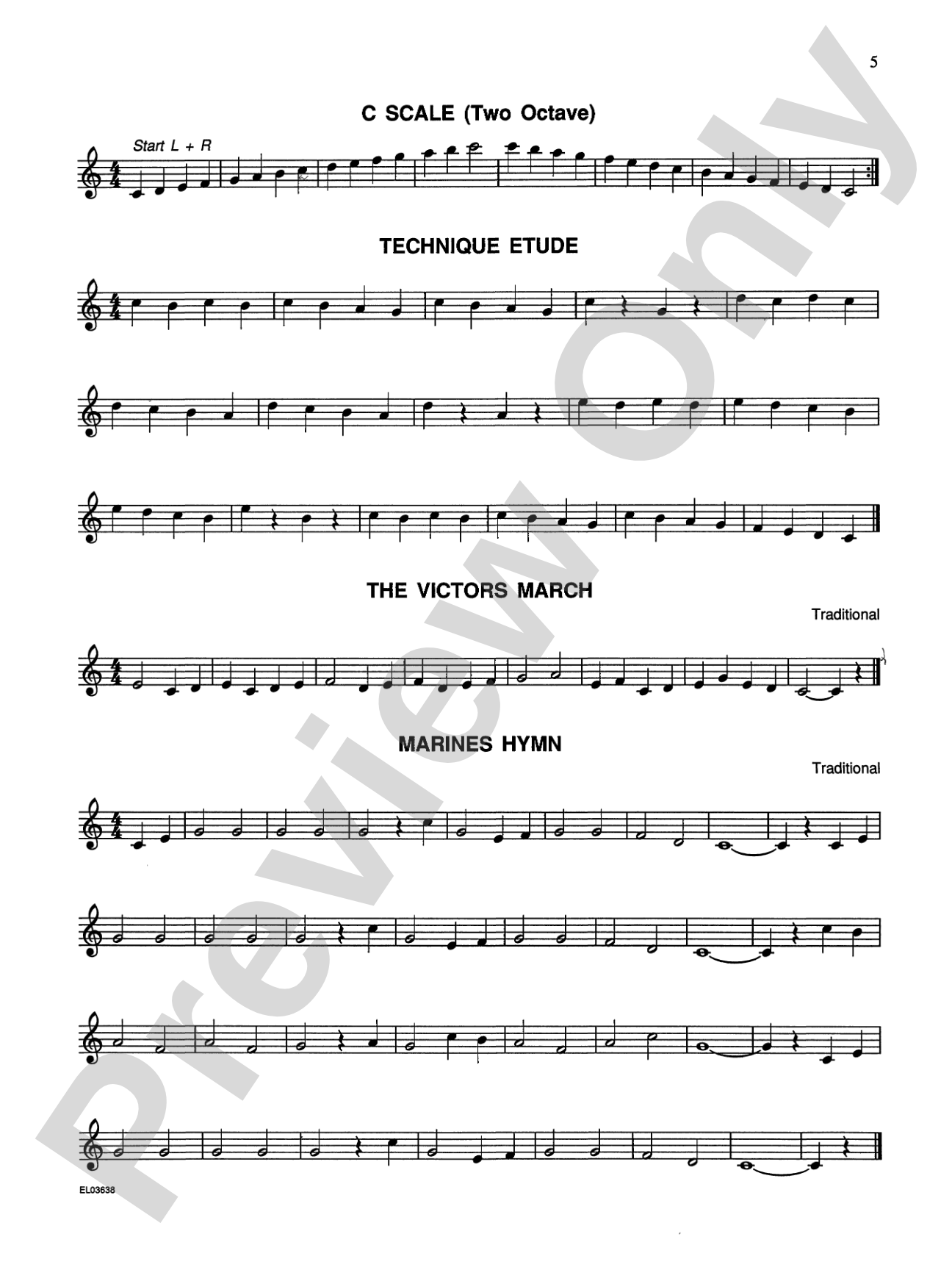
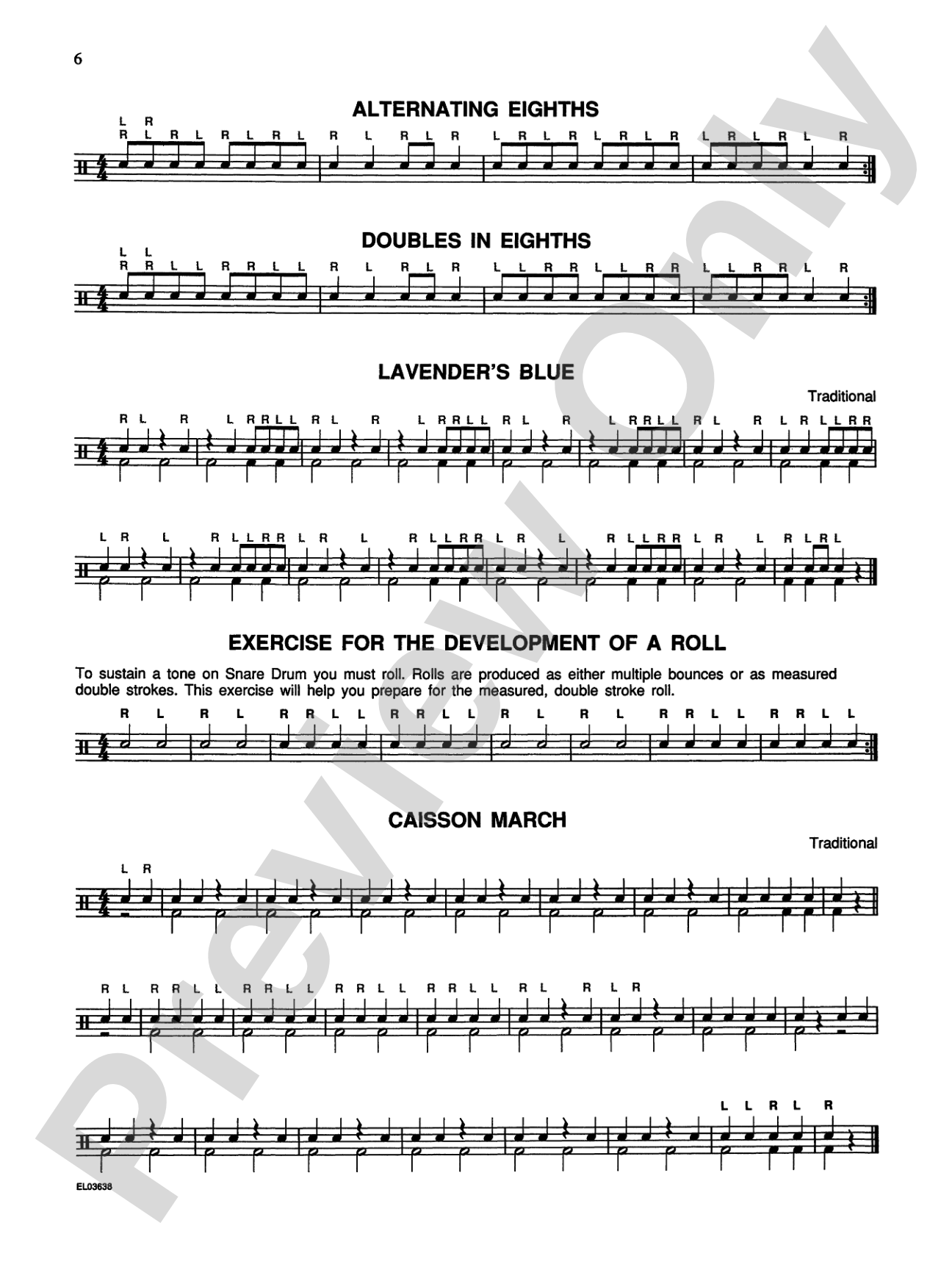
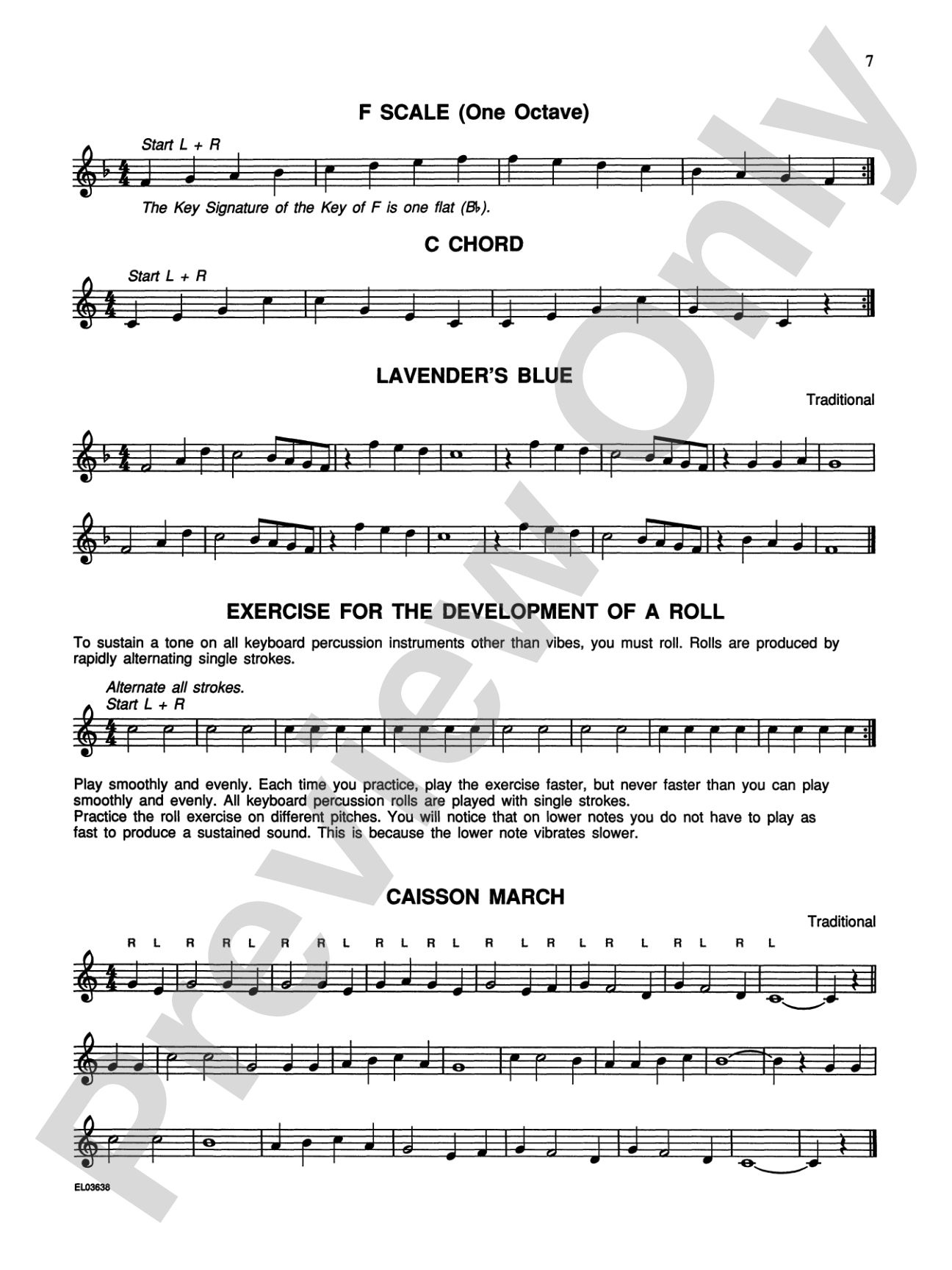

Building Percussion Technique: for Snare Drum, Bass Drum and Keyboard Percussion Instruments
for Snare Drum, Bass Drum and Keyboard Percussion Instruments
By Sandy Feldstein
Item: 00-PB-0001993
$6.99
Pickup currently not available
Description
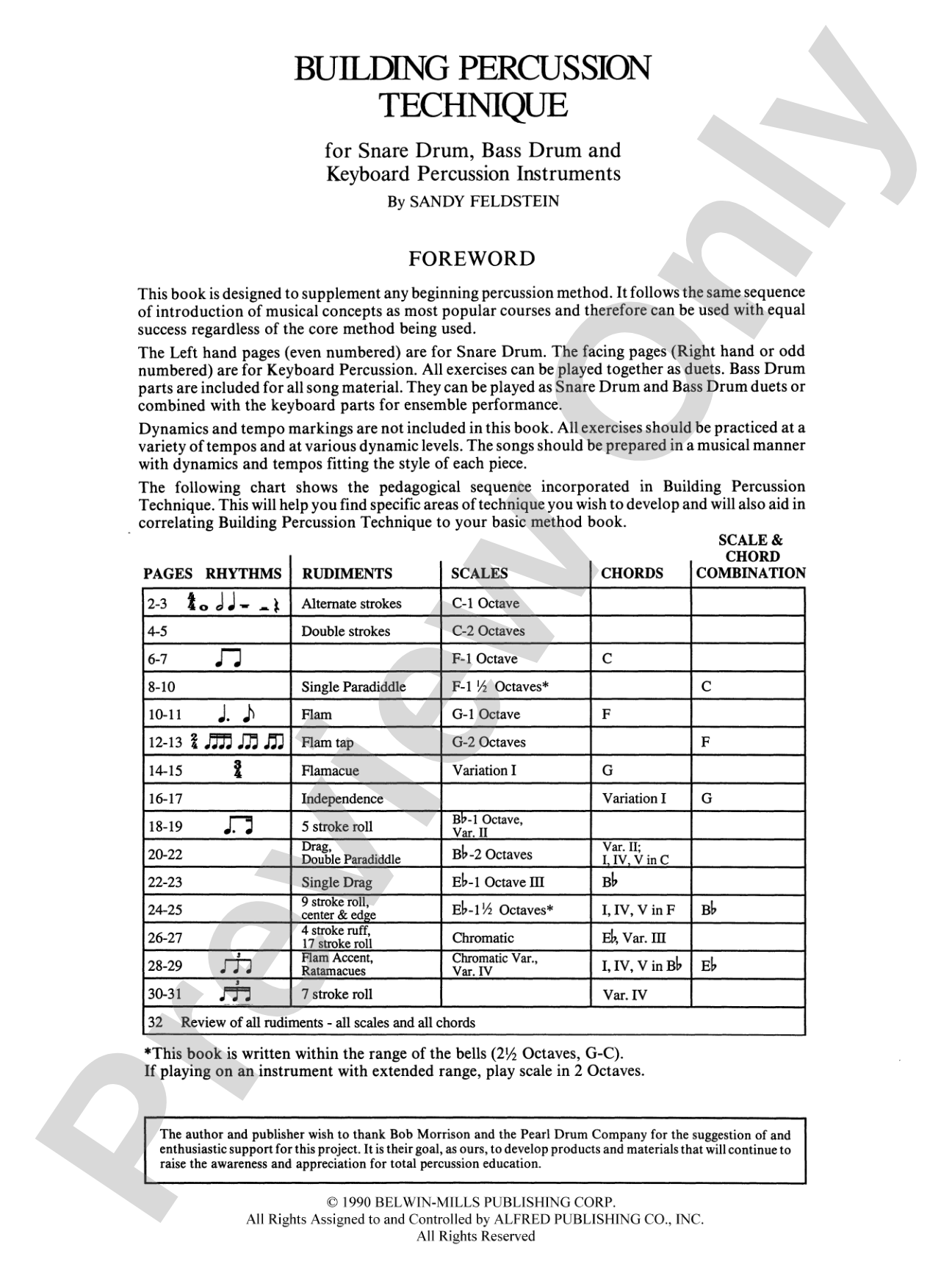
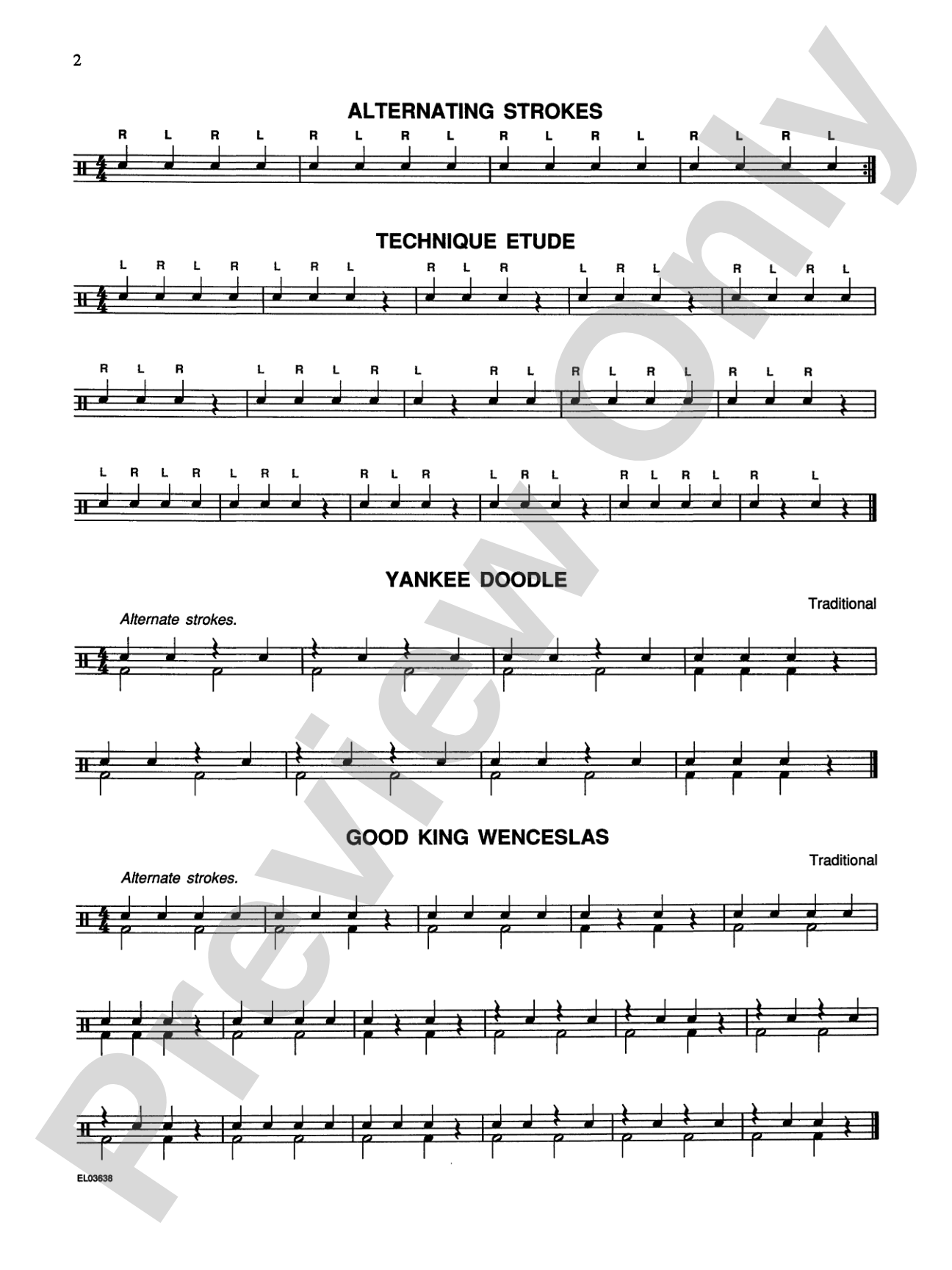
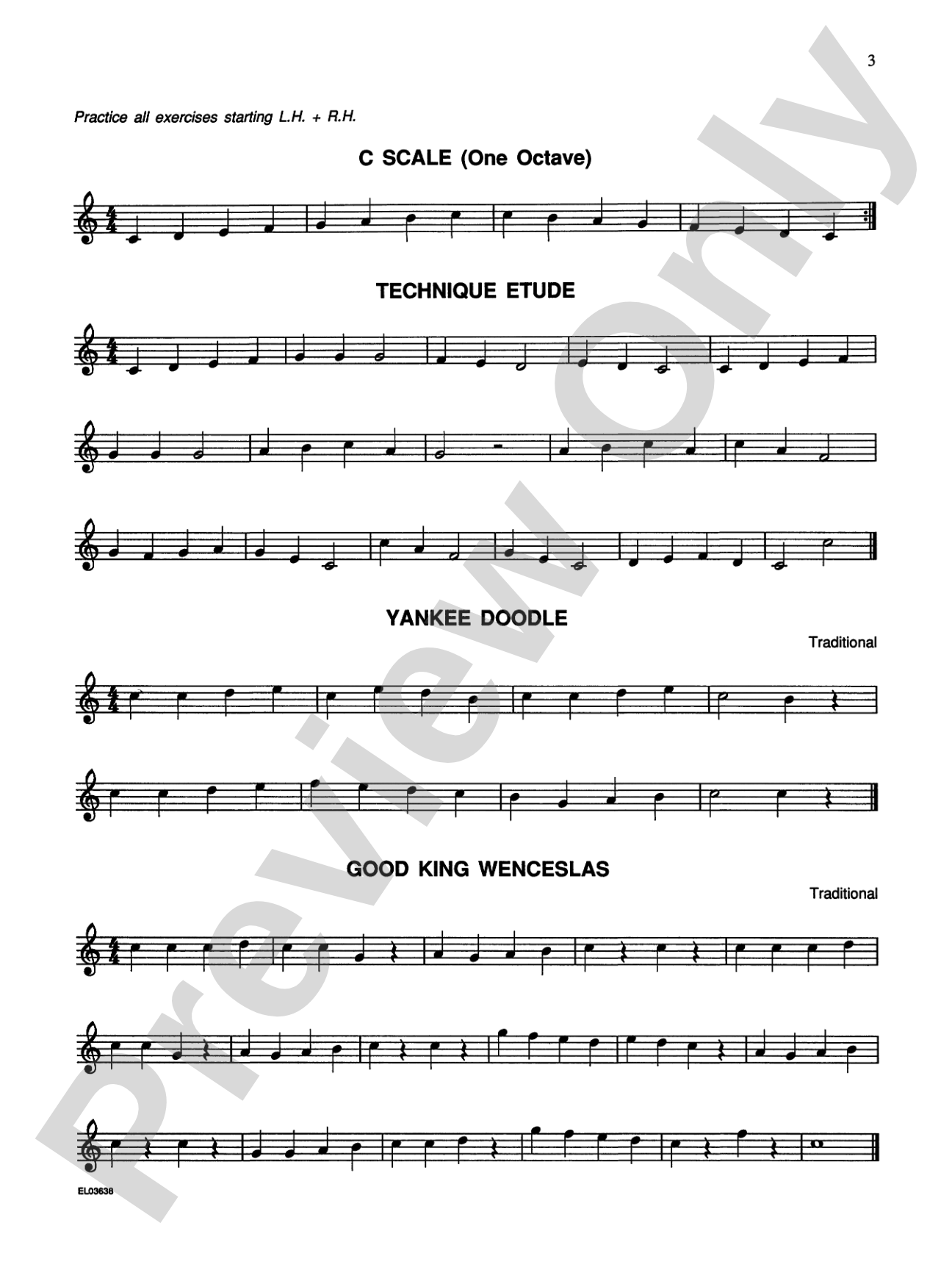
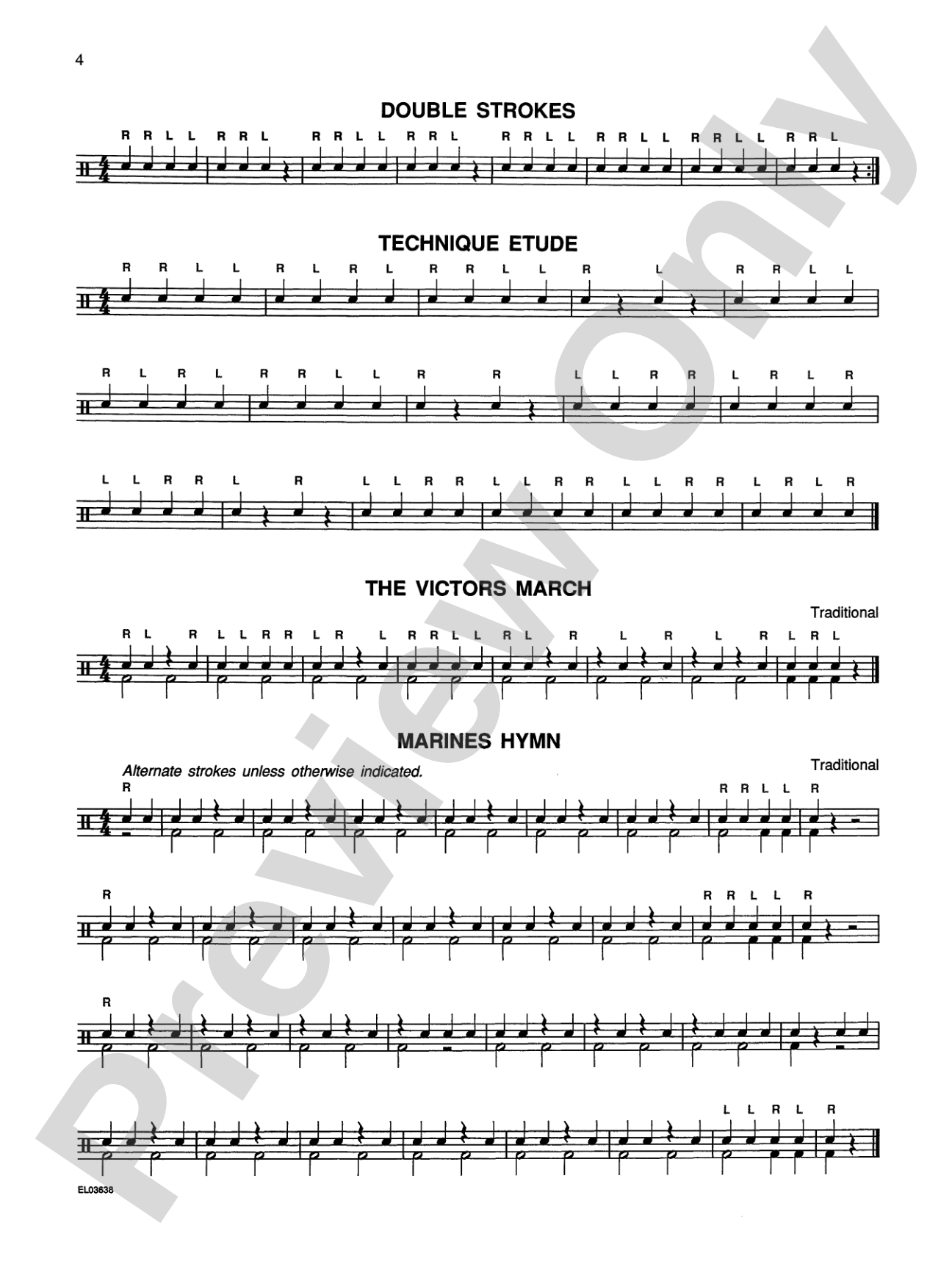
This book is designed to supplement any beginning percussion method. It follows the same sequence of introduction of musical concepts as most popular courses and therefore can be used with equal success regardless of the core method being used. All exercises can be played as solos, duets, and/or trios.


Building Percussion Technique: for Snare Drum, Bass Drum and Keyboard Percussion Instruments isn't in MakeMusic Cloud just yet...but it could be. Let us know you'd like to see it, and you'll help shape what comes next. In the meantime, start a free trial and dive into thousands of interactive titles your students can play along with today.
Request This Title
Tell us you want it.
Start Your Free Trial
Explore everything that's ready to play right now.
Sample Audio
No sample audio found.
Sample Video
No sample videos found.
Additional Details
Publisher:
Alfred Music
Page Count:
32
SKU:
00-PB-0001993
More about this title
About the Composer: Sandy Feldstein
Sandy Feldstein is a prolific composer and arranger whose contributions to music education span decades. His pedagogical works are built on the principle that technique exercises need not feel divorced from musicality; his writing consistently bridges the gap between skill-building and genuine musical engagement.
Why we love this
This book respects the reality of how percussion programs actually work. Rather than forcing you to adopt a single method, Feldstein designed these exercises to complement whatever core text you're already using, which means zero friction when you want to deepen technique without overhauling your curriculum. The solo, duet, and trio options make every exercise immediately flexible for group rehearsals, sectionals, or individual practice.
What to expect
Straightforward and purposeful. These are not flashy pieces, but they carry the quiet confidence of exercises designed by someone who understands what beginners actually need. The progression feels logical, building from simple to gradually more complex without sudden jumps that leave students frustrated.
Who it's for
Beginning percussionists across all four mallets and snare work who need systematic, sequential technique building that integrates with their existing method book. Band and orchestra directors working with multiple percussion students at varying readiness levels will find the duet and trio options especially useful for differentiation without creating separate materials.
How to get the most out of it
- Start each new exercise at a tempo where the student can execute the sticking cleanly before gradually increasing speed. Rushing through these fundamentals compounds into poor habits.
- Assign duet combinations strategically. Pairing a stronger reader with someone still building confidence creates peer support without making it feel remedial.
- Record students playing the trio versions on their own phone. Hearing themselves in ensemble context (even with their own layered tracks) reveals balance and timing issues that sound fine in real time.
- Rotate which line each student plays when working duets or trios. This prevents type-casting and forces engagement with different rhythmic responsibilities.
How to use it
Use this as your targeted technique resource during the first two years of percussion study, assigning exercises that align with whatever concepts you're introducing that week in your core method. The duet and trio arrangements make excellent fillers for full ensemble rehearsals when your percussion section is waiting on other groups, turning what could be idle time into productive skill work.
Skills your students will build
- Fundamental snare drum sticking patterns and grip consistency
- Bass drum control and mallet technique on larger instruments
- Keyboard percussion melodic reading across multiple lines
- Rhythmic independence through duet and trio ensemble playing
- Sight-reading accuracy at increasing tempos
- Coordination between hands and feet on multiple instruments