Leroy Anderson (1908-1975) bridged the worlds of classical composition and popular entertainment with a gift for melody and orchestration that made concert music genuinely accessible. His catalog of light orchestral works became standards in American pops concerts and school band programs, each one crafted with technical precision and unfailing musicality. Anderson's training at Harvard and his work as an arranger for the Boston Pops gave him the rare skill of writing music that satisfied both professional musicians and audiences seeking pure enjoyment.
Why we love this
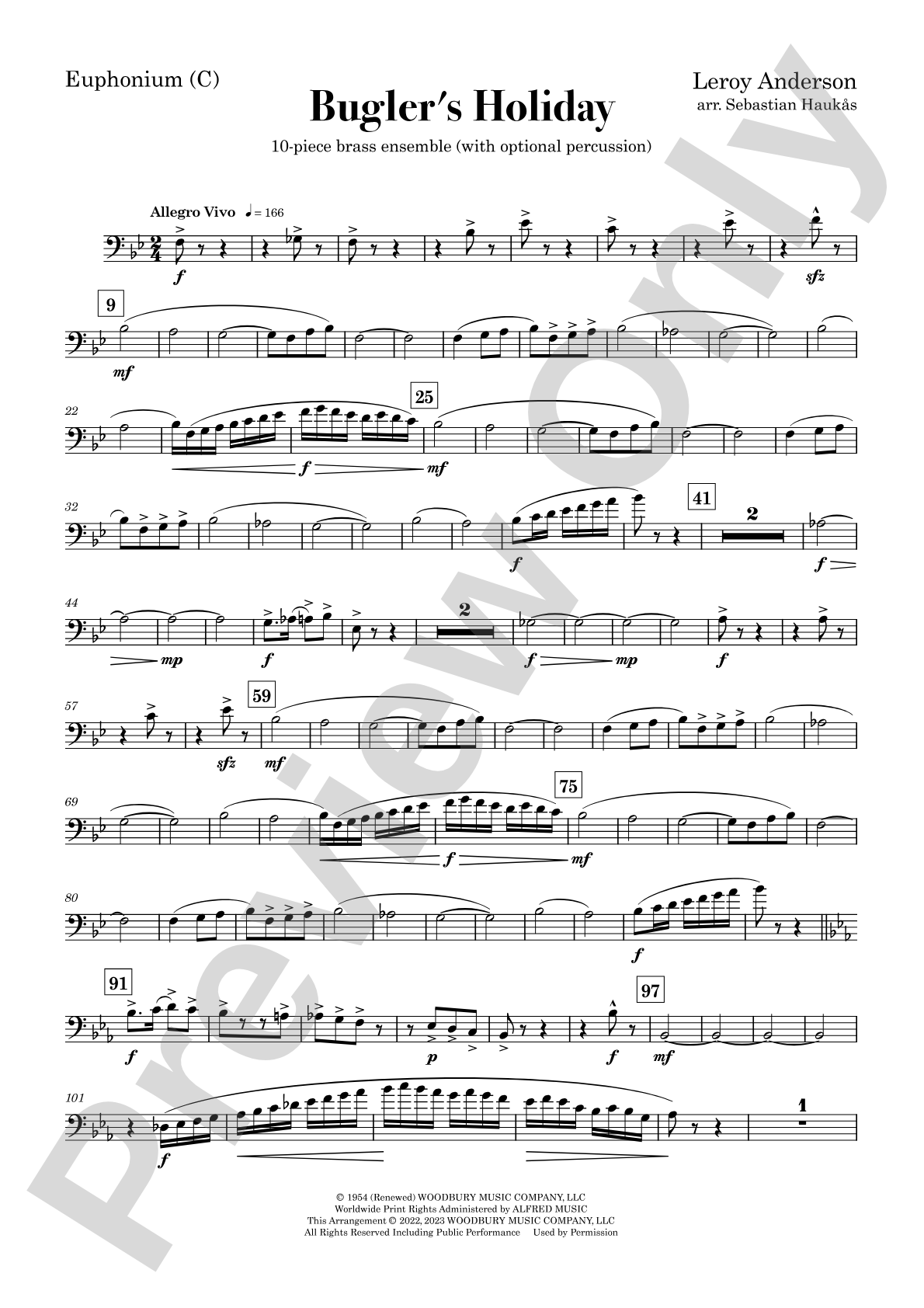
Bugler's Holiday carries the infectious energy that made Anderson's orchestrations beloved across generations, and this brass band version strips away nothing of its charm or technical appeal. The arrangement by Sebastian Haukås respects Anderson's voice while giving brass the voices it needs to sing his memorable themes. Directors choose this piece because it generates genuine enthusiasm from ensembles and audiences alike, and it demonstrates that "light" music demands serious musicianship.
What to expect
Bugler's Holiday sparkles with good humor and boisterous energy, its jagged rhythms and overlapping melodic conversations creating a sense of friendly competition among the soloists. The piece bounces along with an irrepressible lightness that makes both player and listener smile, yet beneath that approachability lies genuine compositional craft and harmonic sophistication.
Who it's for
Brass ensembles at the intermediate to advanced level who want repertoire that combines strong musicianship demands with crowd-pleasing appeal. This arrangement works for concert bands with strong brass sections and for brass quintets expanded with lower voices.
How to get the most out of it
Balance the three soloists (trumpet, French horn, and trombone) so their conversations remain clear; the accompaniment should support, not obscure, the melodic interplay.
Articulation and stylistic clarity are essential to the piece's character; Anderson wrote this for bugler clarity, so tonguing should be crisp and deliberate throughout.
Let the humor in the orchestration breathe by maintaining rhythmic exactness in the tutti passages; precision is what makes the musical jokes land.
Shape phrases with attention to Anderson's melodic contours rather than mechanical phrasing; the tunefulness depends on intelligent dynamic shaping.
How to use it
This works as a standout pops concert opener or closer, or as the centerpiece of a "light classics" program alongside other accessible yet substantial orchestral works. It pairs naturally with other Anderson pieces or with similar-era composers like Sousa and Fillmore, and it reads brilliantly as a crowd-pleaser in a spring concert after more demanding contemporary or classical programming.
Skills your students will build
Playing independent melodic lines within ensemble texture
Balancing solo voices with supportive accompaniment
Maintaining rhythmic precision in syncopated and staggered passages
Phrasing for lyricism within a bright, energetic style
Ensemble listening and awareness across multiple simultaneous lines
You May Also Like
Scan to Complete Your Purchase
Use your phone's camera to scan the code below
You'll log in on your phone and the order will be added to your account