Bugle Call Rag Sheet Music Preview

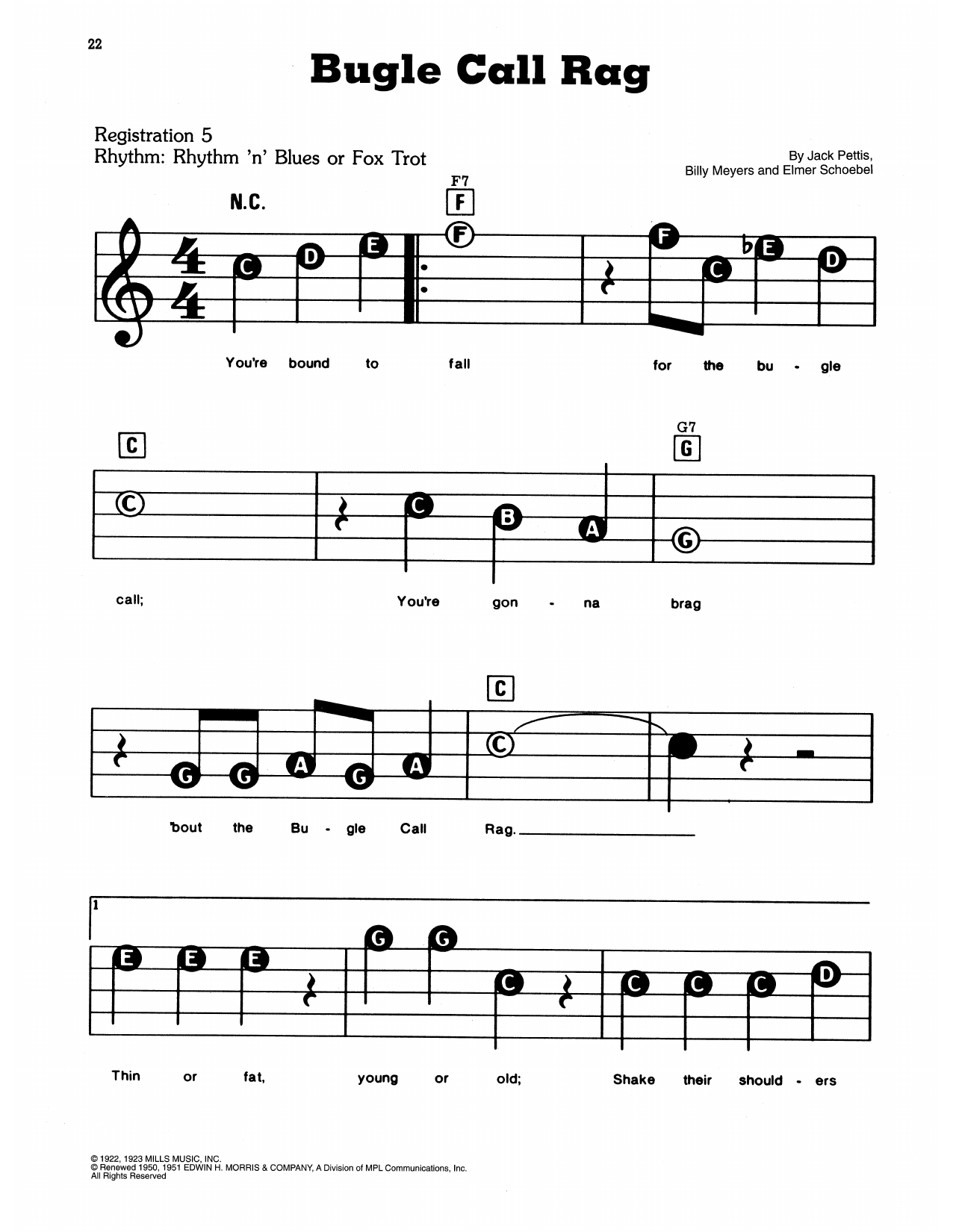
Bugle Call Rag: E-Z Play Today

As performed by Jack Pettis

Item: 35-DS01862107

Digital Download
$4.99
Description

Bugle Call Rag: E-Z Play Today isn't in MakeMusic Cloud just yet...but it could be. Let us know you'd like to see it, and you'll help shape what comes next. In the meantime, start a free trial and dive into thousands of interactive titles your students can play along with today.

Sample Audio
No sample audio found.
Sample Video
Additional Details
Publisher: Hal Leonard
Page Count: 2
SKU: 35-DS01862107

More about this title

About the Artist: Jack Pettis

Jack Pettis was a saxophonist and composer who helped define the jazz and dance band sound of the 1920s. His work bridged popular song, ragtime traditions, and early jazz idioms, making him a central figure in the transition from one era to the next. Pettis composed numerous standards that became favorites of orchestras and small ensembles alike, always with an ear for memorable melodies and accessible arrangements.

Why we love this

This is a straightforward, swinging take on early jazz that sits comfortably on the keyboard without demanding virtuosic chops. The syncopation and rhythmic drive will keep students engaged while building their grasp of jazz phrasing and swing feel in a compact, two-page format.

What to expect

Bugle Call Rag captures the energy and wit of 1920s dance halls, with a melody that bounces and teases over a rhythmically active accompaniment. There's an infectious, good-natured swagger to the piece that makes you want to move.

Who it's for

Piano students ready to explore early jazz and ragtime styles will find this piece both playable and musically rewarding. It works well for intermediate players seeking repertoire that connects popular music history to jazz fundamentals.

How to get the most out of it

  • Keep the left hand loose and rhythmically flexible; the syncopation works best when it's played with conversational timing rather than metronomic precision.
  • Lean into the accents on offbeats to bring out the ragtime DNA underneath the jazz language.
  • Balance the melody line clearly against the accompaniment so the tune stays audible through the syncopated texture.

How to use it

Pair this with other early jazz standards in a concert exploring the roots of American keyboard music, or use it in a jazz history unit that traces ragtime into swing. At two pages, it's ideal for a shorter set or as a novelty encore that audiences will recognize and enjoy.

Skills your students will build

  • Swing rhythm and syncopation in jazz style
  • Left-hand stride patterns and dance band voicings
  • Phrasing and articulation for jazz melodies
  • Reading and executing syncopated rhythmic notation

You May Also Like