
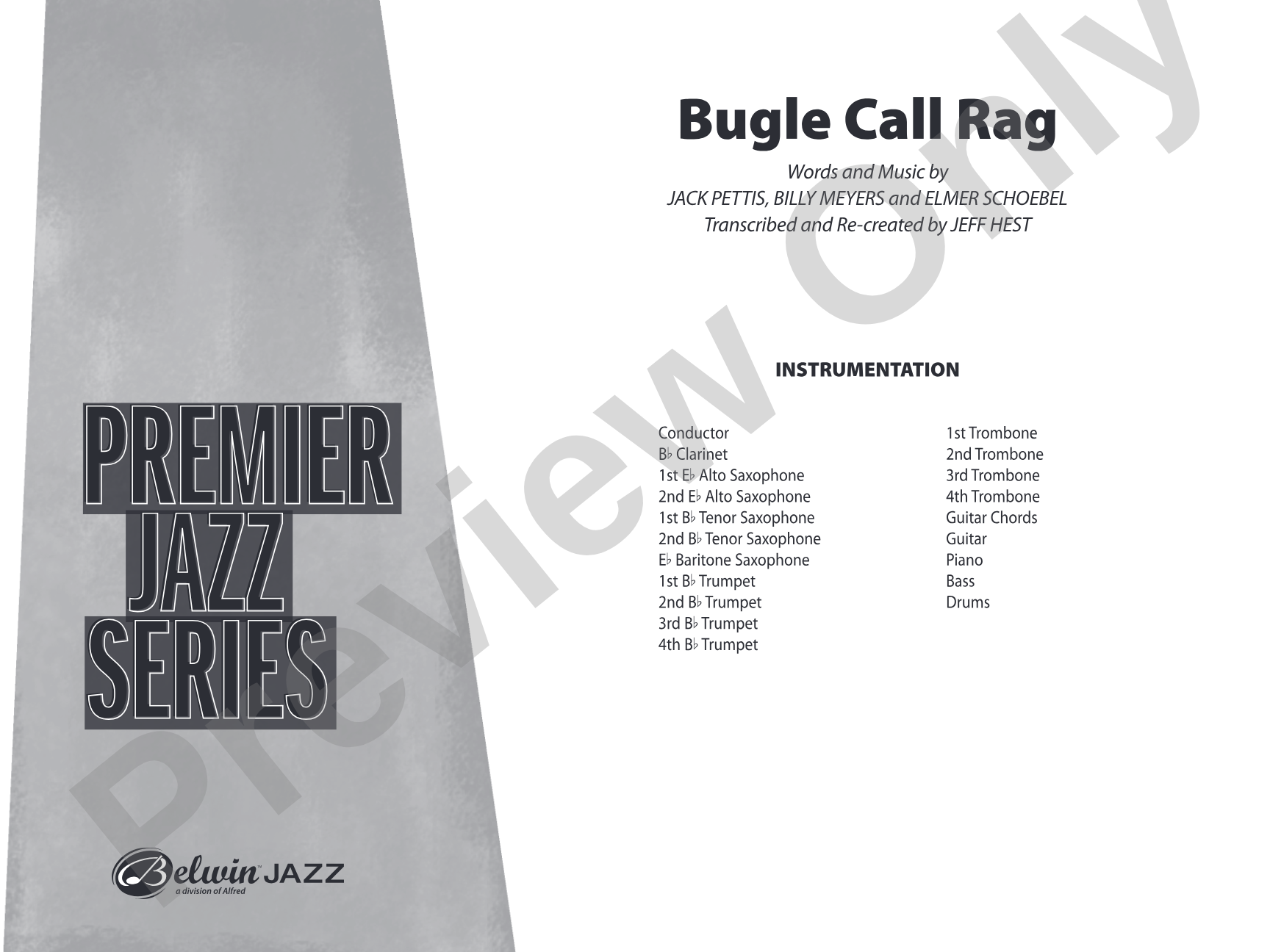
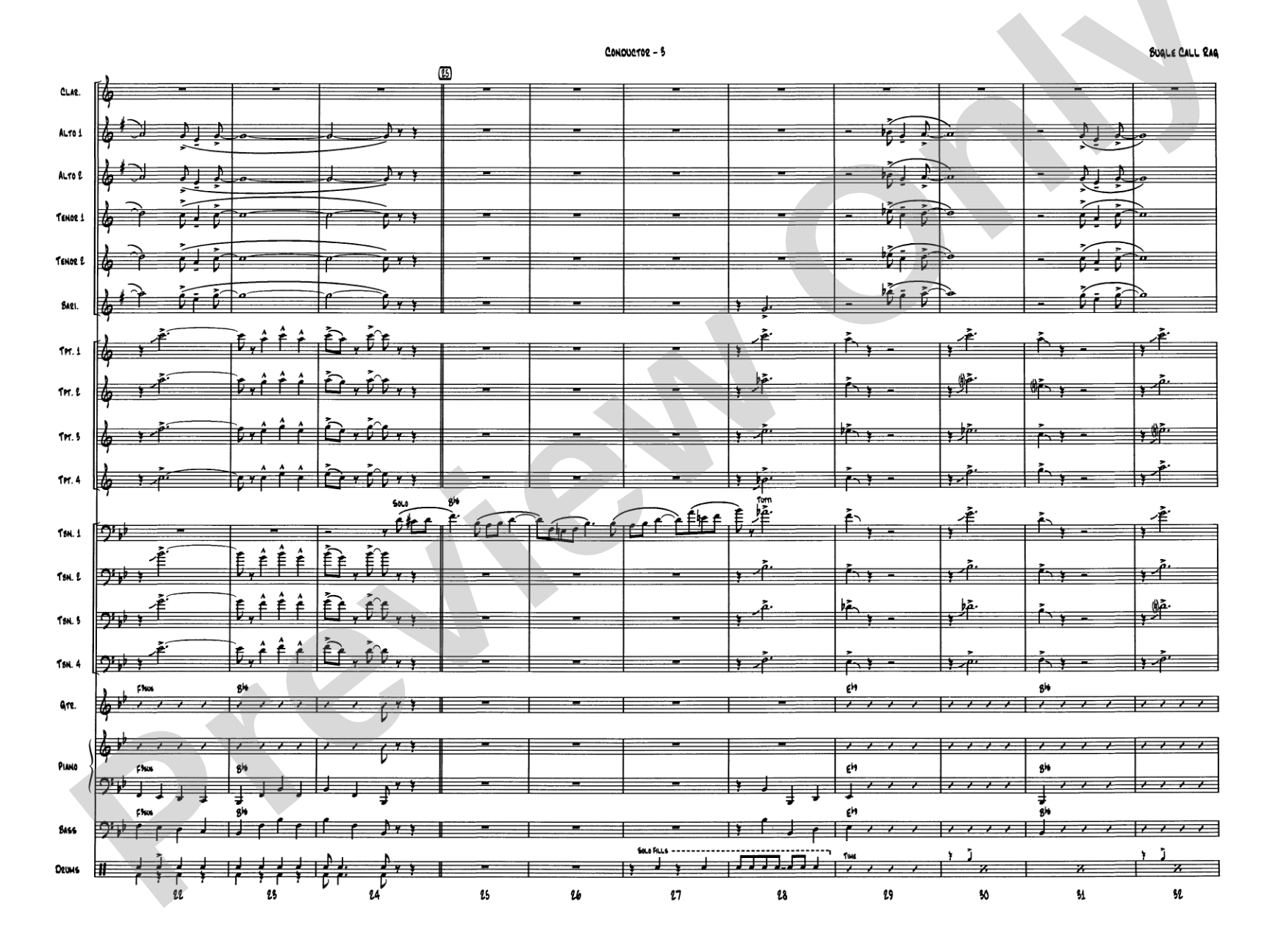
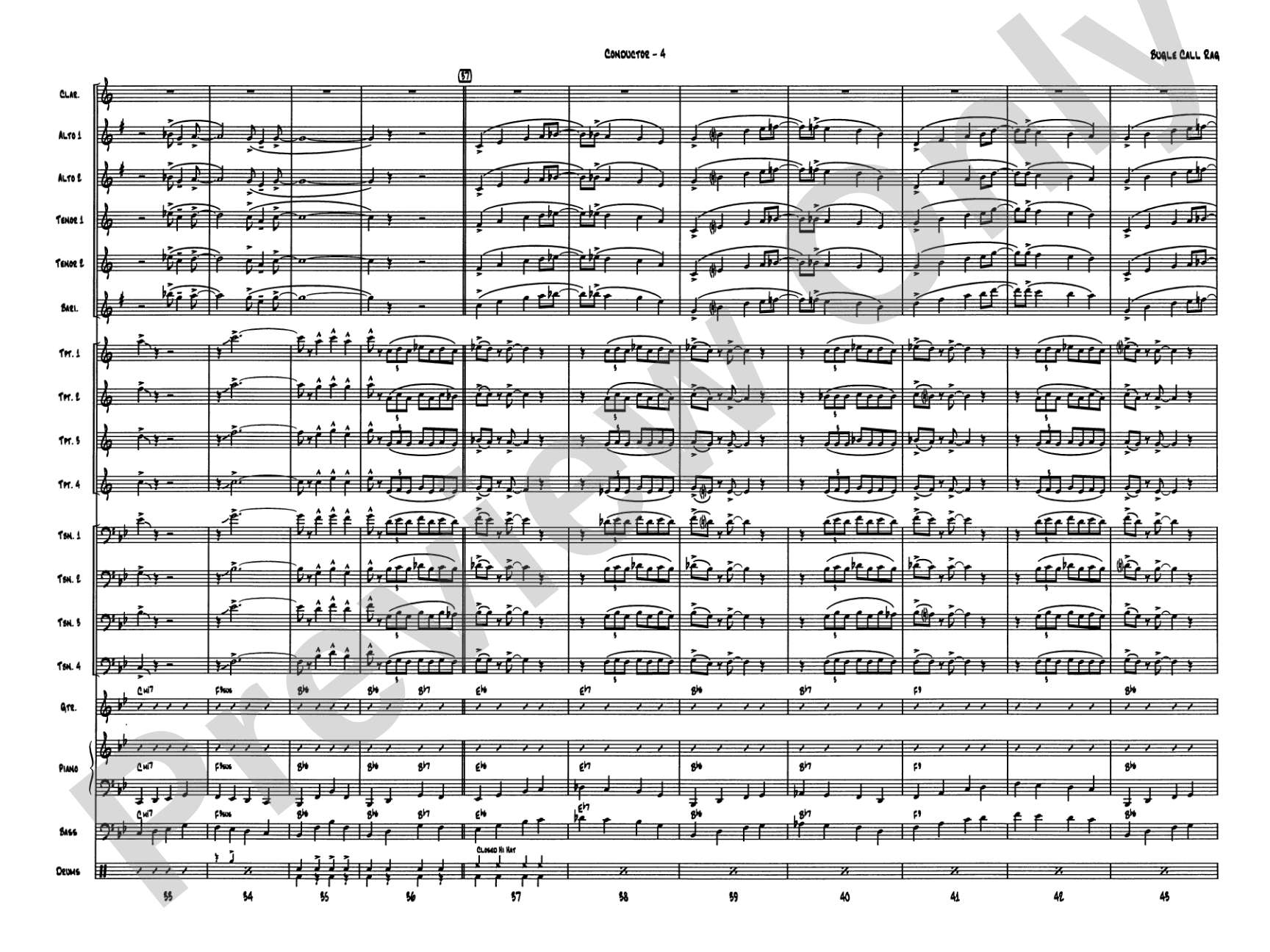
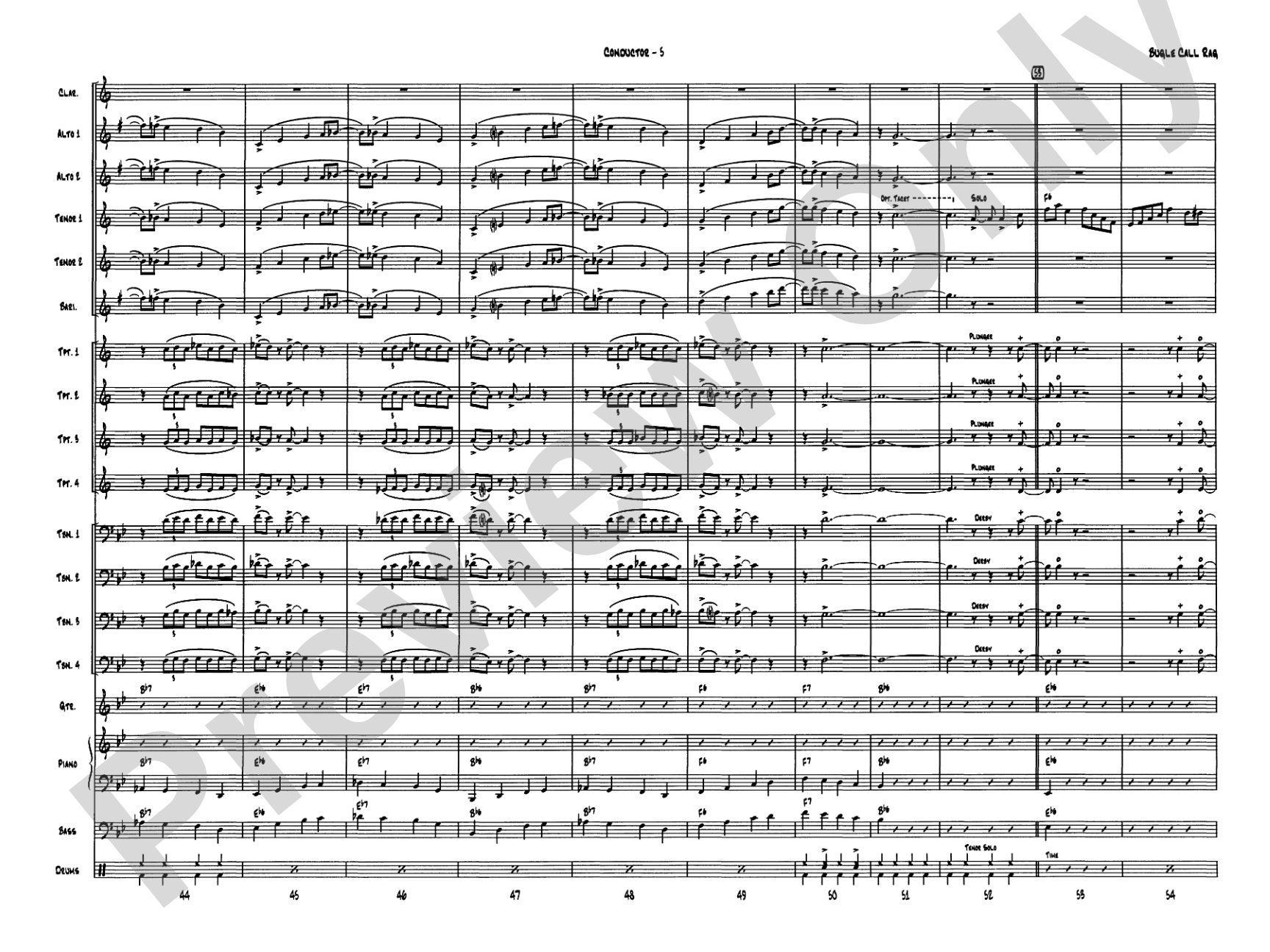
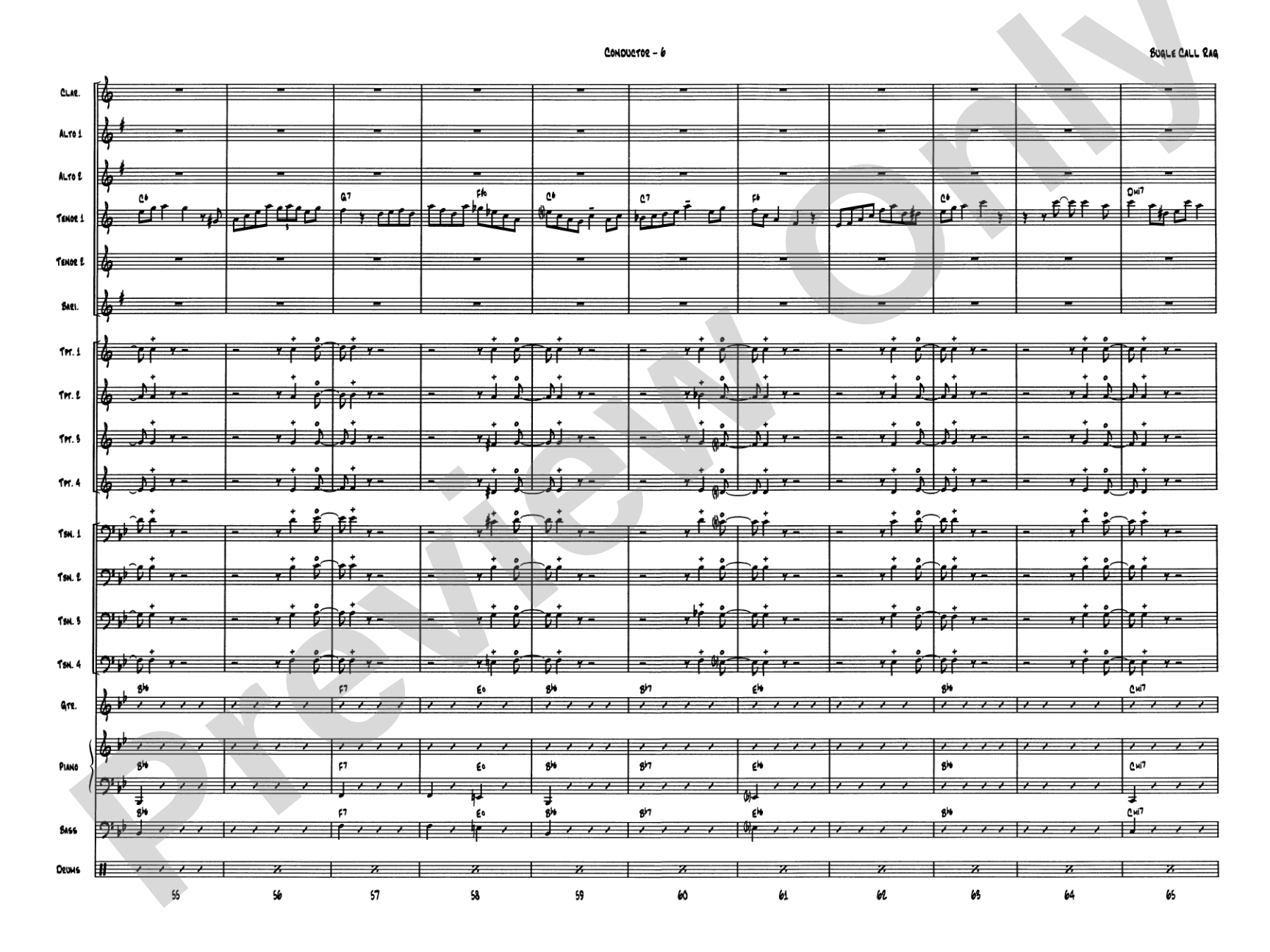
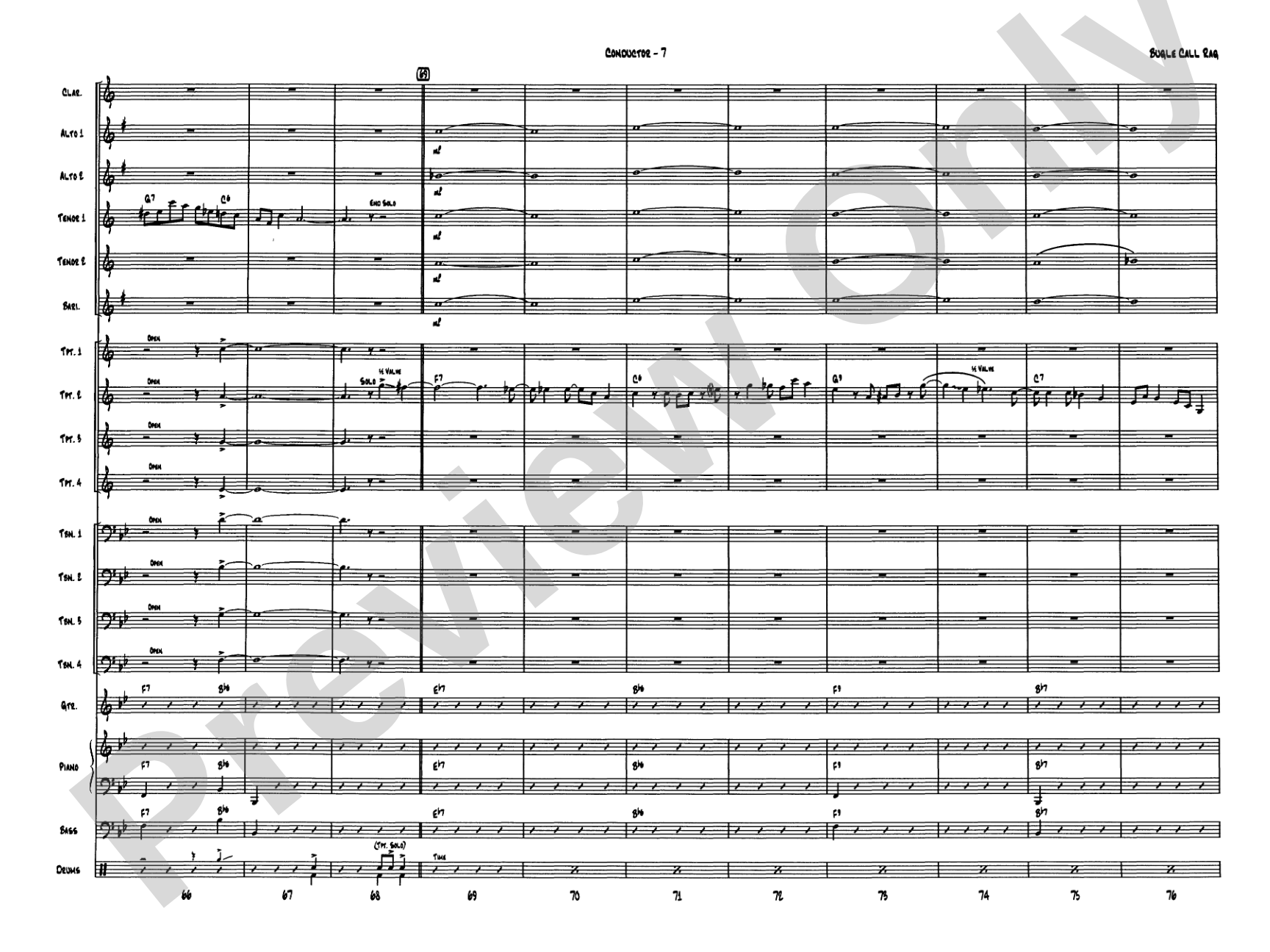
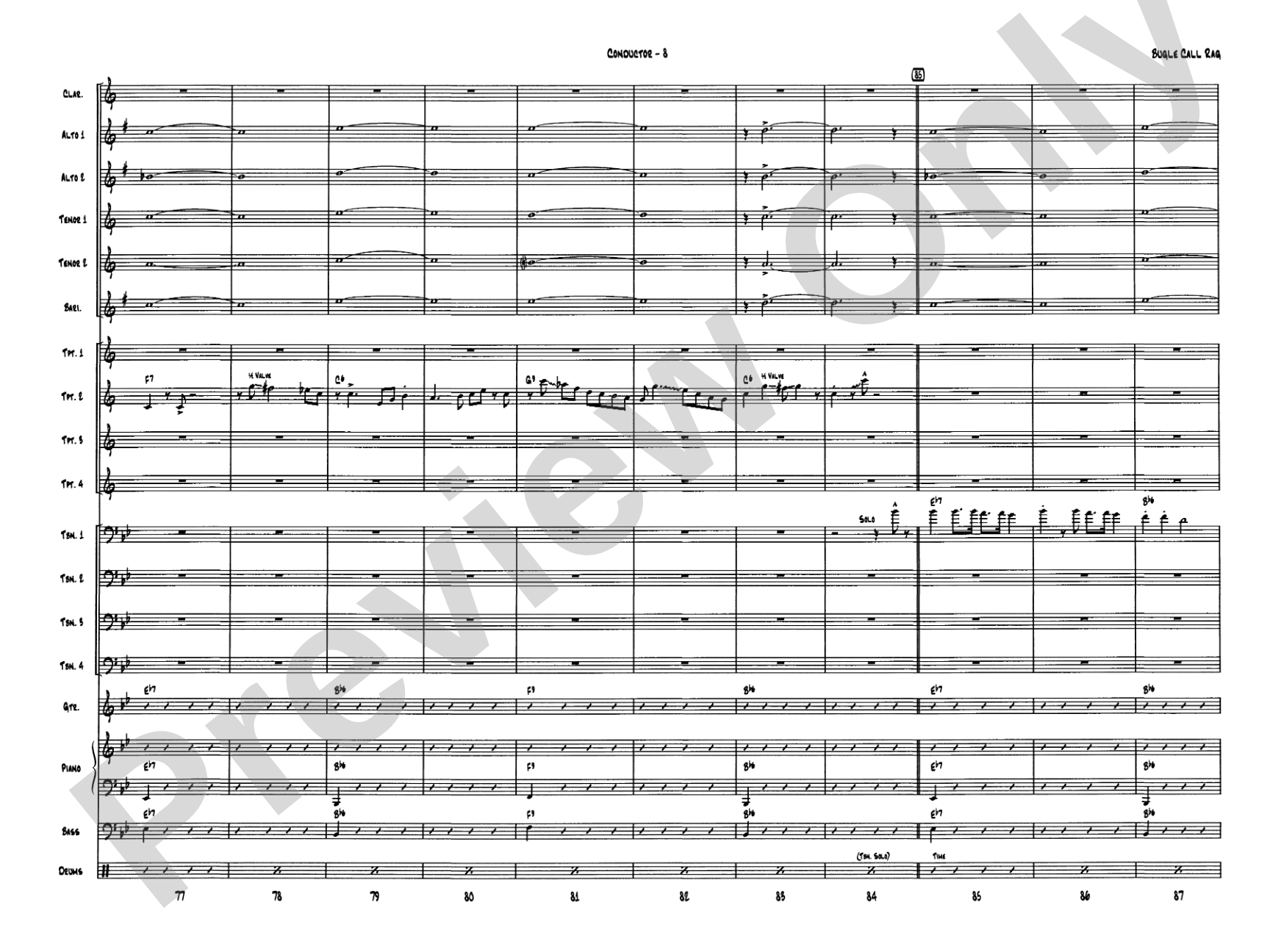
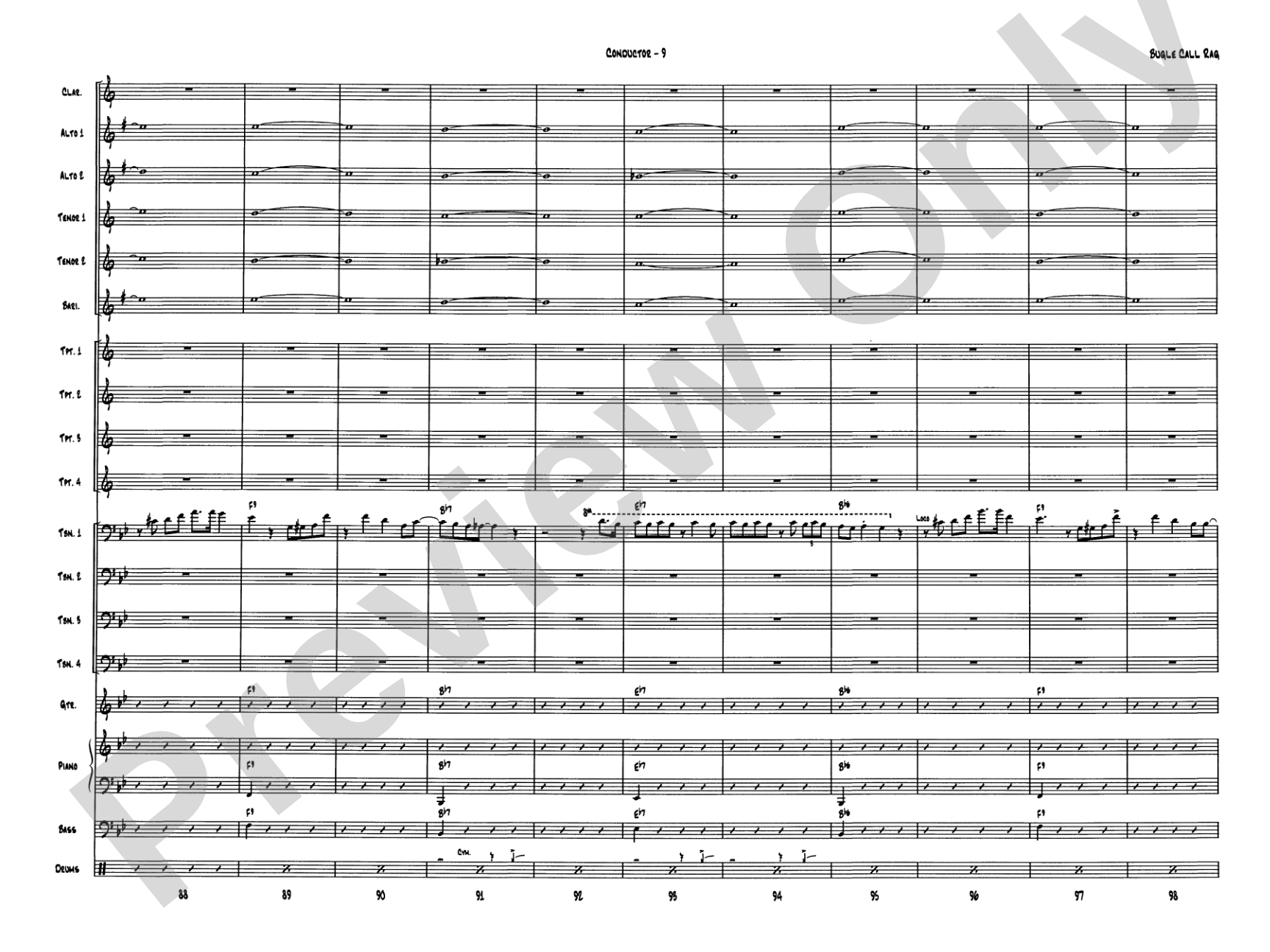
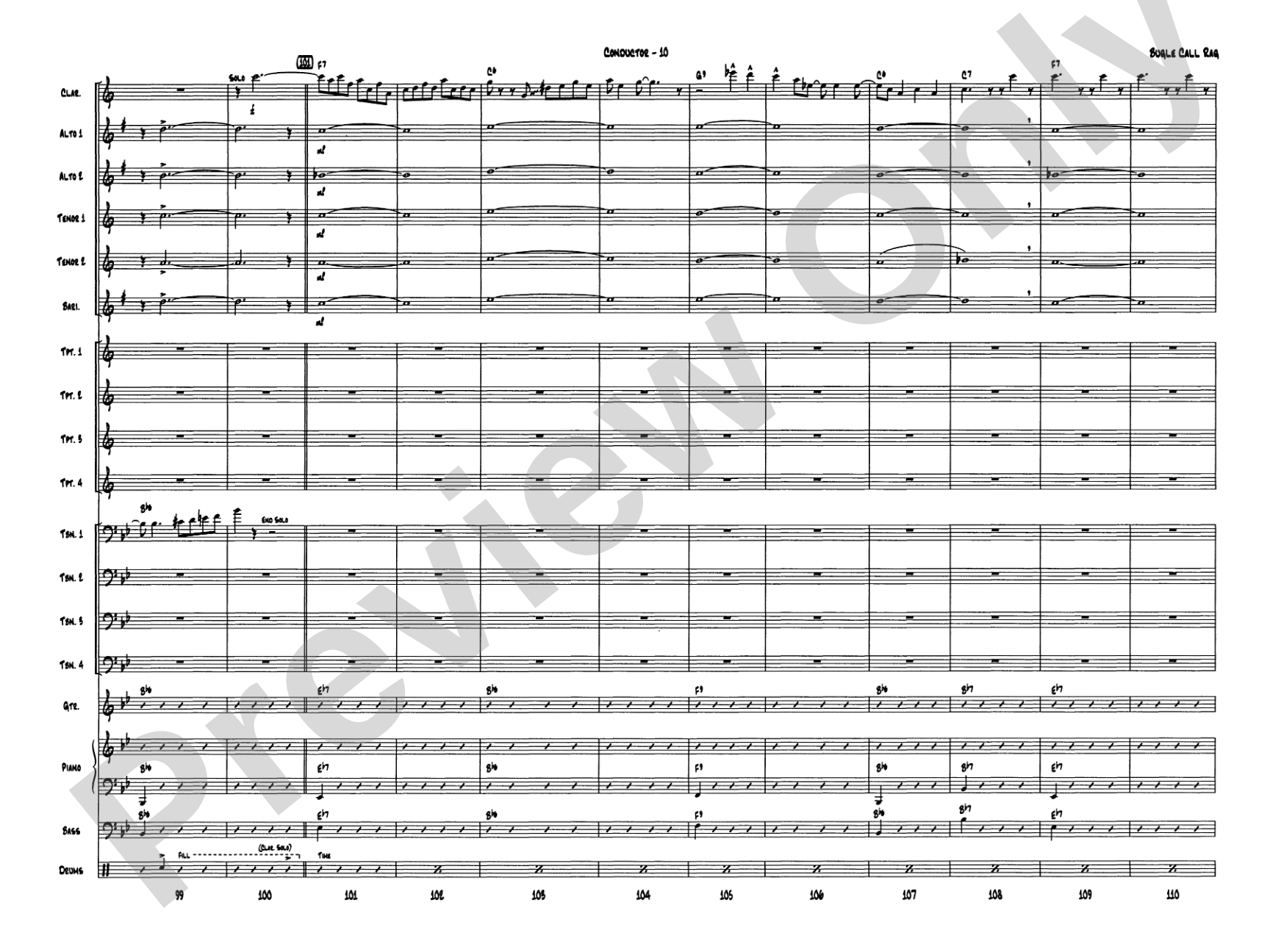
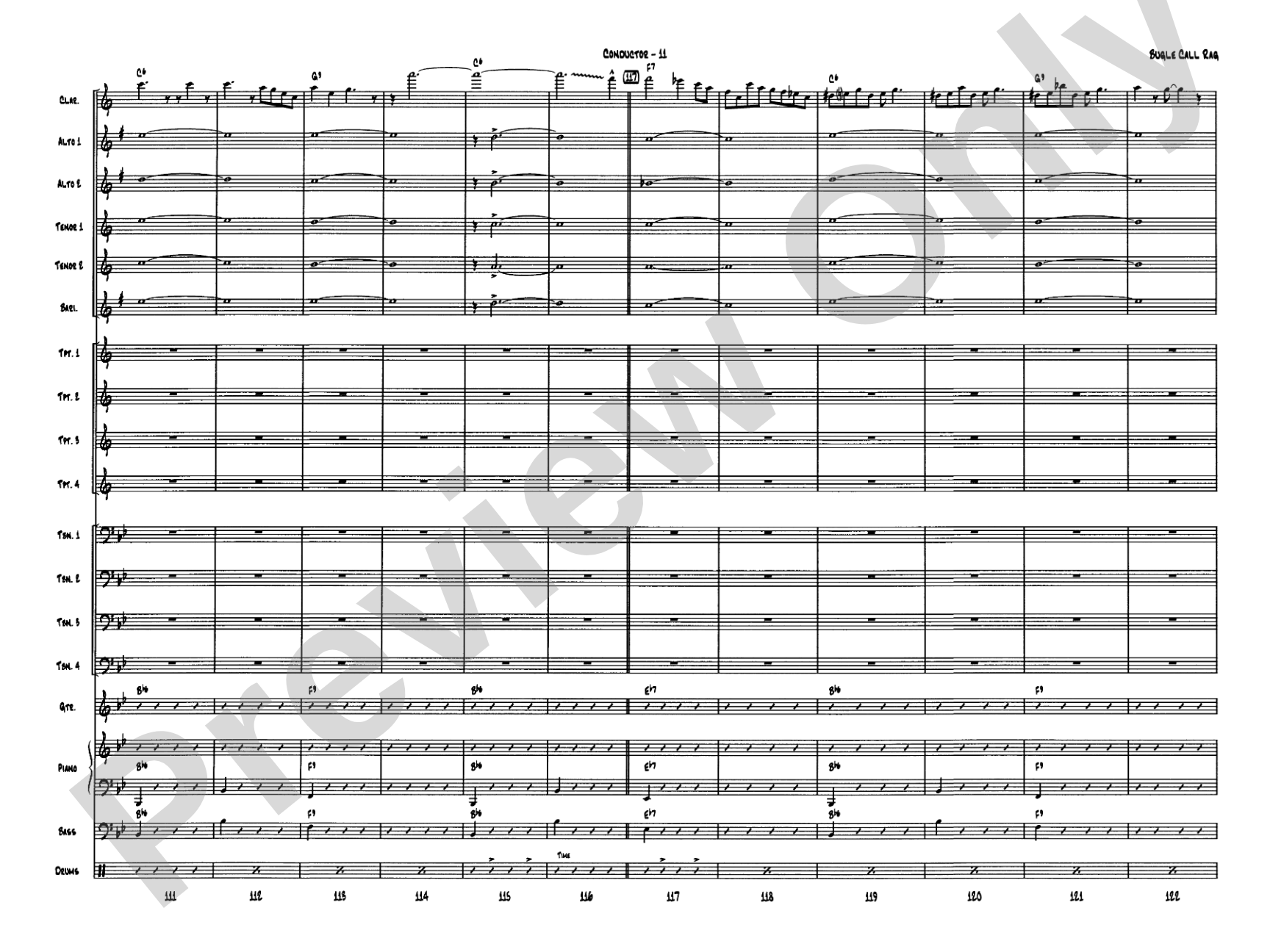
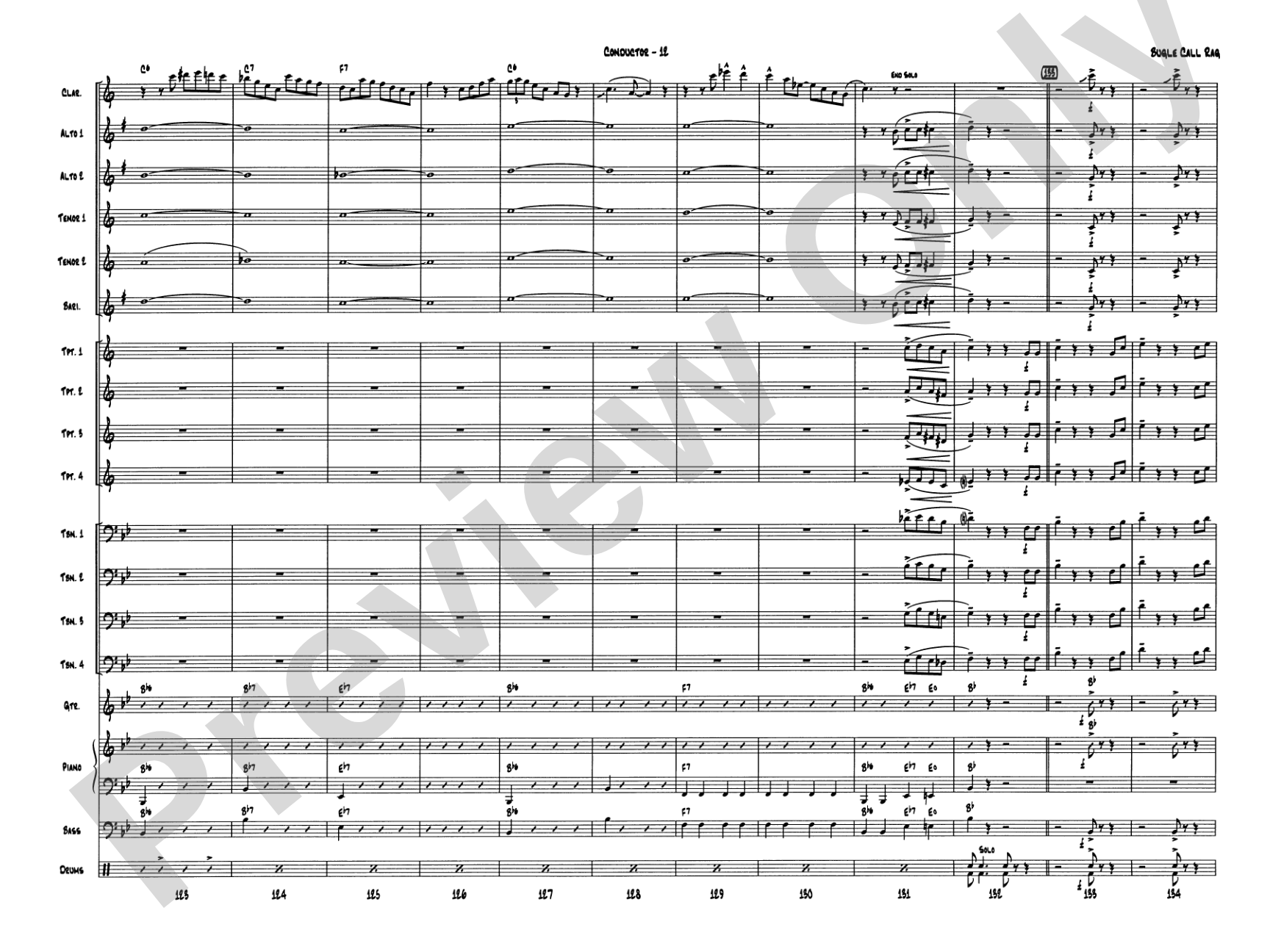
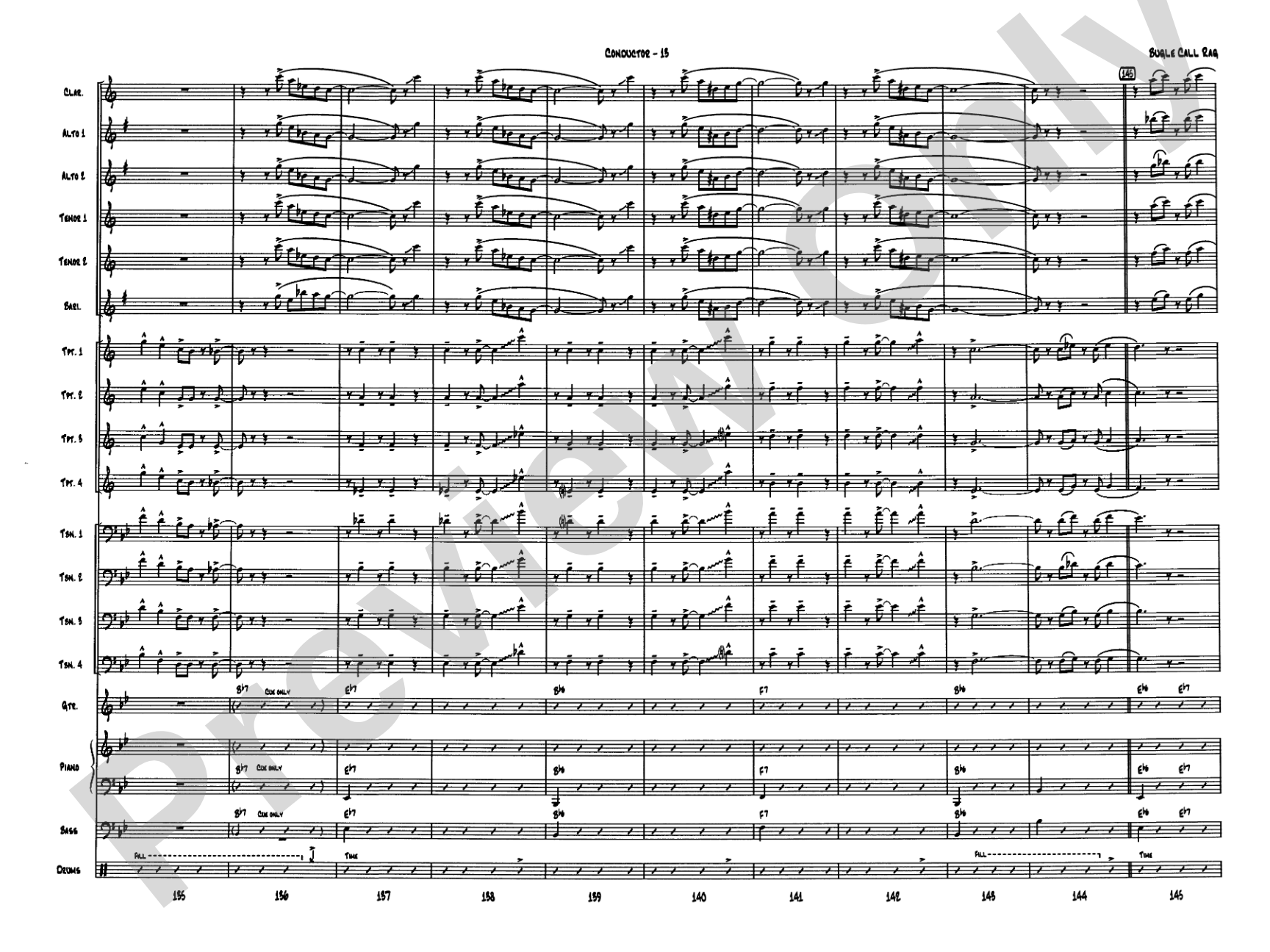
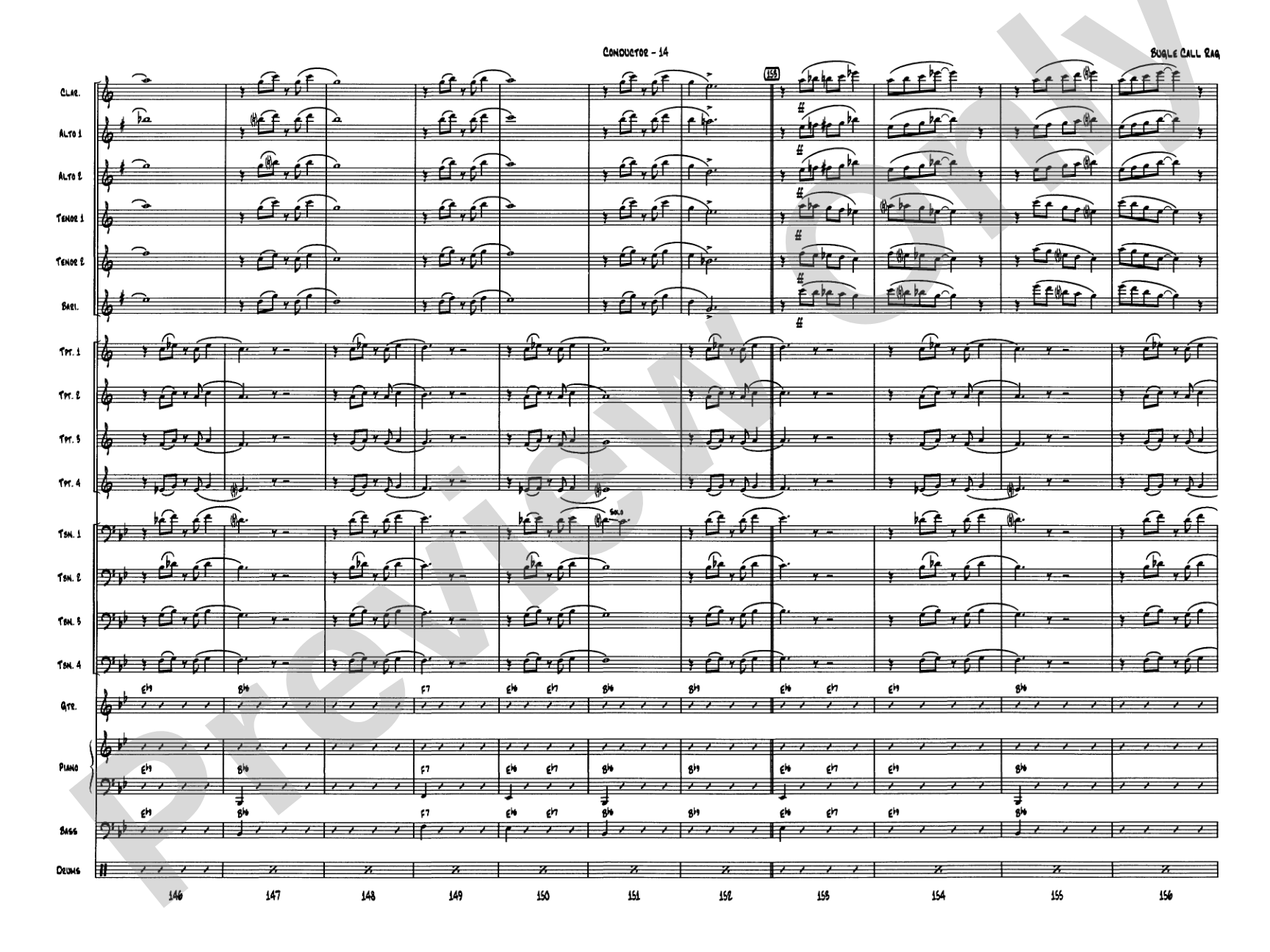
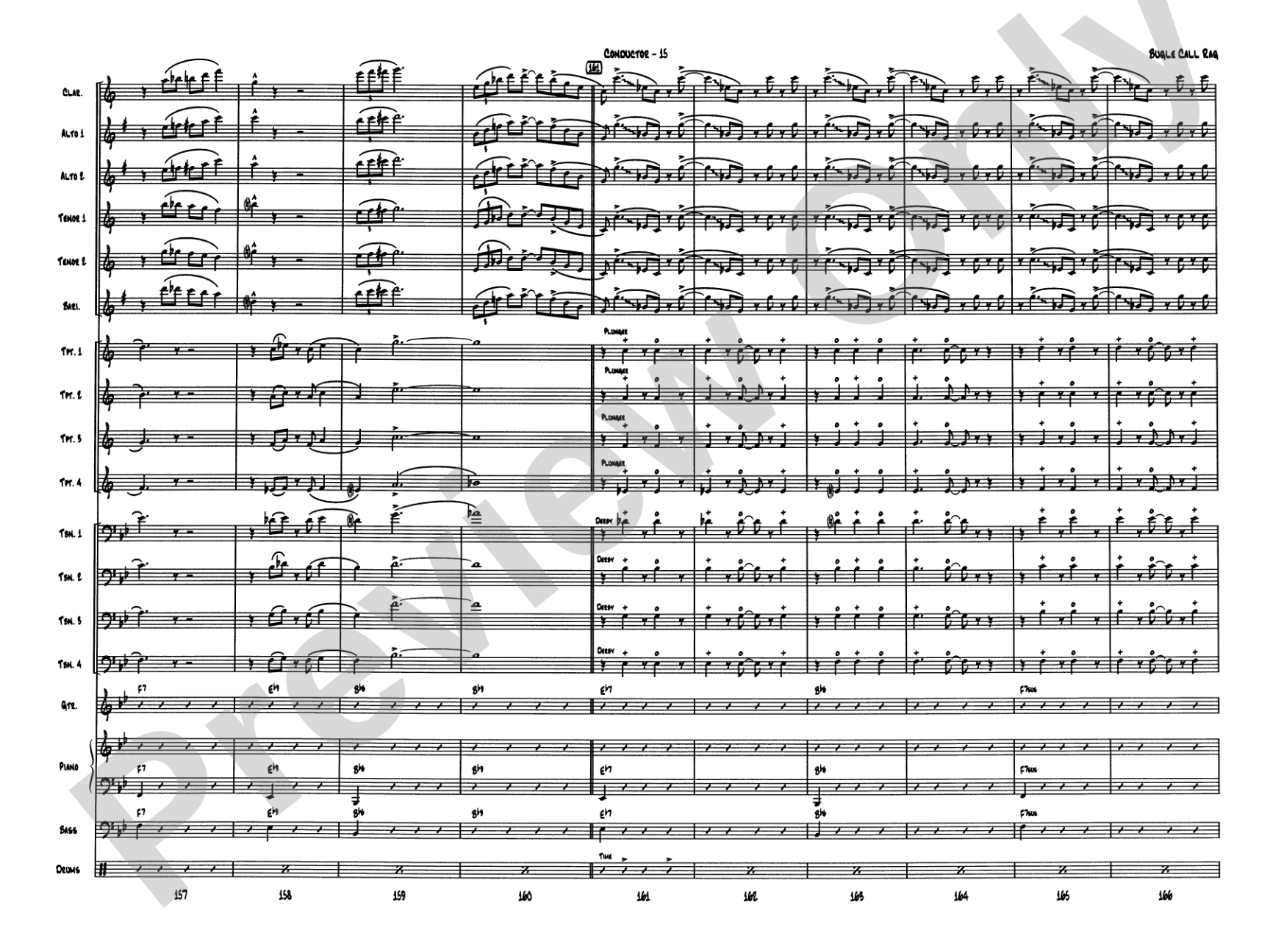
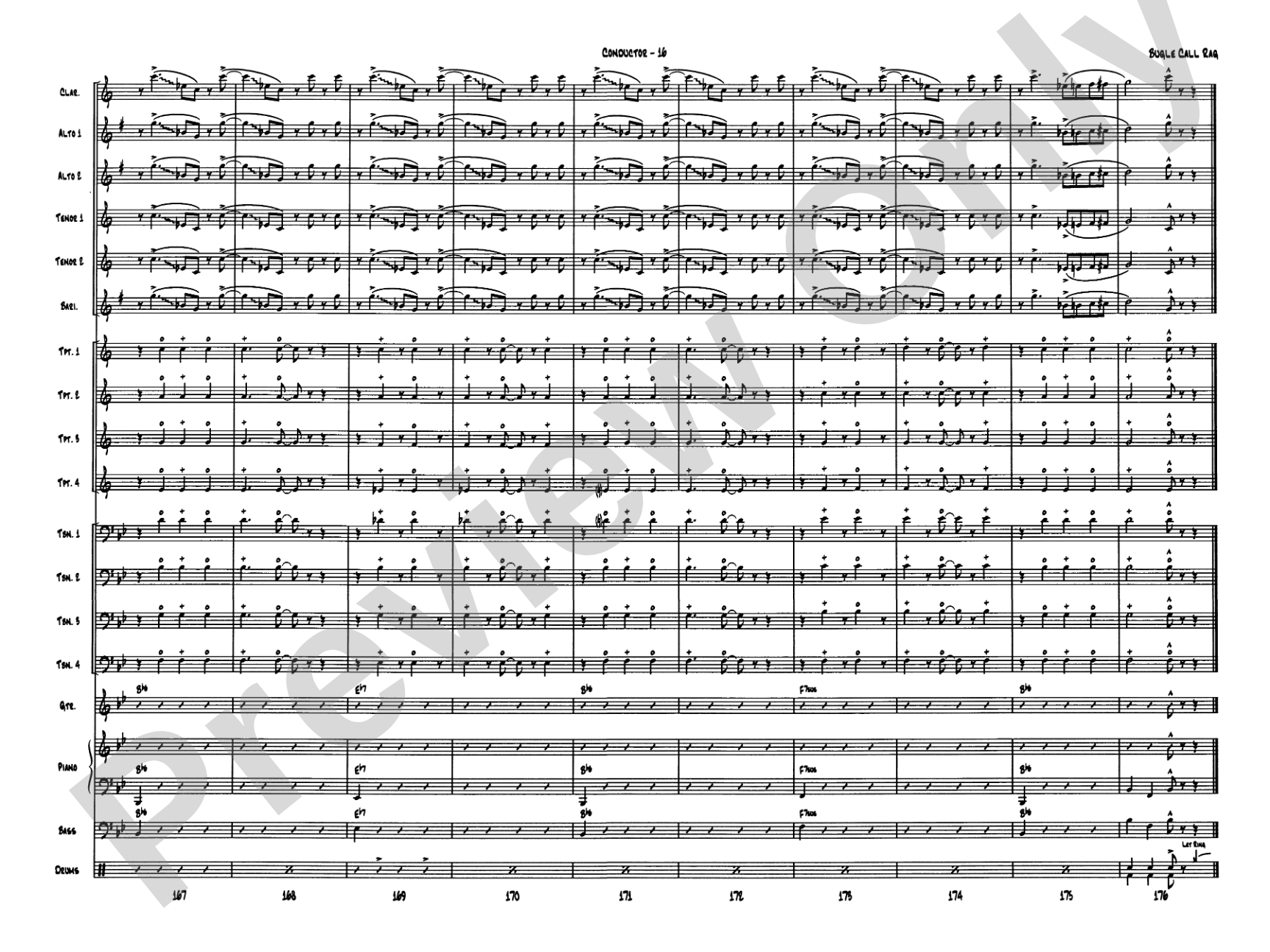



Bugle Call Rag: Jazz Ensemble Conductor Score & Parts
Words and music by Jack Pettis, Billy Meyers and Elmer Schoebel / transcr. and re-created by Jeff Hest
Grade: 4.5 (Medium Advanced / Difficult)
Item: 00-PK-0004426

$60.00
One moment…
Description
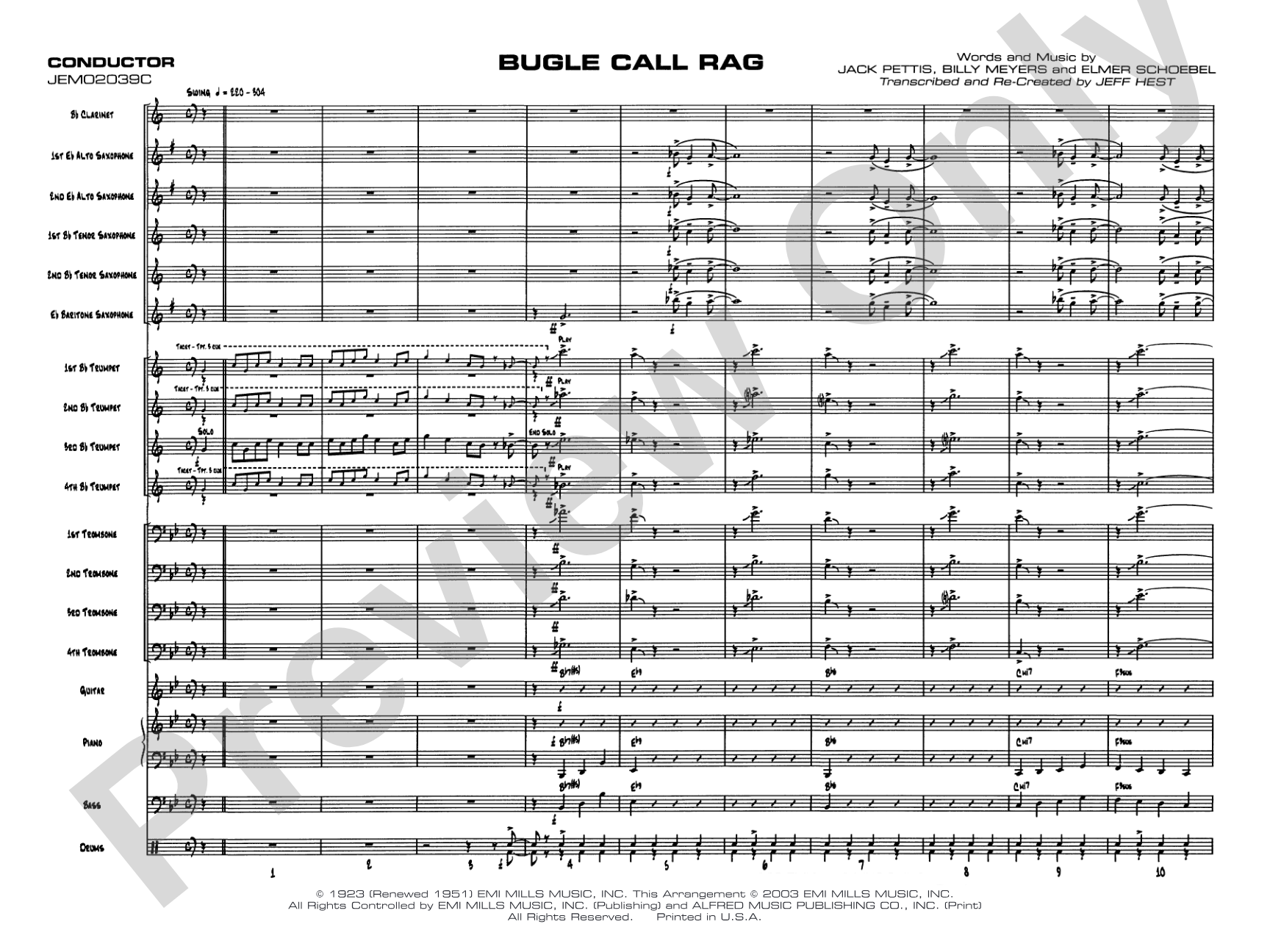
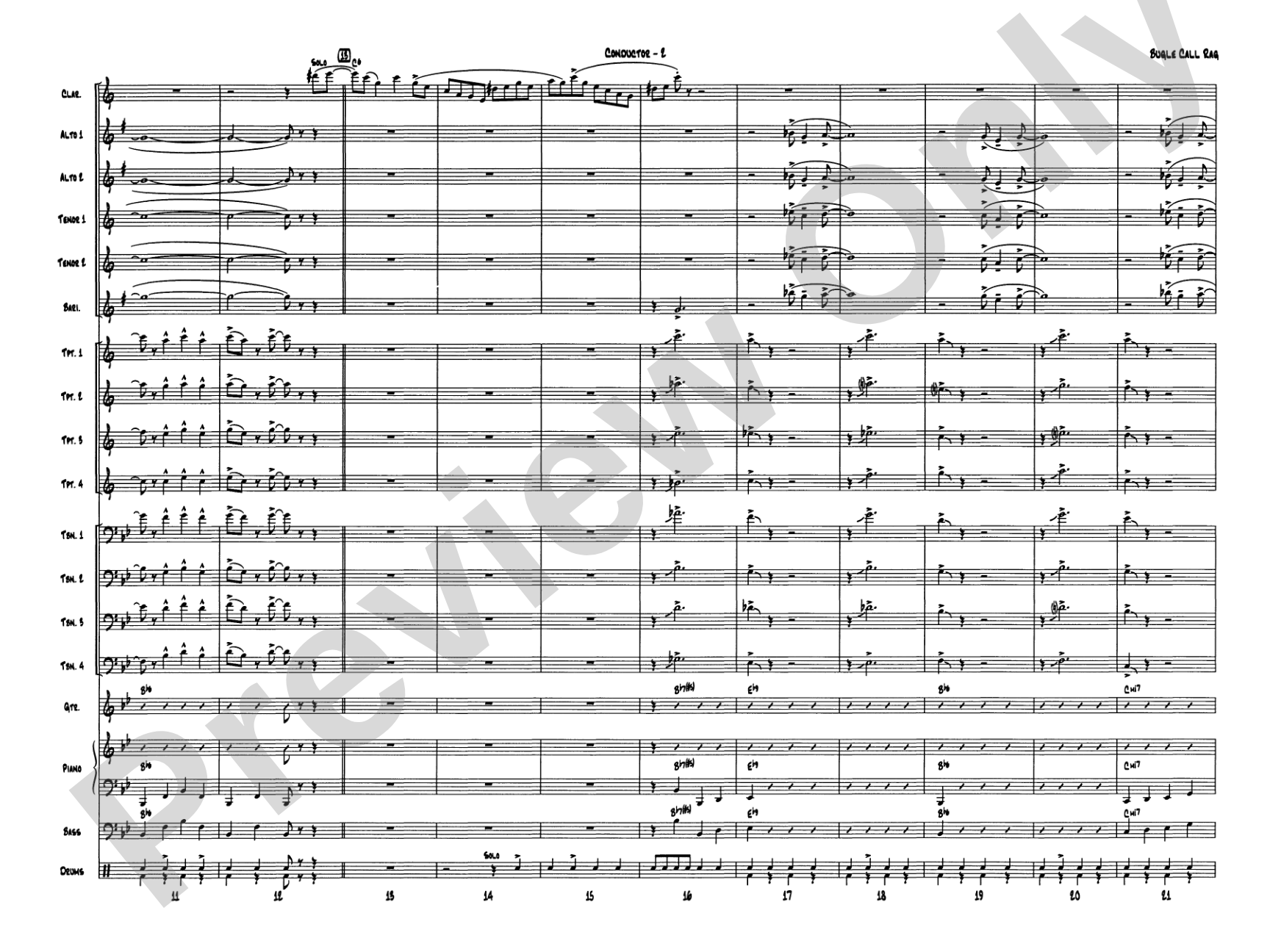
This monster chart is directly from the Benny Goodman library. Transcribed and re-created by Jeff Hest, not many tunes can match the energy of this big band classic. Solos are for clarinet (solo part,) trumpet, tenor, and trombone with solos written out along with the chord changes. Bugle Call Rag will provide a solid jazz education lesson in the swing style and it's also a super crowd pleaser from the first note to the last. (2:46)


Don't just read it, hear it, play along with it, and watch your students grow with it. In MakeMusic Cloud, Bugle Call Rag: Jazz Ensemble Conductor Score & Parts comes alive with professional accompaniment, adjustable tempo, and built-in practice tools that turn solo practice into real progress.
Open in the Player
Jump straight in and assign it today.
Start Your Free Trial
Open this title and explore the full library in minutes.
Sample Audio
1
Audio File
--:--
0:00
0:00
Sample Video
Additional Details
Series:
Premier Jazz Series
Publisher:
Alfred Music
Page Count:
78
SKU:
00-PK-0004426
More about this title
About the Composer: Jack Pettis
Jack Pettis was a saxophonist, composer, and bandleader active during the 1920s and early 1930s, a pivotal era for early jazz development. He contributed several enduring compositions to the jazz standard repertoire, with Bugle Call Rag standing as one of his most recorded and performed pieces. The tune's infectious melody and driving rhythm have made it a staple in the big band and jazz ensemble world for nearly a century.
Why we love this
Jeff Hest's transcription captures the authentic swing and fervor of the original Benny Goodman recording without oversimplifying the arrangement. The solos are written out, giving students a roadmap to the jazz language while still inviting improvisation. This is the kind of chart that works equally well as a teaching tool and a performance showstopper.
What to expect
Pure swing energy from the opening ensemble figures through the final shout chorus. The piece captures the infectious joy and rhythmic propulsion of 1930s big band swing, with moments that feel urgent and celebratory all at once. Soloists will experience the thrill of improvising over changes that lie comfortably in the jazz idiom, while the ensemble drives the whole affair forward with infectious momentum.
Who it's for
Jazz ensemble directors programming Grade 4.5 level material and advanced high school or college jazz musicians ready to tackle authentic big band literature. This chart works for ensembles with strong soloists who want to explore jazz improvisation through a historical standard that audiences recognize instantly.
How to get the most out of it
- Anchor the rhythm section's groove first. The ensemble won't lock into swing feel until the drummer, bassist, and pianist agree on the pocket. Run several rehearsals with just rhythm before adding horns.
- Encourage soloists to learn the written solos completely before attempting improvisation over the changes. Understanding how the original players phrased these solos will inform their own voice.
- Balance the trombone and tenor lines during the section hits. These parts often sit close together in register and can blur if one overpowers the other.
- Keep the tempo steady but energetic. This chart thrives at a tempo that feels like genuine swing, not a race.
How to use it
This belongs in a concert that showcases your ensemble's command of swing style and historical jazz repertoire. Program it after a ballad or contemporary chart to demonstrate range, or use it as a finale to leave the audience energized. The 2:46 runtime makes it ideal for mixed-length concert programming.
Skills your students will build
- Swing articulation and phrasing in section and solo contexts
- Reading jazz chord changes and walking bass lines
- Balancing ensemble blend in big band voicings
- Improvisation over rhythm changes and II-V-I progressions
- Time-feel accuracy and groove lock in a swing idiom
- Interpreting written solos as learning tools for jazz language