
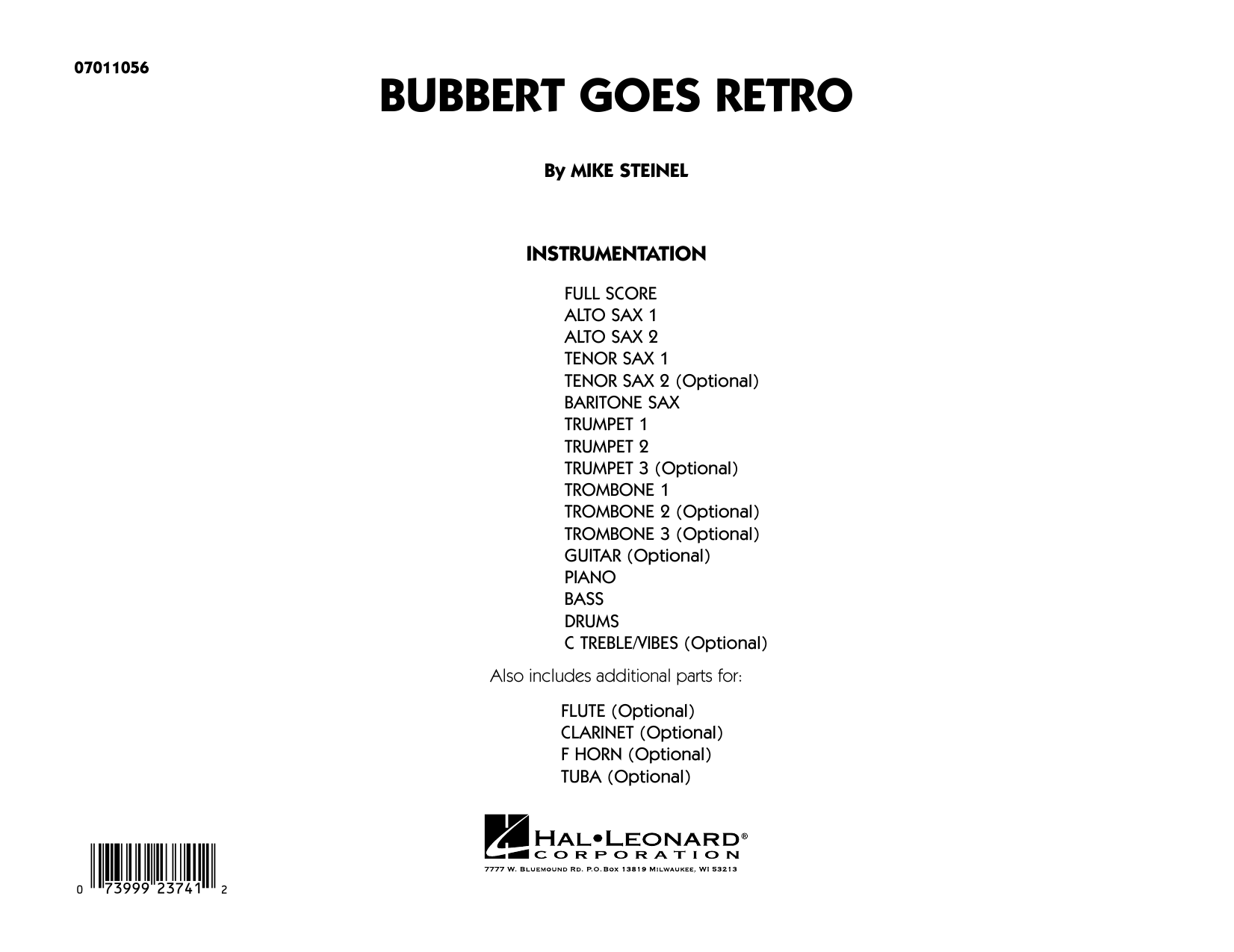

Bubbert Goes Retro: Jazz Ensemble Conductor Score & Parts
By Mike Steinel
Grade: 1-2
Item: 35-PK00309966
$40.00
Pickup currently not available
Buy Extra Parts (Digital PDF Download)
| Product | Price | Quantity |
|---|---|---|
| Bubbert Goes Retro - Conductor Score (Full Score) | $7.50 | |
| Bubbert Goes Retro - Alto Sax 1 | $6.00 | |
| Bubbert Goes Retro - Alto Sax 2 | $6.00 | |
| Bubbert Goes Retro - Tenor Sax 1 | $6.00 | |
| Bubbert Goes Retro - Tenor Sax 2 | $6.00 | |
| Bubbert Goes Retro - Baritone Sax | $6.00 | |
| Bubbert Goes Retro - Trumpet 1 | $6.00 | |
| Bubbert Goes Retro - Trumpet 2 | $6.00 | |
| Bubbert Goes Retro - Trumpet 3 | $6.00 | |
| Bubbert Goes Retro - Trombone 1 | $6.00 | |
| Bubbert Goes Retro - Trombone 2 | $6.00 | |
| Bubbert Goes Retro - Trombone 3 | $6.00 | |
| Bubbert Goes Retro - Guitar | $6.00 | |
| Bubbert Goes Retro - Piano | $6.00 | |
| Bubbert Goes Retro - Bass | $6.00 | |
| Bubbert Goes Retro - Drums | $6.00 | |
| Bubbert Goes Retro - C Treble/Vibes | $6.00 | |
| Bubbert Goes Retro - Flute | $6.00 | |
| Bubbert Goes Retro - Clarinet | $6.00 | |
| Bubbert Goes Retro - F Horn | $6.00 | |
| Bubbert Goes Retro - Tuba | $6.00 |
Parts Added to Cart!
Description
This installment in the continuing adventures of Bubbert is a blues in a '60s "boogaloo style." It's loaded with blues scale material that can be extremely helpful for beginning and developing soloists.
These full-length Grade 1.5 arrangements are the perfect "next step" for bands using the EE Jazz method, and also stand on their own as great easy charts for young players.
Written for full band/playable with 3 saxes, 2 trumpets, 1 trombone and rhythm section.
Each arrangement is a self-contained teaching unit with exercises for melody, rhythm and improvisation.
Includes optional parts for flute, clarinet, F horn and tuba


Bubbert Goes Retro: Jazz Ensemble Conductor Score & Parts isn't in MakeMusic Cloud just yet...but it could be. Let us know you'd like to see it, and you'll help shape what comes next. In the meantime, start a free trial and dive into thousands of interactive titles your students can play along with today.
Request This Title
Tell us you want it.
Start Your Free Trial
Explore everything that's ready to play right now.
Sample Audio
No sample audio found.
Sample Video
No sample videos found.
Additional Details
Publisher:
Hal Leonard
SKU:
35-PK00309966
More about this title
About the Composer: Mike Steinel
Mike Steinel is a jazz educator and composer whose work demonstrates deep understanding of how young musicians learn improvisation and ensemble playing. His arrangements balance accessibility with genuine musical substance, creating pieces that engage students while building foundational skills they'll use throughout their musical lives.
Why we love this
This series knows what it's doing pedagogically. Rather than treating improvisation as an afterthought, each arrangement embeds blues scale work and soloing opportunities into the fabric of the piece itself, so your students get comfortable with jazz language through playing, not explaining. The playability is genuine Grade 1.5, which means your ensemble gets to sound good while learning something real.
What to expect
Groovy and vintage in the best way. The boogaloo style sits somewhere between straightforward blues and funky rhythm and blues, giving the ensemble that infectious 1960s feel while keeping the harmonic and rhythmic demands manageable. It's music that makes young players feel like they're part of something cool.
Who it's for
Young jazz ensembles ready to move beyond reading charts and into actual improvisation, particularly those using the EE Jazz method or similar curricula. It also serves as an ideal easy entry point for groups without a strong jazz tradition who want accessible, professionally arranged material.
How to get the most out of it
- Build the blues scale vocabulary before the first rehearsal if your ensemble hasn't worked with blues idioms yet. Five minutes of scale work pays dividends when soloists need to improvise.
- Keep the rhythm section locked in on the shuffle feel. A tight hi-hat and walking bass line will make the 1960s vibe land immediately.
- Give soloists permission to start simple. The first chorus can be a melody statement; the real improvisation lives in later choruses where they gain confidence.
- Let the ensemble comp behind solos rather than playing the written background figures throughout. This teaches young players how jazz actually breathes.
How to use it
Use this as a standalone concert piece for a jazz night, or as the centerpiece of a curricular unit on blues and early rock improvisation. Because each arrangement is self-contained with its own teaching materials, you can sequence multiple Bubbert pieces throughout the year as your ensemble's jazz vocabulary expands.
Skills your students will build
- Blues scale improvisation in major and minor contexts
- Shuffle rhythm feel and swing eighth-note subdivision
- Reading jazz chord symbols and comping figures
- Solo construction over a 12-bar blues form
- Ensemble blend and listening to soloists in rhythm section