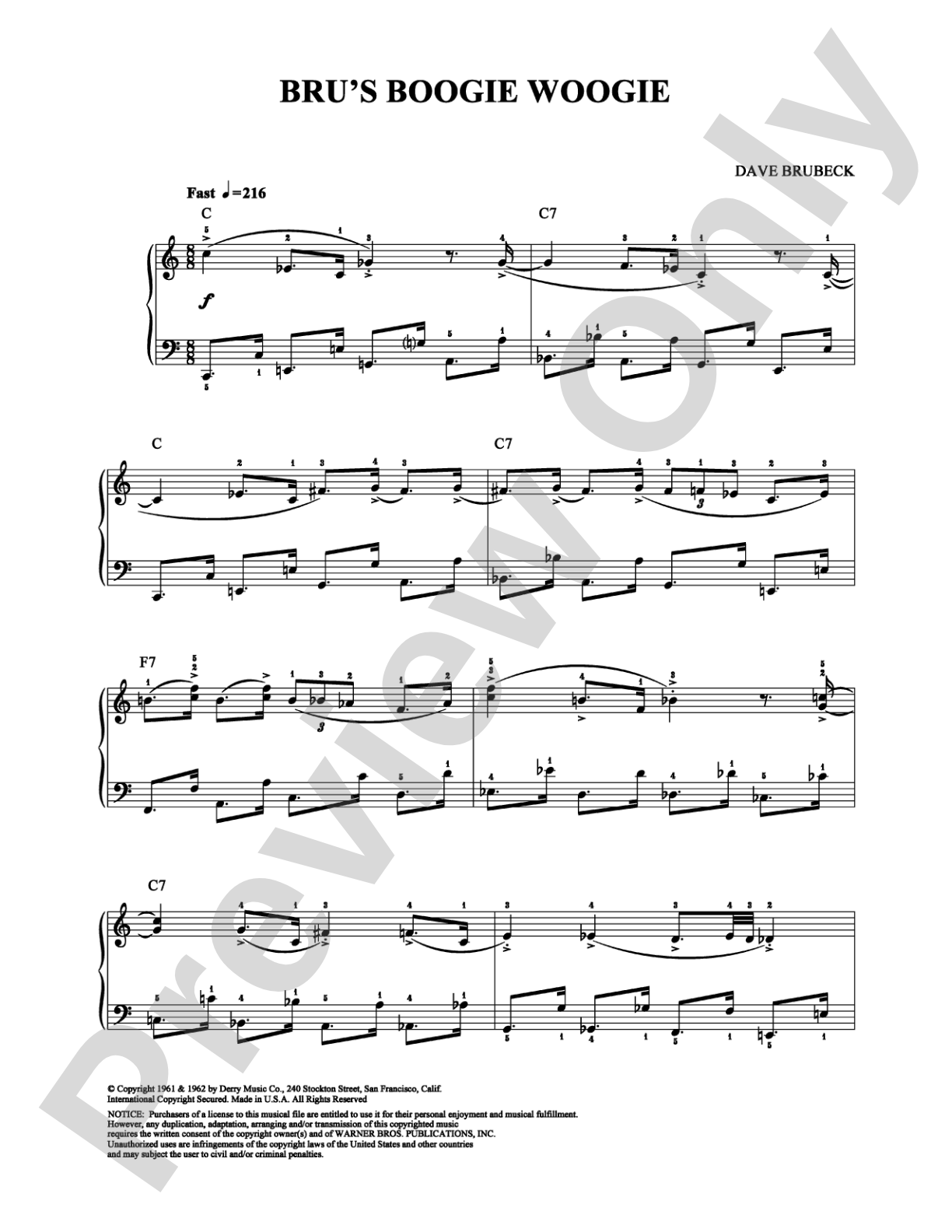
Bru's Boogie Woogie: Piano Digital Sheet Music

Bru's Boogie Woogie: Piano Digital Sheet Music

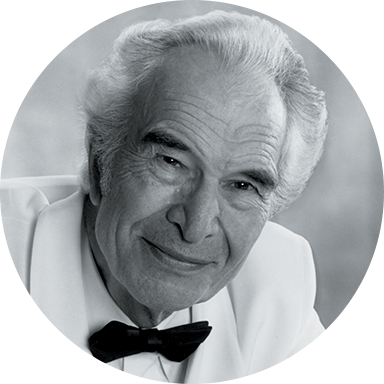
Dave Brubeck

Item: 00-PS-0000977

Digital Download
$3.99
Description

Bru's Boogie Woogie: Piano Digital Sheet Music isn't in MakeMusic Cloud just yet...but it could be. Let us know you'd like to see it, and you'll help shape what comes next. In the meantime, start a free trial and dive into thousands of interactive titles your students can play along with today.

Sample Audio
No sample audio found.
Sample Video
Additional Details
SKU: 00-PS-0000977

More about this title

About the Artist: Dave Brubeck

Dave Brubeck

Dave Brubeck was a pianist and composer whose work bridged jazz improvisation and classical composition with remarkable fluency. After studying with Darius Milhaud at Mills College following World War II, he developed a distinctive voice that drew equally from both traditions, creating everything from large-scale orchestral works and choral pieces to intimate solo compositions. His album "Time Out" became the first jazz recording to sell over a million copies, and his composition "Take Five" remains one of jazz's most recognizable standards.

Beyond his musical innovations, Brubeck was a pioneering figure in breaking racial barriers in mid-twentieth-century American music. His catalog includes sacred works like "To Hope!" and "Pange Lingua Variations" that have been performed worldwide, as well as works that inspired major ballet productions. He received the Grammy Lifetime Achievement Award, the Presidential Medal of the Arts, and was inducted into the American Classical Music Hall of Fame in 2003.

Why we love this

Brubeck's boogie woogie style captures the driving energy and rhythmic sophistication his trio was famous for, making it both accessible and genuinely rewarding to perform. The piece gives pianists a chance to explore the jazz language in a fully notated score, bridging the gap between classical training and improvisational confidence. Programming a Brubeck piece signals to audiences that you take jazz seriously as a compositional art form, not just as background music.

What to expect

Energetic, propulsive, and built on the kind of rhythmic foundation that makes you want to move. The boogie woogie left hand creates an irresistible forward momentum while the right hand melody sits naturally on the keyboard, allowing for both precision and groove.

Who it's for

Pianists at the intermediate level and above who want to explore jazz composition in a accessible, fully notated context. This works equally well for students working toward jazz performance literacy and for classical pianists expanding their repertoire beyond the standard canon.

How to get the most out of it

  • Keep the left hand groove locked and steady; the boogie woogie pattern should feel inevitable, not mechanical, so let it breathe slightly rather than metronomically rigid.
  • Balance the melodic line in your right hand against the propulsive bass figure; the melody should sing out clearly without washing away the rhythmic foundation beneath it.
  • Listen closely to the harmonic rhythm and use it as your guide for phrasing rather than relying on the written barlines; jazz phrasing often crosses traditional measure boundaries.
  • Explore the space between the written notes; Brubeck's compositions leave room for subtle timing adjustments that add swing and personality without requiring improvisation.

How to use it

Pair this with other twentieth-century American composers to build a concert section that reflects the full range of what American musical language includes. A student recital featuring Brubeck shows audiences that jazz deserves the same programming respect as Bartók or Copland.

Skills your students will build

  • Playing steady left-hand ostinatos in boogie woogie style
  • Balancing melodic independence in both hands
  • Reading and performing jazz articulation and phrasing
  • Understanding harmonic movement across blues-based chord progressions
  • Developing rhythmic confidence in a jazz idiom

You May Also Like