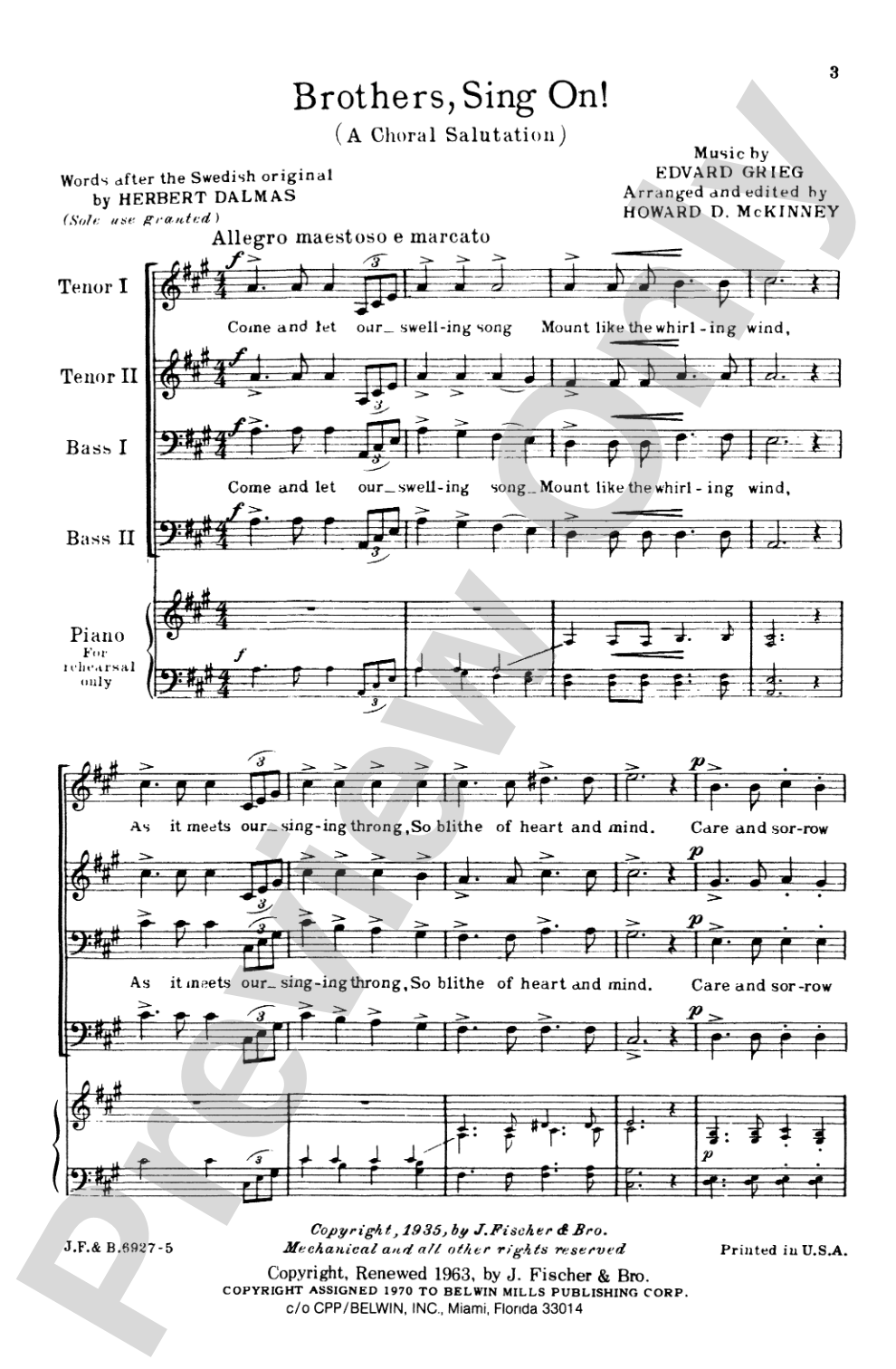
Brothers, Sing On! Sheet Music Preview

Brothers, Sing On!: TTBB, a cappella Choral Octavo

By Edvard Grieg / arr. Howard D. McKinney

Level: Moderate

Item: 00-PO-0003513

Digital Download
$2.05

Minimum order quantity: 20 copies

Description

Brothers, Sing On!: TTBB, a cappella Choral Octavo isn't in MakeMusic Cloud just yet...but it could be. Let us know you'd like to see it, and you'll help shape what comes next. In the meantime, start a free trial and dive into thousands of interactive titles your students can play along with today.

Sample Audio
0:00
0:00
Sample Video
Additional Details
Series: J. Fischer & Bro. Choral Series
Publisher: Alfred Music
Page Count: 8
SKU: 00-PO-0003513

More about this title

About the Composer: Edvard Grieg

Edvard Grieg (1843-1907) stands as Norway's most celebrated composer, a figure whose music shaped the Romantic era and defined a national musical identity. His gift for melody, harmonic innovation, and orchestral color earned him international recognition during his lifetime, yet his choral works remain underperformed in many programs despite their accessibility and emotional directness.

Why we love this

McKinney's arrangement captures the expansive spirit of Grieg's original while tailoring it specifically for male voices, making this a genuine find for TTBB ensembles seeking substantial repertoire beyond the usual concert fare. The piece demands musicality and blend without excessive technical complexity, rewarding directors who prioritize ensemble sound over individual virtuosity.

What to expect

Brothers, Sing On! radiates the lyrical warmth and Romantic grandeur Grieg brought to Scandinavian folk character. Without instrumental support, the voices become the full harmonic landscape, creating an intimate yet powerful sound that feels both noble and genuinely singable.

Who it's for

This arrangement suits intermediate to advancing male choirs ready for four-part a cappella repertoire with musical depth. Directors programming festival or concert seasons will find it both substantive enough to anchor a set and accessible enough for singers who are still building secure part-singing independence.

How to get the most out of it

  • Balance the inner voices carefully; the harmonic texture depends on hearing all four parts equally, not just the tune-carrying tenor line.
  • Shape phrases across the entire arc rather than stopping at cadences, especially in longer sections where momentum keeps the a cappella texture alive.
  • Let the dynamic marking guide your interpretation, but consider how breath placement affects phrase weight in passages without accompaniment support.

How to use it

This works beautifully in a concert section celebrating European choral traditions, where it can stand alongside a cappella works from other Romantic composers or anchor a Grieg-focused program. Its modest page count makes it ideal for festivals where you want substantial musical content without overwhelming rehearsal demands.

Skills your students will build

  • A cappella ensemble blend and intonation stability without instrumental reference
  • Four-part harmonic awareness and listening across multiple voice lines
  • Interpretation of Romantic era musical expression and phrase shaping
  • Confidence sustaining longer phrases without breath support from accompaniment

You May Also Like