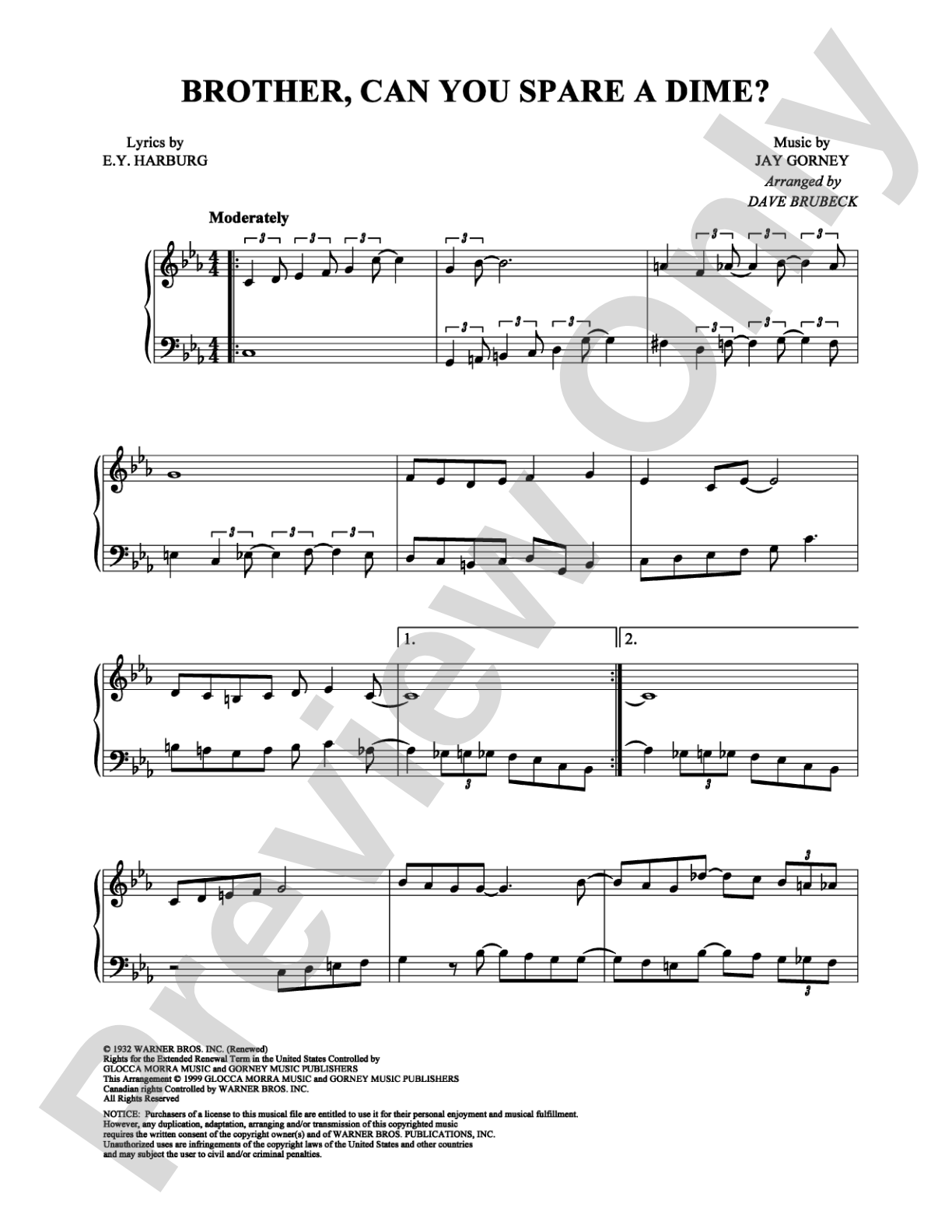
Brother, Can You Spare a Dime?: Piano Digital Sheet Music

Brother, Can You Spare a Dime?: Piano Digital Sheet Music

Jay Gorney

Item: 00-PS-0008435

Digital Download
$3.99
Description

Brother, Can You Spare a Dime?: Piano Digital Sheet Music isn't in MakeMusic Cloud just yet...but it could be. Let us know you'd like to see it, and you'll help shape what comes next. In the meantime, start a free trial and dive into thousands of interactive titles your students can play along with today.

Sample Audio
No sample audio found.
Sample Video
Additional Details
SKU: 00-PS-0008435

More about this title

Why we love this

This standard sits perfectly between accessibility and sophistication, offering pianists a chance to work with one of the Great American Songbook's most historically resonant melodies without requiring advanced classical technique. The jazz idiom opens space for interpretive choice, whether you're leaning into stride piano tradition or a more contemporary voicing approach.

What to expect

Bittersweet and reflective, this standard carries the weight of its 1932 origins while remaining buoyant enough for genuine swing. The melody opens with a gentle, almost conversational quality before the harmonic sophistication reveals itself, creating a piece that feels both intimate and musically substantial.

Who it's for

Pianists exploring jazz standards and American songbook repertoire, from intermediate players building fluency with jazz harmony to advanced musicians seeking a historically significant piece for recital or jam session contexts. This digital download works equally well for solo practice, studio study, or performance preparation.

How to get the most out of it

  • Establish the harmonic foundation early in rehearsal; the changes move quickly and anchor everything else. Work through the chord progression hands separately before layering melody and comping together.
  • Consider the historical weight of the lyric when shaping phrasing. The song's Depression-era narrative calls for genuine emotional grounding rather than purely technical display.
  • Experiment with left-hand comping styles. Try both walking bass and stride patterns to hear which suits your interpretation and hand comfort.

How to use it

Program this as a solo recital selection that speaks to American musical identity and social history, or use it as a bridge between classical and jazz idioms in a mixed repertoire concert. It's equally effective as a study piece in jazz piano coursework or as an encore that leaves audiences with something genuinely memorable.

Skills your students will build

  • Jazz seventh chords and extensions (maj7, min7, dom7, diminished)
  • Swing rhythm and groove phrasing
  • Left-hand comping patterns (stride, walking bass, sparse voicing)
  • Harmonic reharmonization and substitution options
  • Solo improvisation over changes
  • Balancing melody prominence with harmonic complexity

You May Also Like